
IL Permit 03: Warning, School & Work Zone Signs
by FlashQuest
38 Illinois permit test cards on warning signs, school signs and work zone signs. Deck 3 of 12. Warning cards cover crosswalks, signs for a stop, yield or signal ahead, crossroads, T and Y junctions, curves and advisory speed plaques, winding roads, slippery roads, steep grades, narrow bridges, merges, lane reductions and divided highways. Others cover school zones and crossing guards. Work zone cards cover cones, arrow boards, flaggers, message signs and hazmat placards. From the Illinois Rules of the Road 2026 (chapter 9).


Free to start, no account needed. After you install, search the Table for “IL Permit 03: Warning, School & Work Zone Signs”.
Study all 38 cards, with their pictures, in the app.
All 38 cards in this deck.
Made by FlashQuest. Last updated November 2026. Drafted with AI help.
- What does a diamond sign showing a person walking warn of?
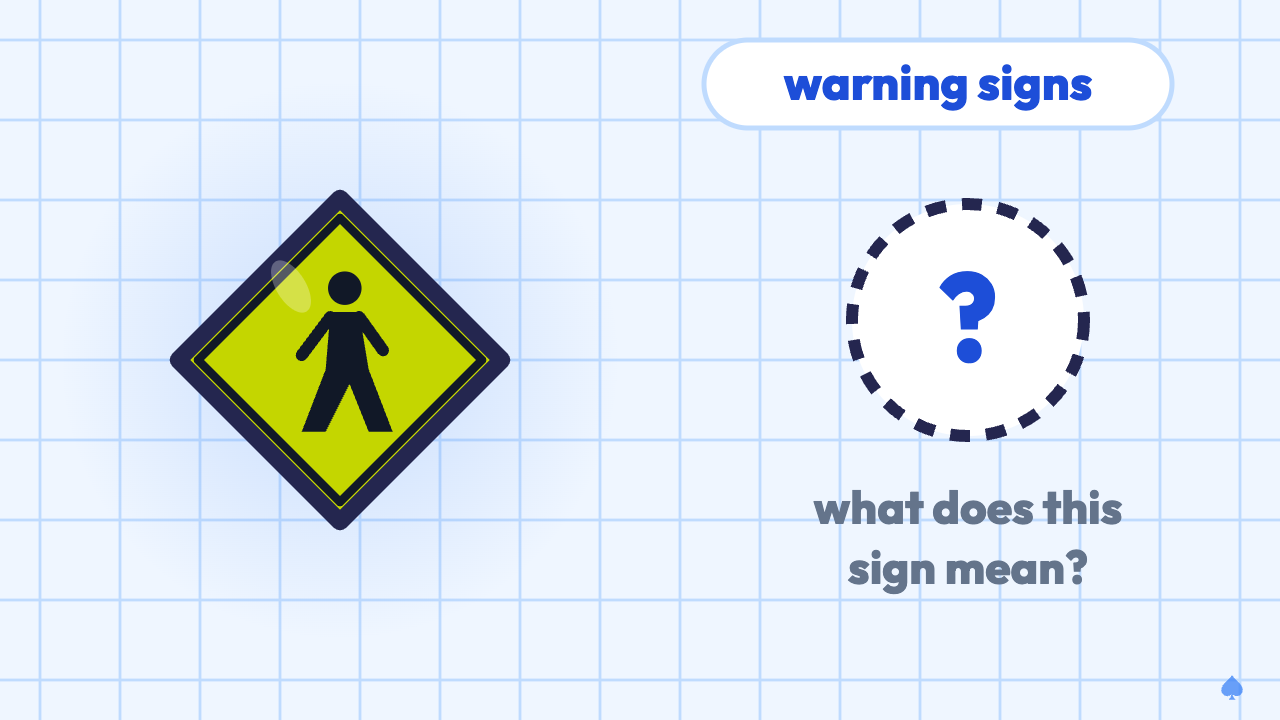
- A pedestrian crosswalk
- This sign tells you there is a crosswalk ahead. Watch both sides of the street for people and be ready to stop for anyone in the crosswalk. (Rules of the Road, p. 68.)
- Why does a crosswalk sign sometimes have a flashing yellow beacon?
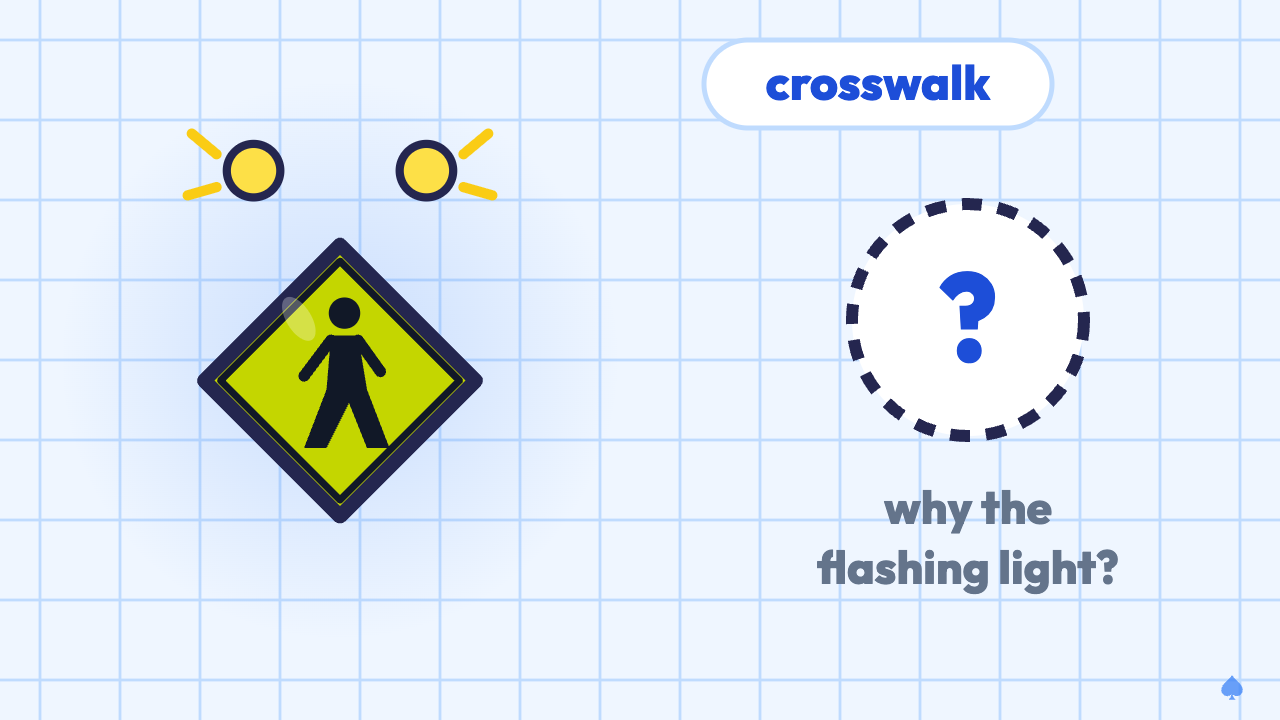
- To warn that people may be crossing
- A flashing yellow beacon on a crosswalk sign makes drivers more aware of the crosswalk and that pedestrians may be in it. Slow down and be ready to stop. (Rules of the Road, p. 68.)
- Crosswalks are always at intersections. True or false?
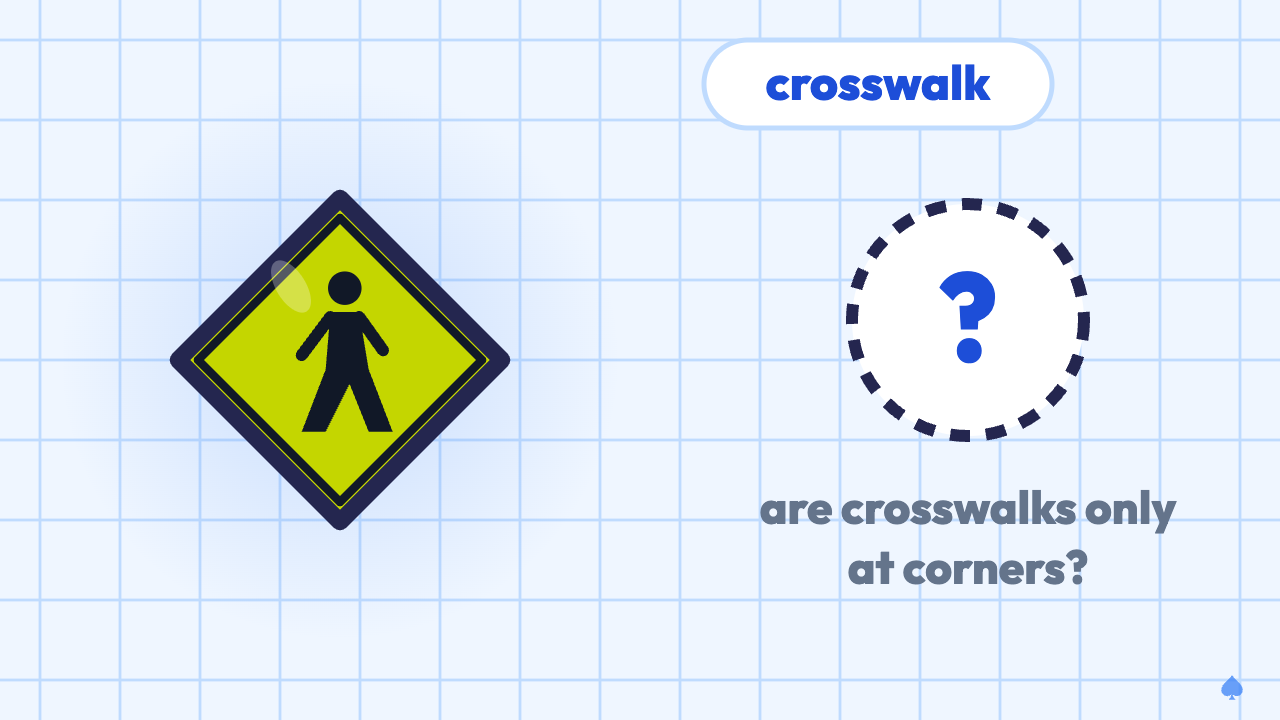
- False, some are mid-block
- Crosswalks are not always at intersections, so watch both sides of the street for pedestrians when you see a crosswalk sign. (Rules of the Road, p. 68.)
- Who often supervises school crossings when students go to and from school?
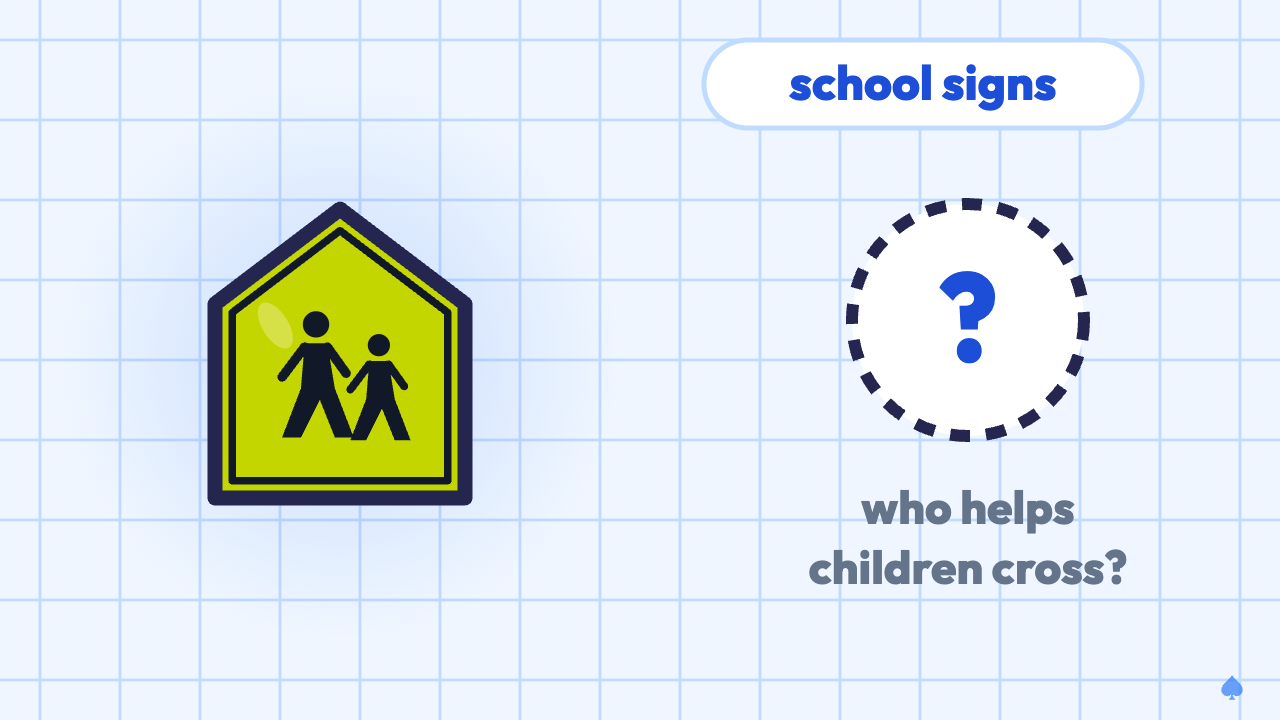
- Crossing guards or police
- Adult school crossing guards, auxiliary police or police officers often supervise school crossings, sometimes helped by student safety patrols. Obey their directions, slow down and stop when needed. (Rules of the Road, p. 69.)
- In a posted reduced-speed school zone, when does the lower speed limit apply?
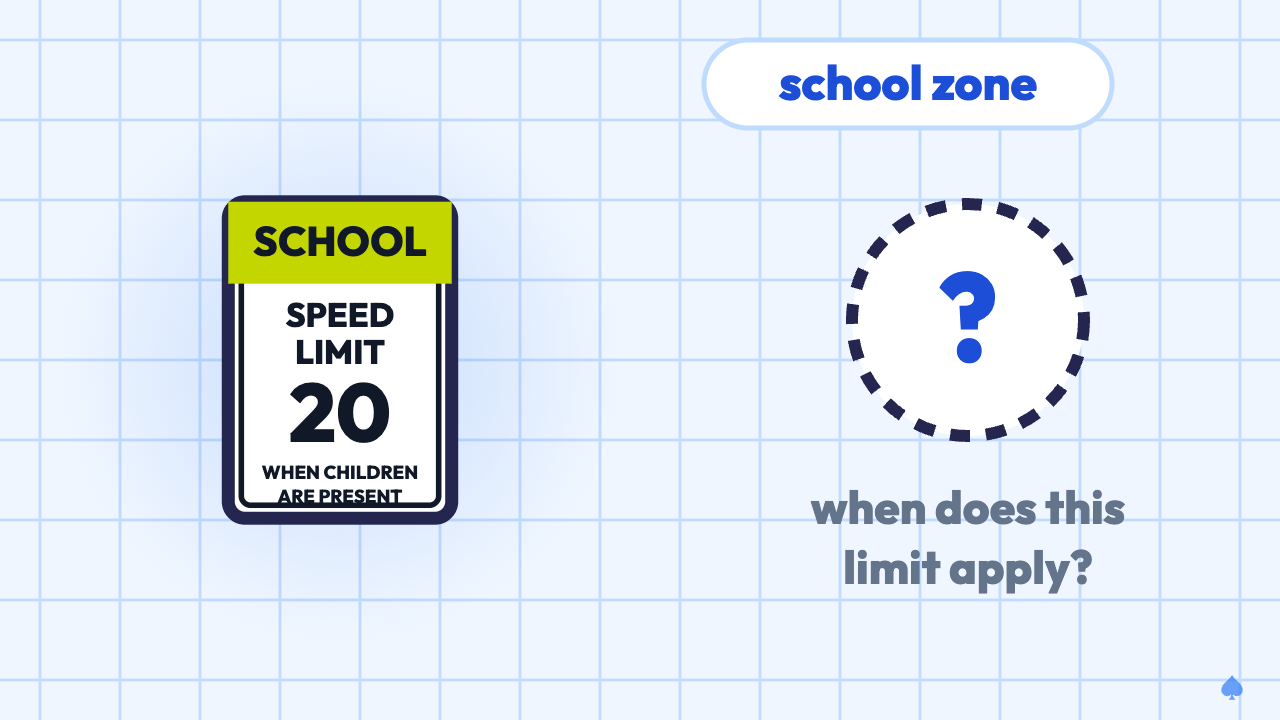
- School days with children present
- The posted school speed applies on school days when children are present, usually from 6:30 a.m. to 4 p.m., though hours may vary, or when a light is flashing. (Rules of the Road, p. 69, 24.)
- May you use a cellphone while driving in a posted school speed zone?
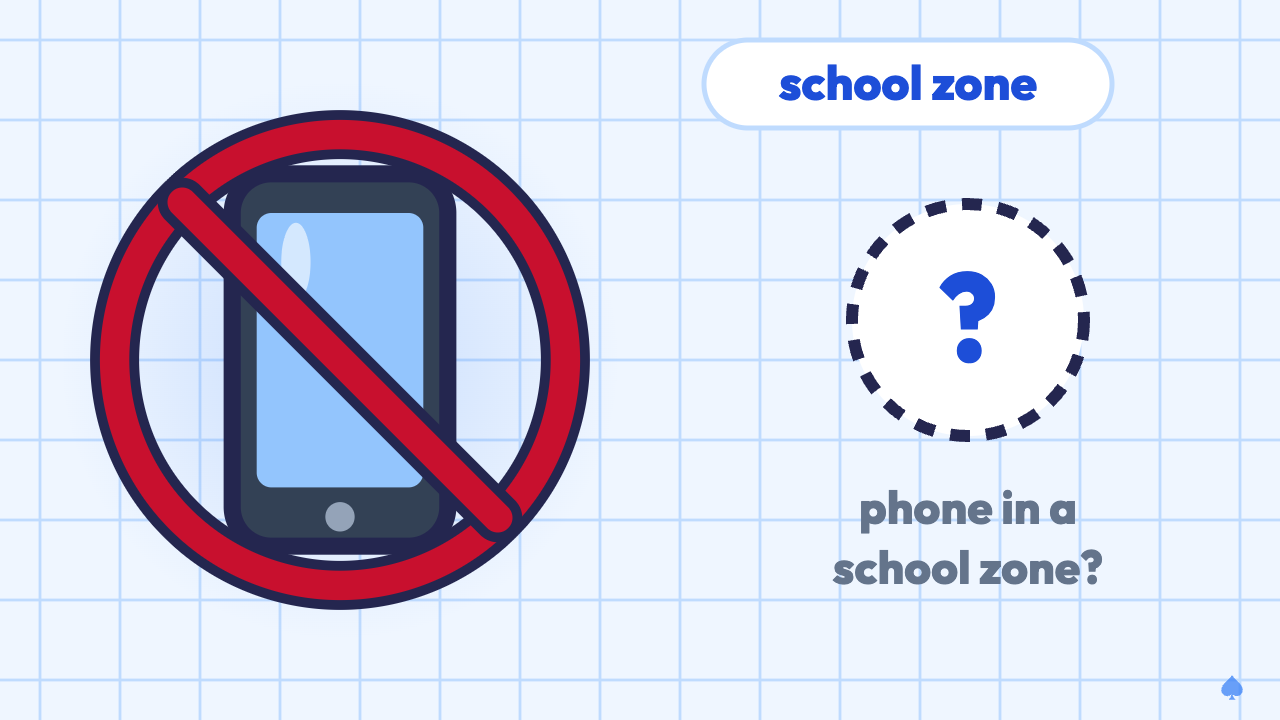
- No, it is prohibited
- Using a wireless phone is prohibited while driving in a posted school speed zone. Put the phone away before you enter the zone. (Rules of the Road, p. 69, 25.)
- A yellow sign shows a red octagon and an arrow. What does it warn of?
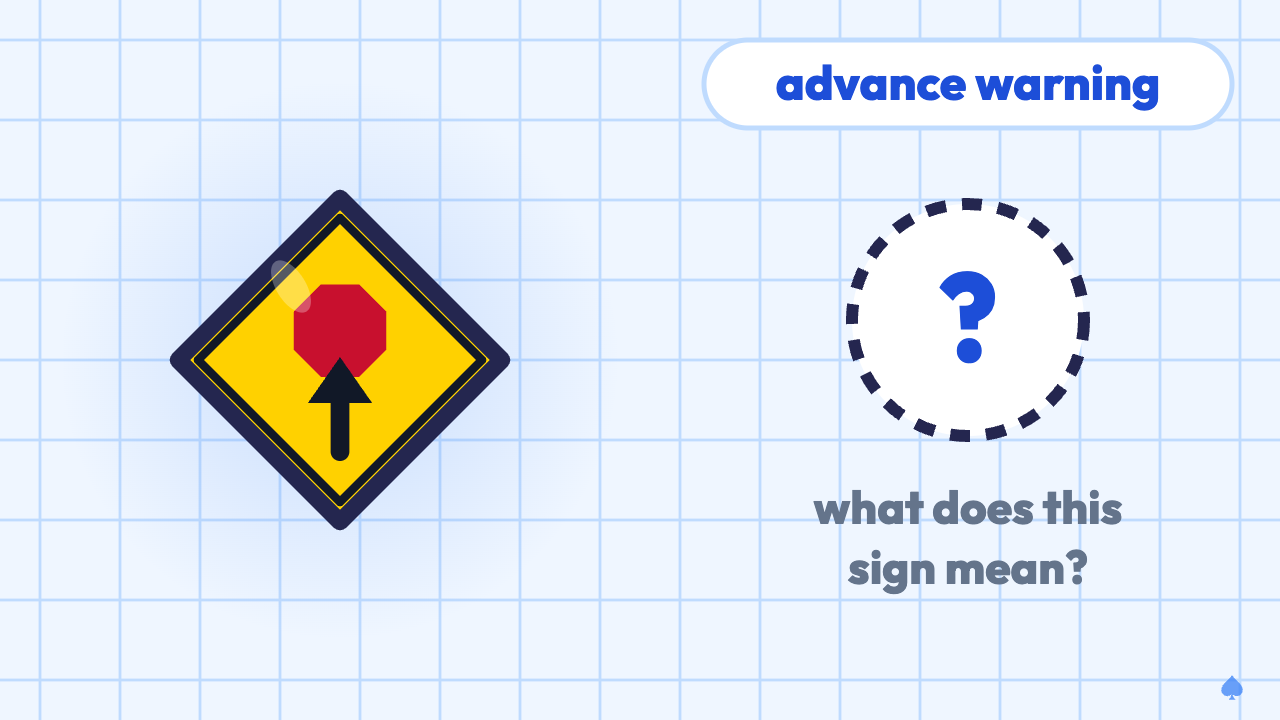
- A STOP sign ahead
- STOP AHEAD warns that a STOP sign is coming even though you cannot see it yet. Begin slowing so you can stop in time. (Rules of the Road, p. 69.)
- A yellow sign shows a red, yellow and green light. What does it warn of?
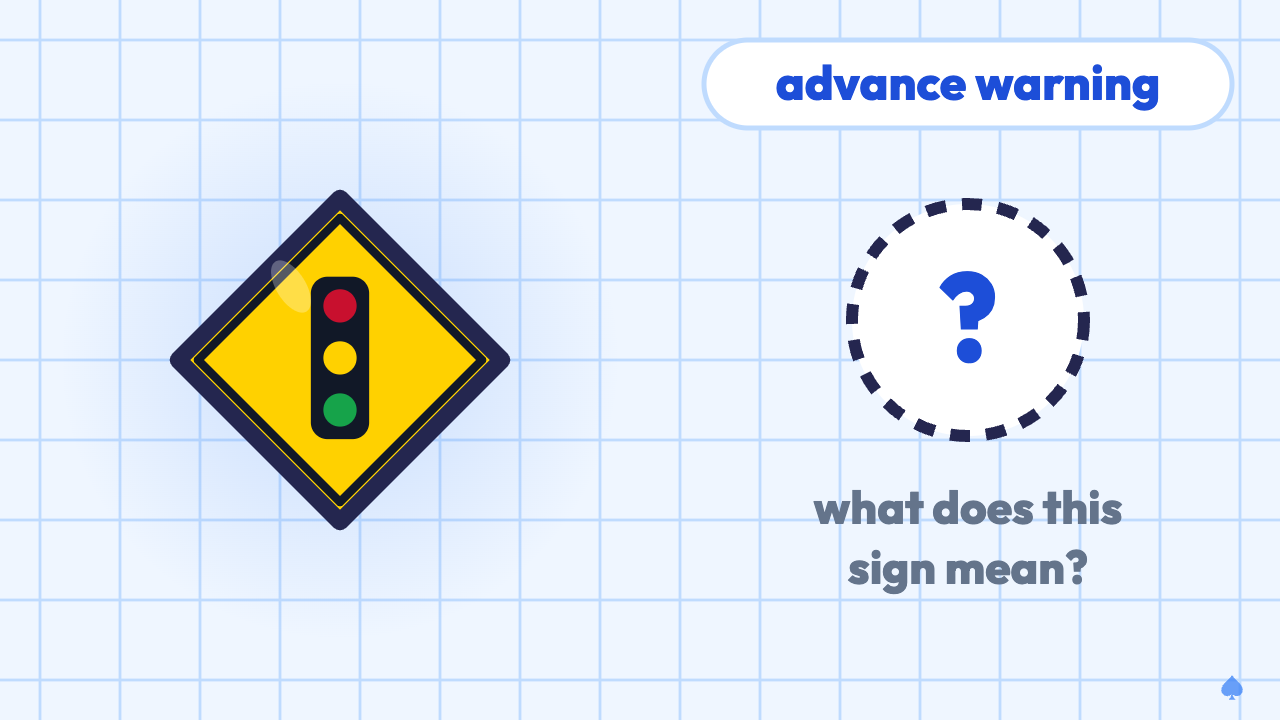
- A traffic signal ahead
- SIGNAL AHEAD warns of a traffic signal you may not see yet. The sign is close enough that you should start slowing down. (Rules of the Road, p. 69.)
- A yellow sign shows a red triangle and an arrow. What does it warn of?
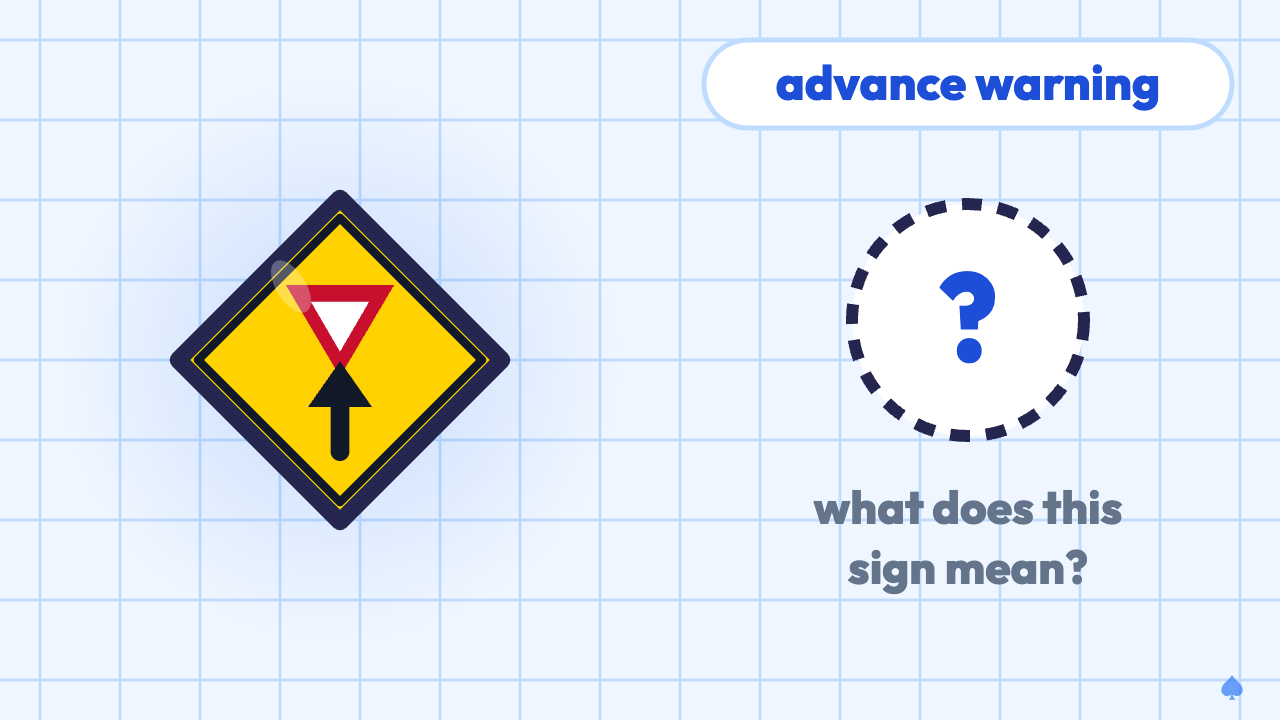
- A YIELD sign ahead
- YIELD AHEAD warns that a YIELD sign is coming. Slow down and be ready to give the right of way. (Rules of the Road, p. 69.)
- Why are advance warning signs like SIGNAL AHEAD also used in high-speed areas?
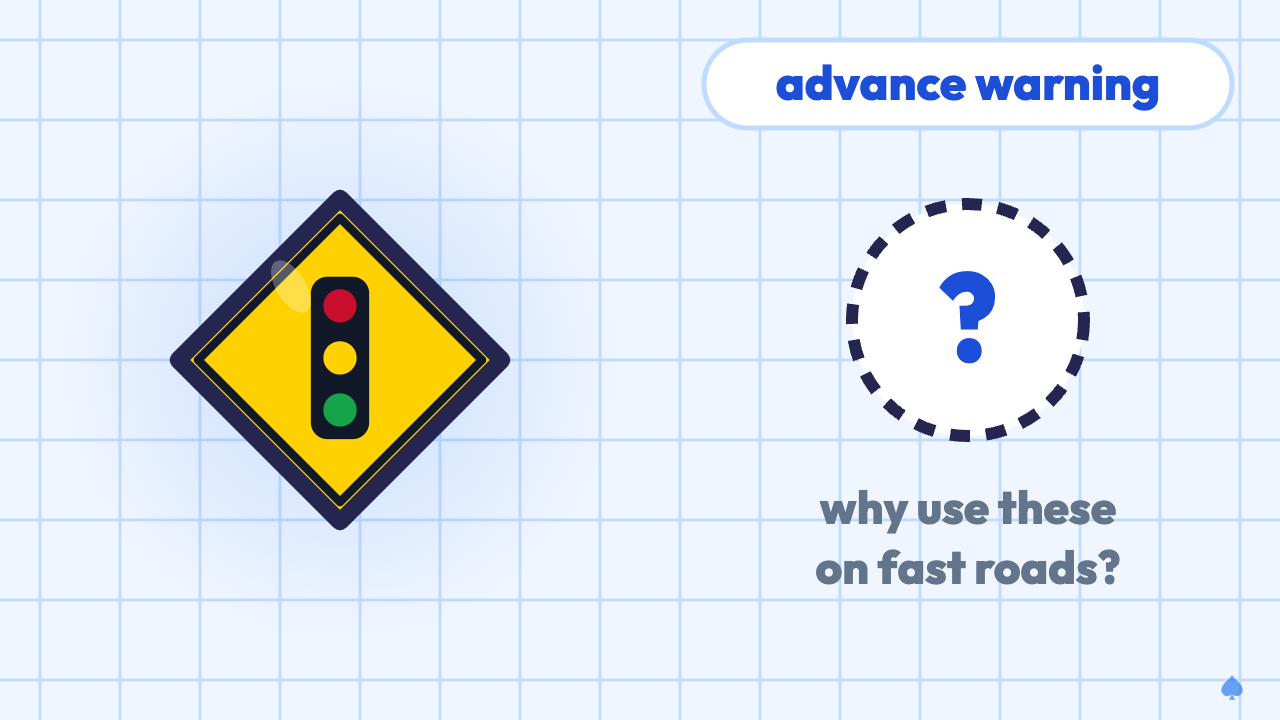
- You need more distance to stop
- Advance warning signs are used in high-speed areas because a vehicle needs a longer distance to slow down or stop. (Rules of the Road, p. 69.)
- What does a cross-shaped (+) warning sign mean?
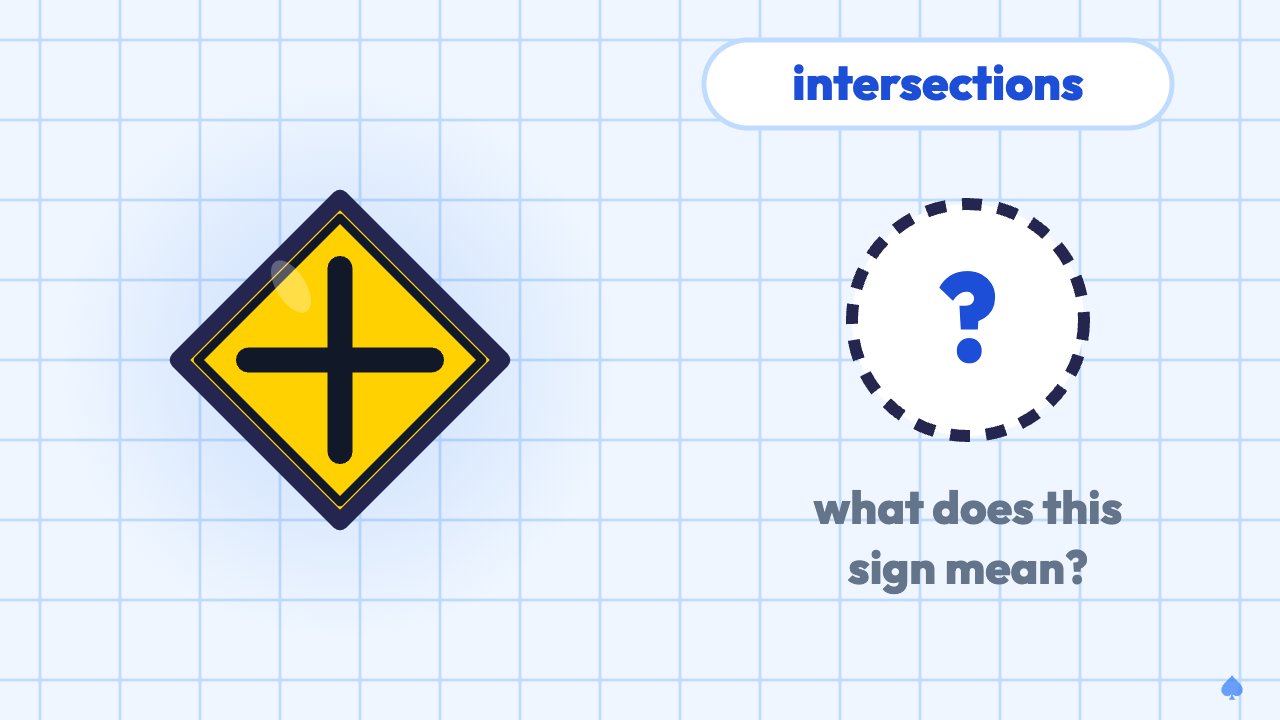
- A crossroad ahead
- The crossroad sign warns of an intersection ahead where traffic may cross your path. A sign naming the other road may also be posted. (Rules of the Road, p. 70.)
- What does this warning sign show?
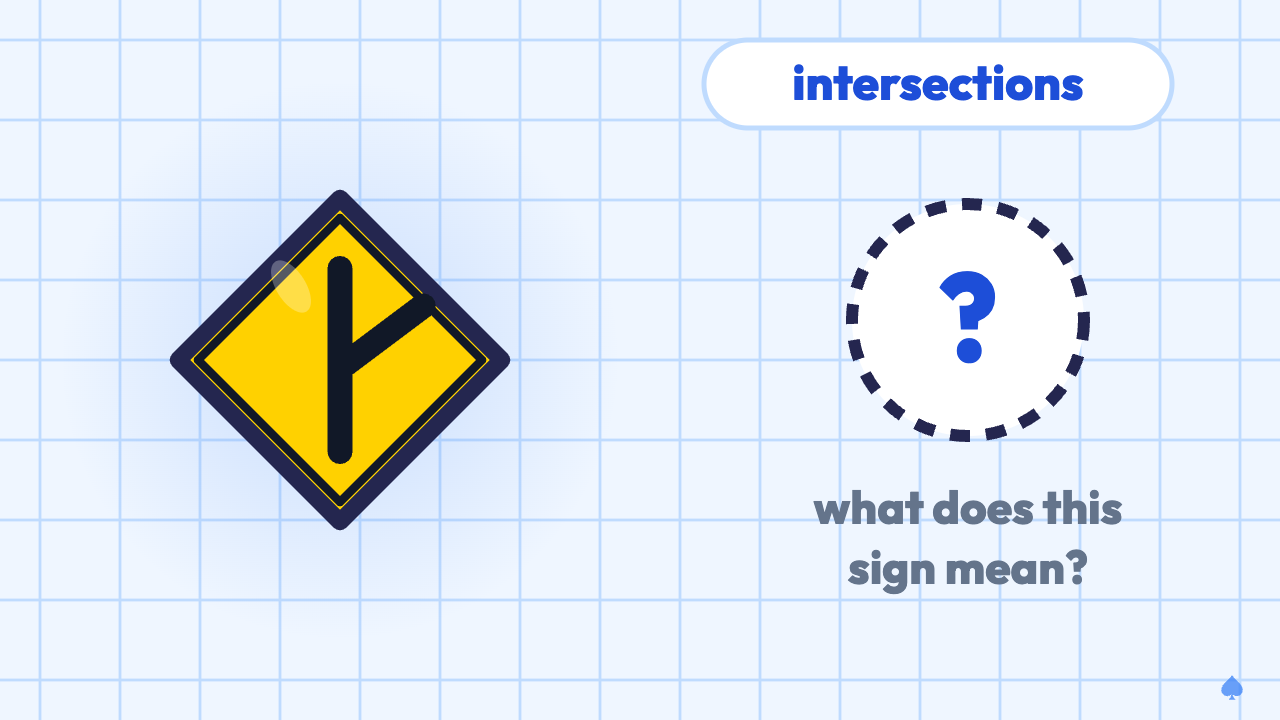
- A side road joins ahead
- The side road sign warns that a road joins yours ahead, on the side shown, so watch for vehicles entering or turning. (Rules of the Road, p. 70.)
Show the other 26 cards
-
What does this T-shaped warning sign mean?
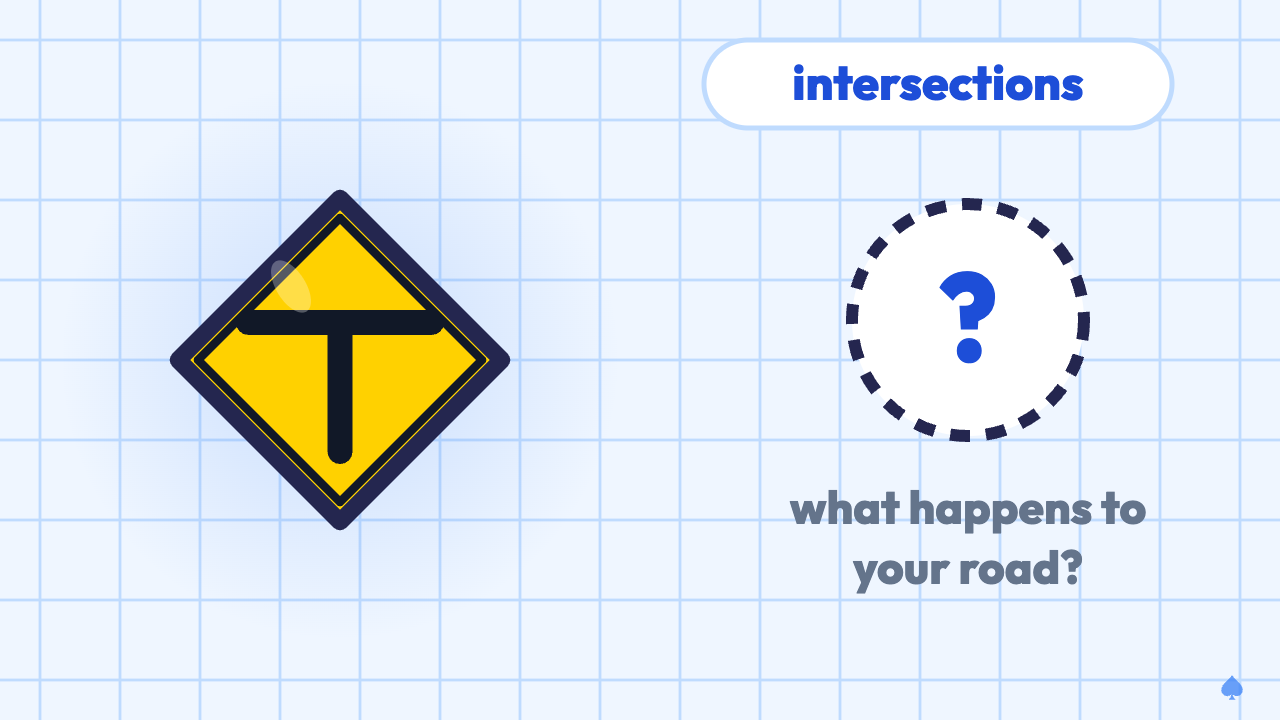
Your road ends; turn left or right
The T intersection sign warns that your road ends ahead at a crossing road. You must turn left or right. (Rules of the Road, p. 70.)
-
What does this Y-shaped warning sign mean?
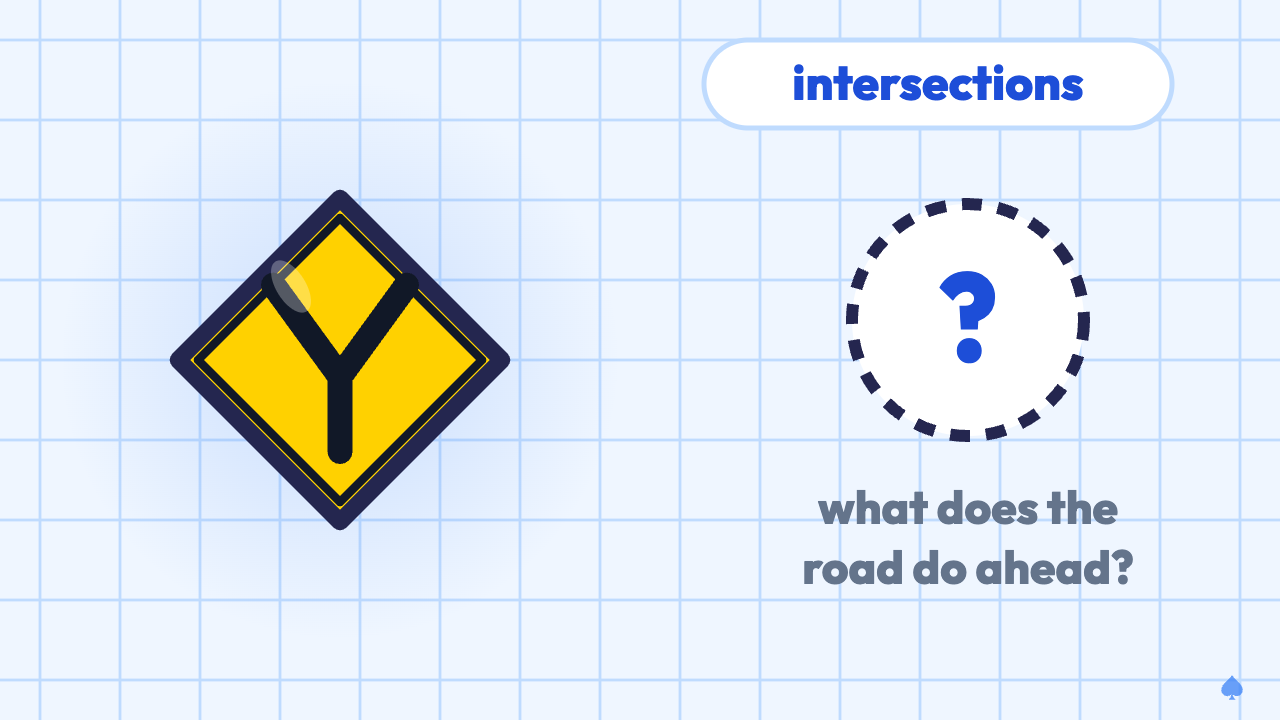
The road splits in two
The Y intersection sign warns that the road divides into two roads ahead. Choose your branch early and slow down. (Rules of the Road, p. 70.)
-
An arrow on a warning sign bends at a sharp right angle. What is ahead?
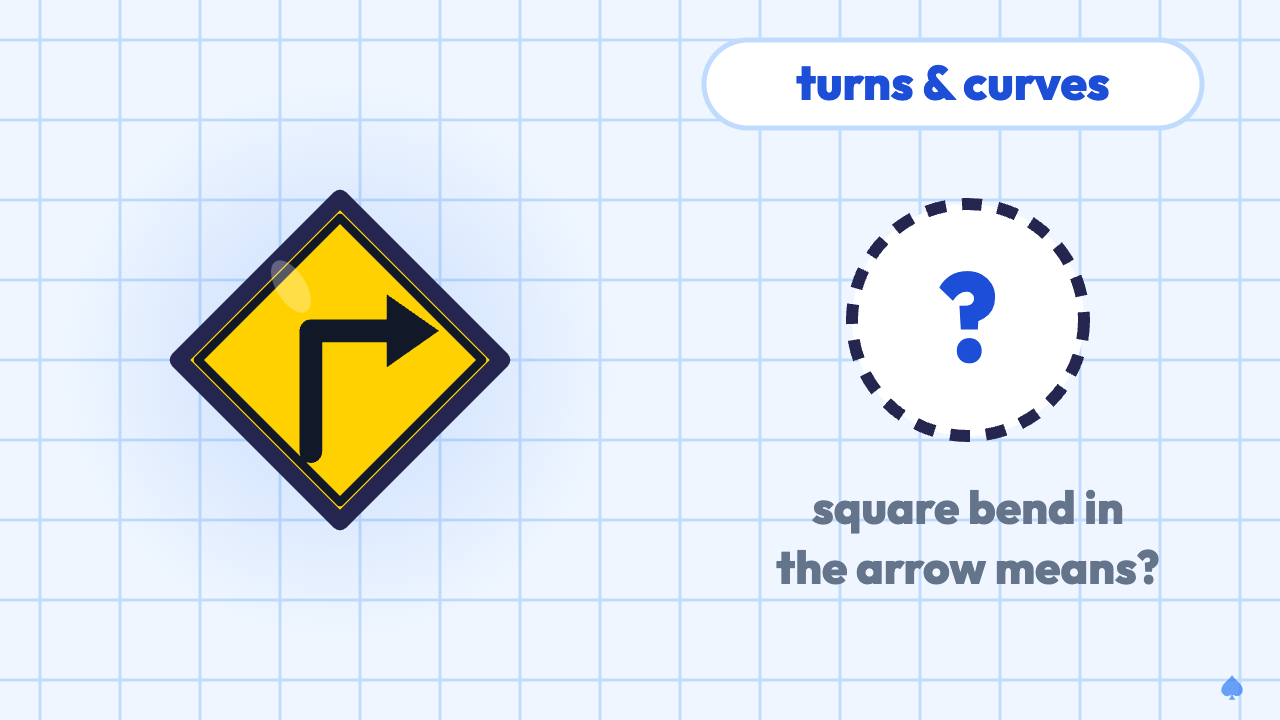
A sharp right turn
The shape of the arrow tells you what to expect. A sharp right-angle arrow means a right turn ahead; a gently bent arrow means a curve. A safe-speed plaque may be posted below. (Rules of the Road, p. 70.)
-
A yellow sign shows a gently bending arrow. What does it mean?
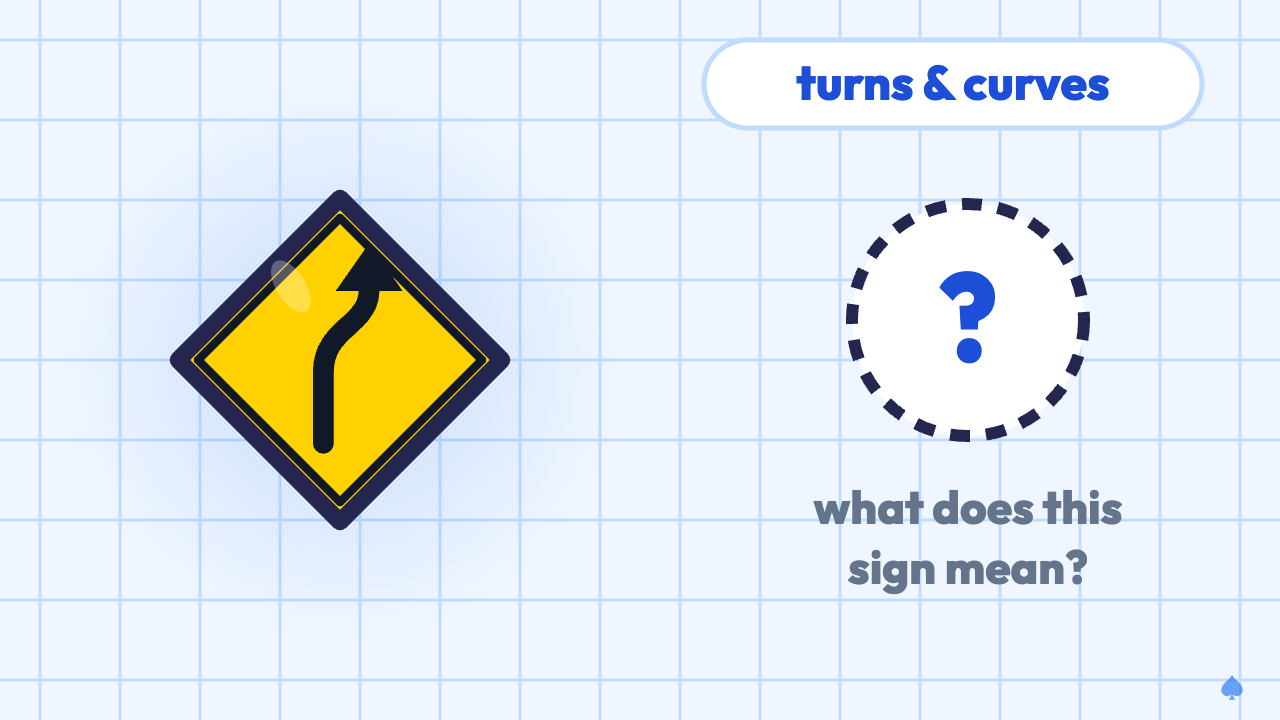
The road curves to the right
A gently curved arrow warns of a curve in the direction shown. Slow down before you enter the curve, not in it. (Rules of the Road, p. 70.)
-
A yellow sign shows an arrow snaking back and forth. What does it mean?
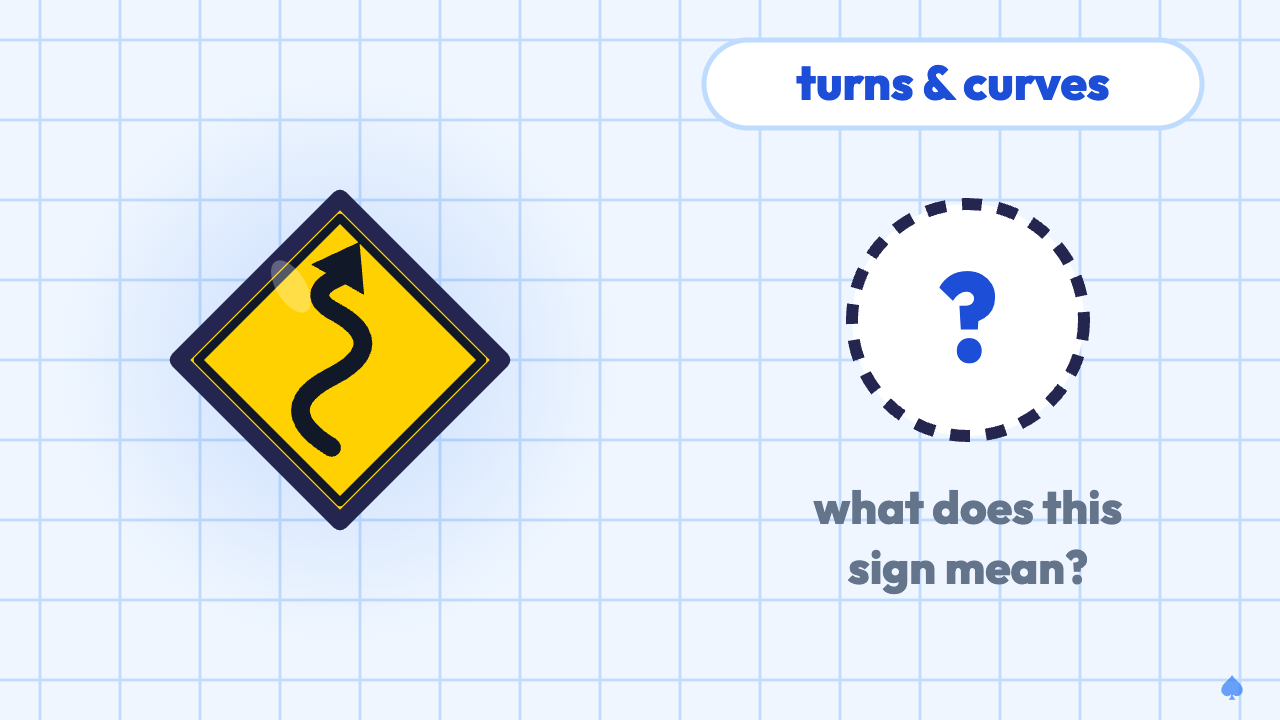
A winding road ahead
The winding road sign warns of several curves in a row. Slow down and stay in your lane through them. (Rules of the Road, p. 70.)
-
A small yellow plaque reading 25 MPH sits under a curve sign. What does it show?
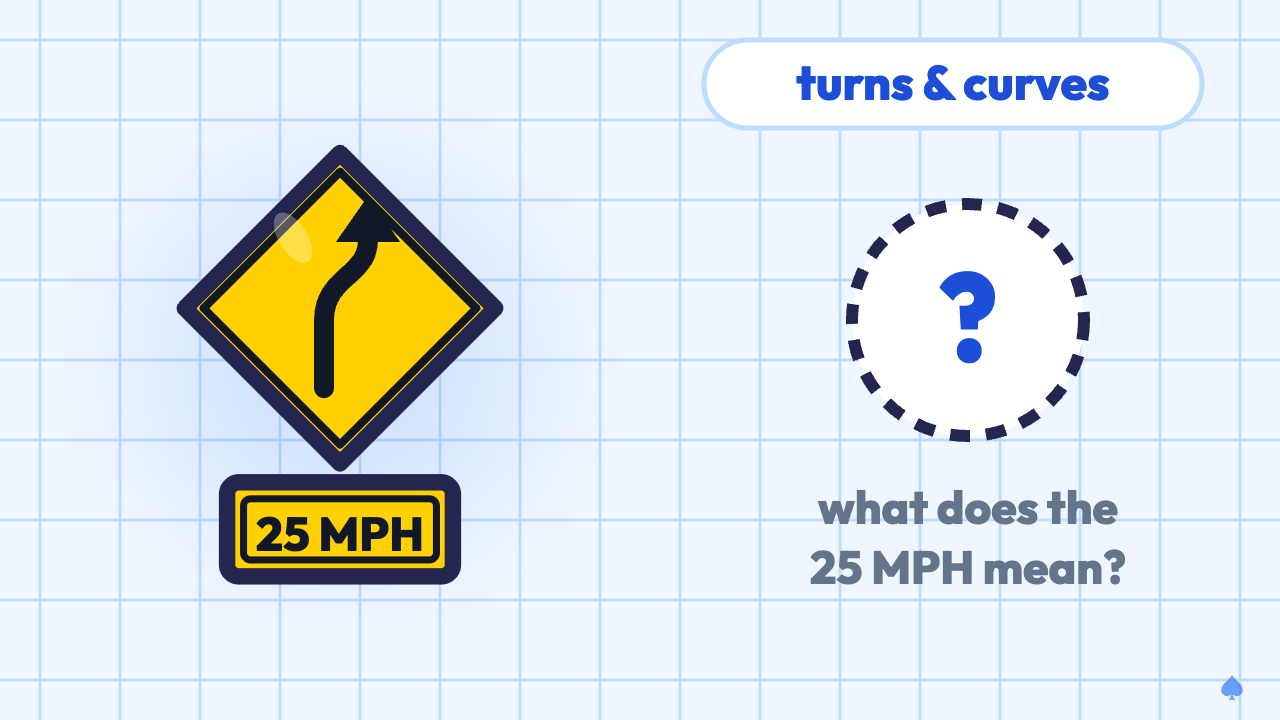
The safe speed for the curve
A small sign below a turn or curve arrow can show the maximum safe speed for that curve or turn. Slow to it before you enter. (Rules of the Road, p. 70.)
-
What does a speed sign posted at a freeway exit ramp show?
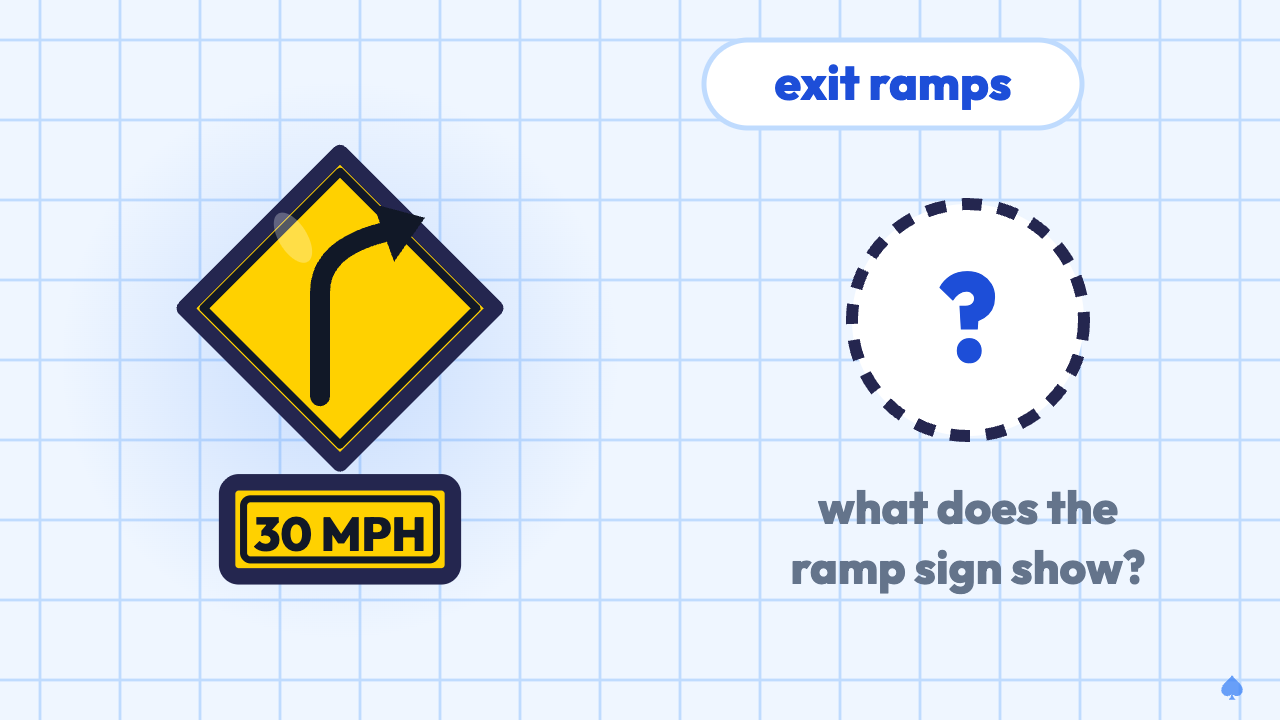
The safe speed for the ramp
Exit ramp signs show the maximum safe speed for driving on the ramp. Slow down on the exit lane, not on the main highway. (Rules of the Road, p. 70.)
-
A yellow sign shows a car with wavy tire tracks. What does it mean?
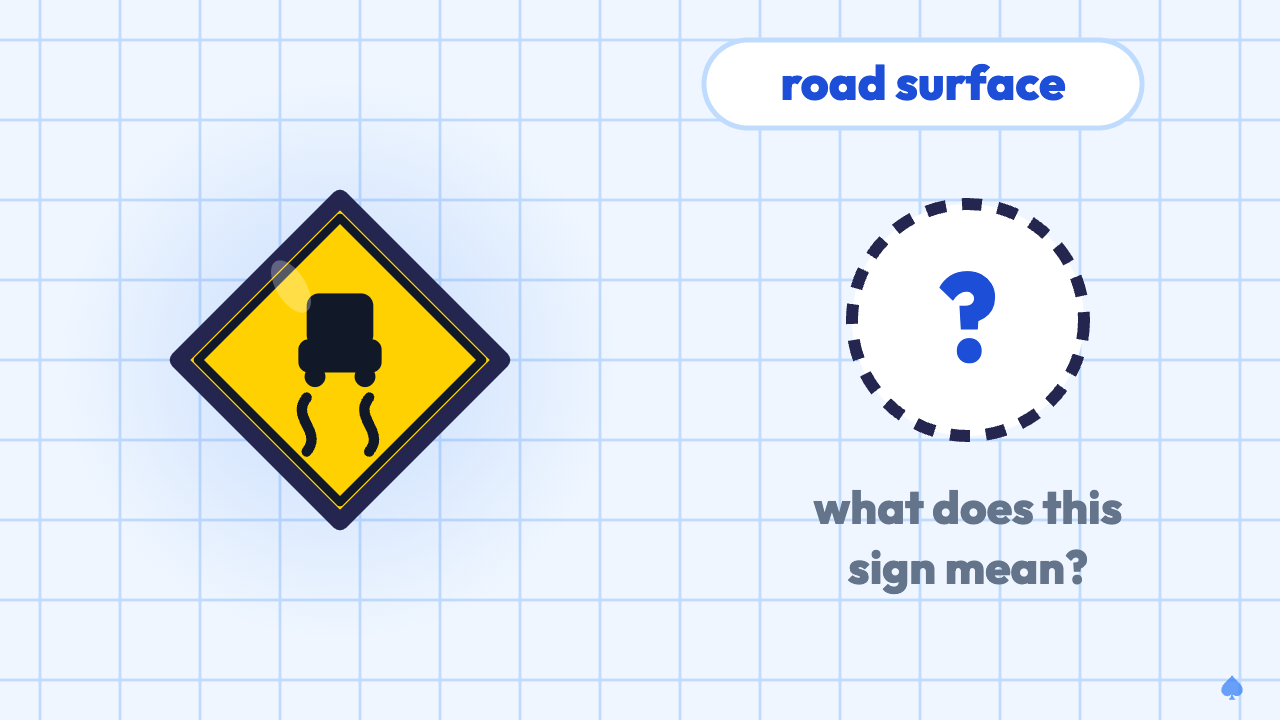
Slippery when wet
This sign warns of pavement that becomes slippery when wet. Slow down on wet pavement, because it takes longer to stop and you can lose control. (Rules of the Road, p. 70.)
-
A sign shows a truck on a slope. What should you do?
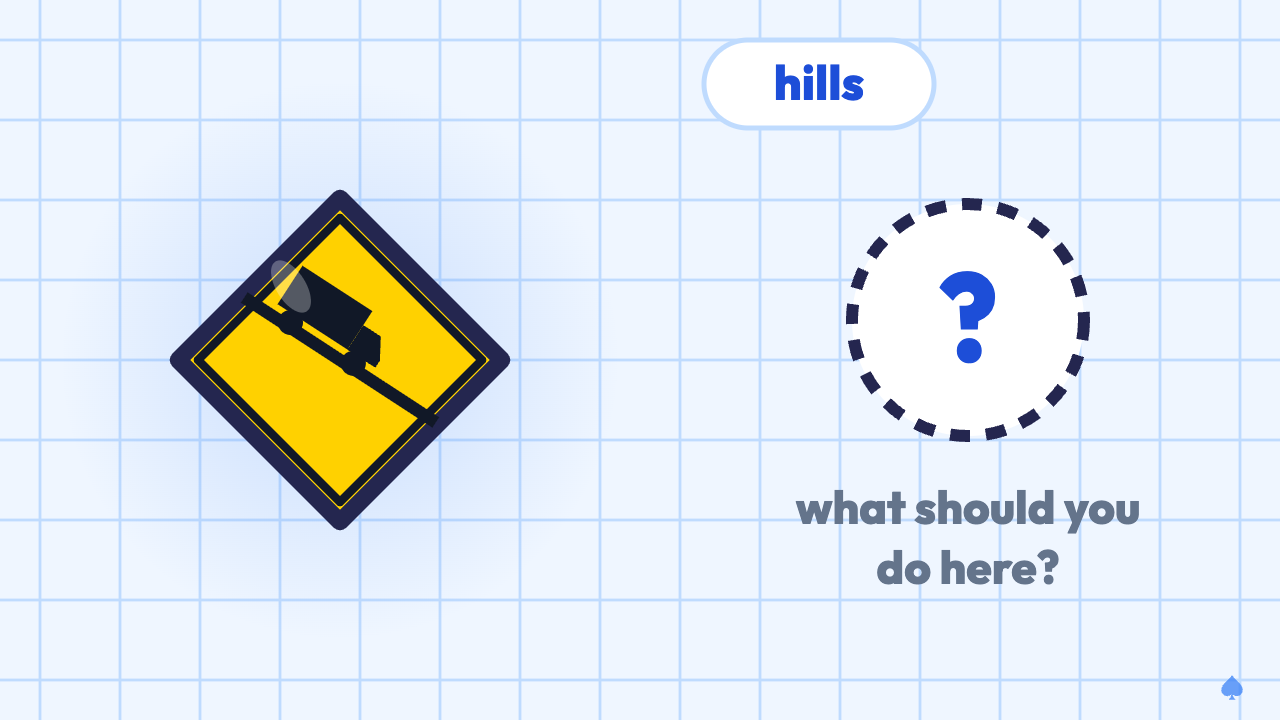
Slow down before going downhill
The downgrade sign warns of a dangerous hill that may be long or steep or have sharp curves. Slow your speed before you start down the hill. (Rules of the Road, p. 71.)
-
What does a NARROW BRIDGE sign warn you about?
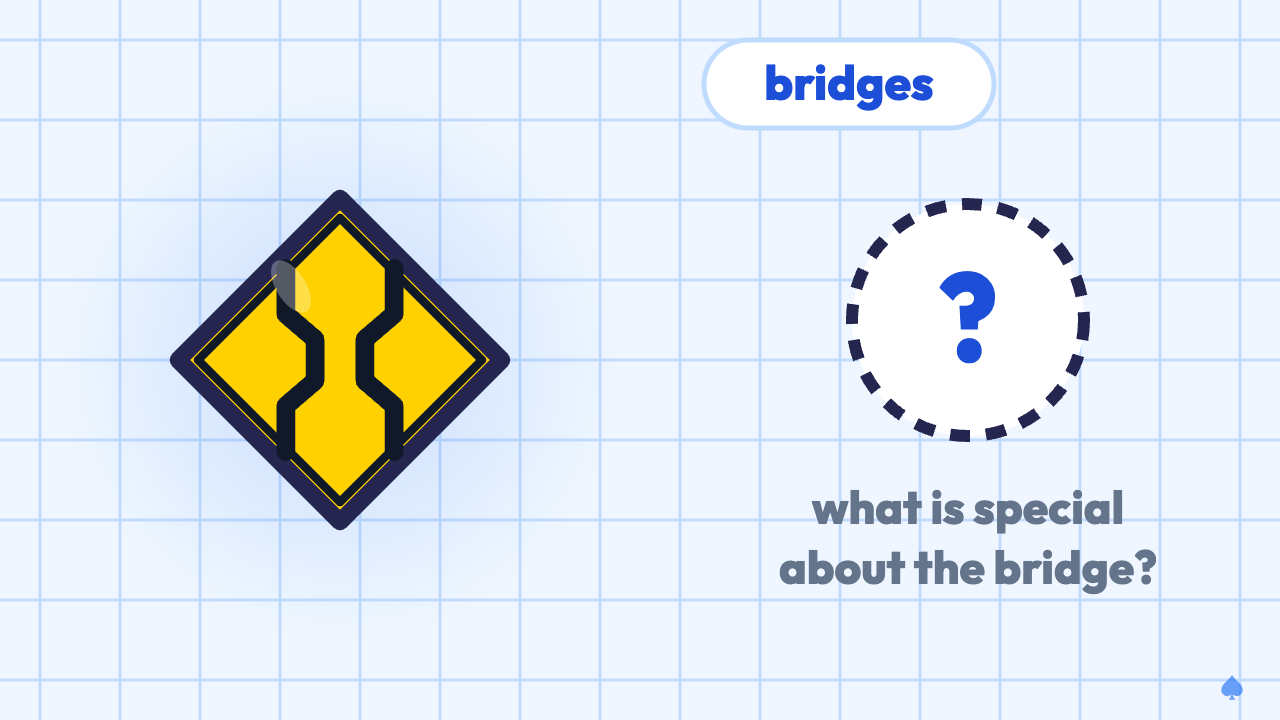
The bridge is narrower than the road
A NARROW BRIDGE sign warns that the bridge roadway is narrower than the approach. A bridge is generally about 2 feet narrower than the pavement leading to it. (Rules of the Road, p. 71.)
-
A lane reduction sign shows one lane ending. What should you be ready to do?
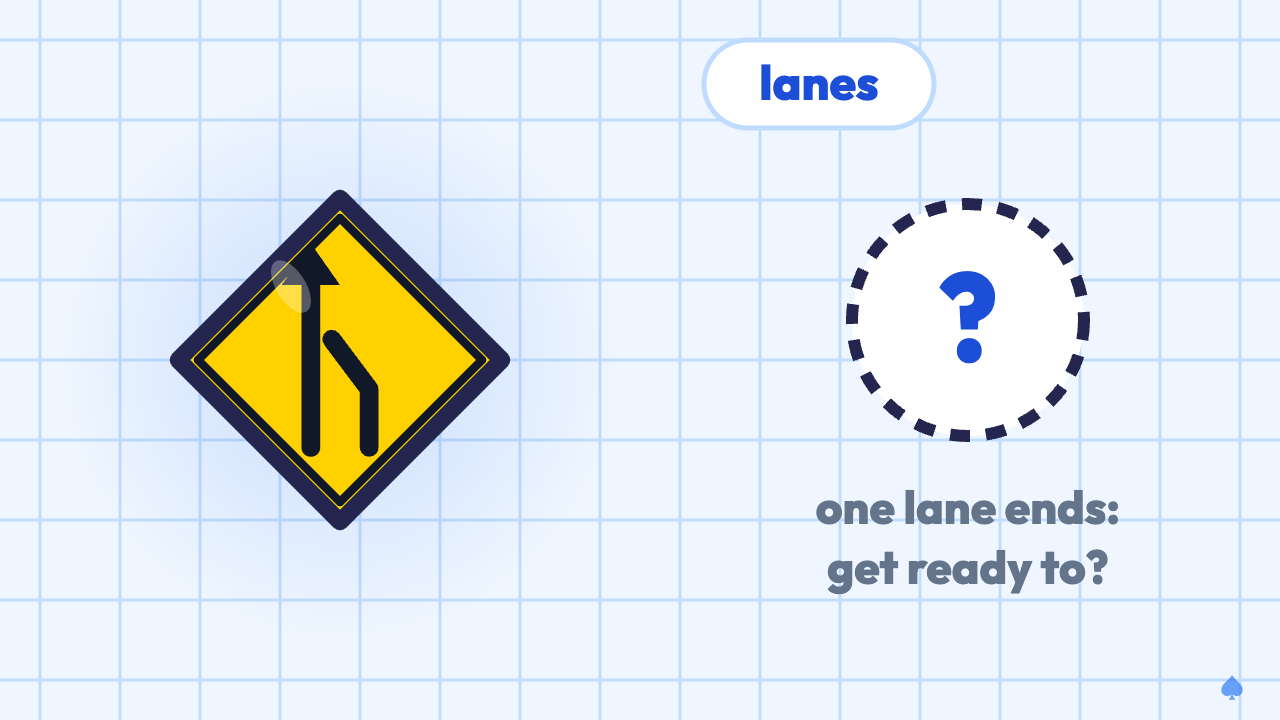
Change lanes or let others merge
Lane reduction signs warn that the number of lanes will drop. Be prepared to change lanes or let other vehicles merge into your lane, and adjust your speed and position to avoid a crash. (Rules of the Road, p. 71.)
-
Traffic is congested and two lanes become one. What does the manual advise?
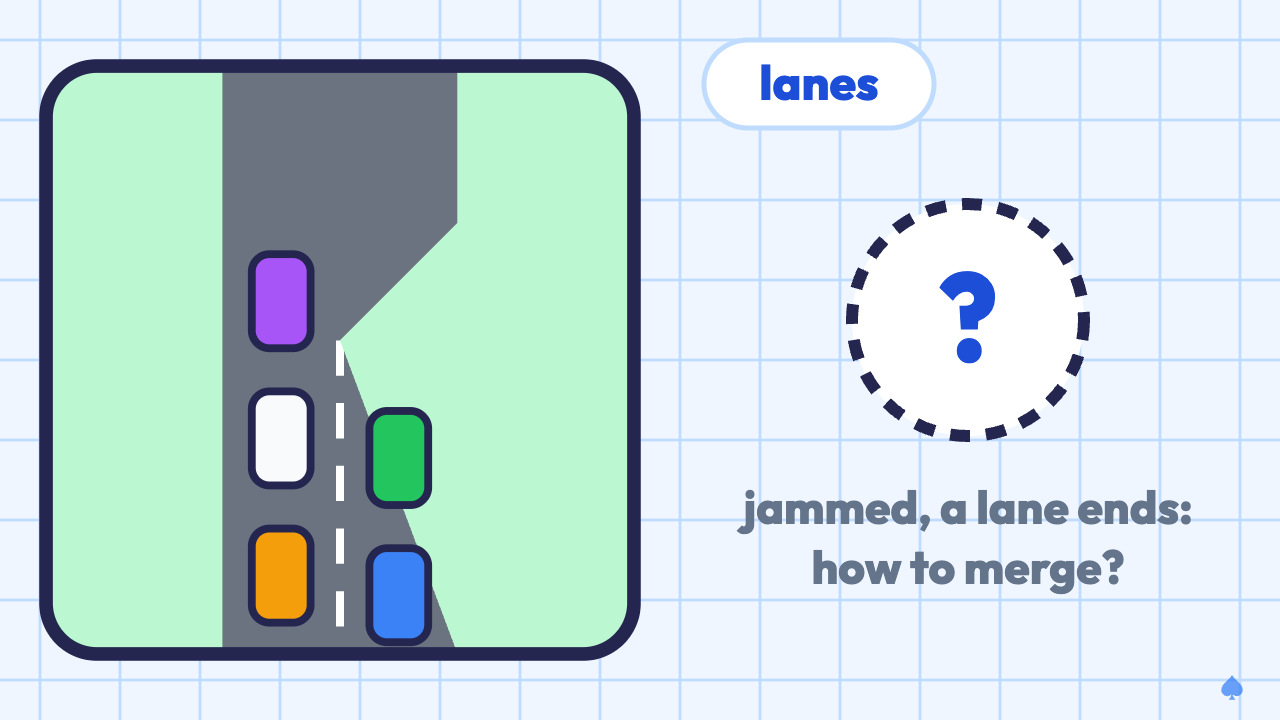
Use both lanes, then take turns
In congestion, use both lanes up to the lane reduction point, then merge there by alternating turns. This is the zipper merge. When traffic is light, merge into the open lane early. (Rules of the Road, p. 71.)
-
Traffic is light and a lane ends ahead. When should you merge?
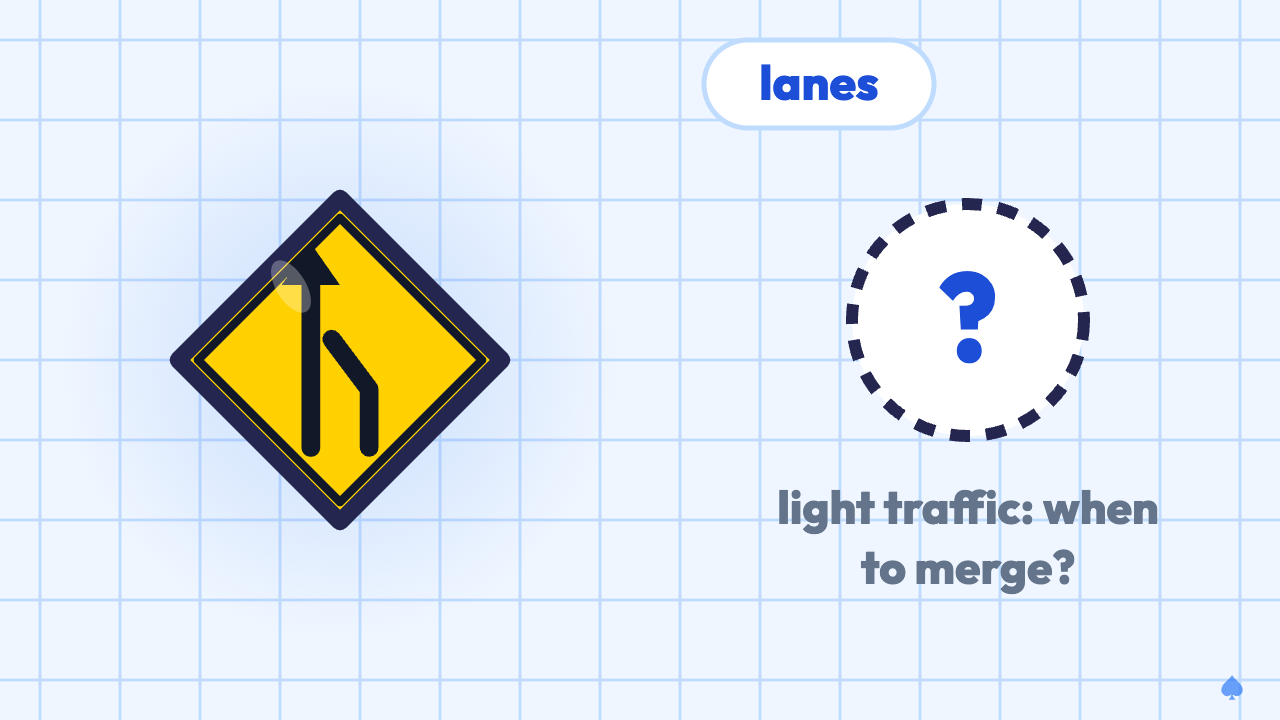
As early as possible
When the road is not congested, merge into the open lane as early as possible. The zipper merge is for congested traffic. (Rules of the Road, p. 71.)
-
What does a ROAD NARROWS warning sign mean?
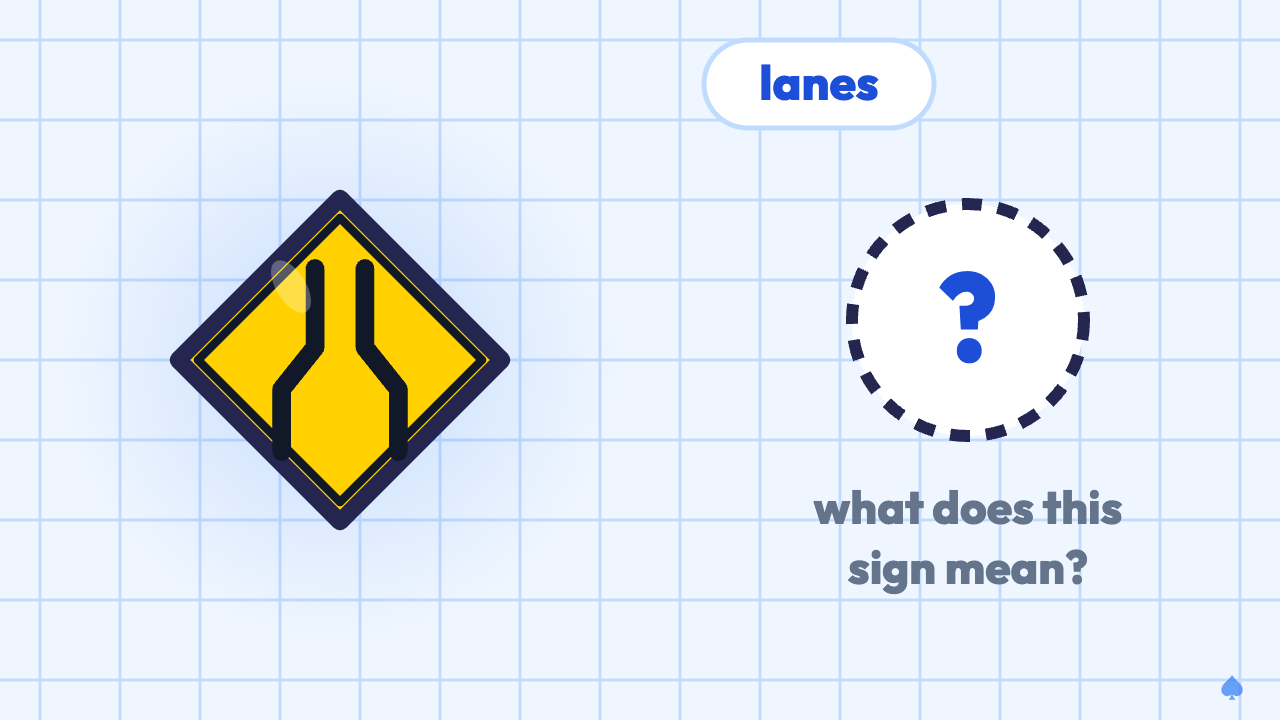
A two-lane road gets narrower
ROAD NARROWS warns that a two-lane road suddenly becomes narrower ahead. Slow down and keep to your side. (Rules of the Road, p. 71.)
-
What does a MERGE sign tell you to be ready for?
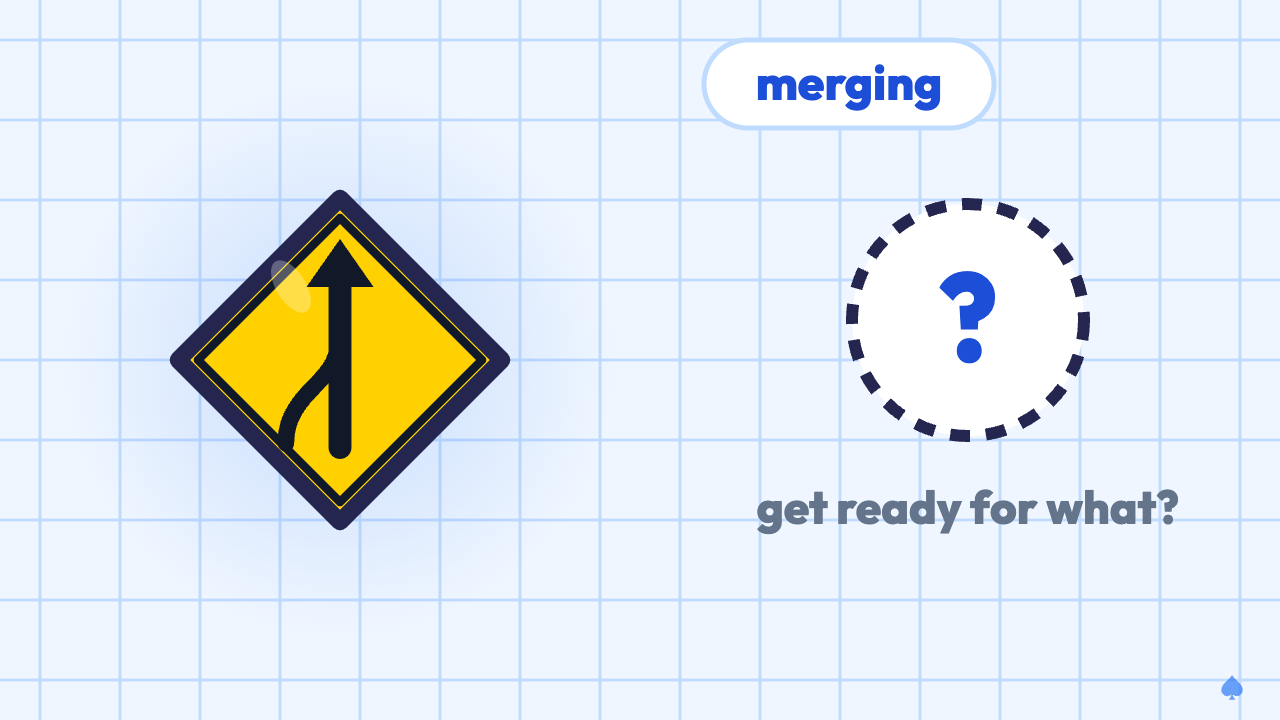
Lanes joining; let traffic in
A merge sign means two lanes going the same way will soon become one. Be ready to change lanes or to allow other traffic to come into your lane. (Rules of the Road, p. 72.)
-
On an expressway, a car is merging from the ramp. What should the expressway driver do?
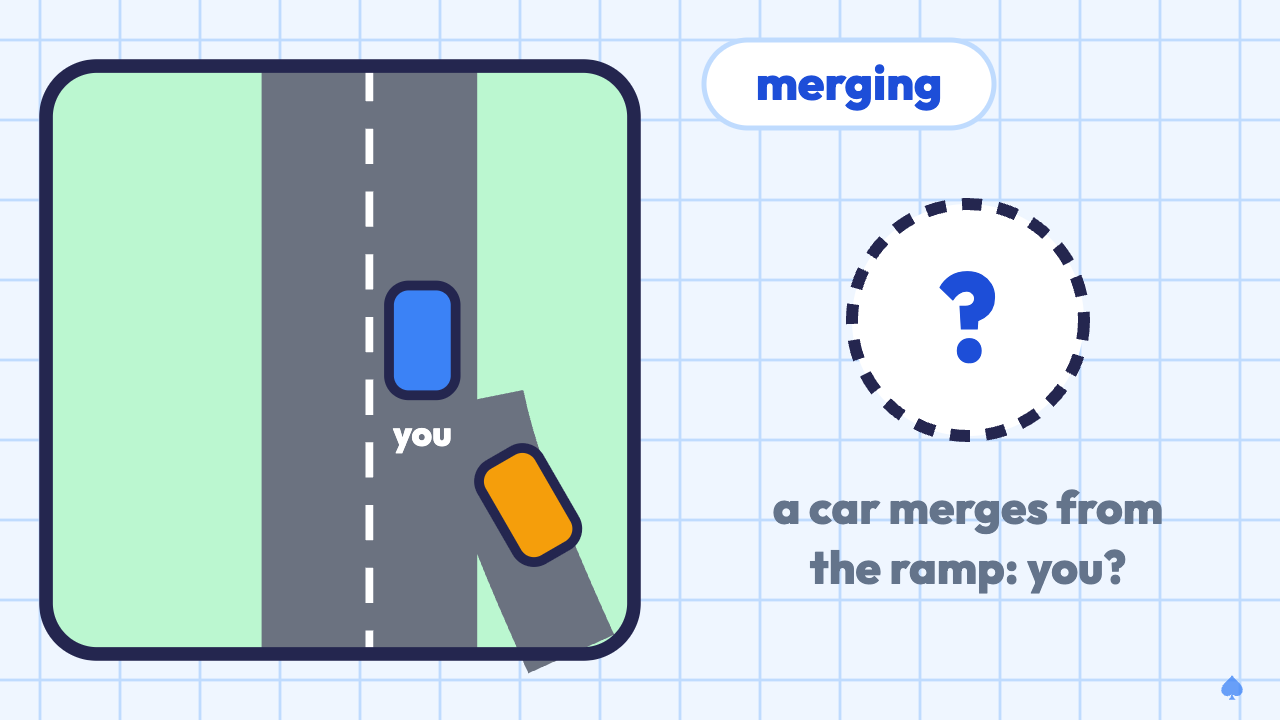
Slow down to let it merge
The manual says the driver on the expressway should slow down to let the driver on the ramp merge. Moving over a lane, when safe, also helps. (Rules of the Road, p. 72.)
-
What do yellow signs with large chevrons (>) on the outside of a curve warn of?
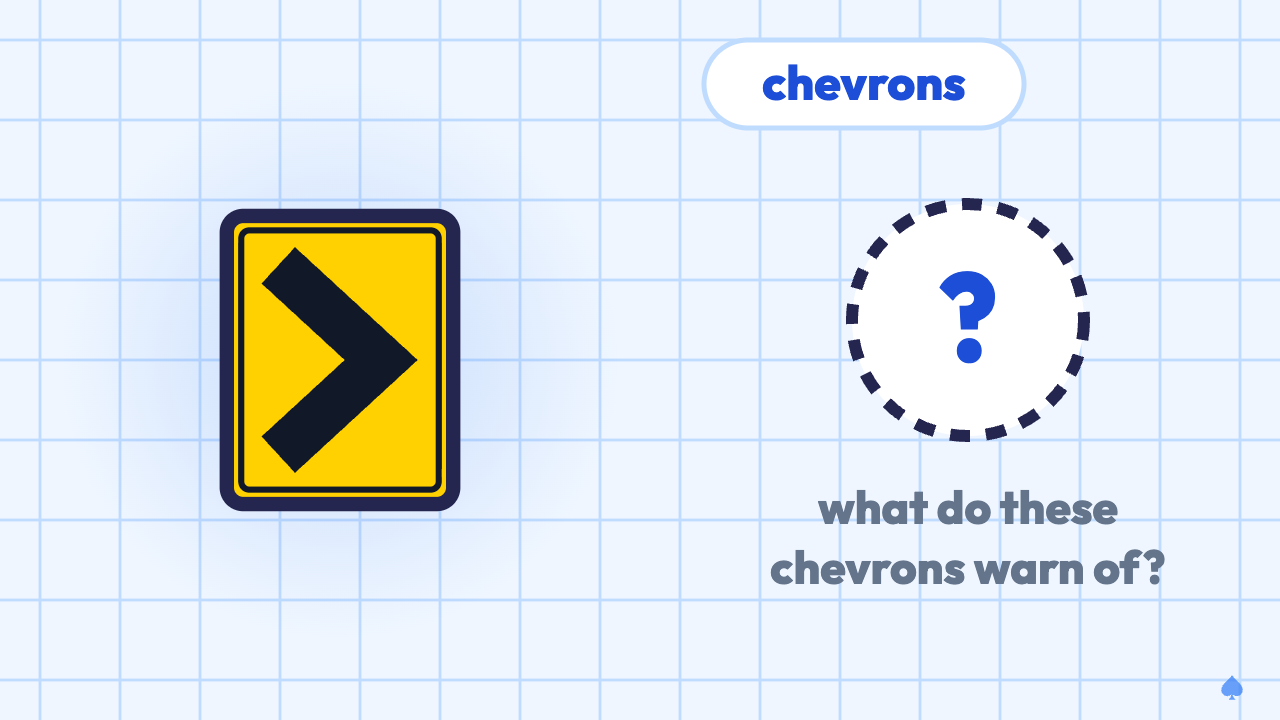
A sharp change in direction
Change in direction (chevron) signs warn of a sharp curve or a narrowing road. You may see several on the outside of a sharp curve or near a narrow bridge. (Rules of the Road, p. 72.)
-
A yellow sign shows two lines spreading apart around a strip. What does it mean?
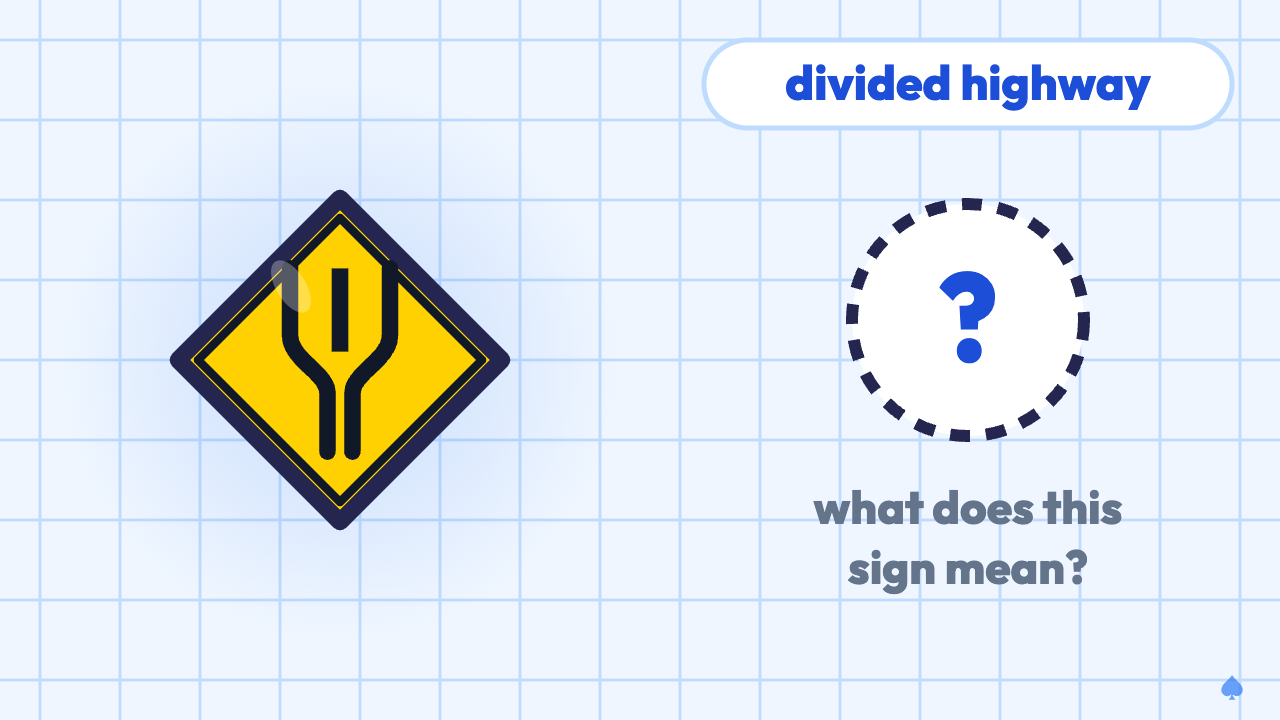
A divided highway begins
This sign is posted before a divided highway begins, where a center strip will separate traffic going in opposite directions. (Rules of the Road, p. 72.)
-
A yellow sign shows two lines coming together after a strip. What does it mean?
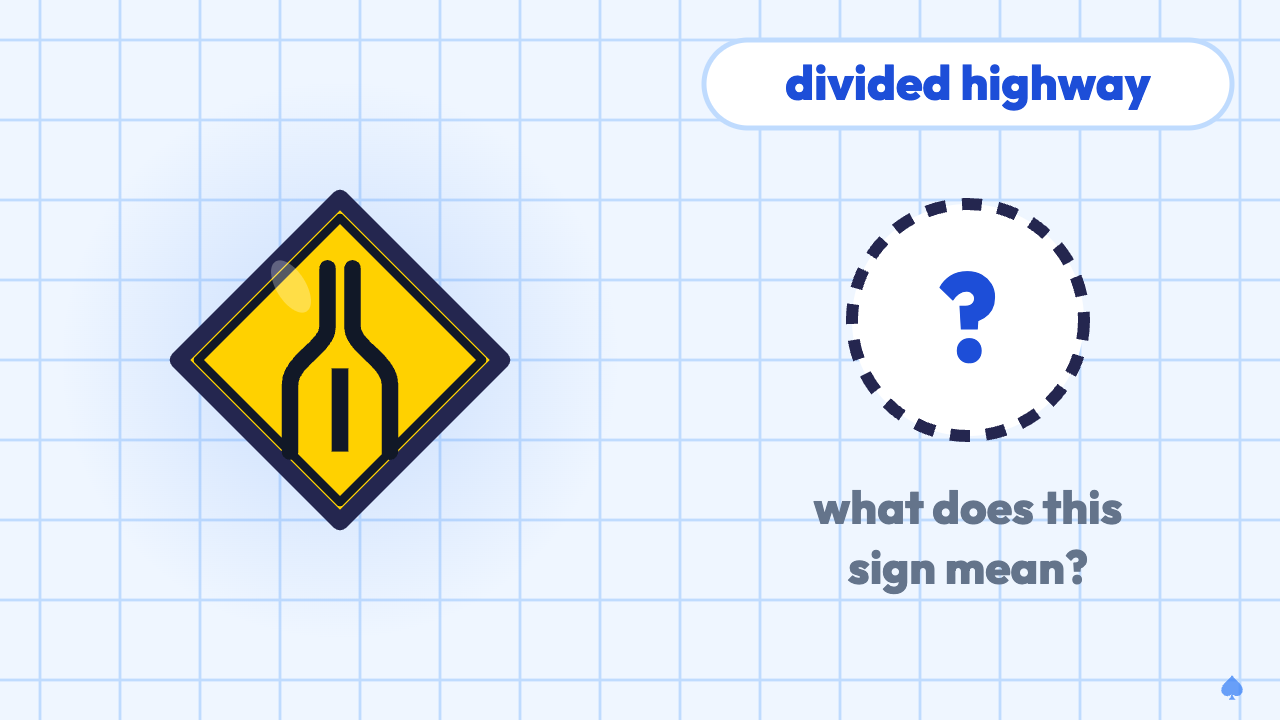
A divided highway ends
This sign is posted just before a divided highway ends. Be careful: soon there will be no median between you and oncoming traffic. (Rules of the Road, p. 72.)
-
A warning sign shows two arrows pointing opposite ways. What is ahead?
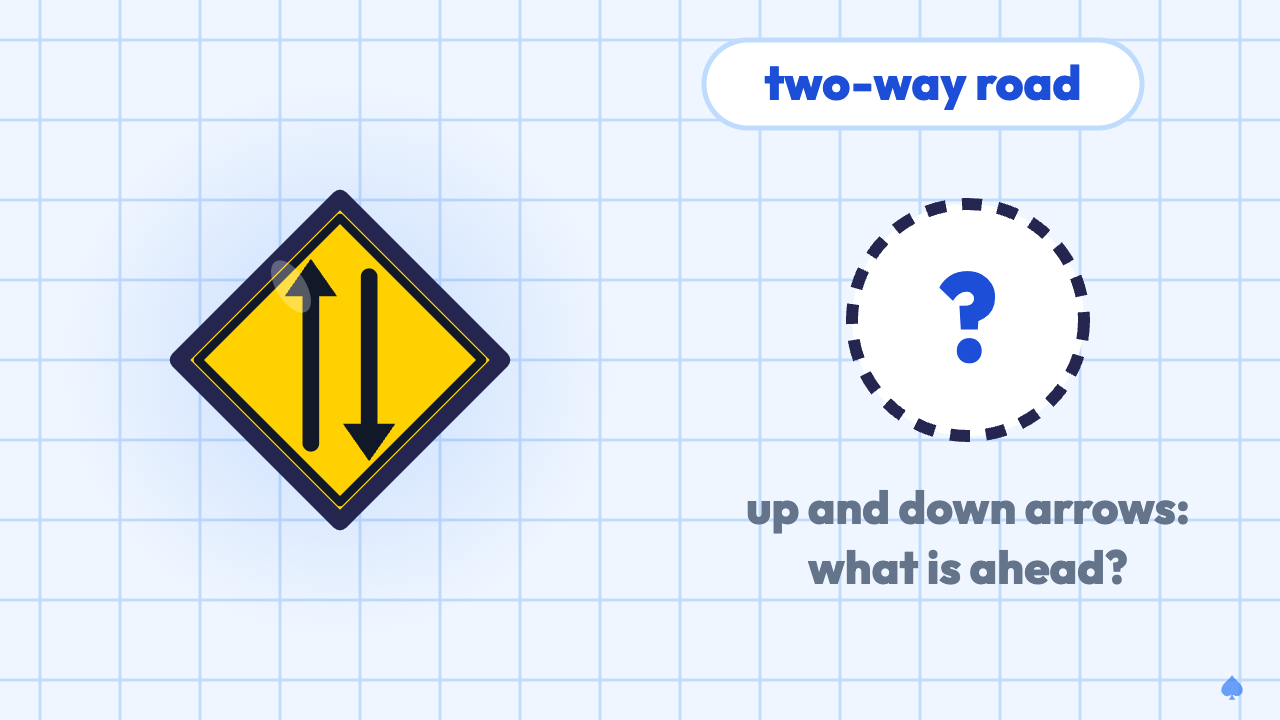
Two-way traffic
The two-way roadway sign tells you that you are leaving a divided roadway and approaching a highway where traffic goes both ways. (Rules of the Road, p. 72.)
-
A WORKERS AHEAD sign is posted. What speed should you drive?
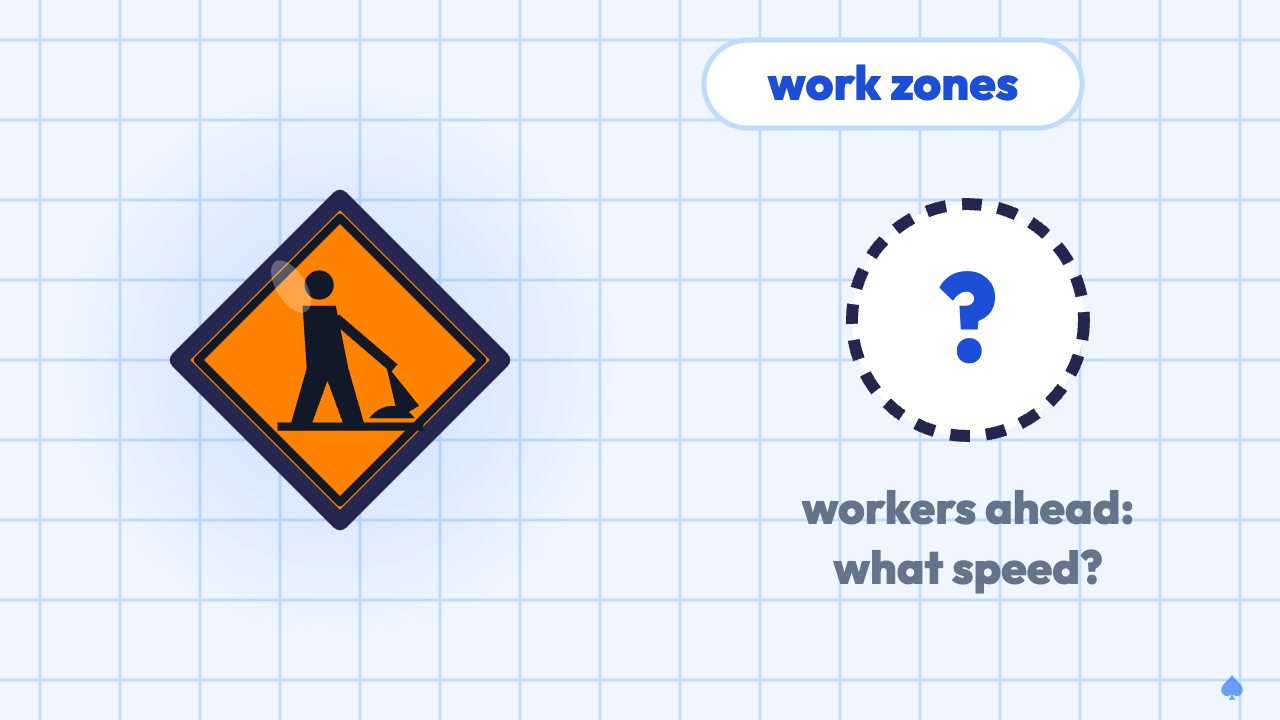
The posted work zone speed limit
Workers may be close to your lane. Adjust to the posted construction zone speed limit, stay alert and keep a safe distance from barriers and other traffic. (Rules of the Road, p. 72, 25.)
-
What are cones, drums and barricades in a work zone for?
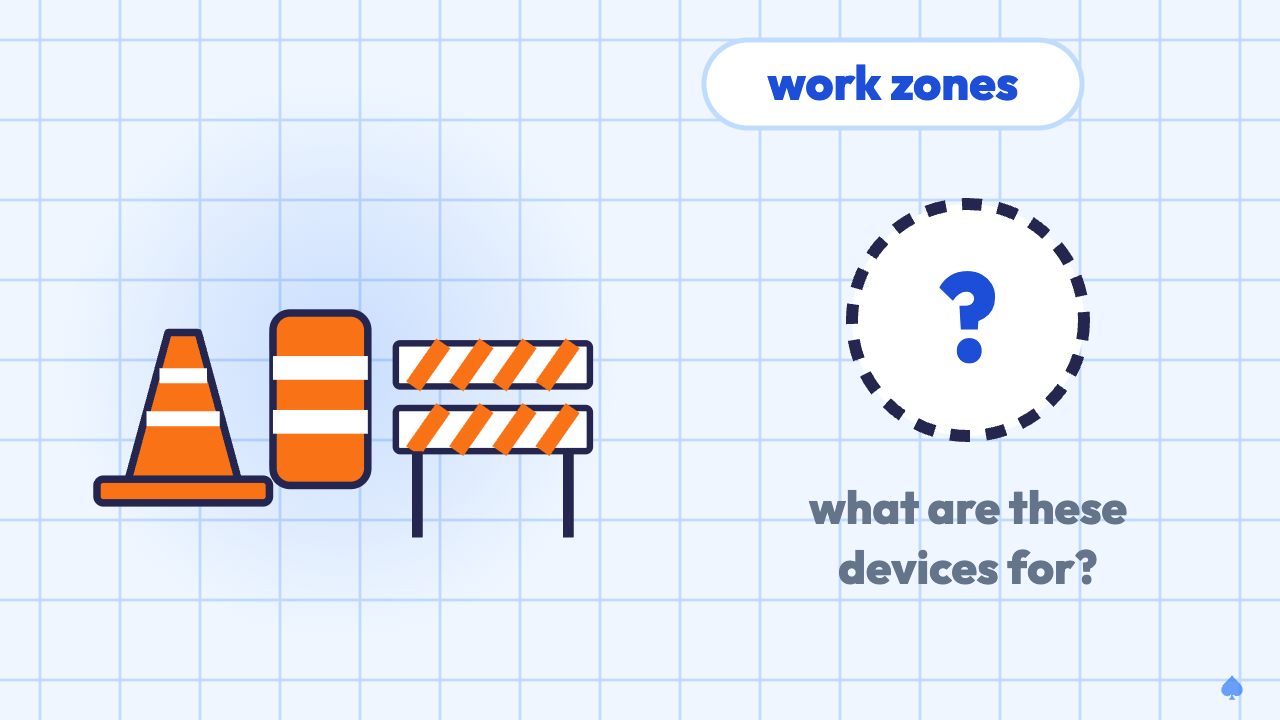
To mark a safe path through it
Cones, drums, barricades and vertical panels mark a path for you to follow through construction and maintenance zones, and warn you of hazards. (Rules of the Road, p. 73.)
-
What does a flashing arrow board in a work zone tell you?
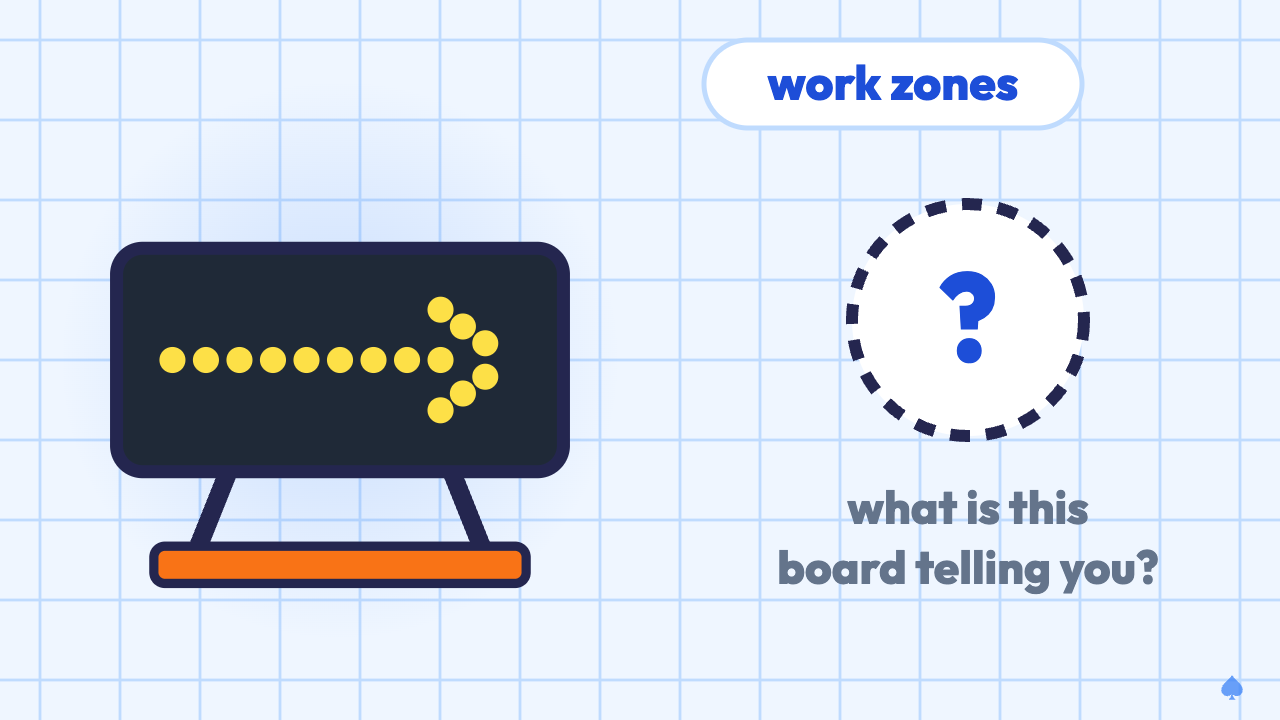
A lane is closed; move over
Arrow boards warn of an upcoming lane closure and show the direction to merge or move. Warning lights also mark drums and barricades at night. (Rules of the Road, p. 73.)
-
A flagger ahead signals you to stop. What must you do?
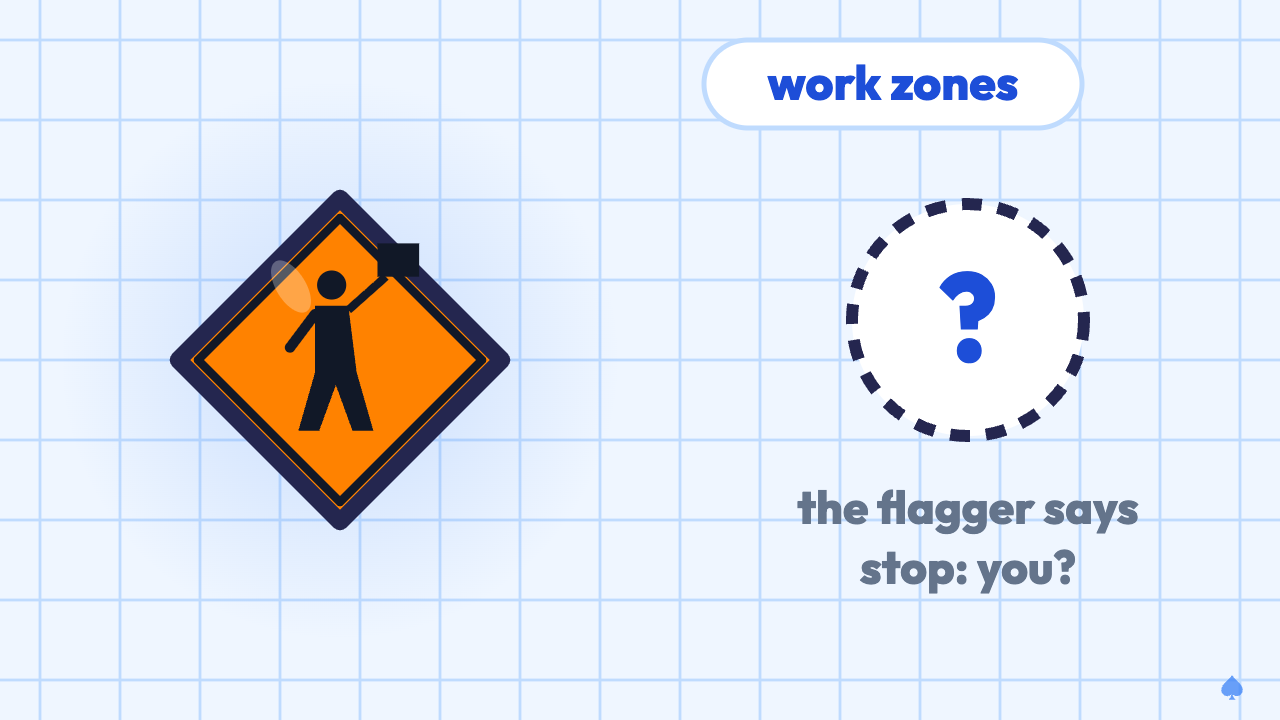
Stop
A flagger sign warns that a flagger is ahead, working close to traffic. Slow down and obey the flagger. You must stop if signaled to do so. (Rules of the Road, p. 73.)
-
What should you do about a portable changeable message sign?
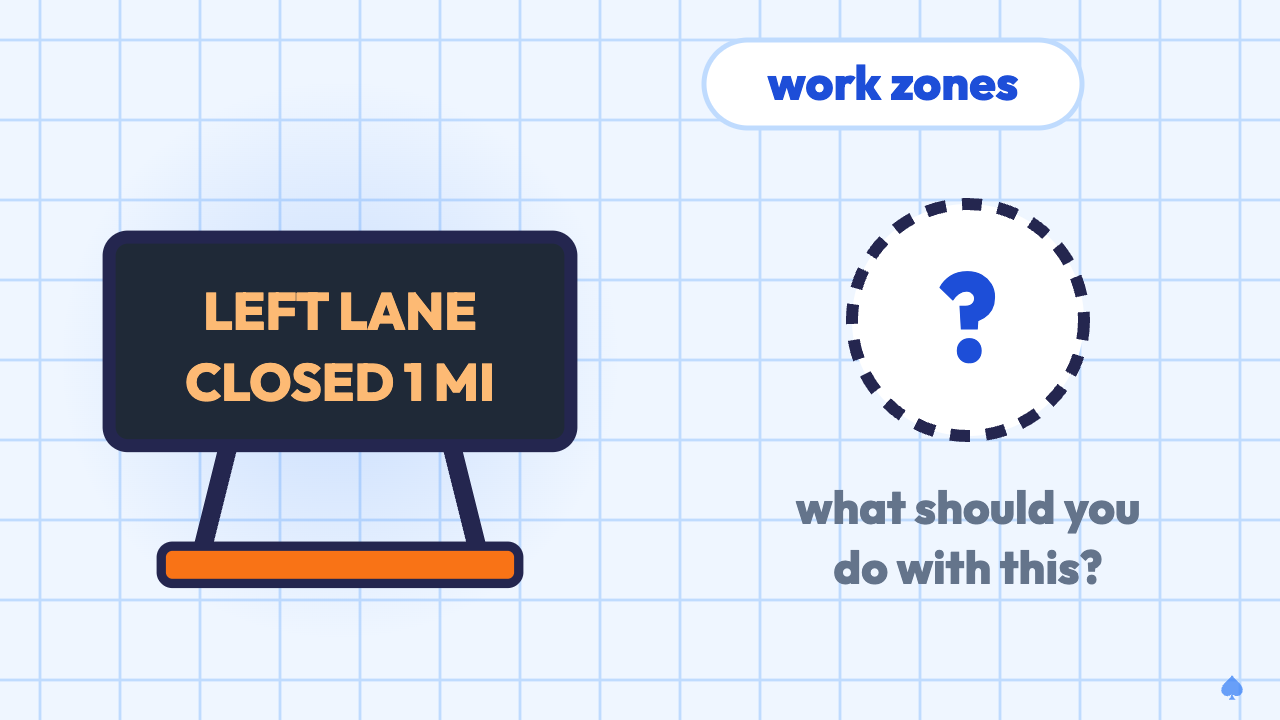
Follow its messages
Portable changeable message signs give real-time information, such as slow traffic, lane closures, delays or detours. Follow their messages. (Rules of the Road, p. 73.)
-
You come upon a crash with a truck carrying a hazardous materials placard. What should you do?
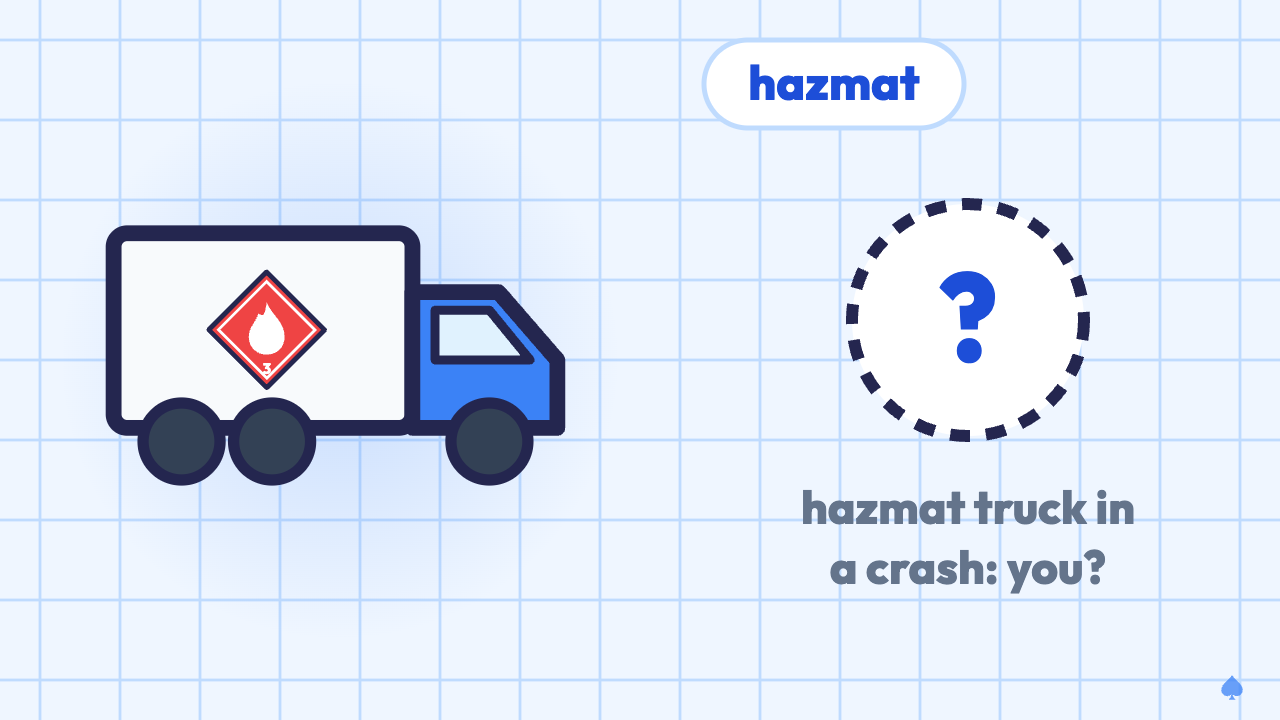
Stay away; follow responders
Evacuate as best you can by following emergency responders. If none are there, avoid the crash area and report it from a safe location. Toxic exposure can show up later, so seek medical help if you feel ill. (Rules of the Road, p. 75.)
Every card is here to read. Study them in the app, free to start, with spaced repetition bringing back the ones you miss.
Decks like this one.
- IL Permit 06: Work Zones, Emergencies, Buses & Trains FlashQuest · 30 cards Start free
- IL Permit 02: Regulatory Signs FlashQuest · 28 cards Start free
- IL Permit 12: Teens, Phones, Belts & Your License FlashQuest · 60 cards Start free
- IL Permit 11: Alcohol, Drugs & DUI FlashQuest · 26 cards Start free
- IL Permit 10: Safe Driving & Equipment FlashQuest · 45 cards Start free
- IL Permit 09: Sharing the Road FlashQuest · 36 cards Start free

Study it properly.
All 38 cards are in the app, free to start, scheduled so the ones you miss come back sooner.