
IL Permit 06: Work Zones, Emergencies, Buses & Trains
by FlashQuest
30 Illinois permit test cards on work zones, emergency vehicles, school buses and railroad crossings. Deck 6 of 12. The work zone cards cover the 24-hour speed limit and license suspension for repeat tickets. Scott's Law cards cover changing lanes for a stopped police car and the 500 foot phone ban at emergency scenes. Bus cards cover two-lane and four-lane roads and the $300 fine. Rail cards cover the 15 to 50 foot stopping zone, crossbuck, ENS sign and stalled cars. From the Illinois Rules of the Road 2026 (chapters 4 and 10).


Free to start, no account needed. After you install, search the Table for “IL Permit 06: Work Zones, Emergencies, Buses & Trains”.
Study all 30 cards, with their pictures, in the app.
All 30 cards in this deck.
Made by FlashQuest. Last updated November 2026. Drafted with AI help.
- What should you do when approaching a highway construction area?
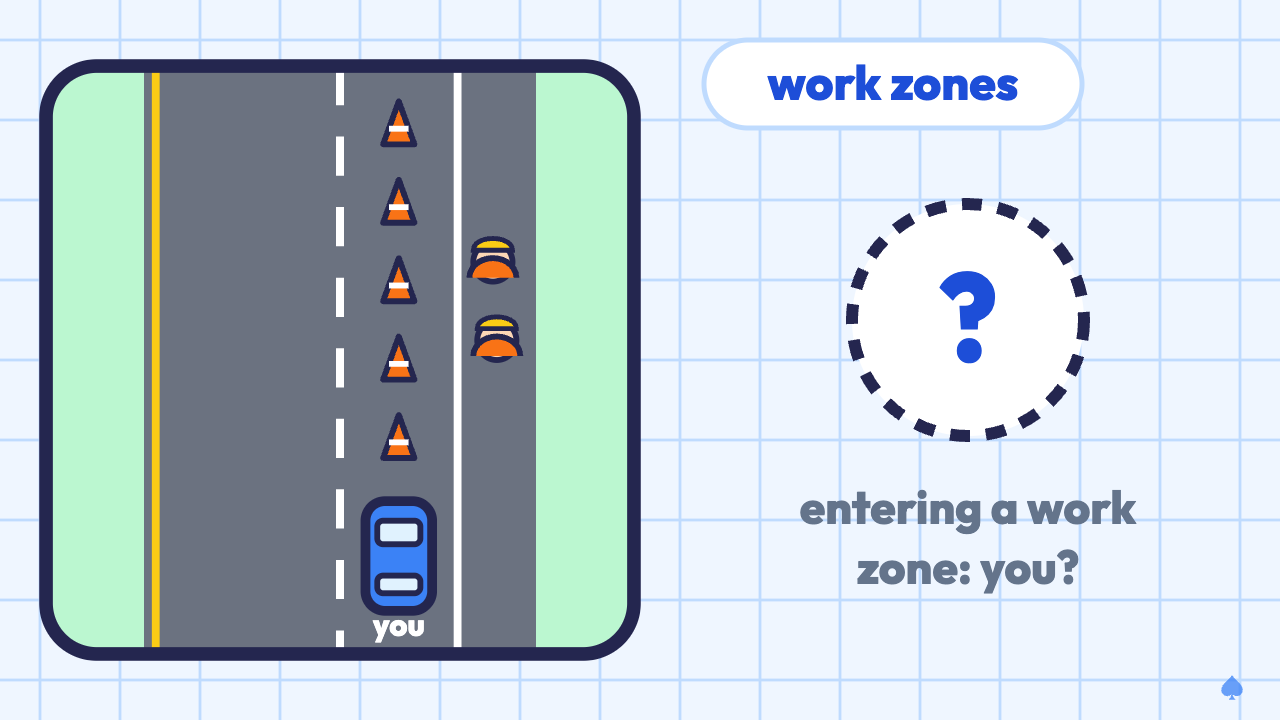
- Slow down, no phone, yield
- Illinois law requires you to slow down, stop using a handheld phone, yield to workers and work vehicles, change to a lane away from workers when possible, and proceed with caution. (Rules of the Road, p. 25.)
- When does a posted construction zone speed limit apply?
- 24 hours a day, 7 days a week
- Motorists must obey the posted construction zone speed limit 24 hours a day, seven days a week, whether or not workers are present. It may drop further when workers are present. (Rules of the Road, p. 25.)
- When may you speed back up after a work zone?
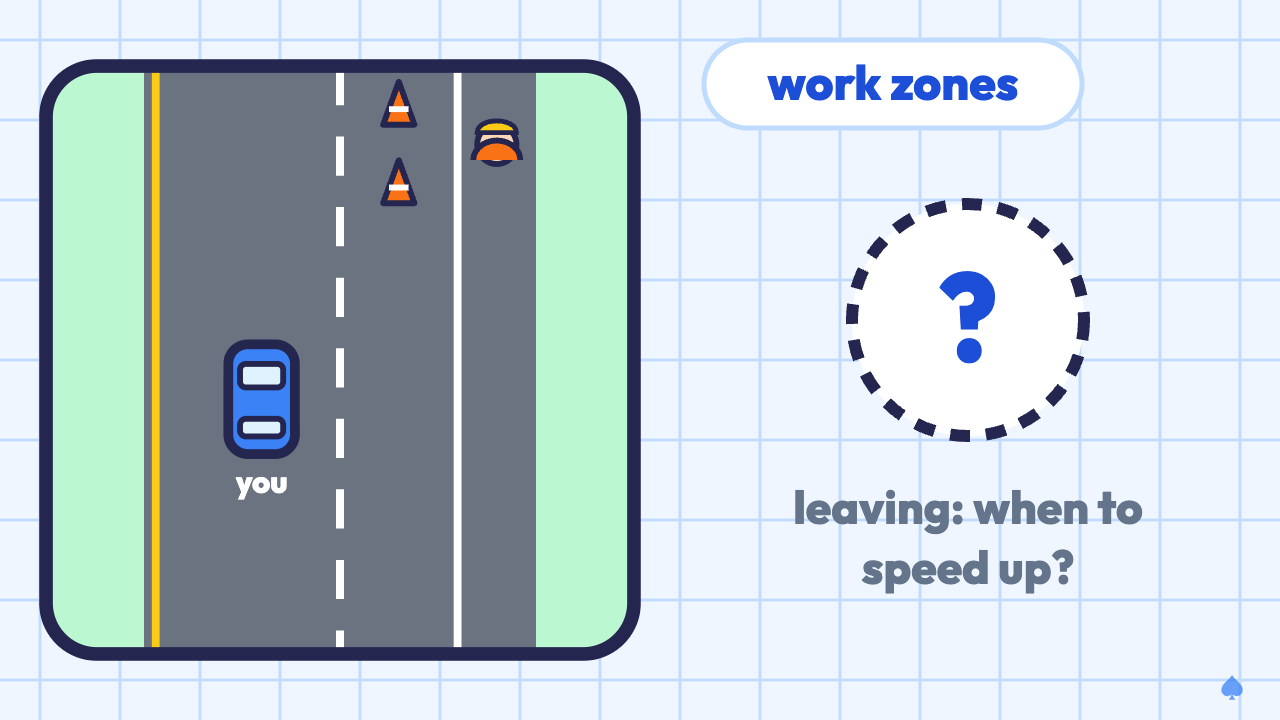
- Once safely past the workers
- Maintain a reduced speed when leaving the work zone until you are safely past any workers or authorized vehicles. (Rules of the Road, p. 25.)
- A second speeding ticket in a work zone with workers present within two years can lead to what?
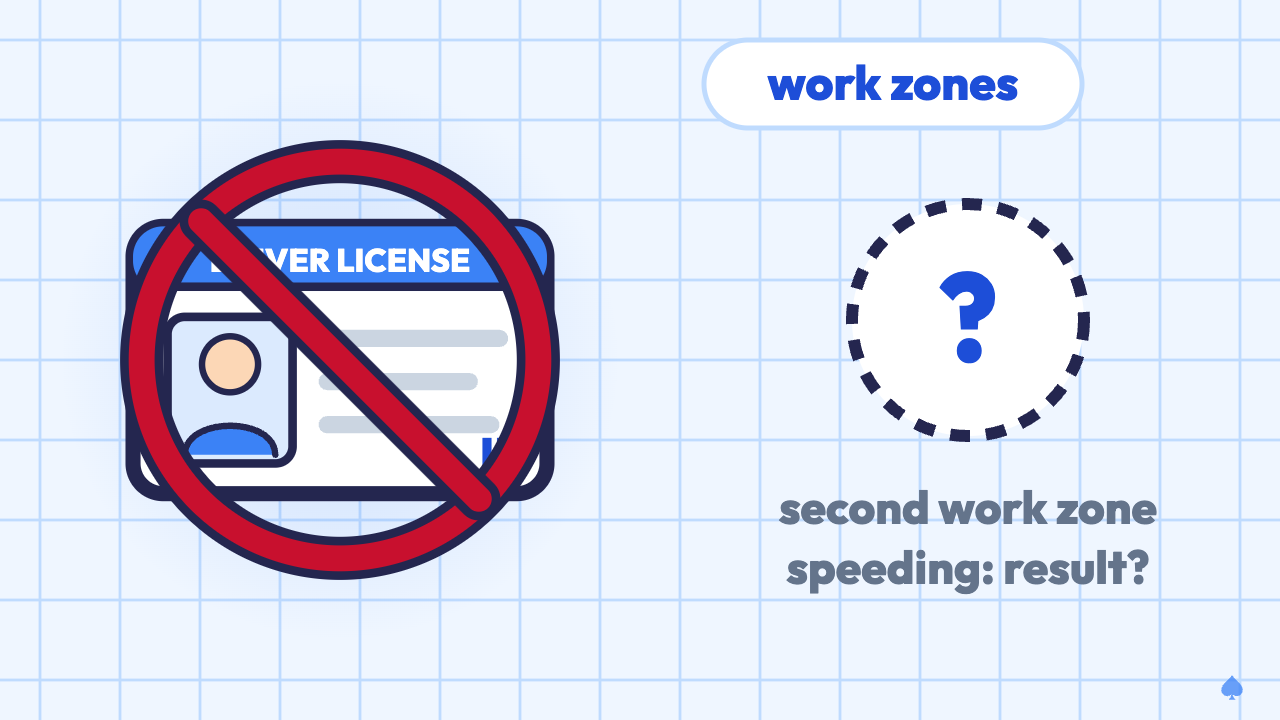
- License suspension
- A second speeding violation in a construction zone with workers present, within two years, can suspend your license. So can failing to slow or change lanes in a work zone and causing damage or injury. (Rules of the Road, p. 60.)
- A police car is stopped on the shoulder with lights flashing. What does Illinois law require?
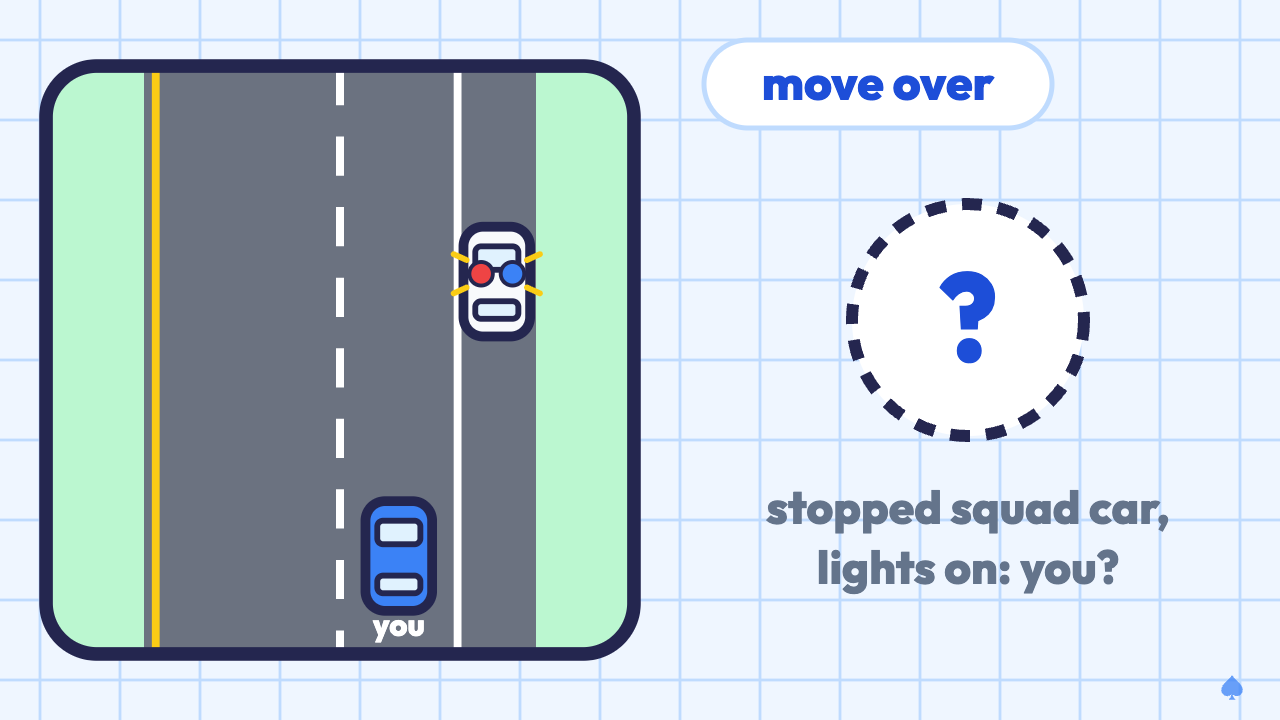
- Change lanes away and slow down
- When approaching a stationary emergency or maintenance vehicle with flashing lights, you must yield, change to a lane away from it when possible, slow down and proceed with caution until safely past. (Rules of the Road, p. 25.)
- You cannot change lanes away from a stopped emergency vehicle. What must you do?
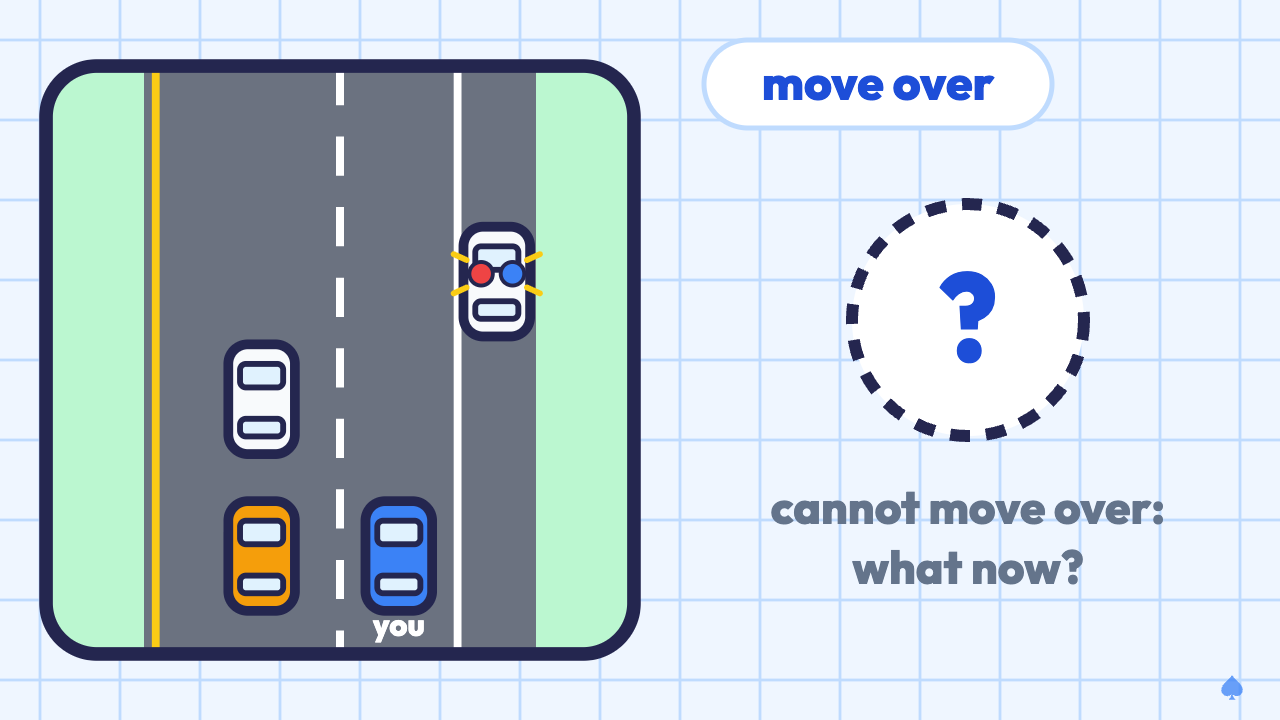
- Slow down and use caution
- If a lane change is not possible, reduce speed to one that is reasonable for conditions and proceed with caution until safely past the emergency vehicle. (Rules of the Road, p. 25.)
- Within how many feet of an emergency scene are photos and phone use banned?
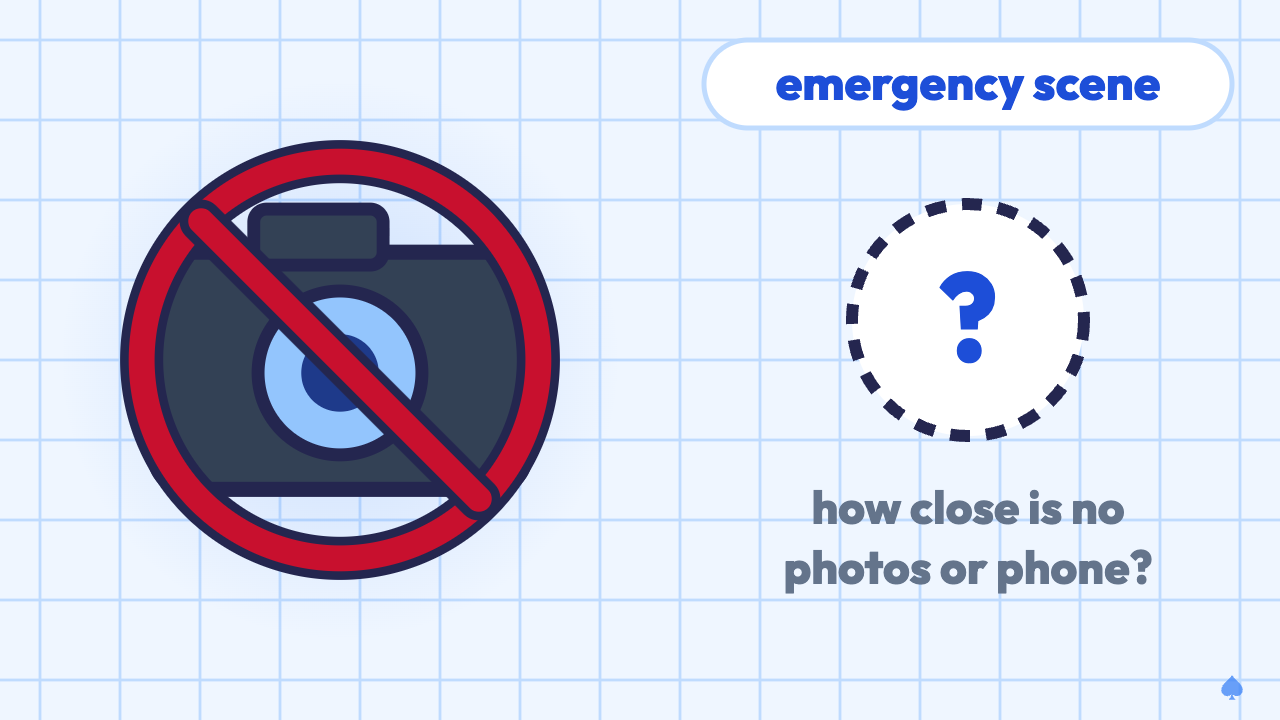
- 500 feet
- Illinois law prohibits photography and wireless phone use within 500 feet of an emergency scene, except in certain circumstances. (Rules of the Road, p. 25.)
- An emergency vehicle with siren and lights comes up behind you. What must you do?
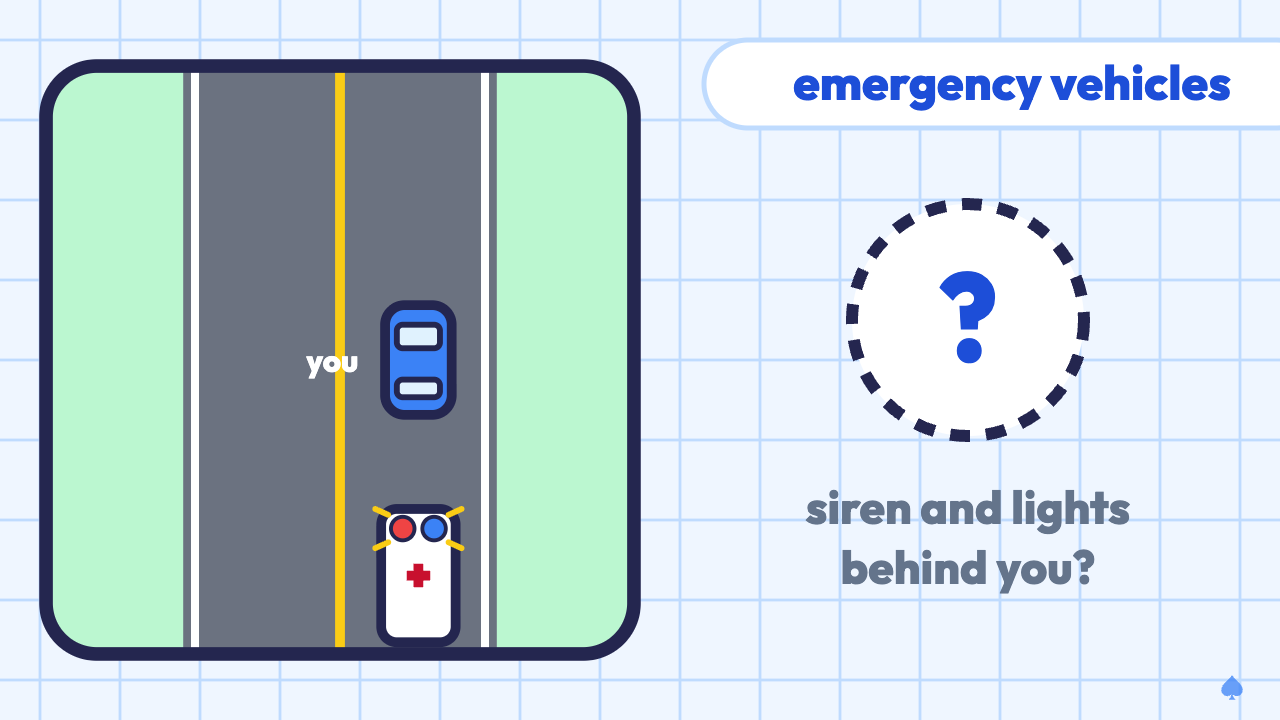
- Pull right; stop if needed
- When an emergency vehicle uses lights and/or a siren, immediately pull to the right side of the road and let it pass. A complete stop may be needed. (Rules of the Road, p. 25.)
- You are stopped at an intersection with two-way traffic when an emergency vehicle approaches. What do you do?
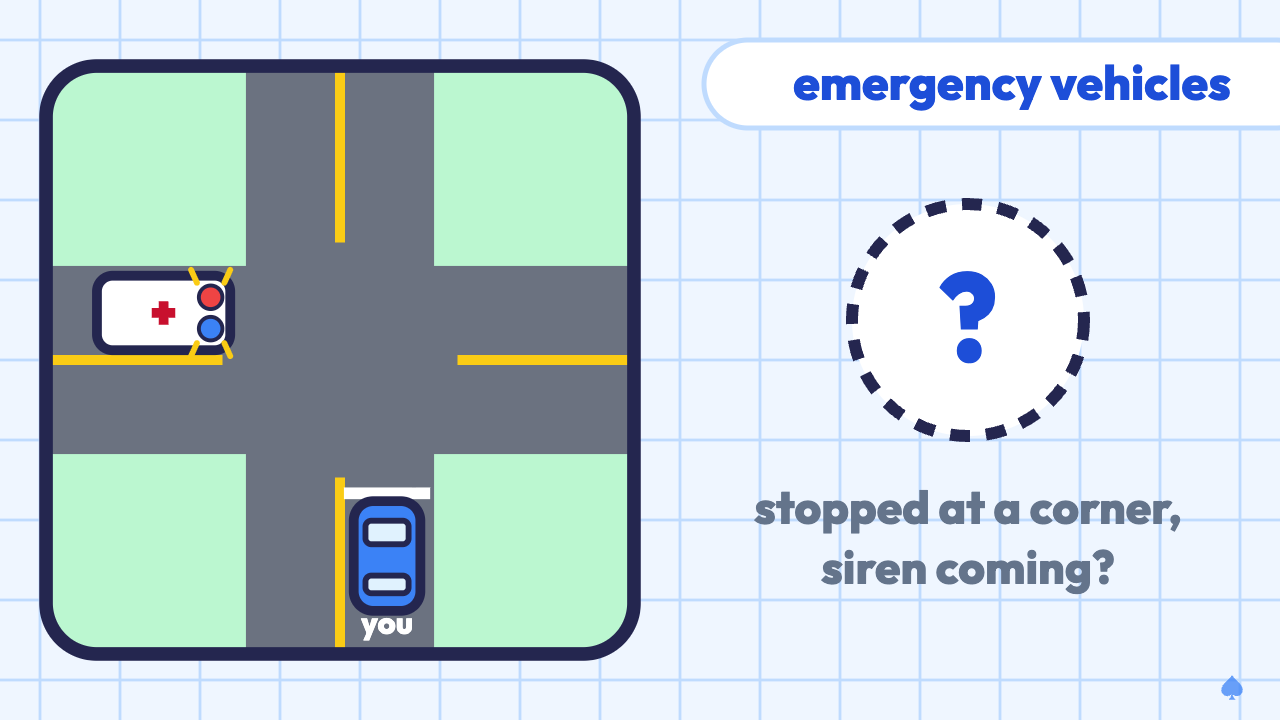
- Stay stopped until it passes
- If stopped at an intersection with two-way traffic, remain stopped until the emergency vehicle passes through the intersection. (Rules of the Road, p. 25.)
- May you drive over a fire hose at a fire scene?
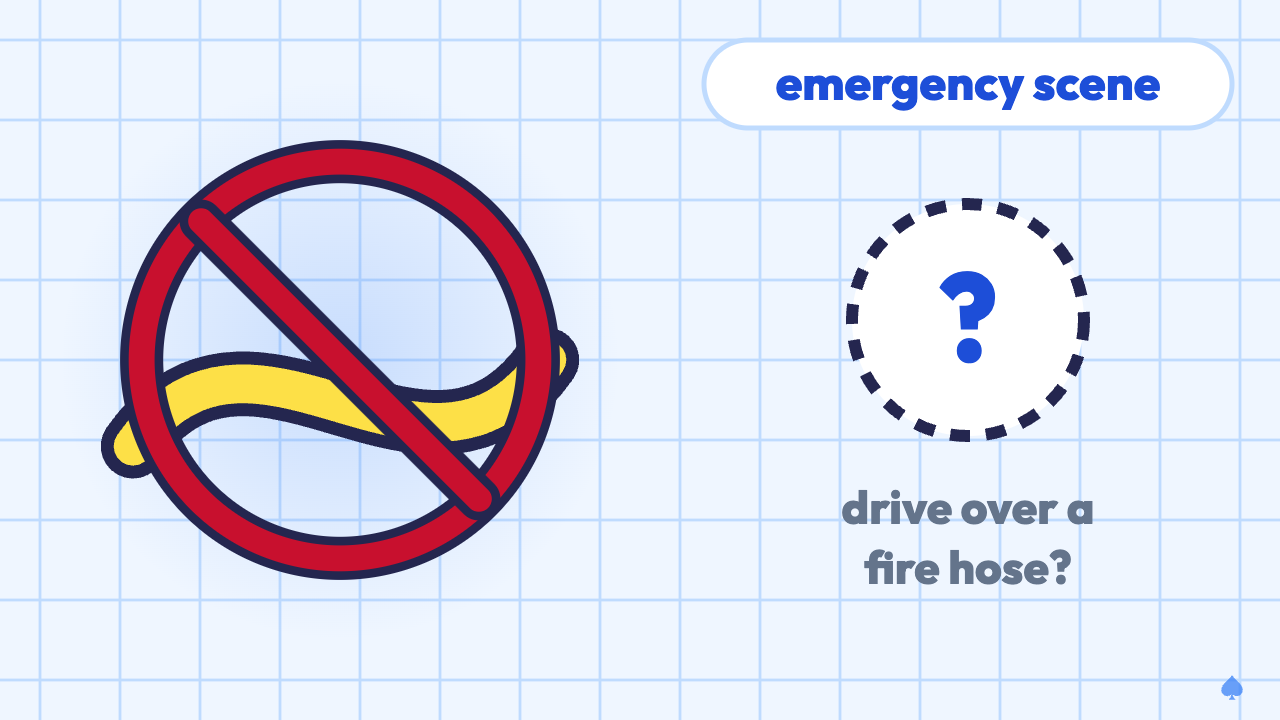
- No, unless a fire official allows it
- A driver is prohibited from driving over fire hoses unless permitted by the fire official in command of the scene. (Rules of the Road, p. 25.)
- On a two-lane road, a school bus is stopped with red lights flashing and stop arm out. Who must stop?
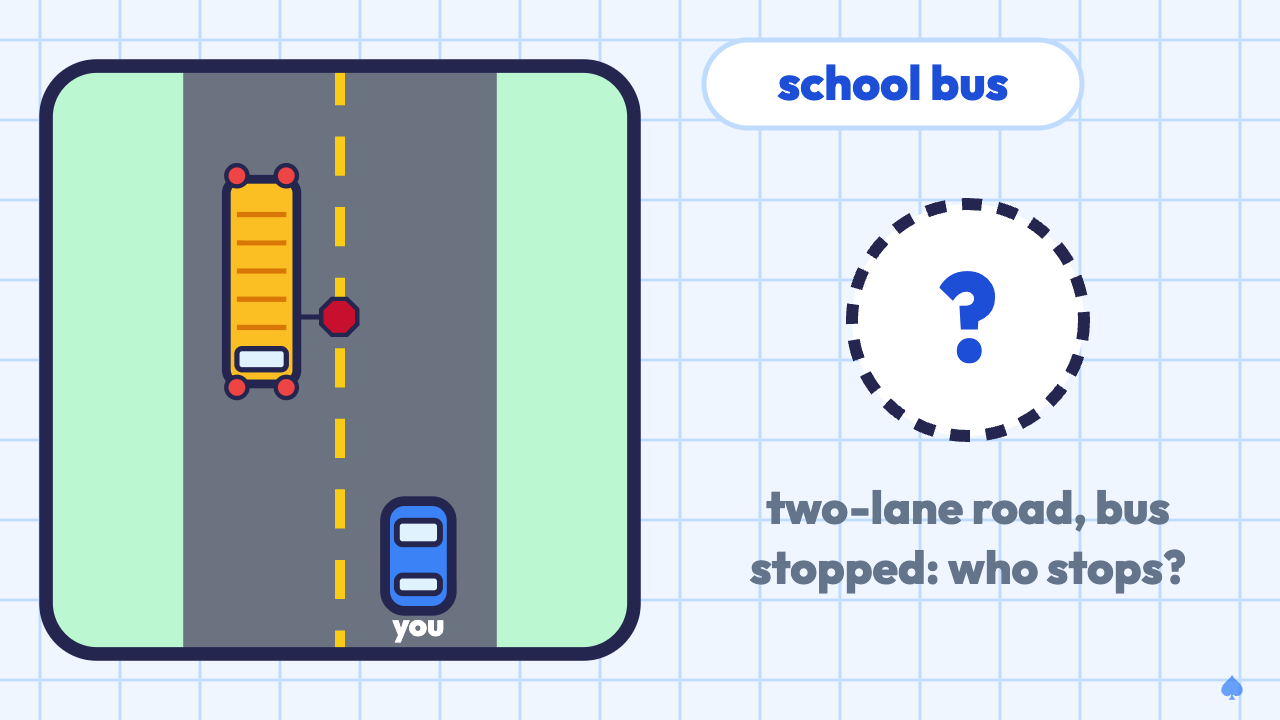
- Traffic both ways must stop
- You must stop before meeting or overtaking a stopped school bus loading or unloading on any two-lane road, in town or rural. Traffic in both directions stops. (Rules of the Road, p. 32-33.)
- On a four-lane road, a school bus is stopped across from you, going the other way. Must you stop?
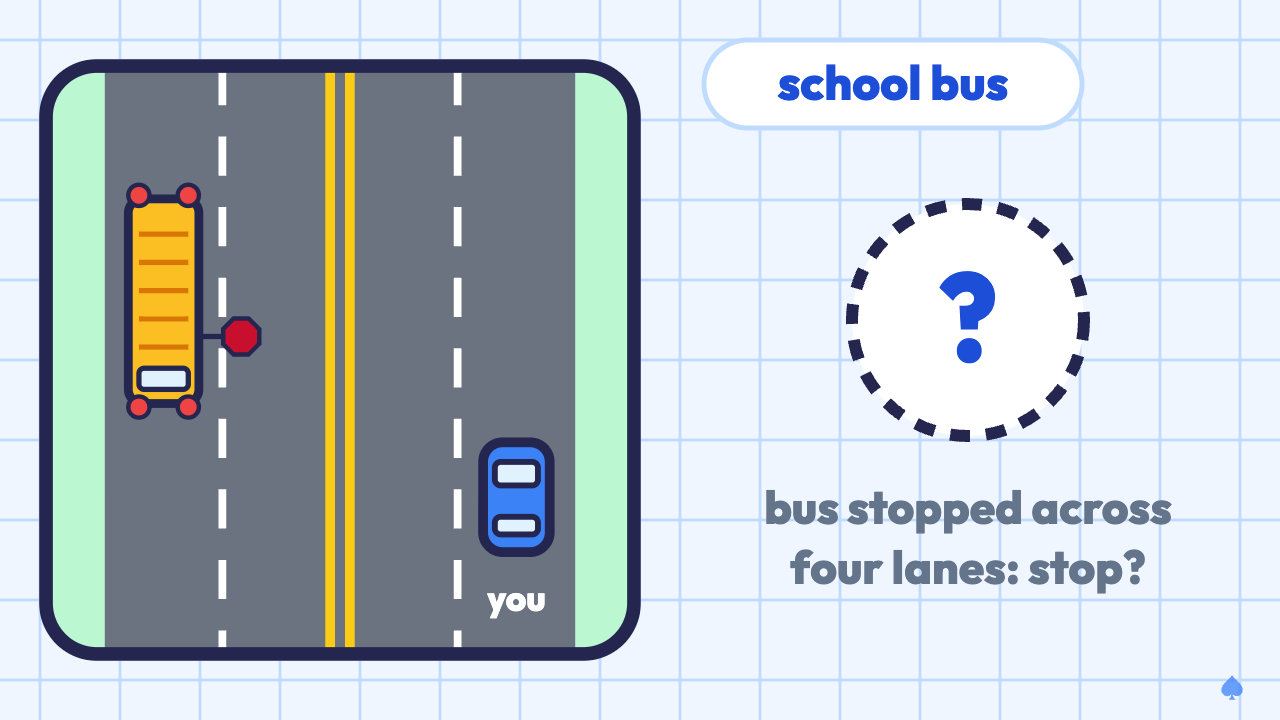
- No
- You do not need to stop when both vehicles are on a four-lane roadway and the bus is stopped in the opposite direction. Traffic behind the bus must stop. (Rules of the Road, p. 32.)
Show the other 18 cards
-
On a four-lane road, you are behind a school bus that stops with its arm out. Must you stop?
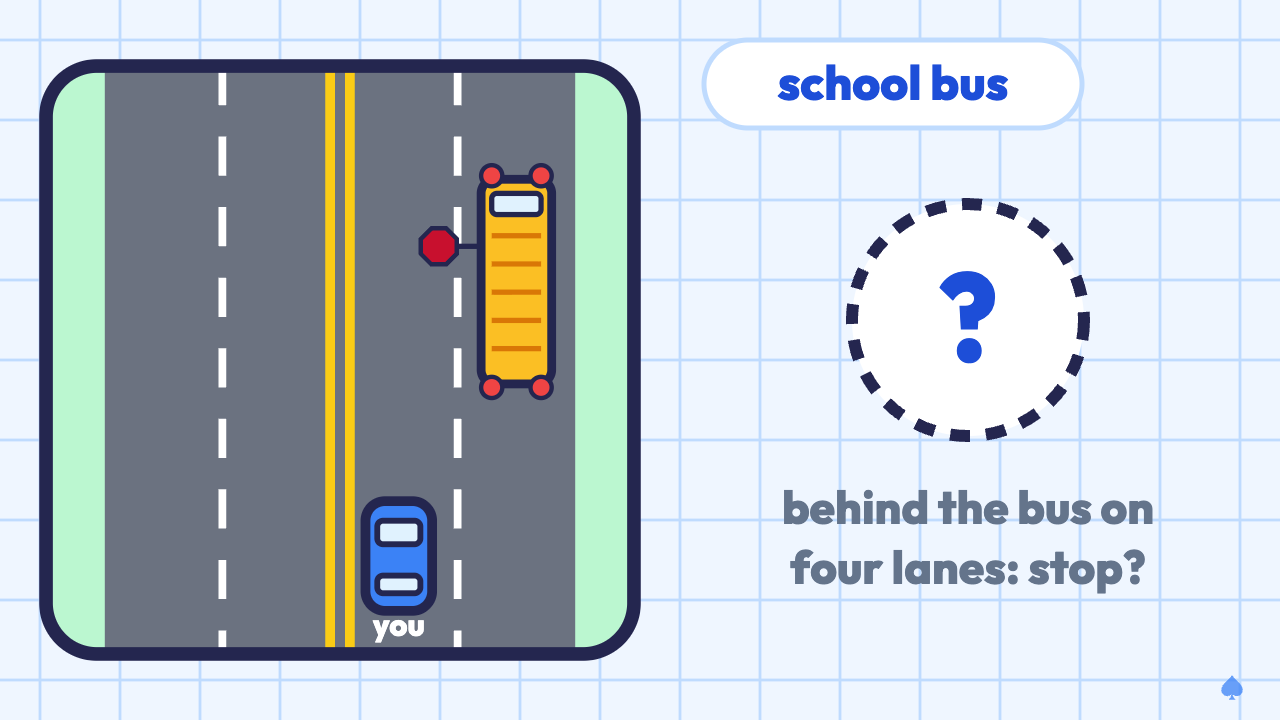
Yes
The four-lane exception covers only drivers going the opposite way. Drivers behind a stopped school bus must stop. (Rules of the Road, p. 32-33.)
-
A school bus is loading in a school parking lot. Must you stop for it?
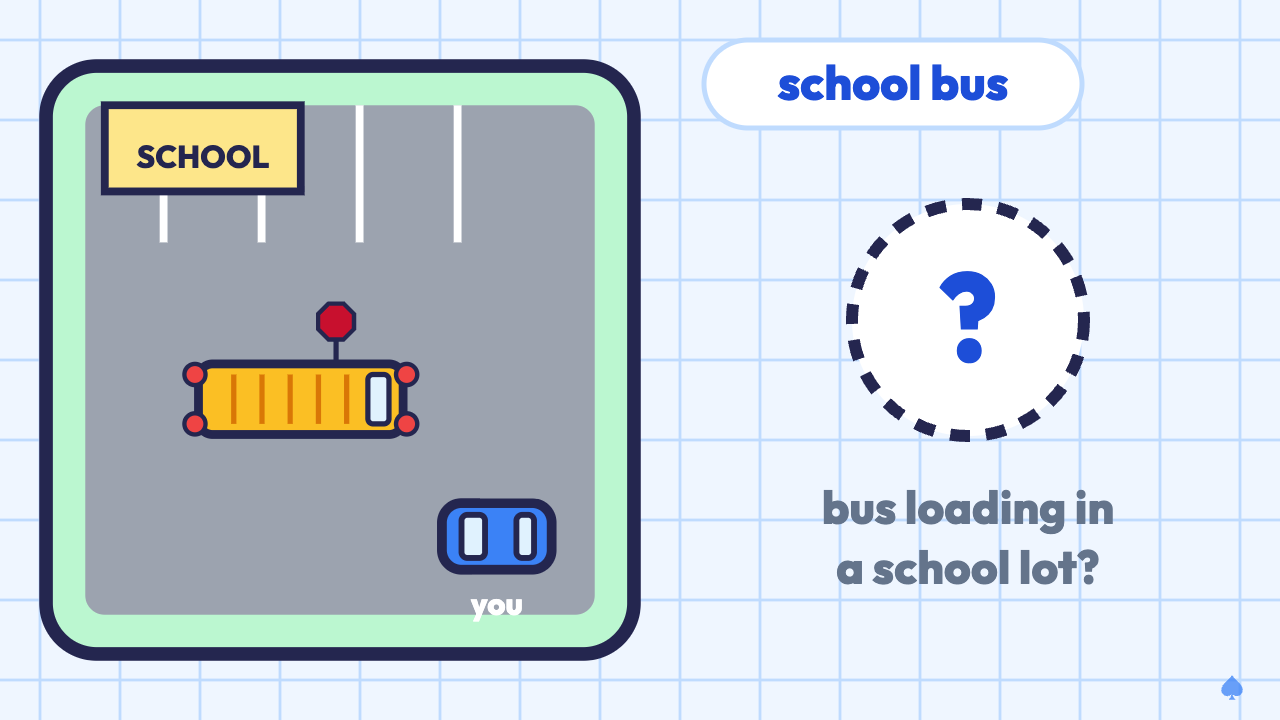
Yes
You must stop for a school bus loading or unloading on any roadway, highway or private road, and in any parking lot on school property. (Rules of the Road, p. 33.)
-
How far ahead does a school bus warn that it is about to stop in a city?
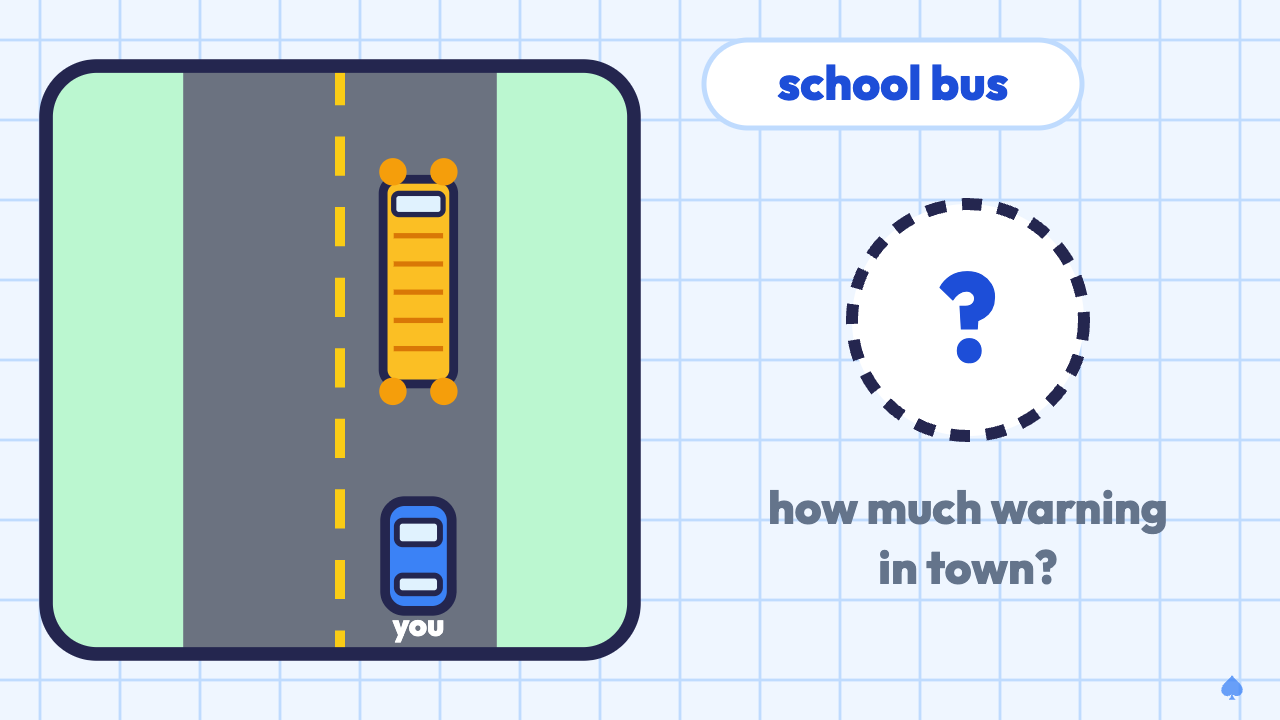
At least 100 feet
A school bus gives a warning at least 100 feet before a stop, 200 feet in rural areas, by flashing lights on the front and rear. The stop arm comes out after the bus stops. (Rules of the Road, p. 33.)
-
You stopped for a school bus. When may you go?
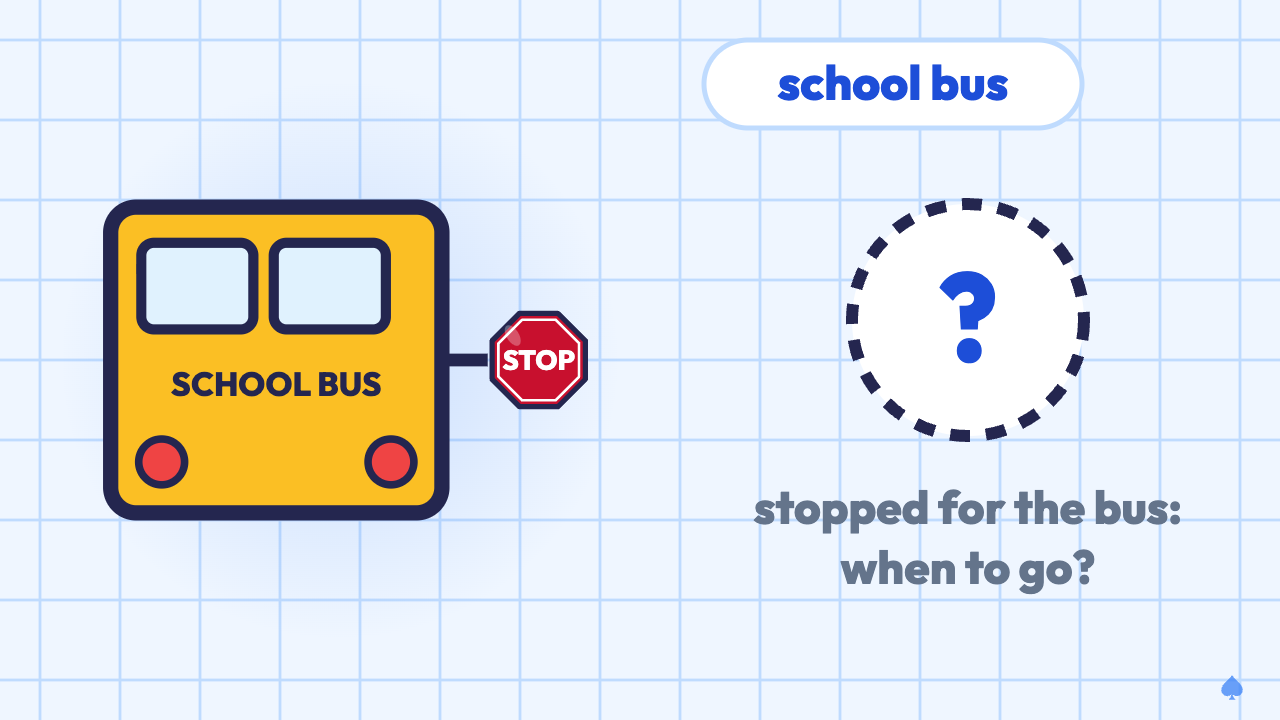
Arm in and lights off, or a signal
Remain stopped until the stop signal arm is no longer extended and the flashing lights are turned off, or the bus driver signals vehicles to pass. (Rules of the Road, p. 33.)
-
What happens to your license if convicted of passing a stopped school bus?
It is suspended
A conviction for passing a stopped school bus with flashing lights and stop arm out results in license suspension, a mandatory $300 fine and court-set community service. (Rules of the Road, p. 33.)
-
What is the mandatory fine for passing a stopped school bus?

$300
A conviction for passing a stopped school bus carries a mandatory $300 fine plus community service set by the court, along with license suspension. (Rules of the Road, p. 33.)
-
A train is coming. How far from the nearest rail do you stop?
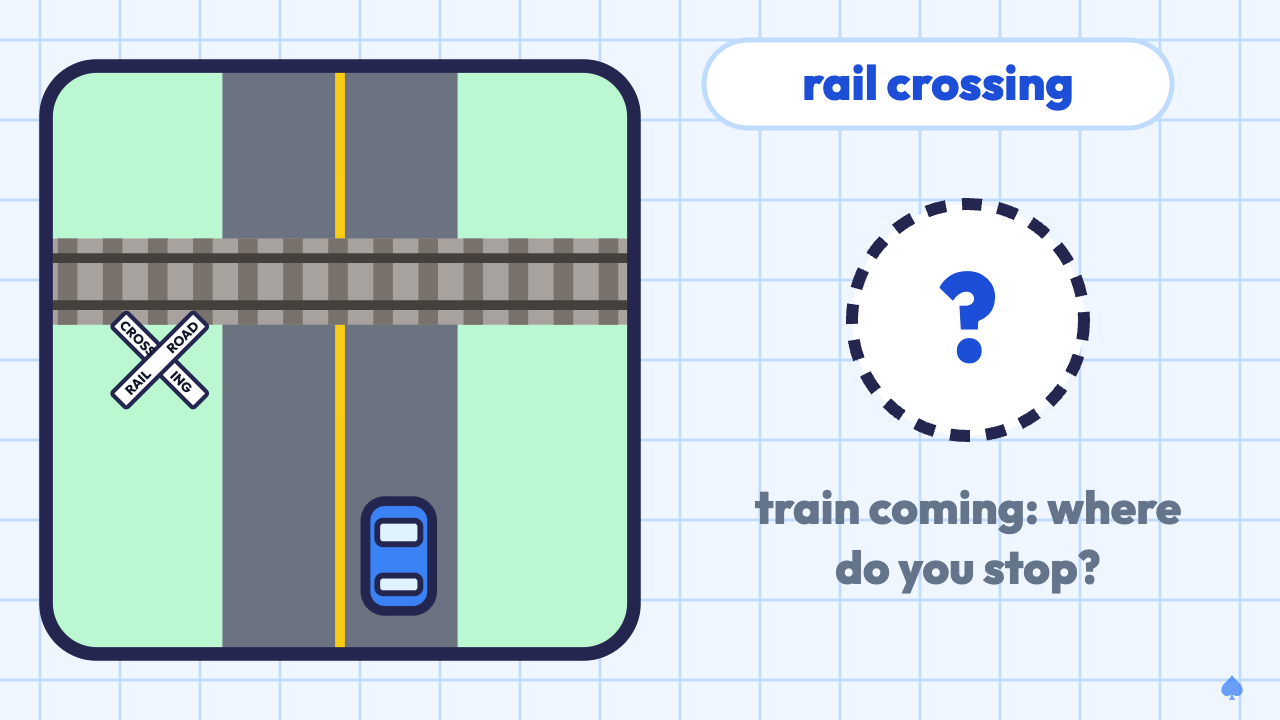
Between 15 and 50 feet
At a railroad crossing you must stop within 15 to 50 feet of the nearest rail if there is a stop sign, flashing signal, lowered gate, flagger signal, or an approaching train. (Rules of the Road, p. 33.)
-
A train has passed a crossing with flashing lights. When may you go?
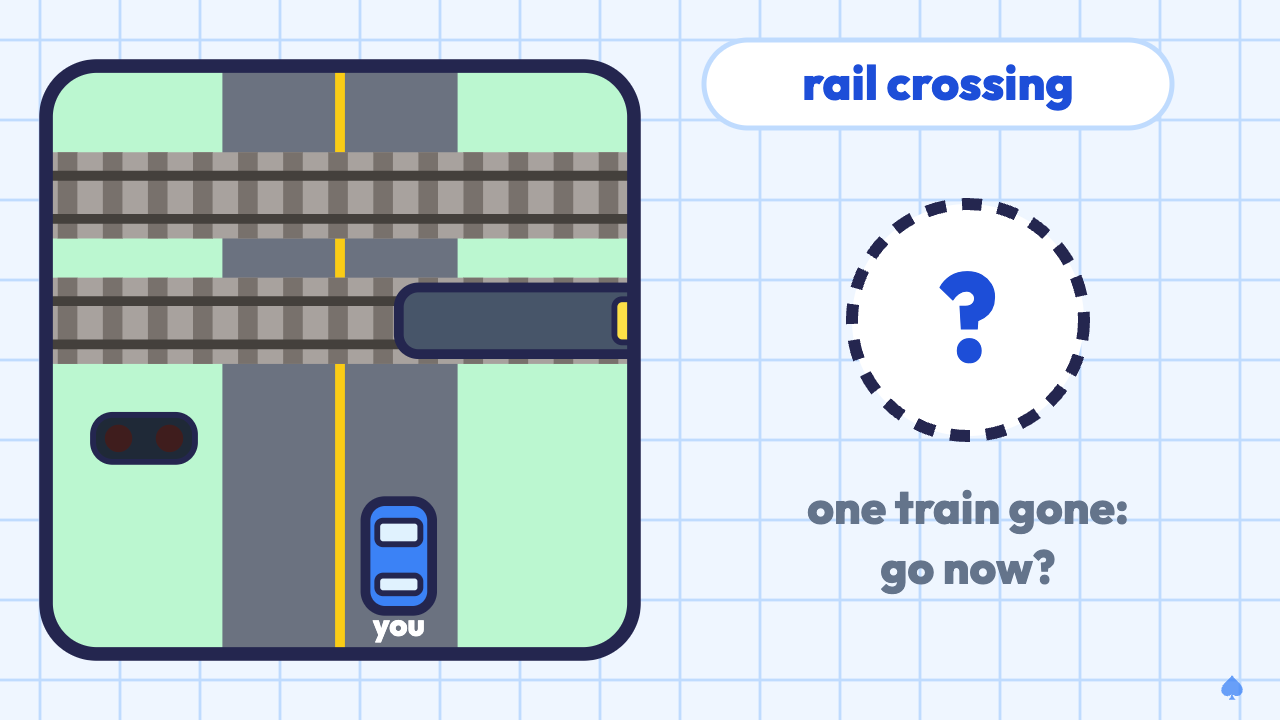
Lights off, no 2nd train
Proceed only after the gate is all the way up and the lights stop flashing, and after checking all tracks for a second train or railroad equipment. (Rules of the Road, p. 33-34.)
-
A railroad crossing has only a crossbuck sign, no lights or gates. What should you do?
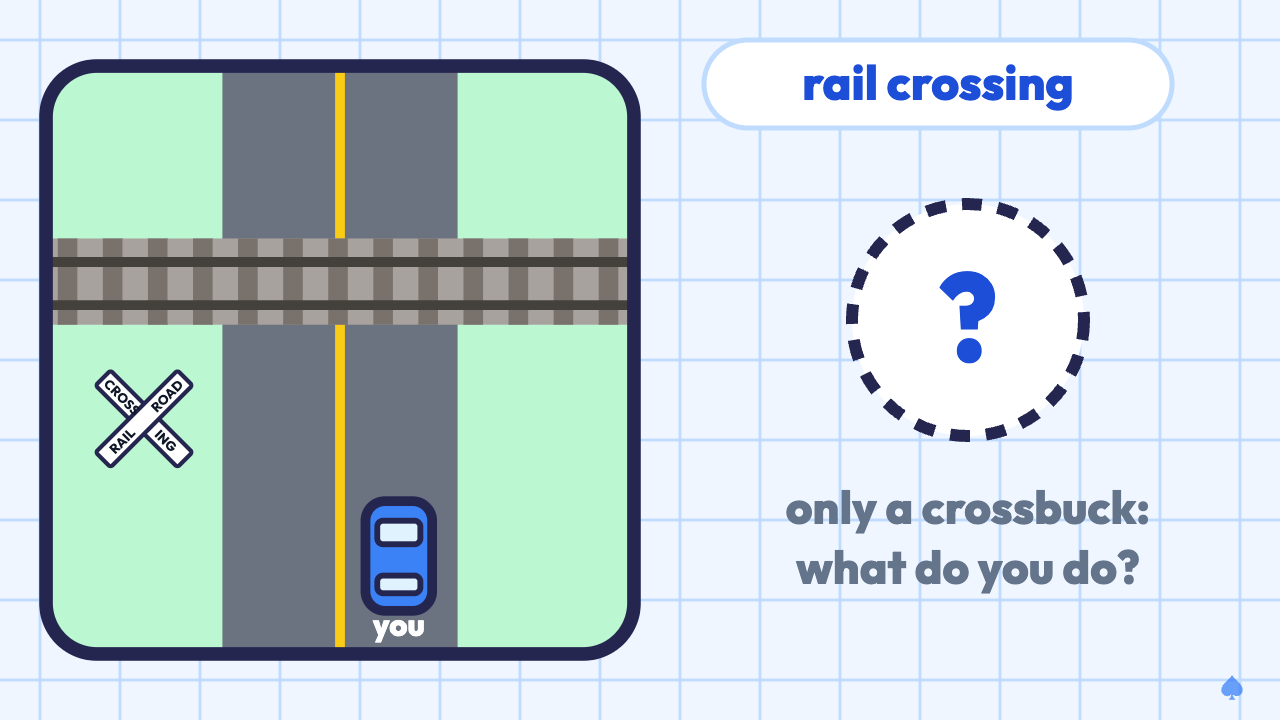
Slow, look and listen
At a crossing with no warning devices or only a crossbuck, slow down, look both ways along the track and listen for a train. Proceed with caution only if safe. (Rules of the Road, p. 33.)
-
A railroad crossbuck sign should be treated like which other sign?
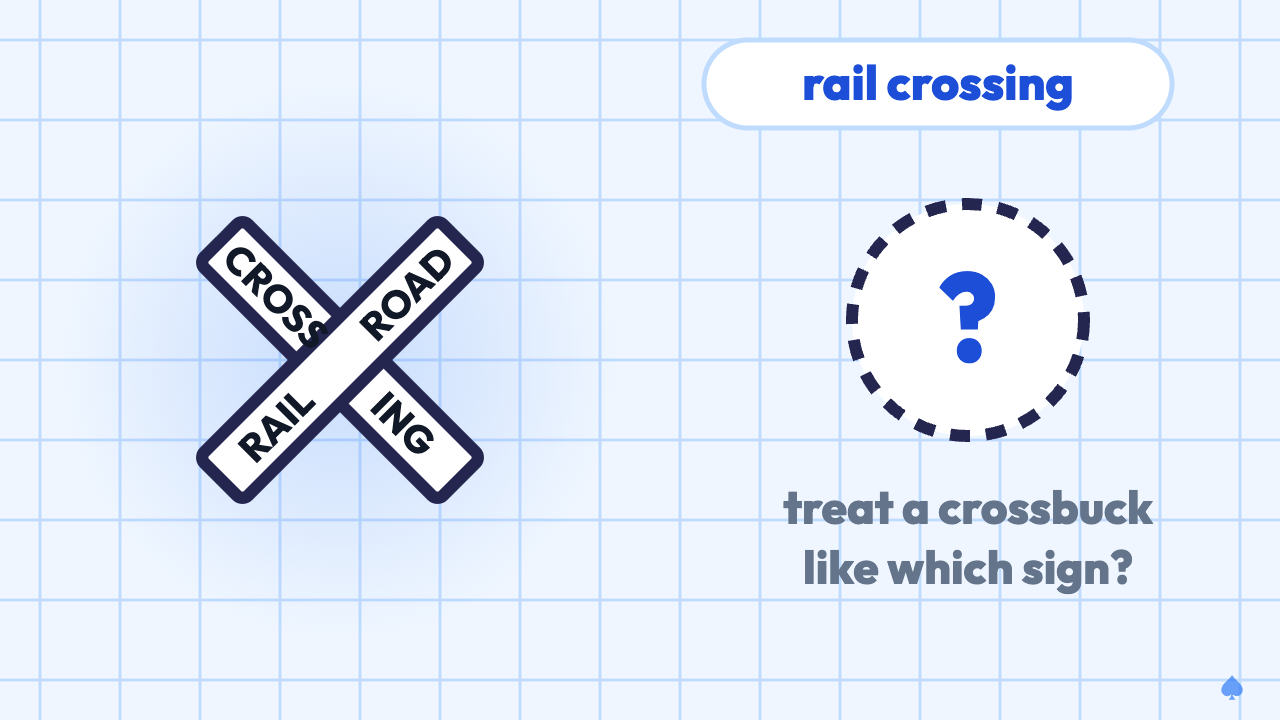
A YIELD sign
A railroad crossbuck is considered a yield sign: yield the right of way to any oncoming trains and railroad equipment. A plaque below shows the number of tracks if more than one. (Rules of the Road, p. 81.)
-
How far before a railroad crossing may the round yellow RR sign be placed?
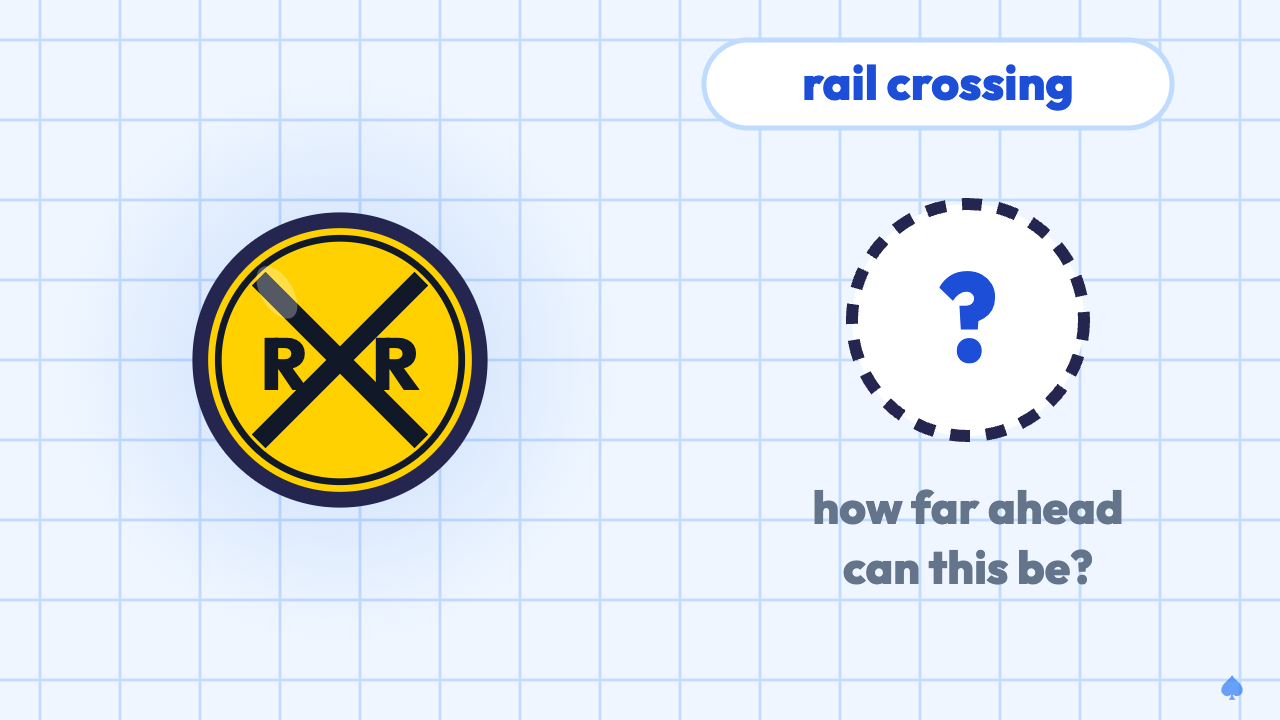
Up to 750 feet
The round yellow advance warning sign with a black X and RR means a highway-rail crossing is ahead. It may be placed up to 750 feet before the crossing. (Rules of the Road, p. 81.)
-
You see a railroad crossing sign ahead. What should you do?
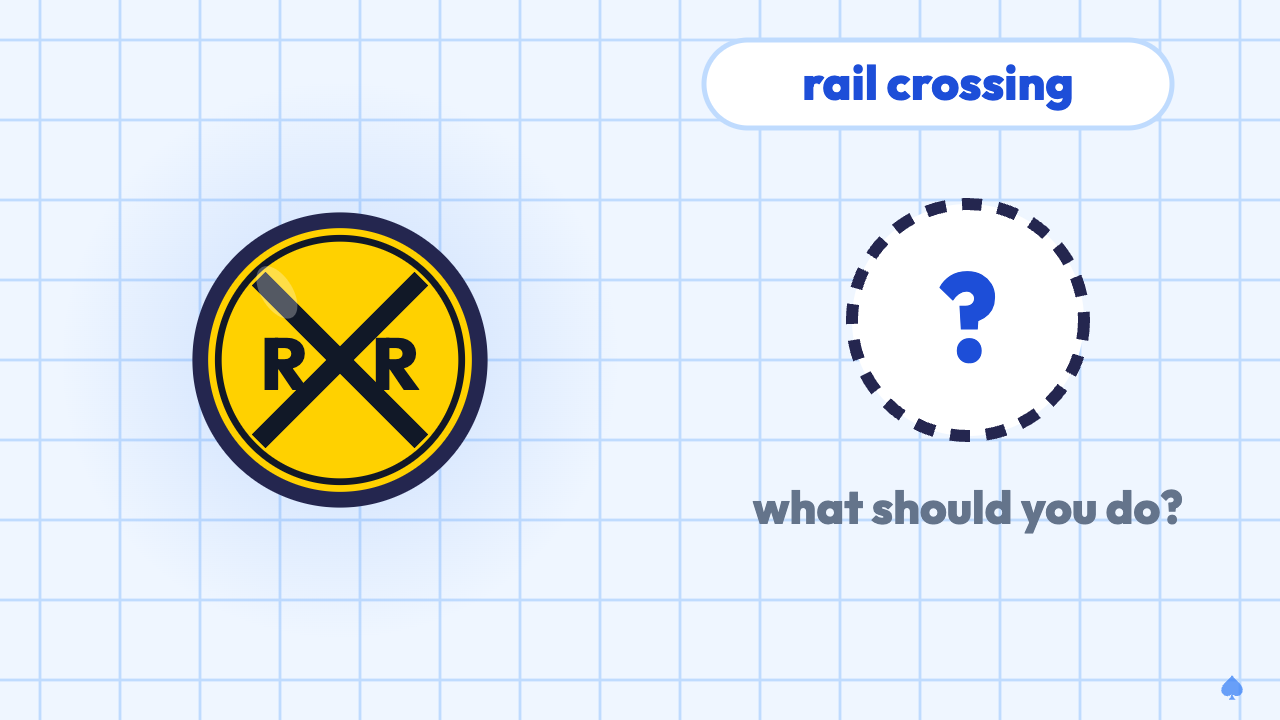
Slow down, look, stop if needed
When approaching a railroad crossing sign, slow down, look both ways and listen, and stop if necessary. Expect a train on any track at any time. (Rules of the Road, p. 63.)
-
Before a crossing, the road has a big painted X with RR and a solid yellow line. What does the line mean?
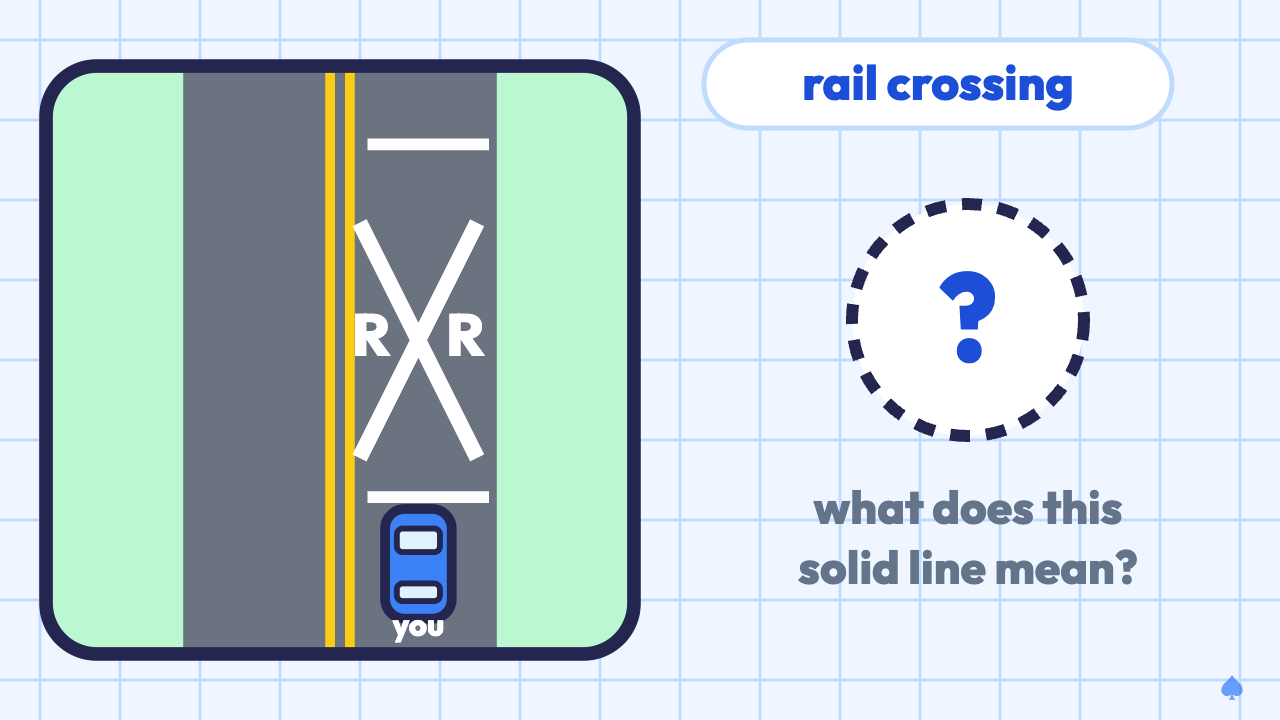
No passing
A solid yellow line before the crossing means no passing. White stop lines on each side of the track show where to stop when a train is coming. The markings also warn a crossing is ahead. (Rules of the Road, p. 81.)
-
Traffic is backed up past a railroad crossing. May you drive onto the tracks?
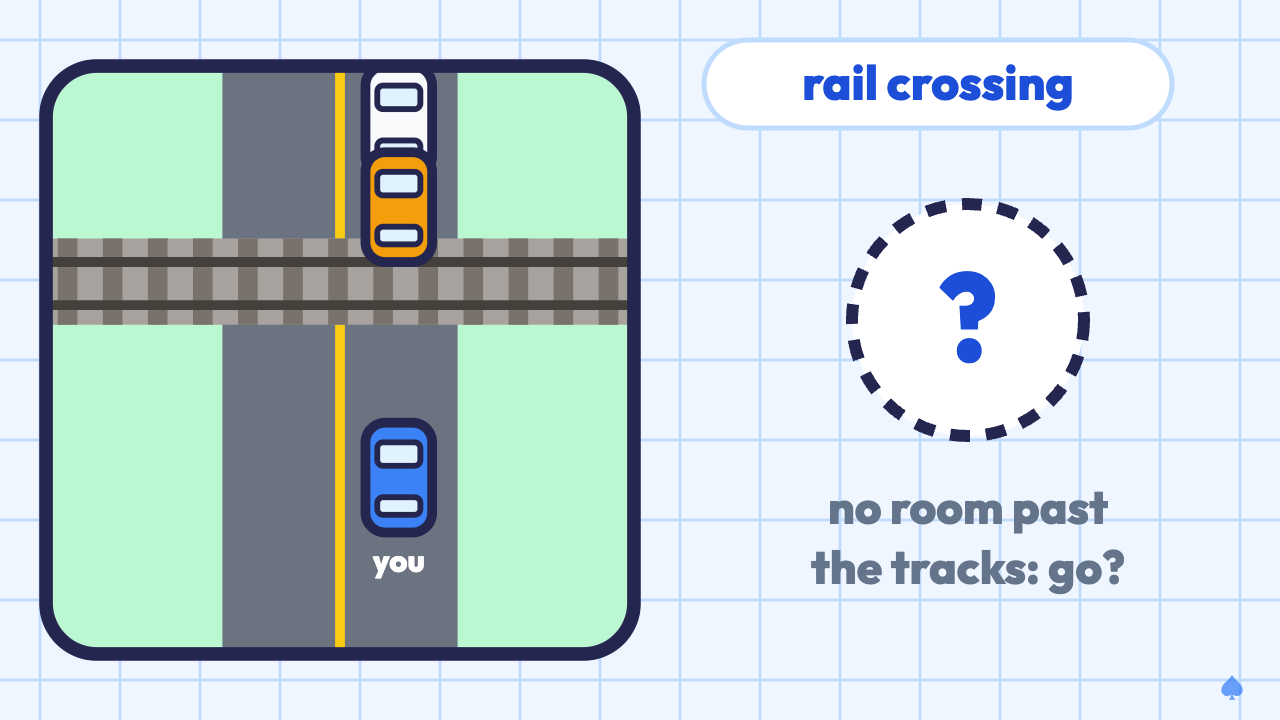
No, not without room beyond
You may not enter a crossing unless there is room on the other side for your vehicle without blocking a train. It is never safe to stop on the tracks, even briefly. (Rules of the Road, p. 33.)
-
Which vehicles must stop at most railroad crossings by law?
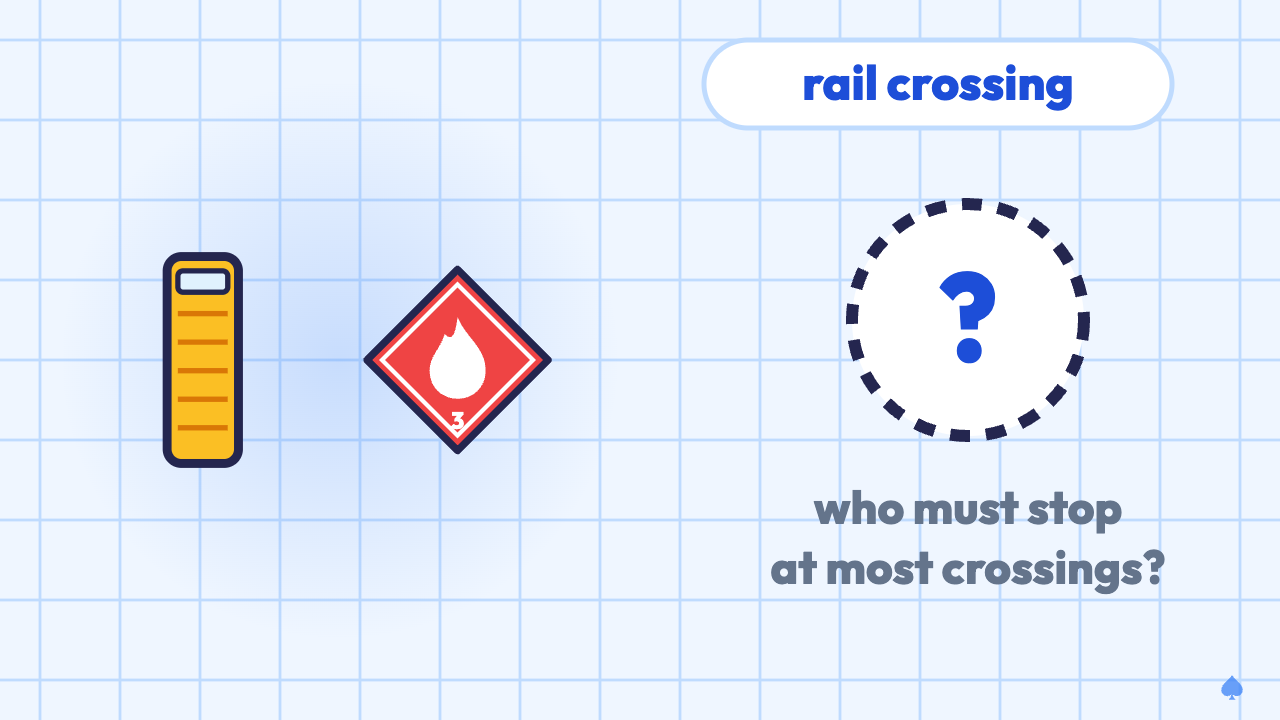
Buses, hire cars, hazmat
Vehicles carrying people for hire, school buses and vehicles carrying hazardous materials are required to stop at most railroad crossings. Be ready to stop behind them. (Rules of the Road, p. 33.)
-
Your car stalls on the tracks. What should everyone do?
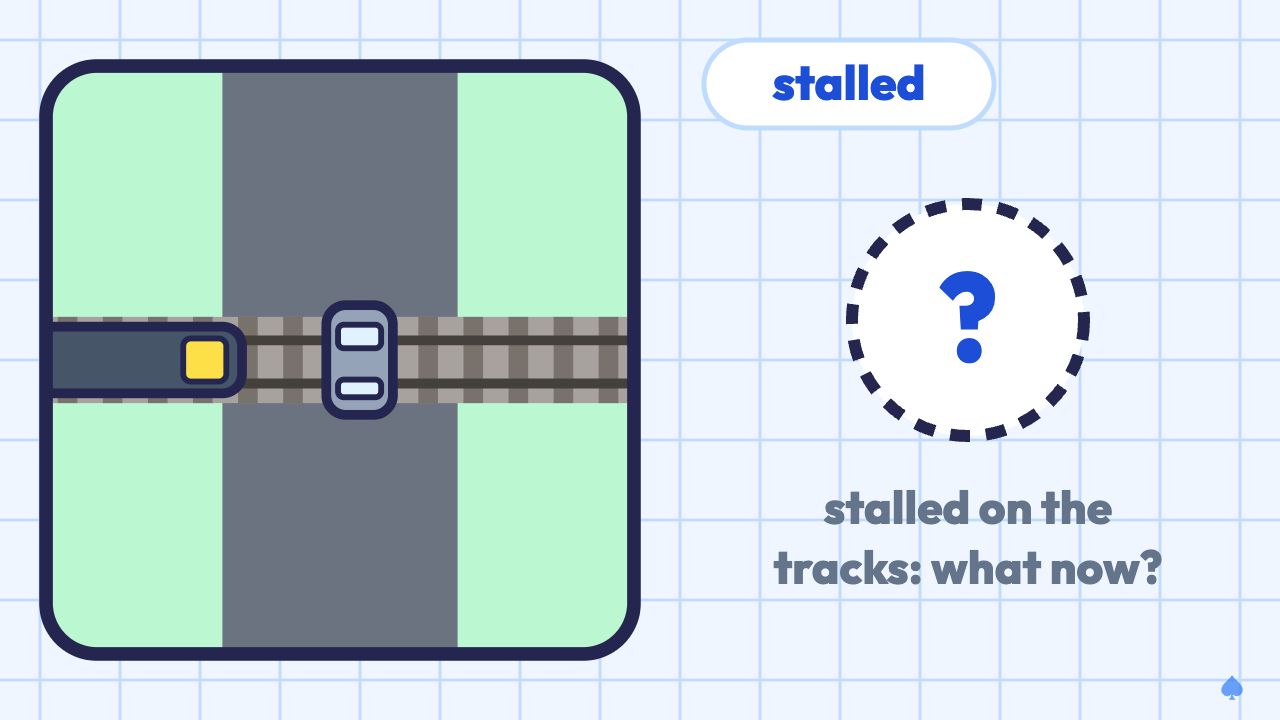
Get out, call 911, go toward train
Everyone should get out immediately, call 911, and move away from the tracks at a 45-degree angle in the direction of the train, which keeps you clear of flying debris. (Rules of the Road, p. 33.)
-
Where do you find the number to report a problem at a railroad crossing?
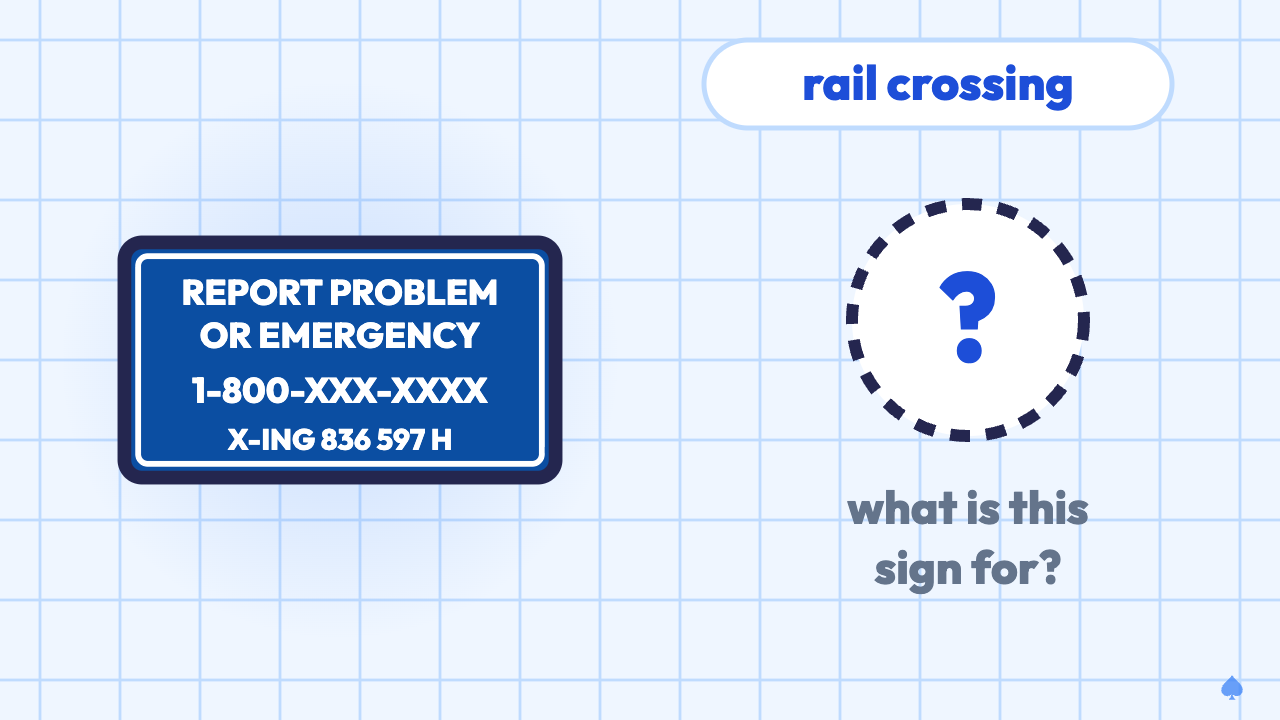
On the blue ENS sign
The blue Emergency Notification System sign at every crossing gives the railroad phone number and the crossing ID. Call it to report a stalled car or a problem. (Rules of the Road, p. 34, 81.)
-
With a manual transmission, when should you shift down at a railroad crossing?
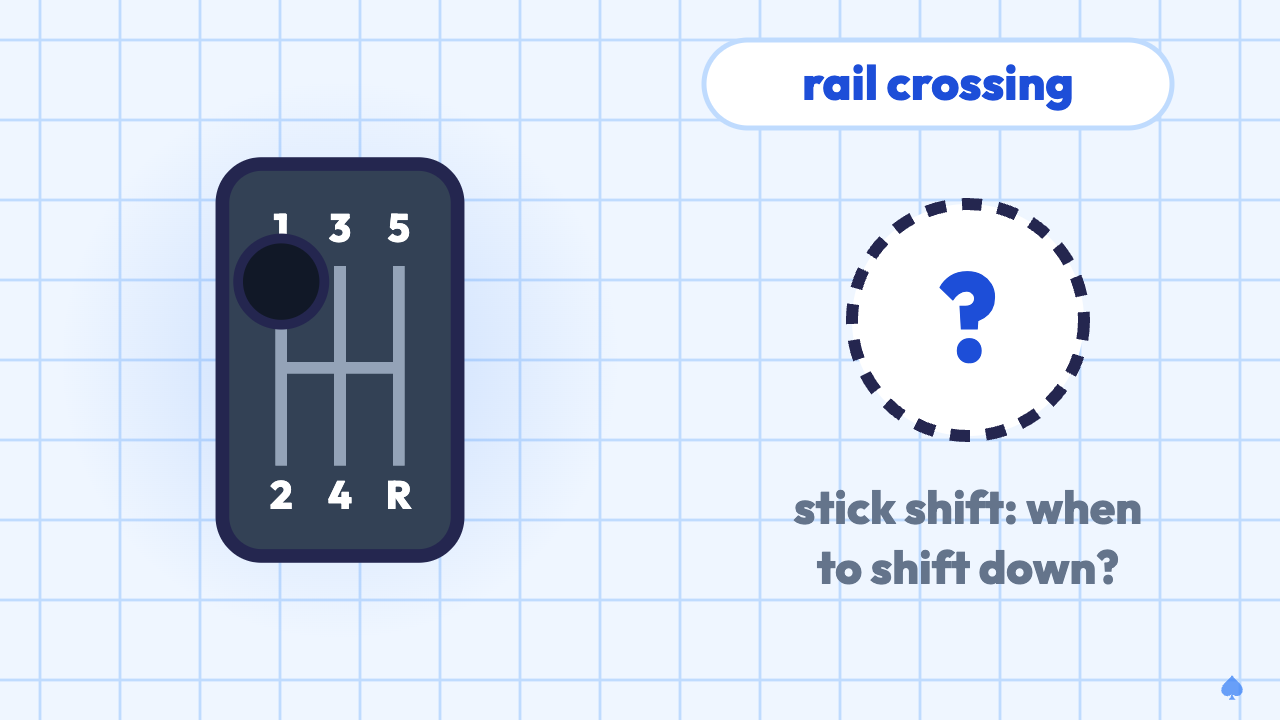
Before the tracks
If your vehicle has a manual transmission, shift down before reaching the tracks. To avoid stalling, do not change gears while crossing. (Rules of the Road, p. 34.)
Every card is here to read. Study them in the app, free to start, with spaced repetition bringing back the ones you miss.
Decks like this one.
- IL Permit 03: Warning, School & Work Zone Signs FlashQuest · 38 cards Start free
- IL Permit 12: Teens, Phones, Belts & Your License FlashQuest · 60 cards Start free
- IL Permit 11: Alcohol, Drugs & DUI FlashQuest · 26 cards Start free
- IL Permit 10: Safe Driving & Equipment FlashQuest · 45 cards Start free
- IL Permit 09: Sharing the Road FlashQuest · 36 cards Start free
- IL Permit 08: Speed Limits & Parking FlashQuest · 31 cards Start free

Study it properly.
All 30 cards are in the app, free to start, scheduled so the ones you miss come back sooner.