
IL Permit 08: Speed Limits & Parking
by FlashQuest
31 Illinois permit test cards on default speed limits and parking rules. Deck 8 of 12. The speed cards run from 70 mph on interstates down to 30 in town, 20 in a school zone and 15 in an alley, plus when to go slower than posted. The parking cards cover wheel direction on hills, parallel parking within 12 inches, disability and EV spaces, double parking, and the no-parking distances: 15 feet from a hydrant, 20 from a crosswalk, 30 from a stop sign and 50 from a rail. From the Illinois Rules of the Road 2026 (chapter 4).


Free to start, no account needed. After you install, search the Table for “IL Permit 08: Speed Limits & Parking”.
Study all 31 cards, with their pictures, in the app.
All 31 cards in this deck.
Made by FlashQuest. Last updated November 2026. Drafted with AI help.
- Unless posted otherwise, what is the speed limit on Illinois interstates and tollways?
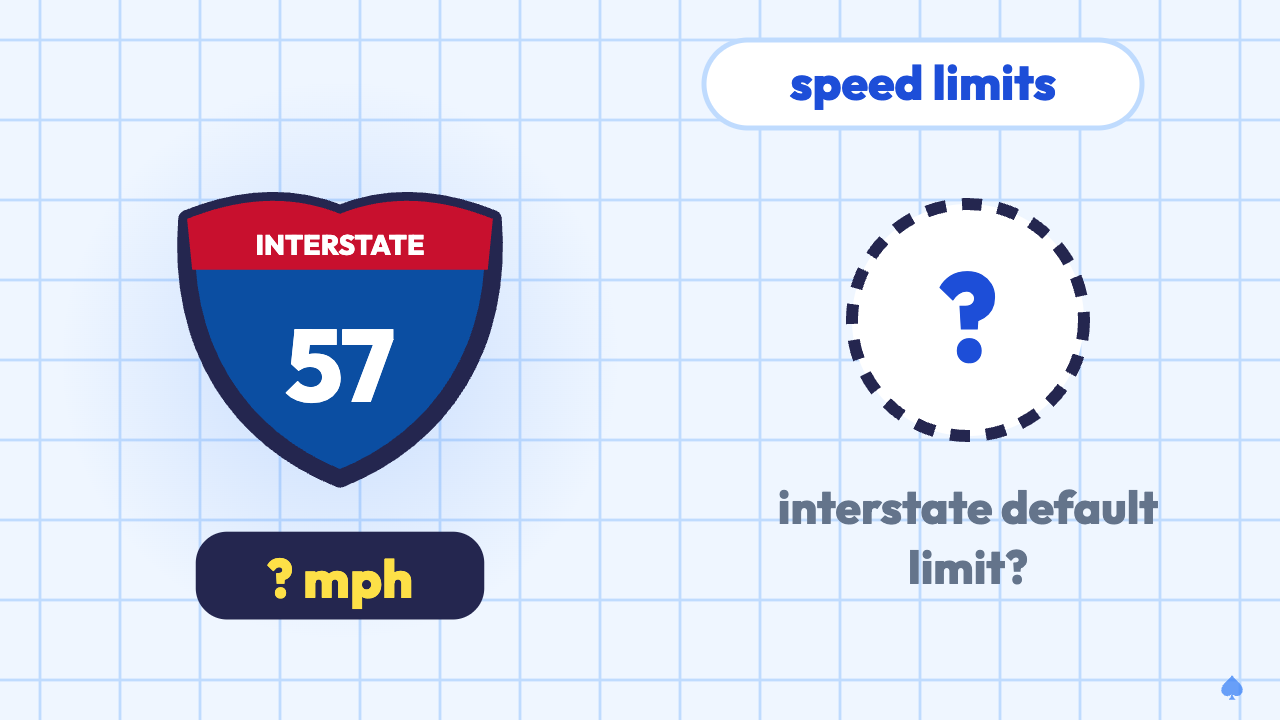
- 70 mph
- Unless otherwise posted, the speed limit on interstates and tollways is 70 mph. You may drive the maximum only in safe conditions. (Rules of the Road, p. 24.)
- Unless posted otherwise, what is the speed limit on four-lane highways?
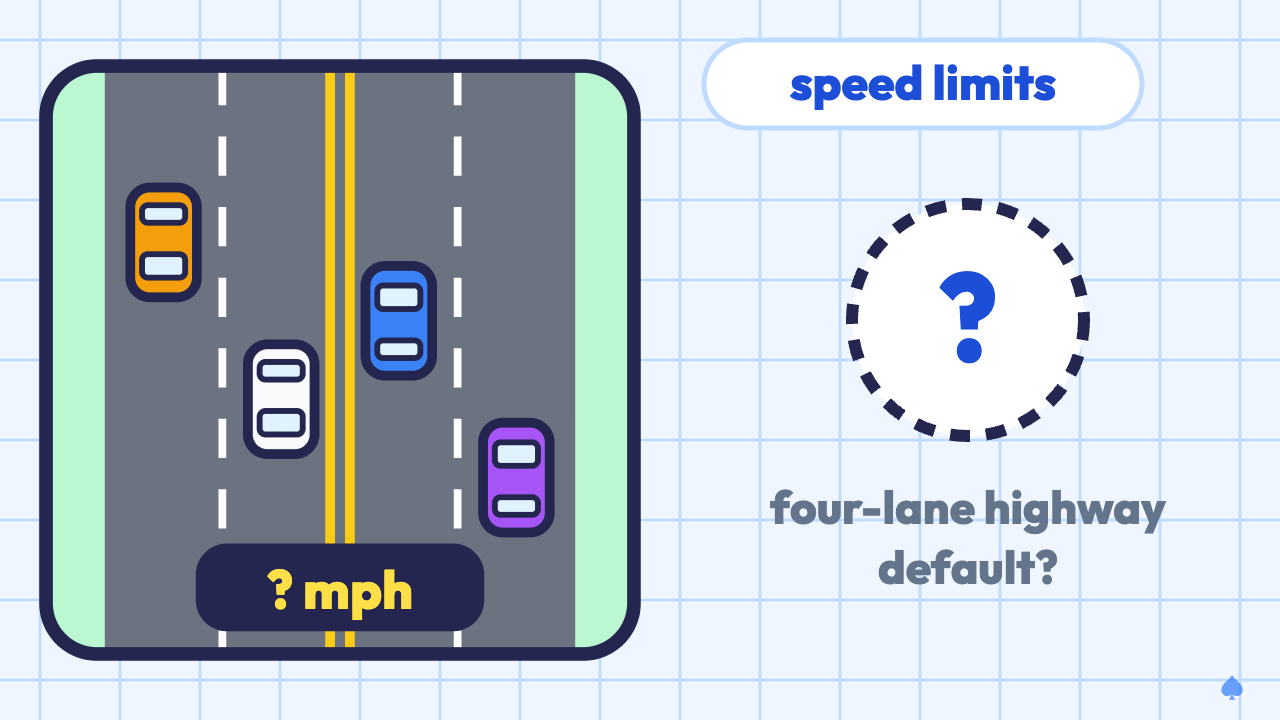
- 65 mph
- Unless otherwise posted, highways with four lanes have a 65 mph speed limit. (Rules of the Road, p. 24.)
- Unless posted otherwise, what is the speed limit on other highways and in rural areas?
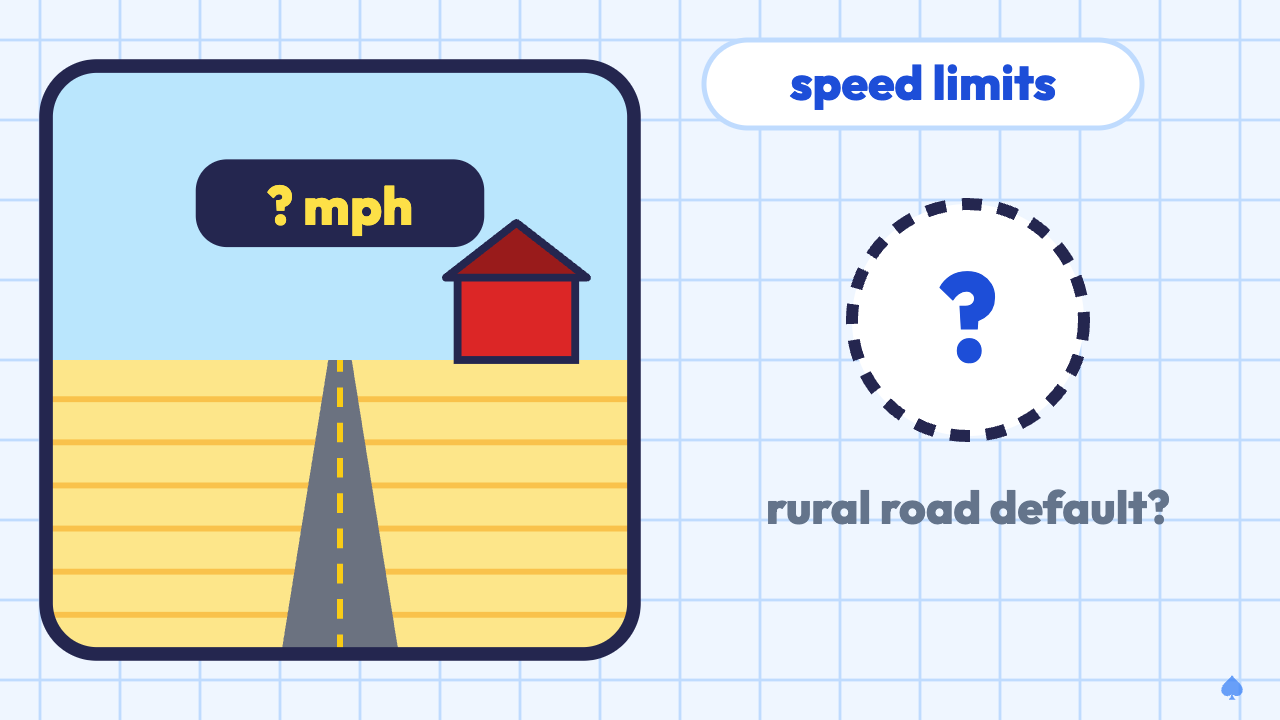
- 55 mph
- Unless otherwise posted, other highways and rural areas have a 55 mph speed limit. (Rules of the Road, p. 24.)
- Unless posted otherwise, what is the speed limit in city and town areas?
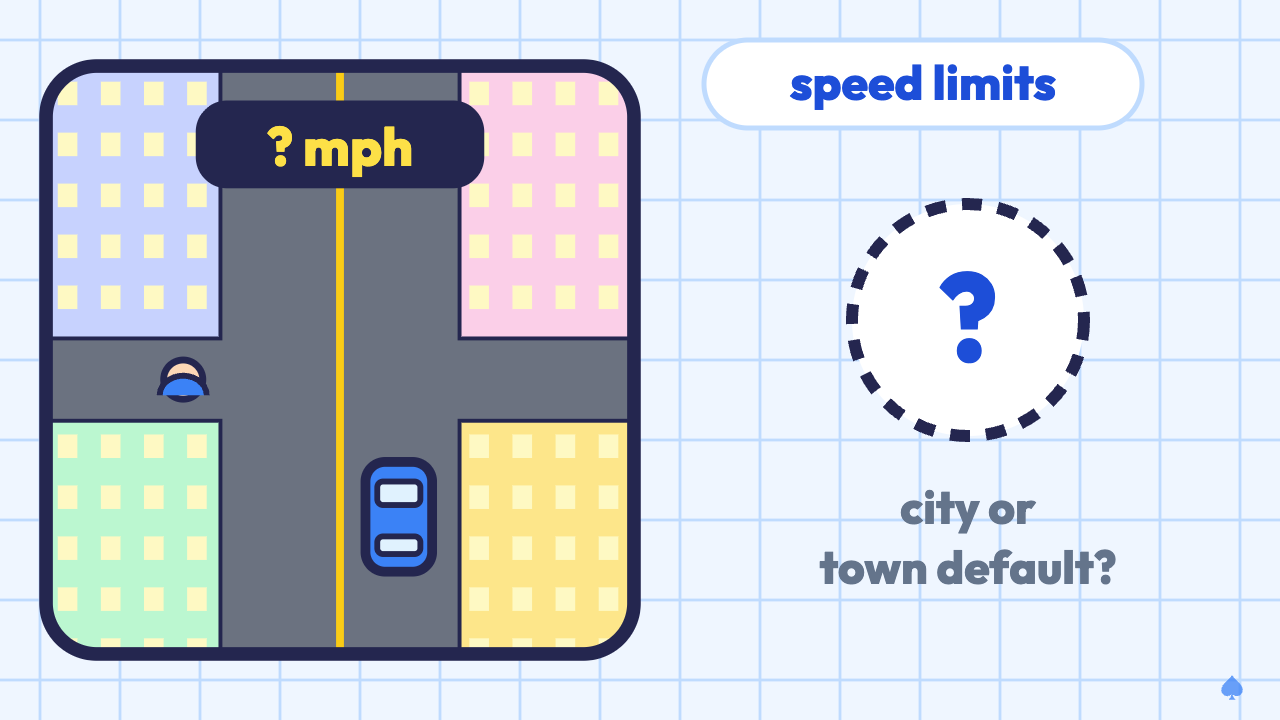
- 30 mph
- Unless otherwise posted, the speed limit in city and town areas is 30 mph. Towns may post different limits. (Rules of the Road, p. 24.)
- Unless posted otherwise, what is the speed limit in an alley?
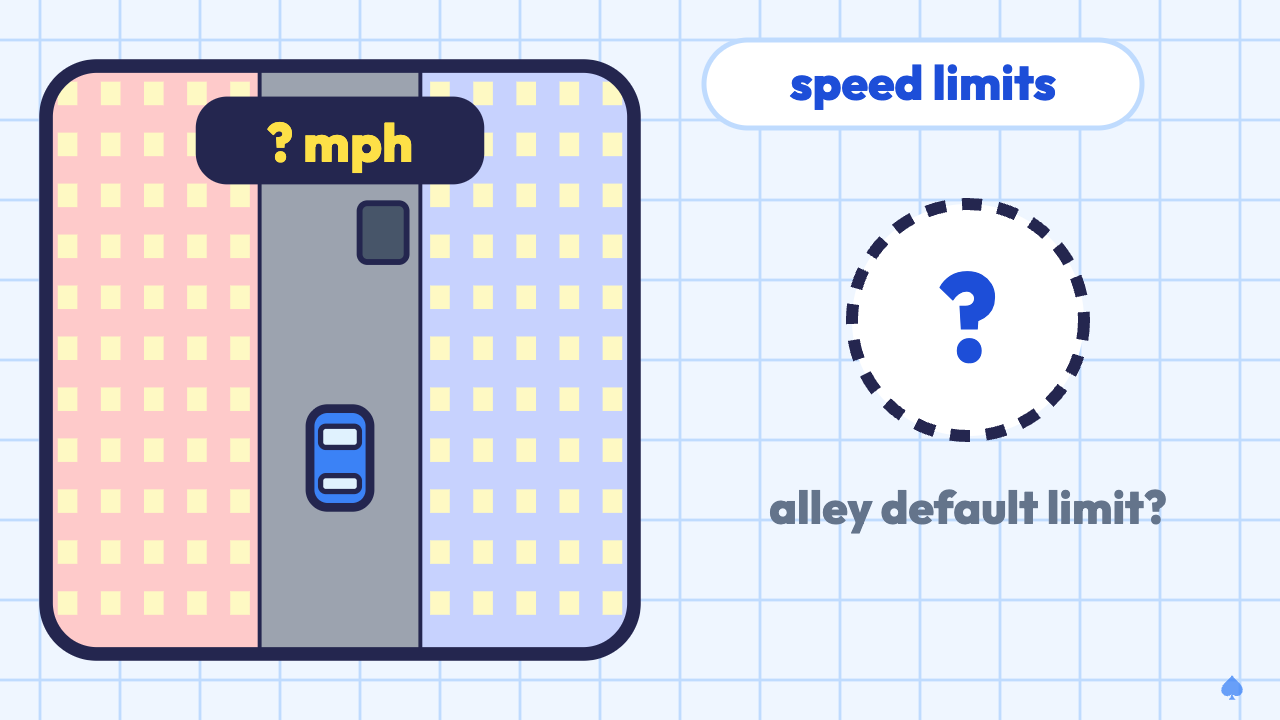
- 15 mph
- Unless otherwise posted, the speed limit in alleys is 15 mph, the lowest default limit in Illinois. (Rules of the Road, p. 24.)
- What is the speed limit in a posted school zone on school days when children are present?
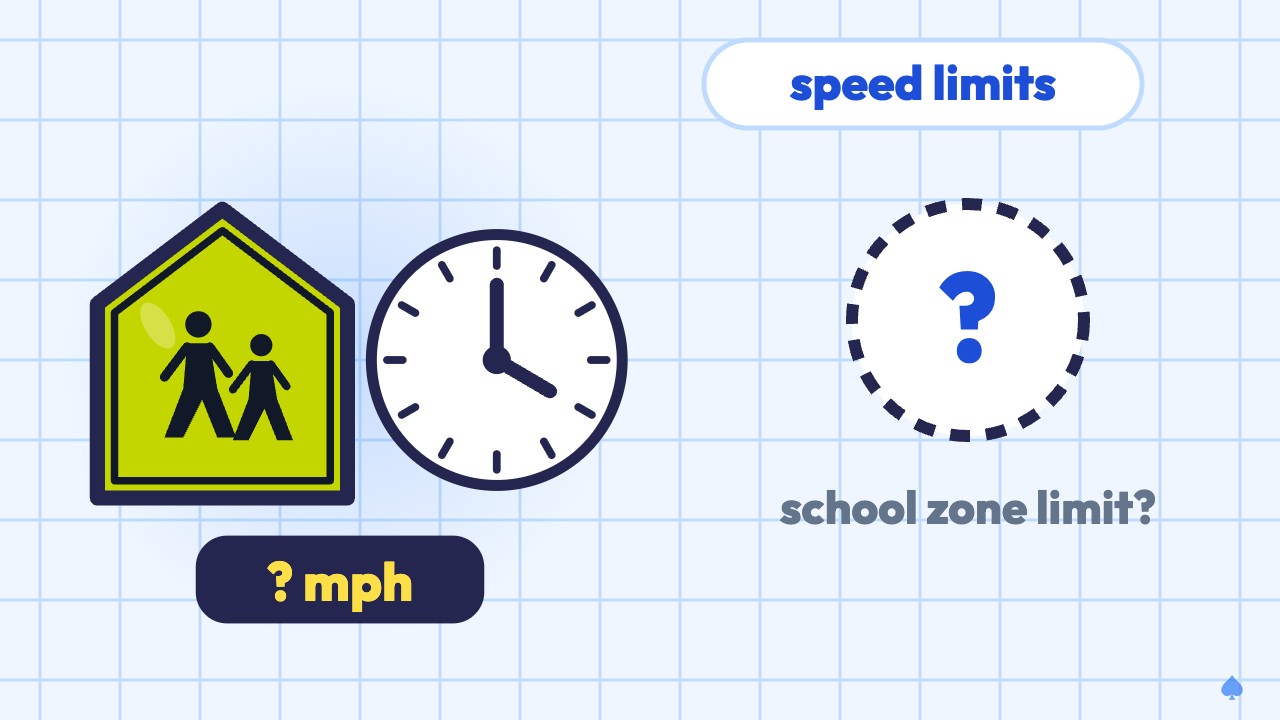
- 20 mph
- School zones have a 20 mph limit on school days between 6:30 a.m. and 4 p.m. when children are present and signs are posted. (Rules of the Road, p. 24.)
- When should you drive below the posted speed limit?
- Bad weather and intersections
- Drive the maximum only in safe conditions. Slow down in bad weather and when approaching and crossing an intersection, going around a curve, nearing a hilltop, or on narrow winding roads. (Rules of the Road, p. 24.)
- Which places does the manual say you must slow down for?
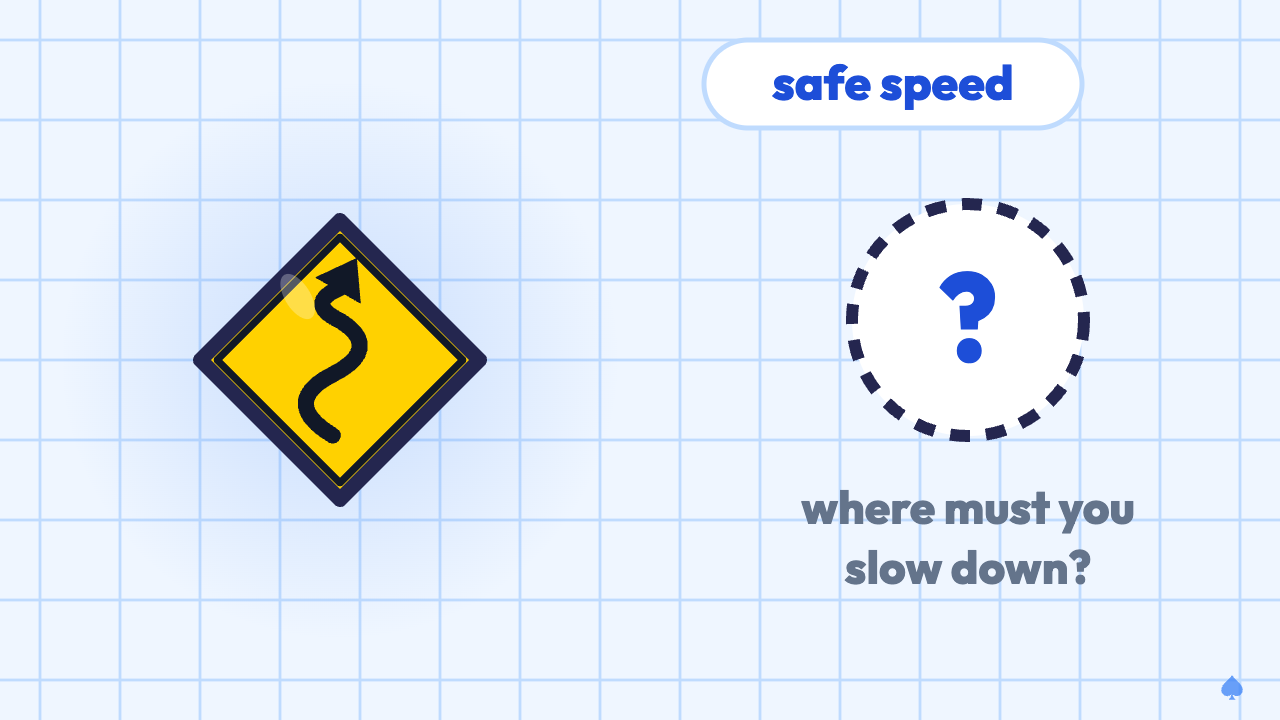
- Curves, hilltops, intersections
- You must slow down when approaching and crossing an intersection, going around a curve, approaching the top of a hill, or traveling a narrow and winding road. (Rules of the Road, p. 24.)
- No minimum speed is posted. May you drive as slowly as you like?
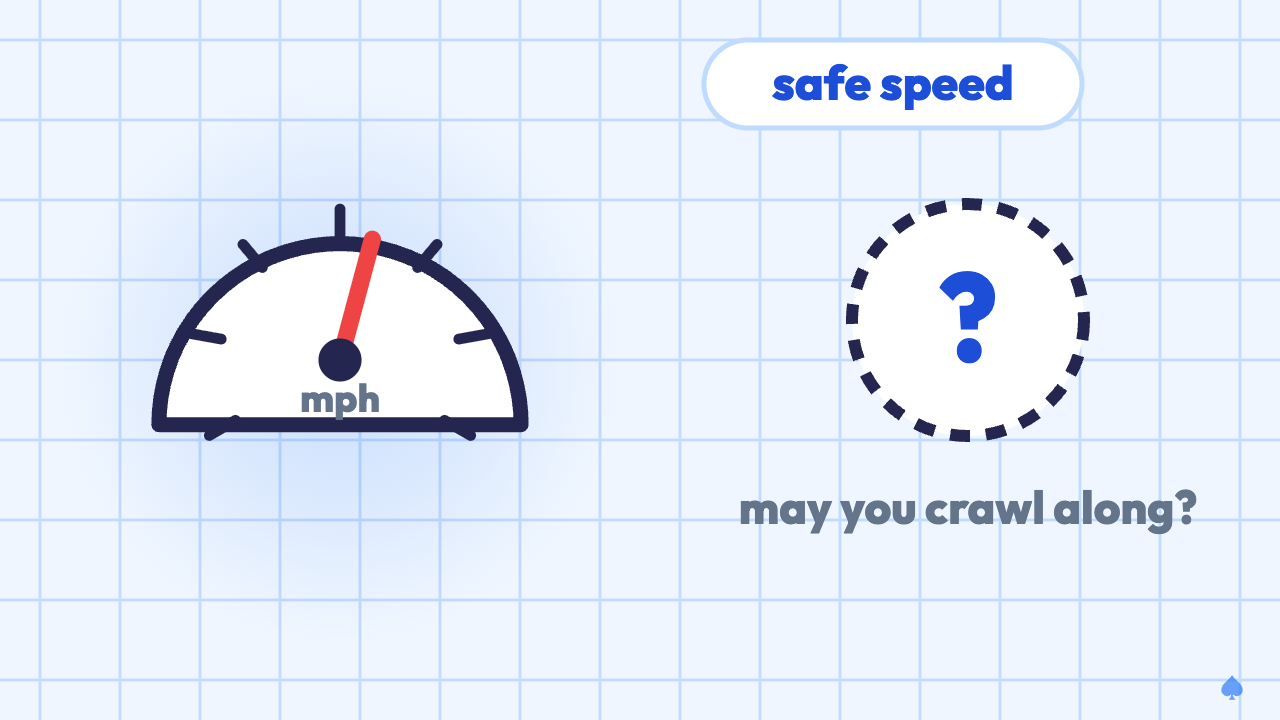
- No, not so slow you block traffic
- A minimum speed may be posted on some roads. When none is posted, do not drive so slowly that you interfere with the normal movement of traffic. (Rules of the Road, p. 24.)
- You park facing downhill next to a curb. Which way do you turn your front wheels?
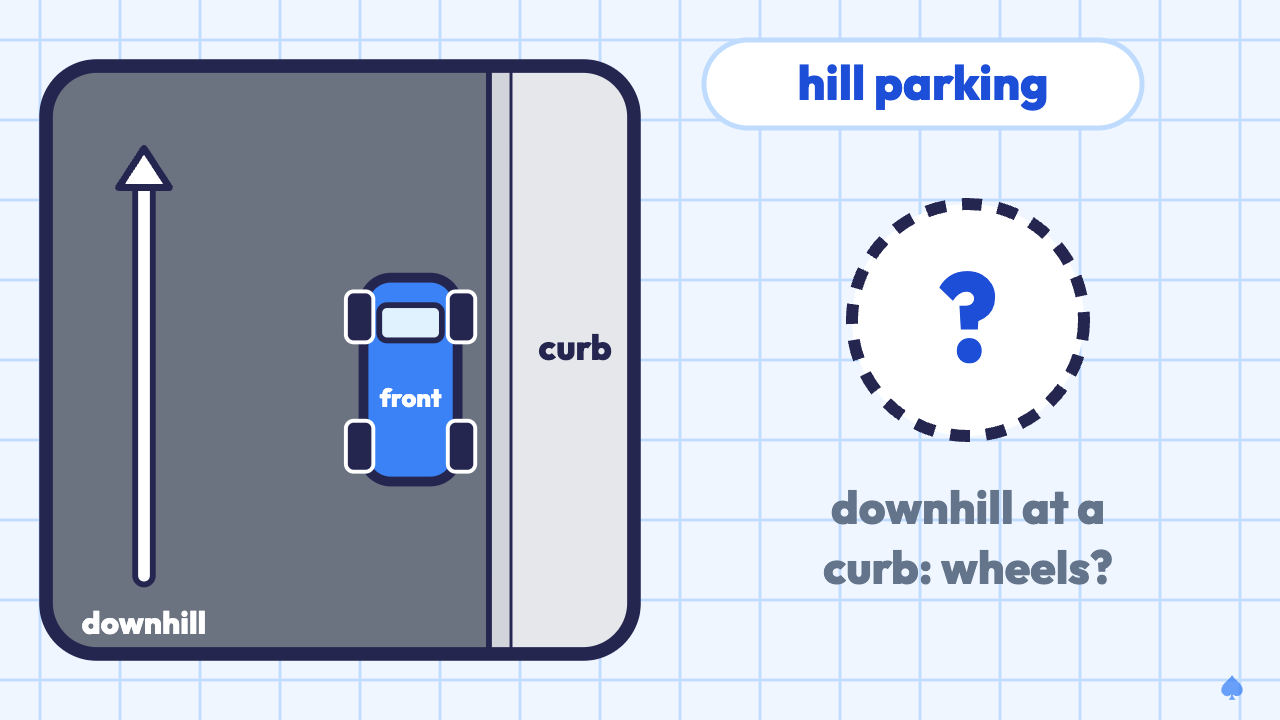
- Toward the curb
- Facing downhill with a curb, turn the front wheels toward the curb so the car rolls into the curb. Put the car in park and set the parking brake. (Rules of the Road, p. 34.)
- You park facing uphill next to a curb. Which way do you turn your front wheels?
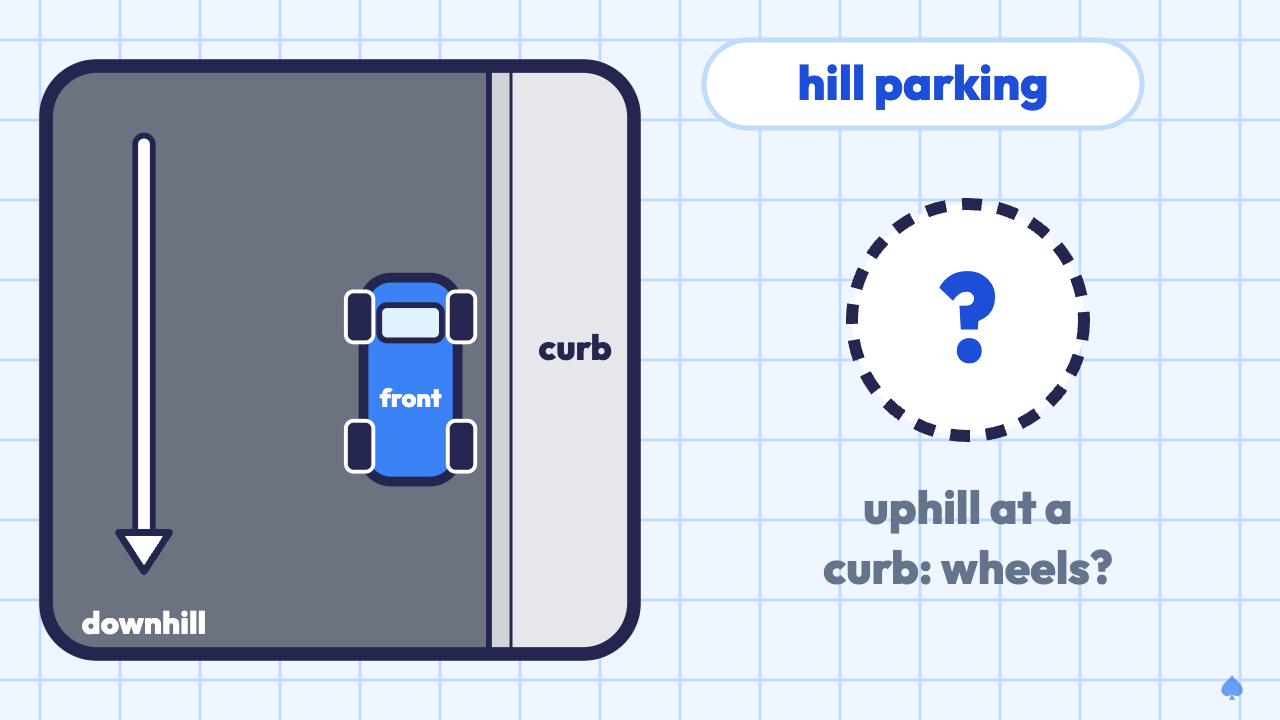
- Away from the curb
- Facing uphill with a curb, turn the front wheels away from the curb. If the car rolls back, the tire rests against the curb. (Rules of the Road, p. 34.)
- You park on a hill with no curb. Which way do you turn your front wheels?
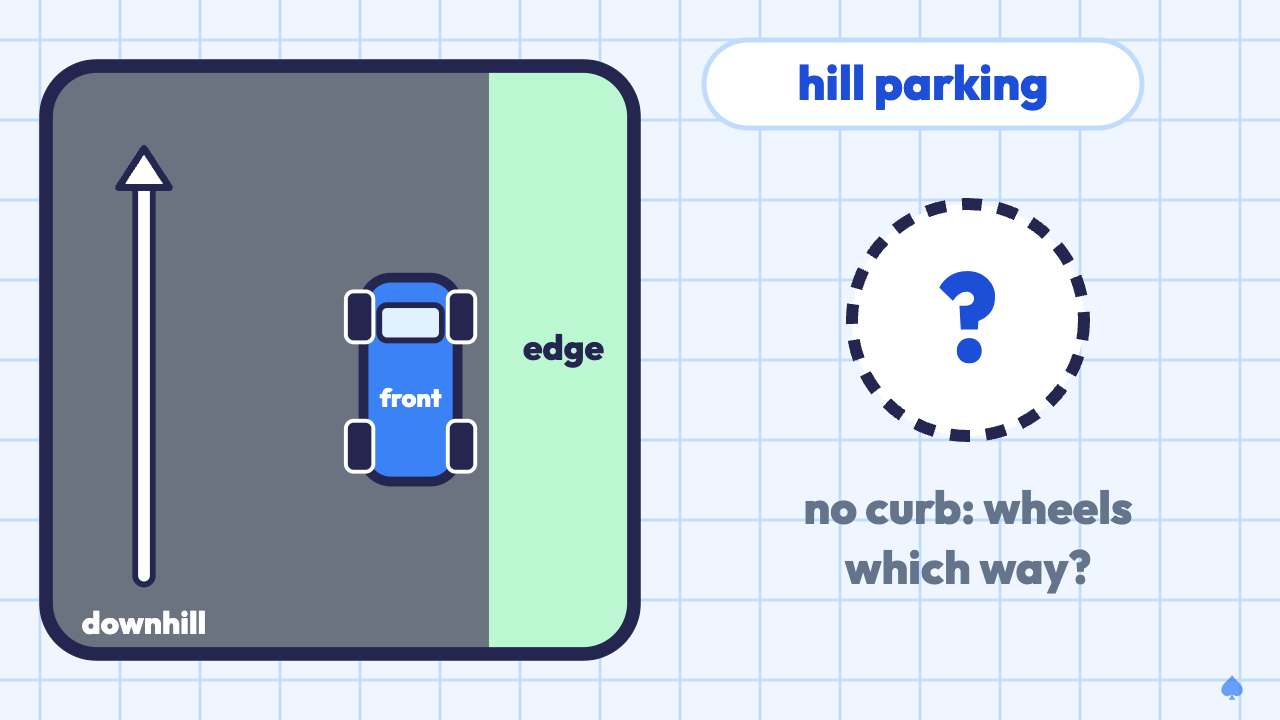
- Toward the edge of the road
- On a street without a curb, uphill or downhill, turn the wheels toward the side of the road where the car is parked, so it rolls off the road, not into traffic. (Rules of the Road, p. 34.)
Show the other 19 cards
-
Parking on any hill, what should you do with the gear selector and brake?
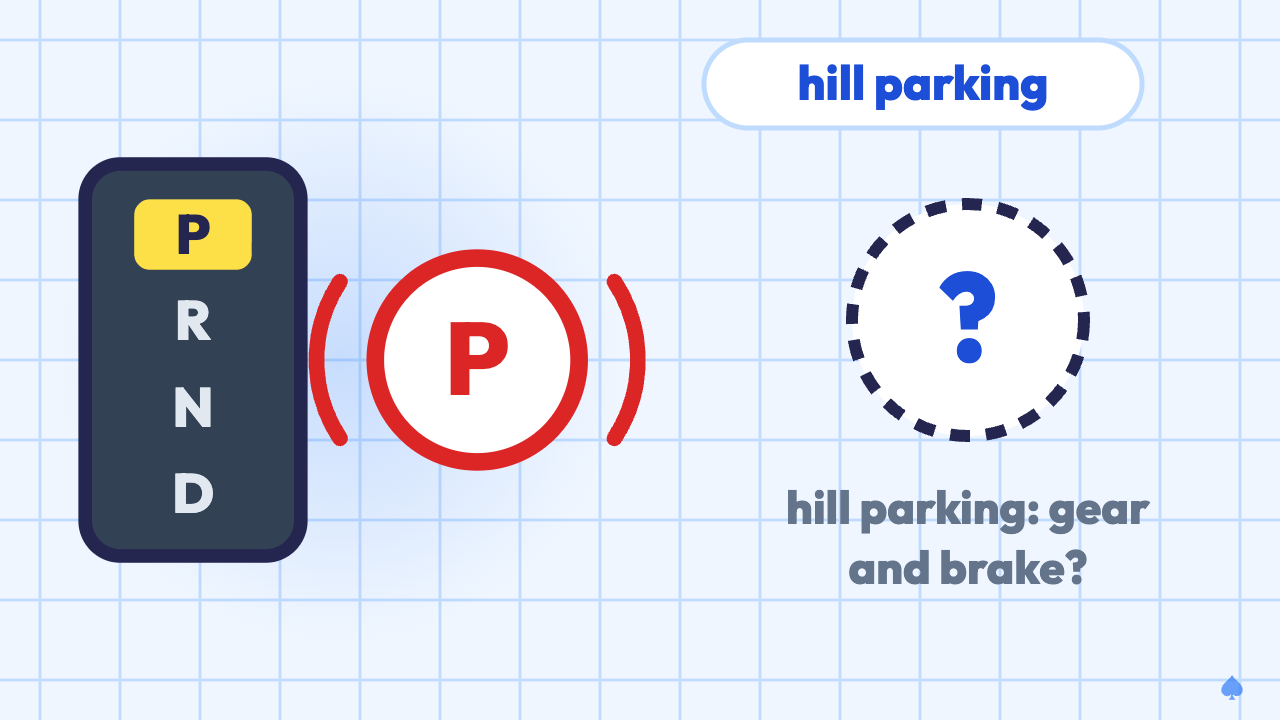
Park, and set the parking brake
Any time you park on a hill, put the gear selector in park and set the parking brake if needed. When leaving, release the brake, signal, check traffic and go when safe. (Rules of the Road, p. 34.)
-
When parallel parking on a two-way street, how close must your right wheels be to the curb?
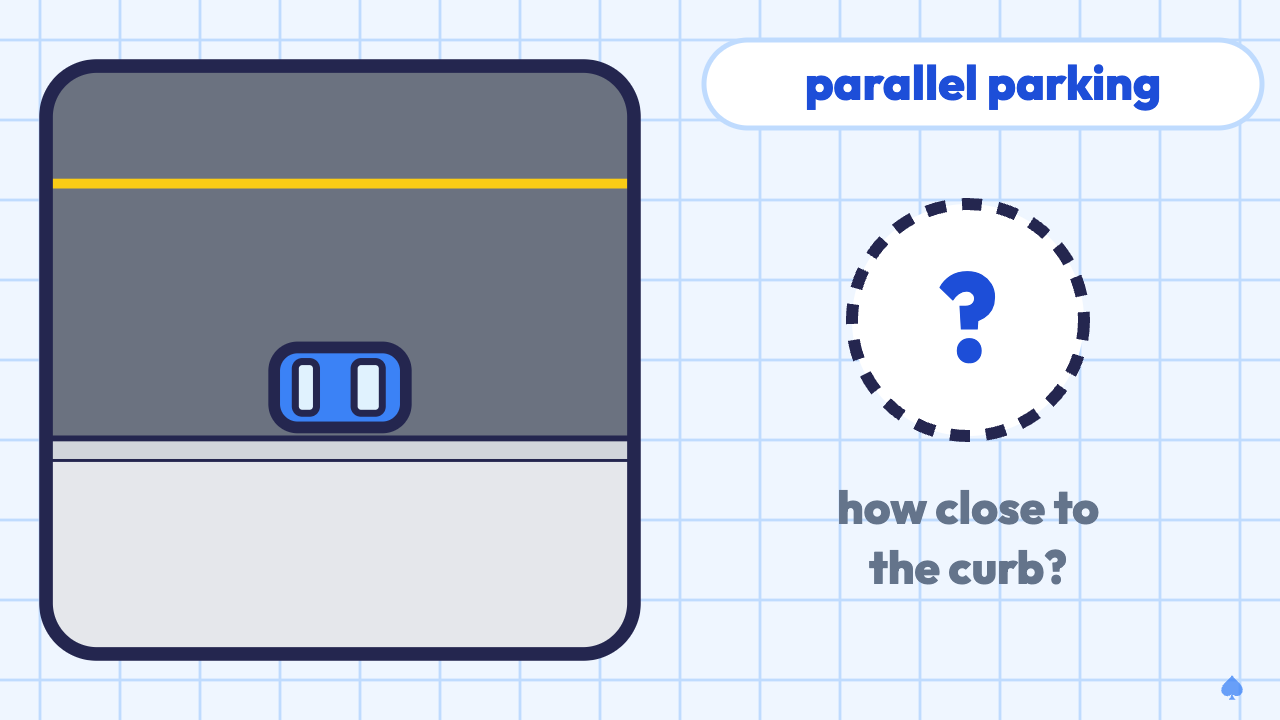
Within 12 inches
On a two-way street, park with the right-hand wheels parallel to and within 12 inches of the curb. On a one-way street, park within 12 inches of the right or left curb. (Rules of the Road, p. 35.)
-
Which way must your car face when parked on a street?
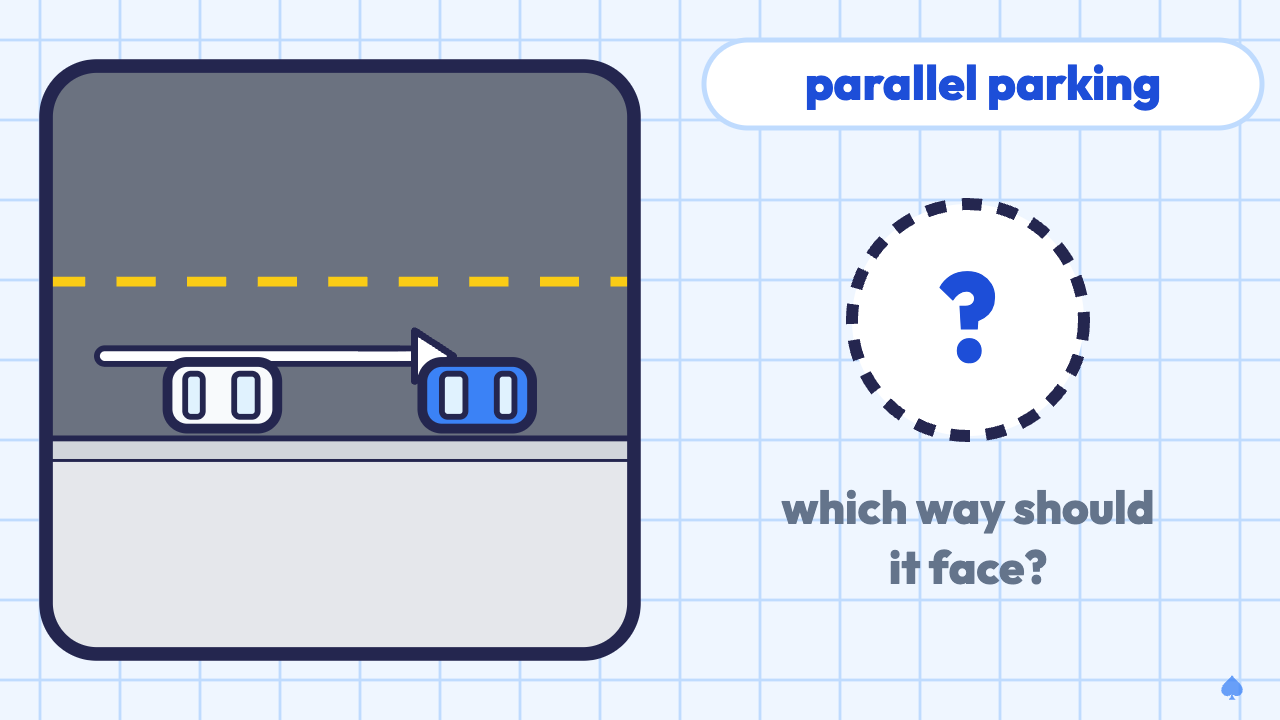
The way traffic moves
Vehicles must be parked in the direction in which traffic is moving. (Rules of the Road, p. 35.)
-
Who may park in a space reserved by an official disability parking sign?
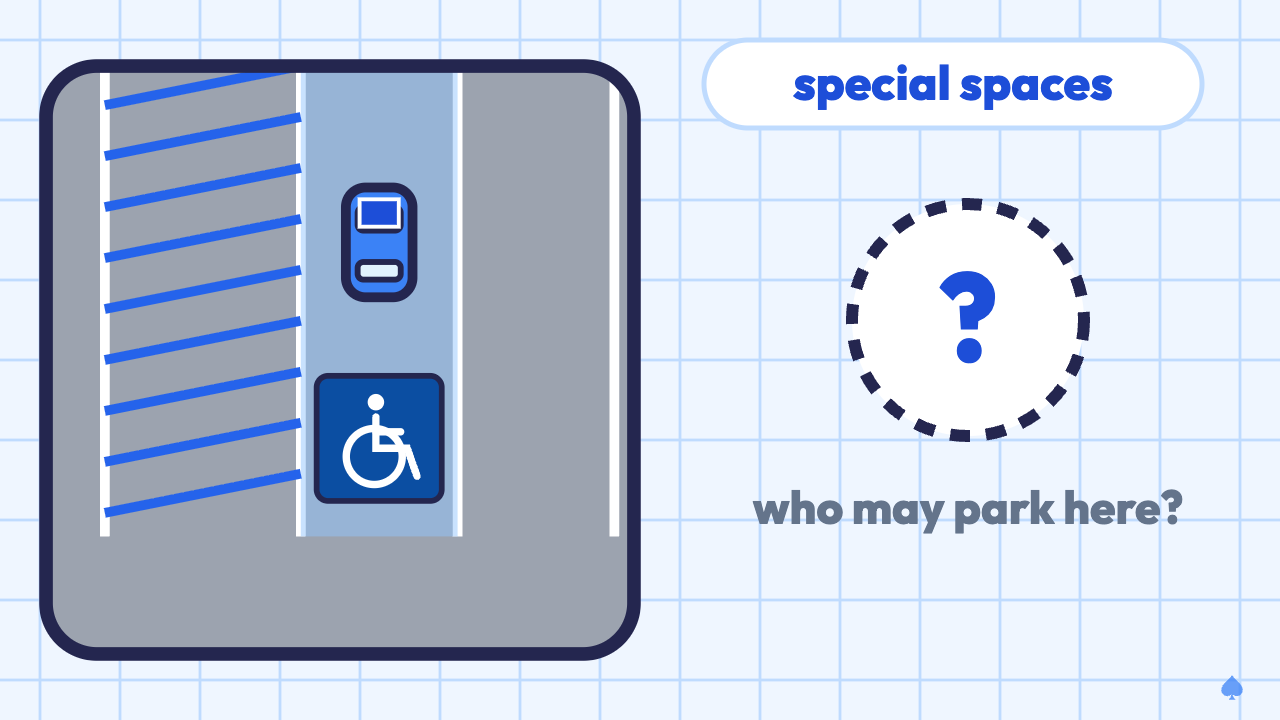
Only cars with the plate or placard
Only vehicles displaying license plates or parking placards for persons with disabilities may use spaces reserved by an official disability parking sign. (Rules of the Road, p. 35.)
-
Using disability parking privileges, who must be present?
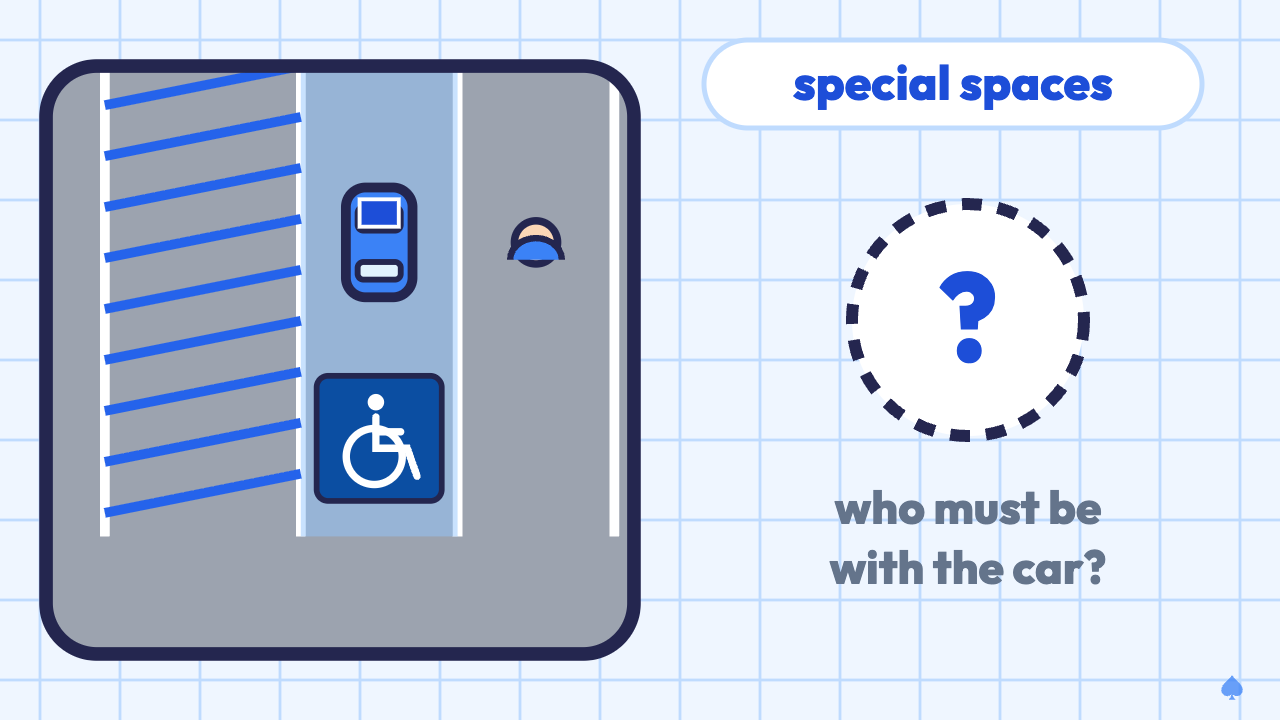
The placard or plate holder
The authorized holder of the placard or plates must be present and must enter or exit the vehicle when the parking privilege is used. (Rules of the Road, p. 35.)
-
May you park in the striped area next to an accessible parking space if you have a placard?
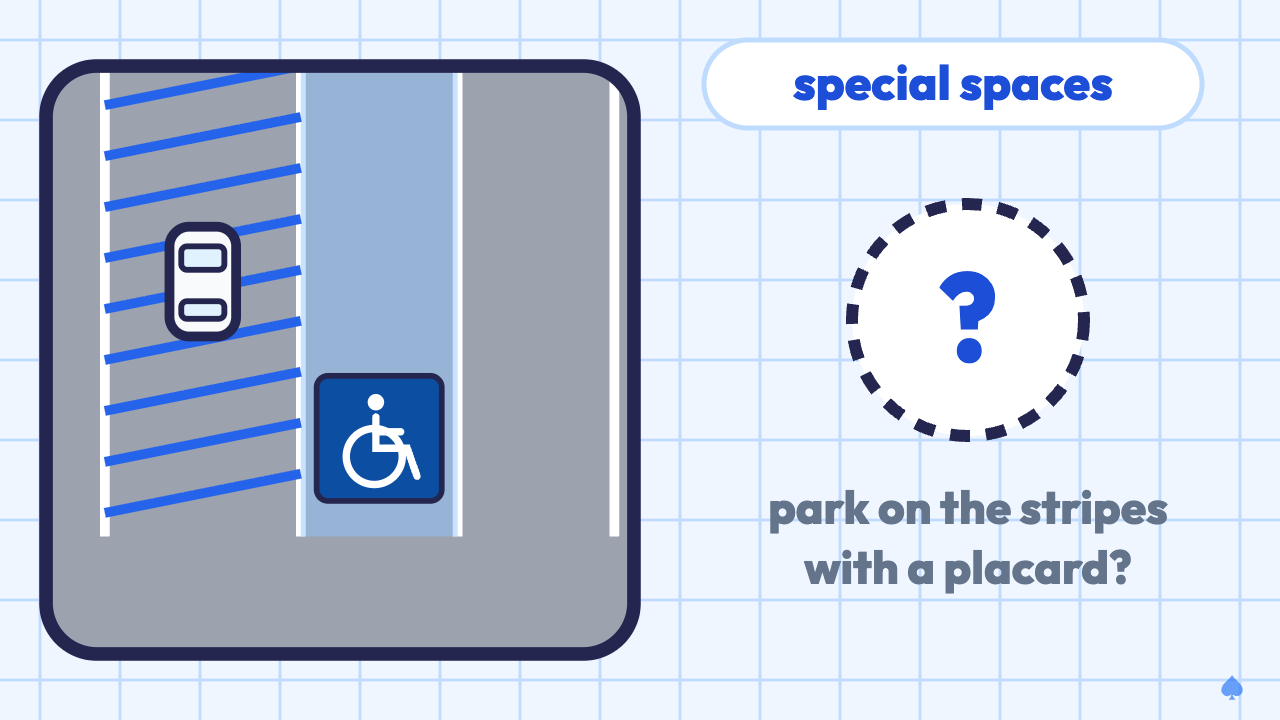
No, never
The striped area beside an accessible space is part of the reserved space. No vehicle may park there, even one with a placard or disability plates. (Rules of the Road, p. 35.)
-
Who may park in a space with an electric vehicle charging station?
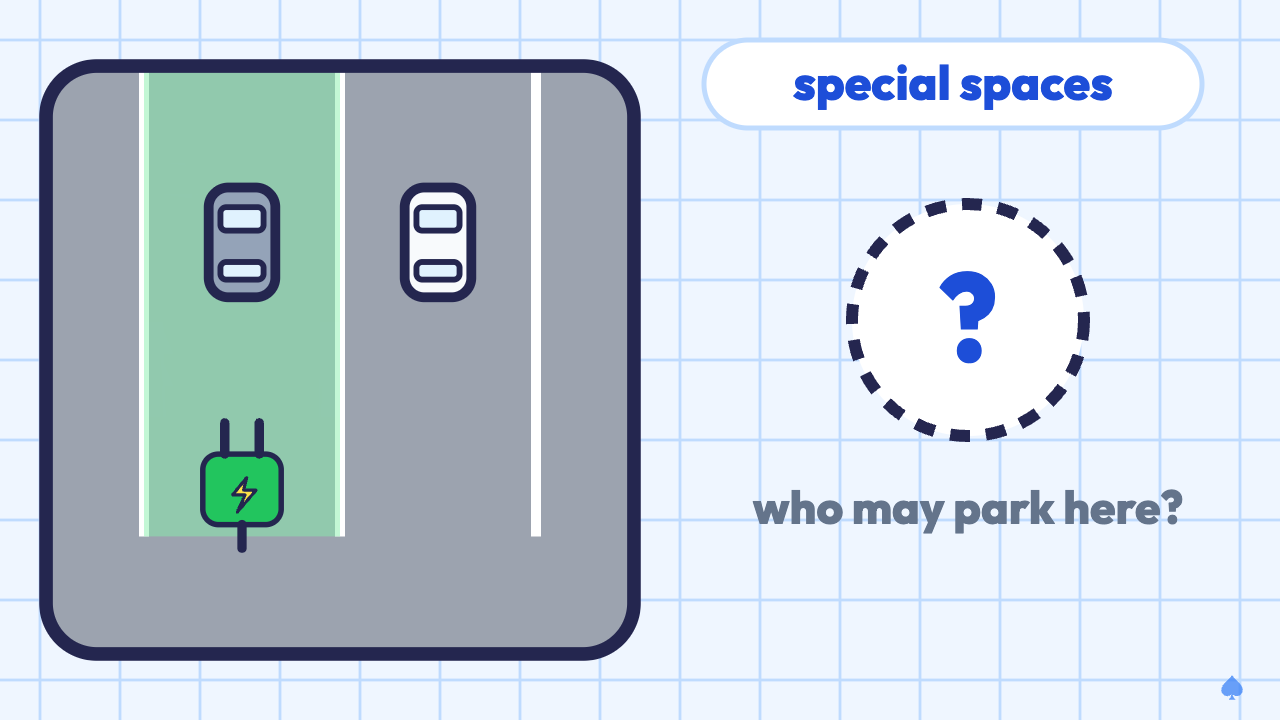
Only electric vehicles
Some parking areas have spaces with charging stations for electric vehicles. Only electric vehicles may park in these designated spaces. (Rules of the Road, p. 35.)
-
May you stop on the road side of a car already parked at the curb?
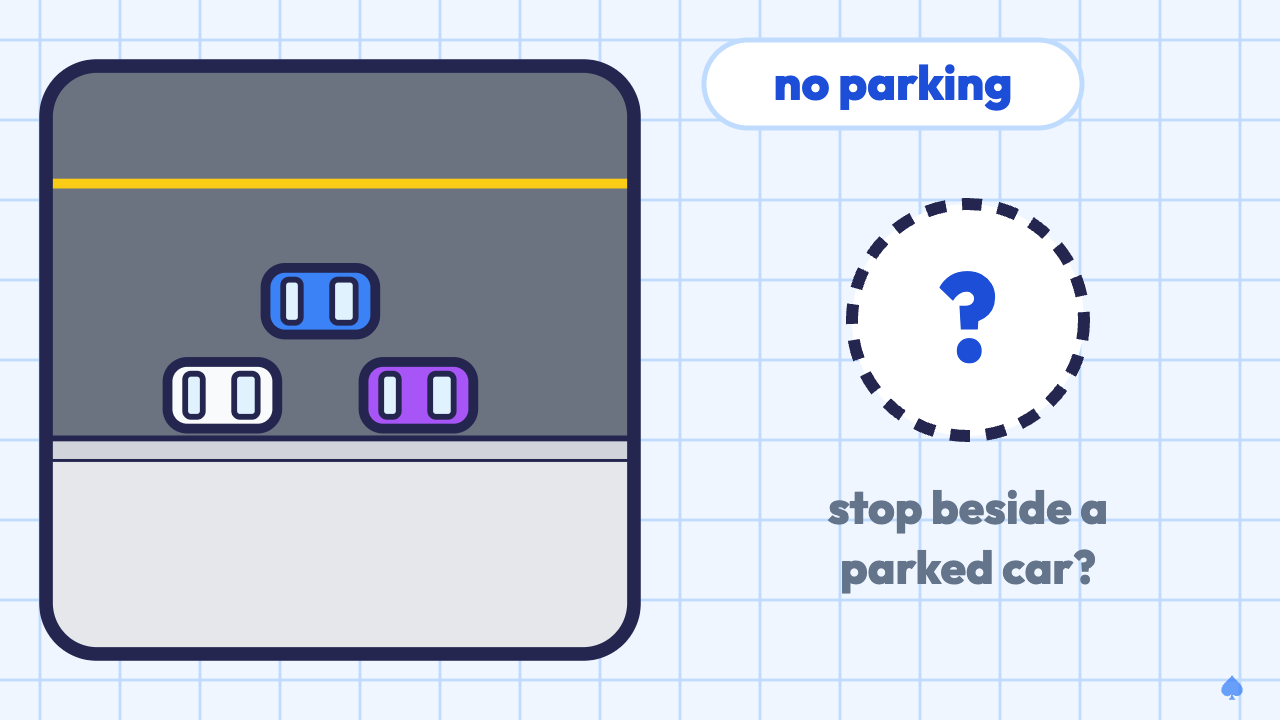
No, that is double parking
Stopping, standing or parking on the roadway side of any parked vehicle, called double parking, is prohibited. (Rules of the Road, p. 35.)
-
May you stop or park in a crosswalk or within an intersection?
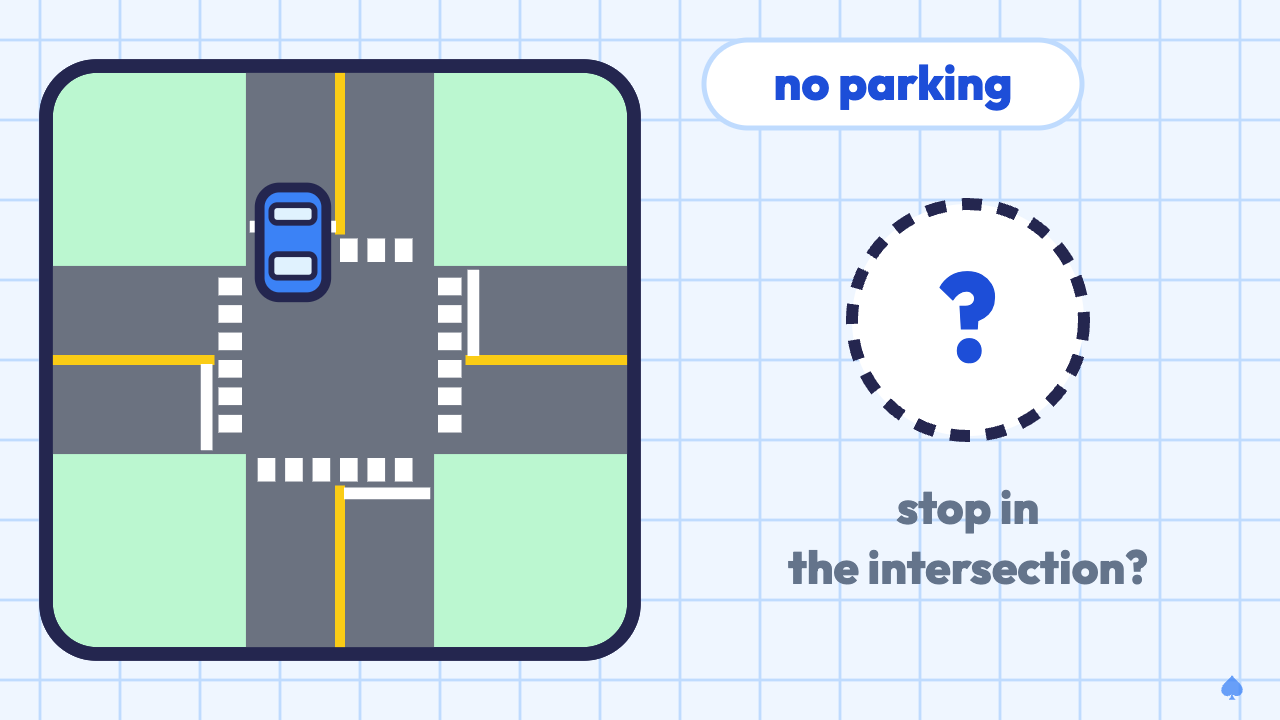
No
Stopping, standing or parking is prohibited on a sidewalk, in a crosswalk, or within an intersection. (Rules of the Road, p. 35.)
-
May you stop or park in a marked bike lane?
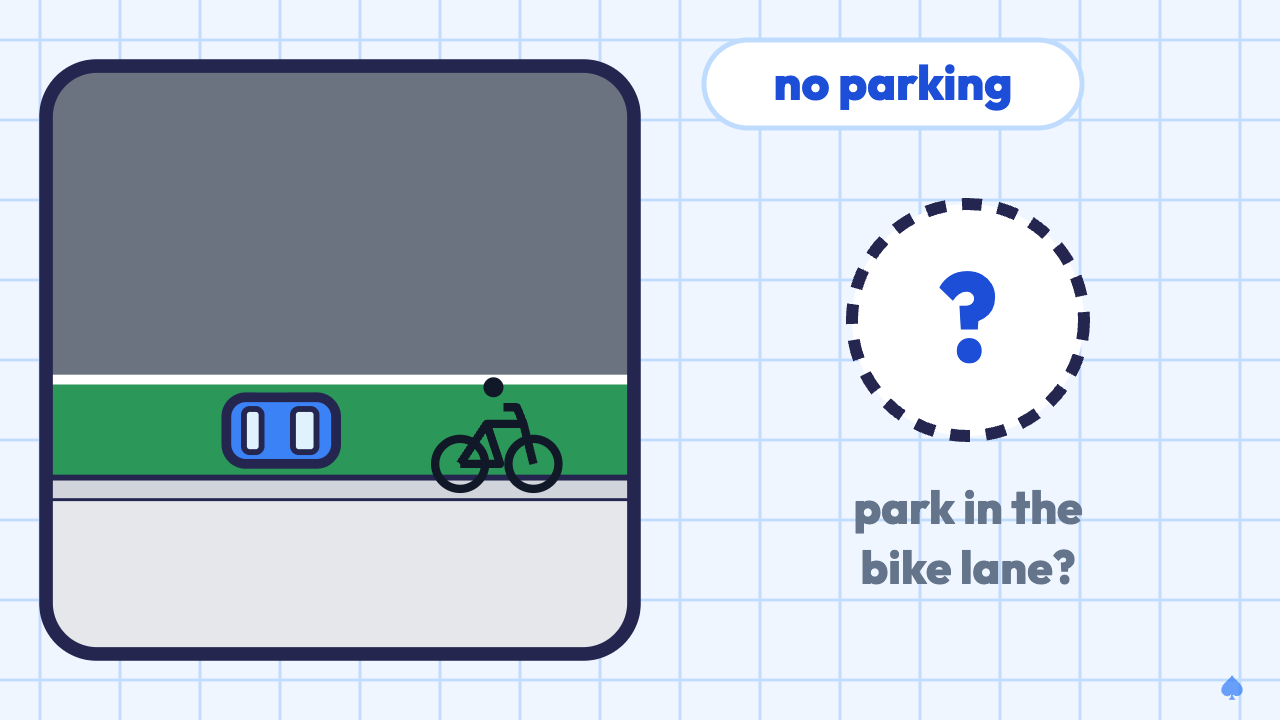
No
Stopping, standing or parking is prohibited in a marked, buffered or barrel-protected bike lane. (Rules of the Road, p. 35.)
-
May you park on a bridge, on railroad tracks or in a highway tunnel?
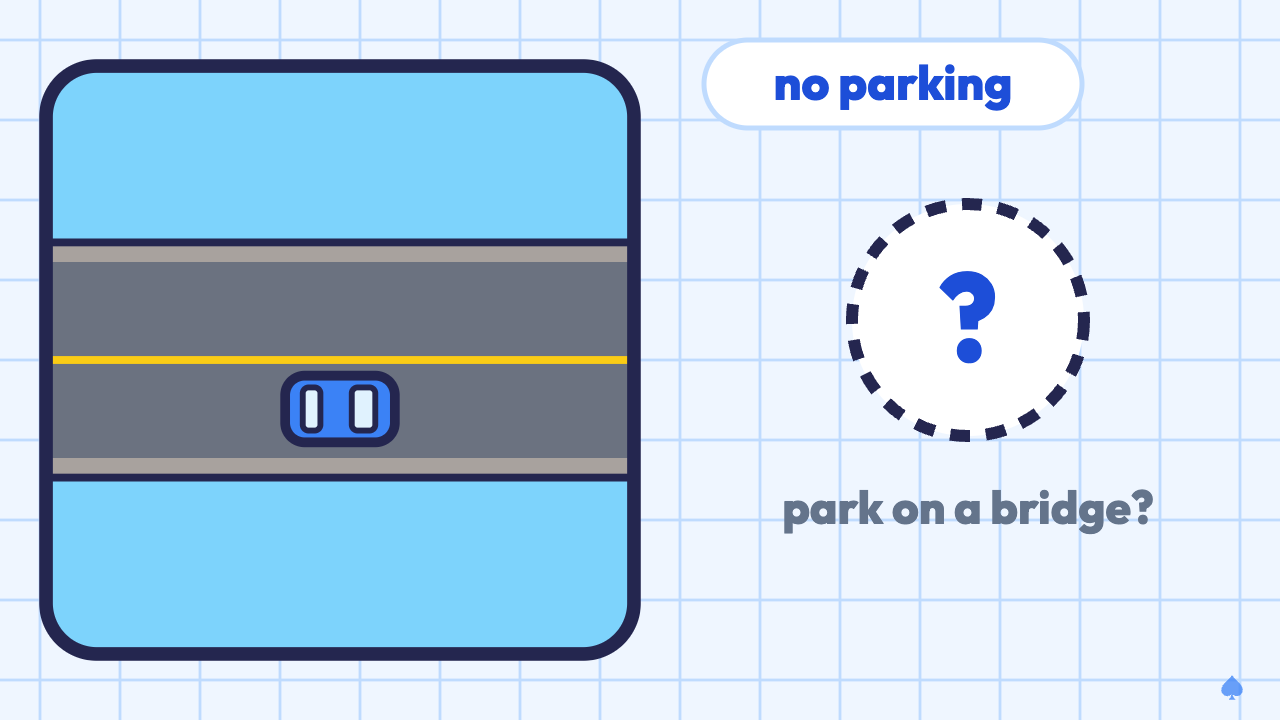
No
Stopping, standing or parking is prohibited on any bridge, overpass, railroad track, or within a highway tunnel, and on controlled-access roads. (Rules of the Road, p. 35.)
-
Outside town, you must stop on the road in an emergency. What does the law require?
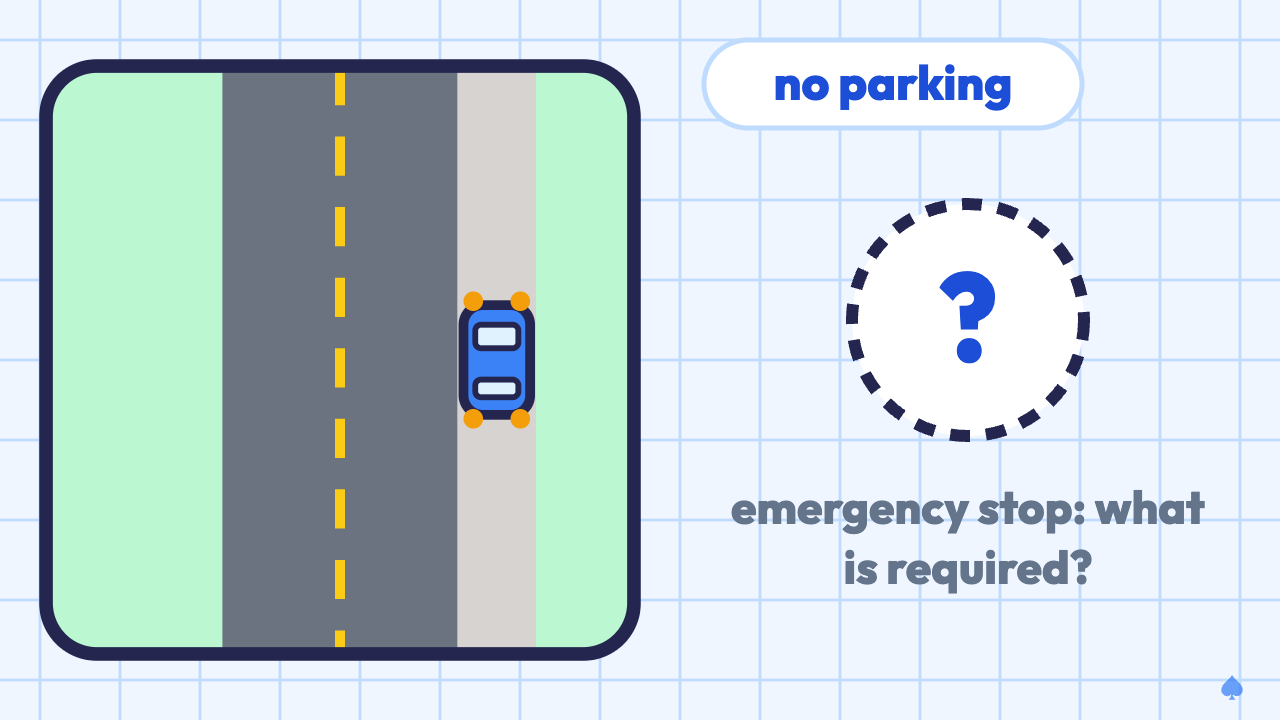
200 ft clear view, flashers on
Outside business and residential districts, park off the road when practical. In an emergency you may stop only with a clear view of 200 feet each way; turn on your flashers and leave room to pass. (Rules of the Road, p. 35.)
-
May you park in front of a public or private driveway?
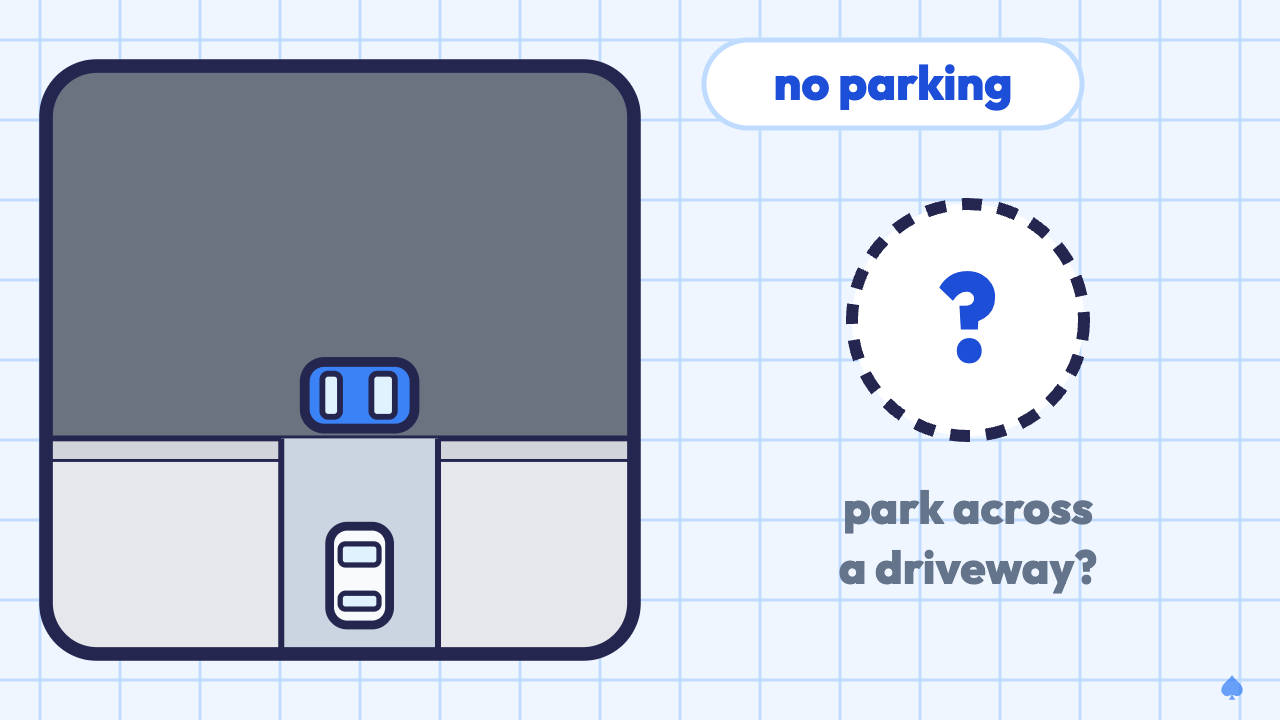
No
Standing or parking a vehicle, whether occupied or not, is prohibited in front of a public or private driveway. (Rules of the Road, p. 35.)
-
How close to a fire hydrant may you park?
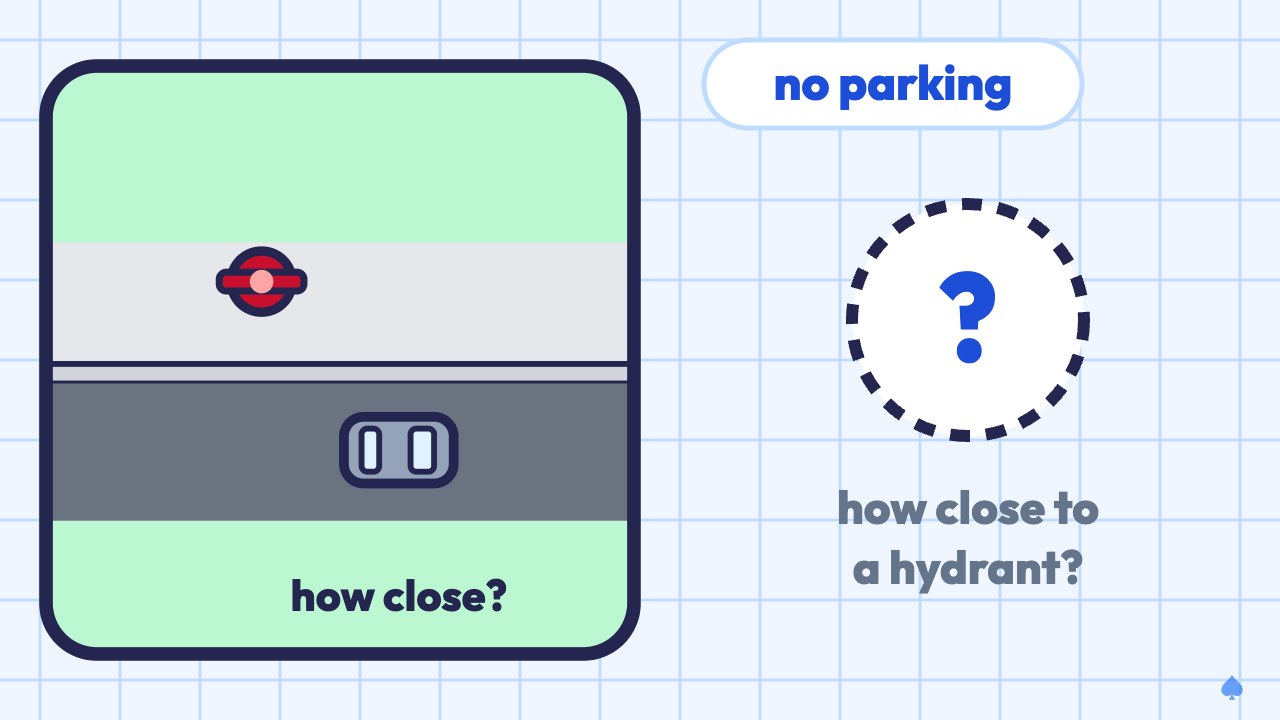
No closer than 15 feet
Standing or parking within 15 feet of a fire hydrant is prohibited, whether or not the vehicle is occupied. (Rules of the Road, p. 35.)
-
How close may you park to a crosswalk at an intersection?
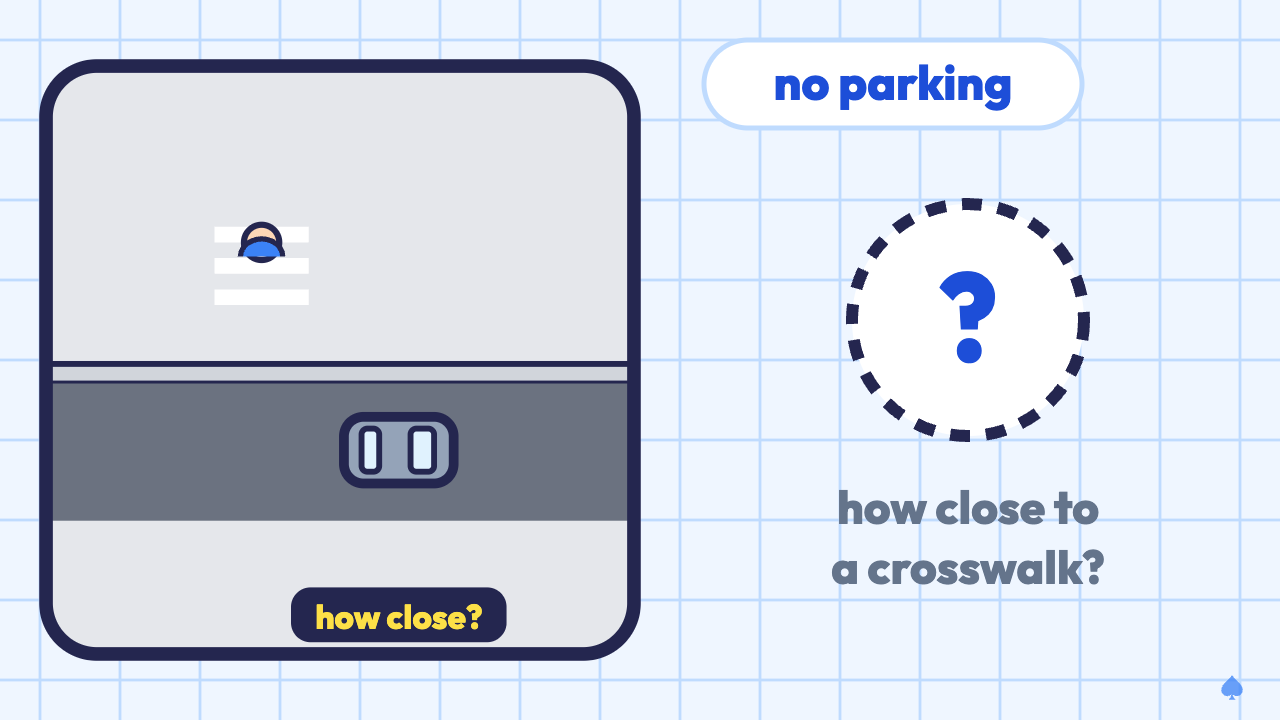
No closer than 20 feet
Standing or parking within 20 feet of a crosswalk at an intersection, or of a fire station driveway, is prohibited. (Rules of the Road, p. 36.)
-
How close may you park to a STOP sign, YIELD sign or traffic signal?
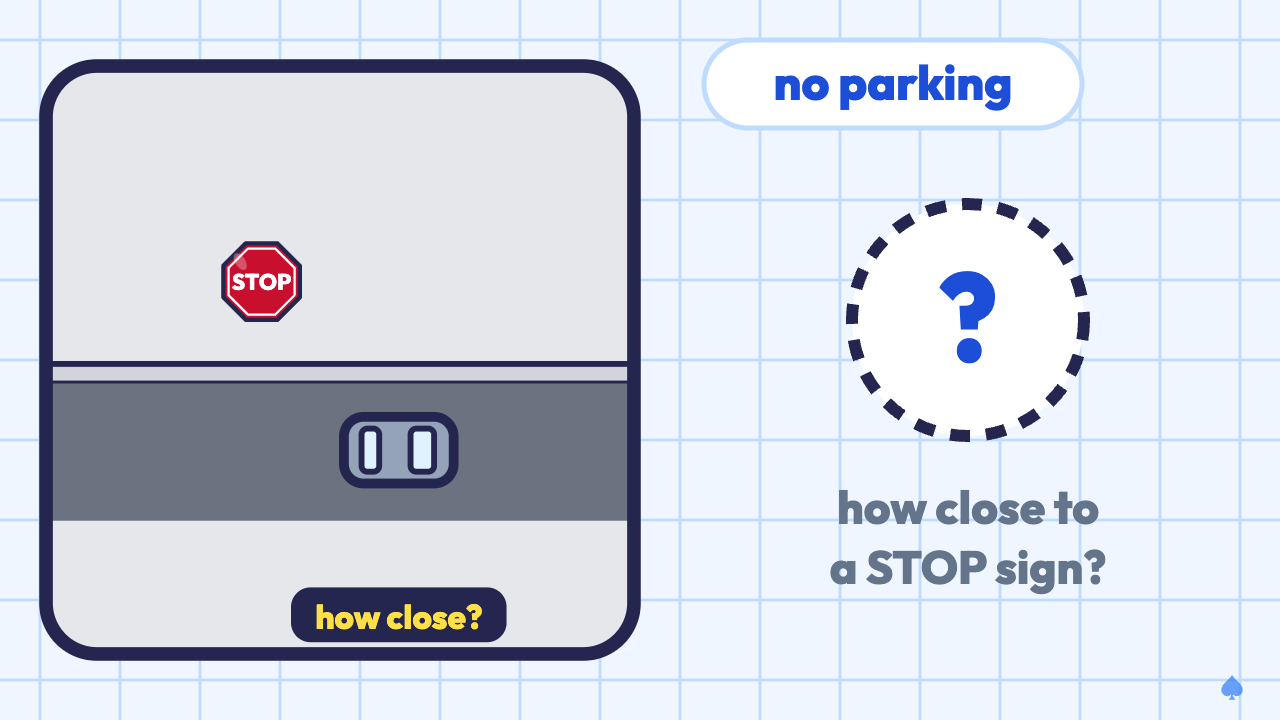
No closer than 30 feet
Standing or parking within 30 feet of a STOP sign, YIELD sign or traffic control signal is prohibited. (Rules of the Road, p. 36.)
-
How close may you park to the nearest rail of a railroad crossing?
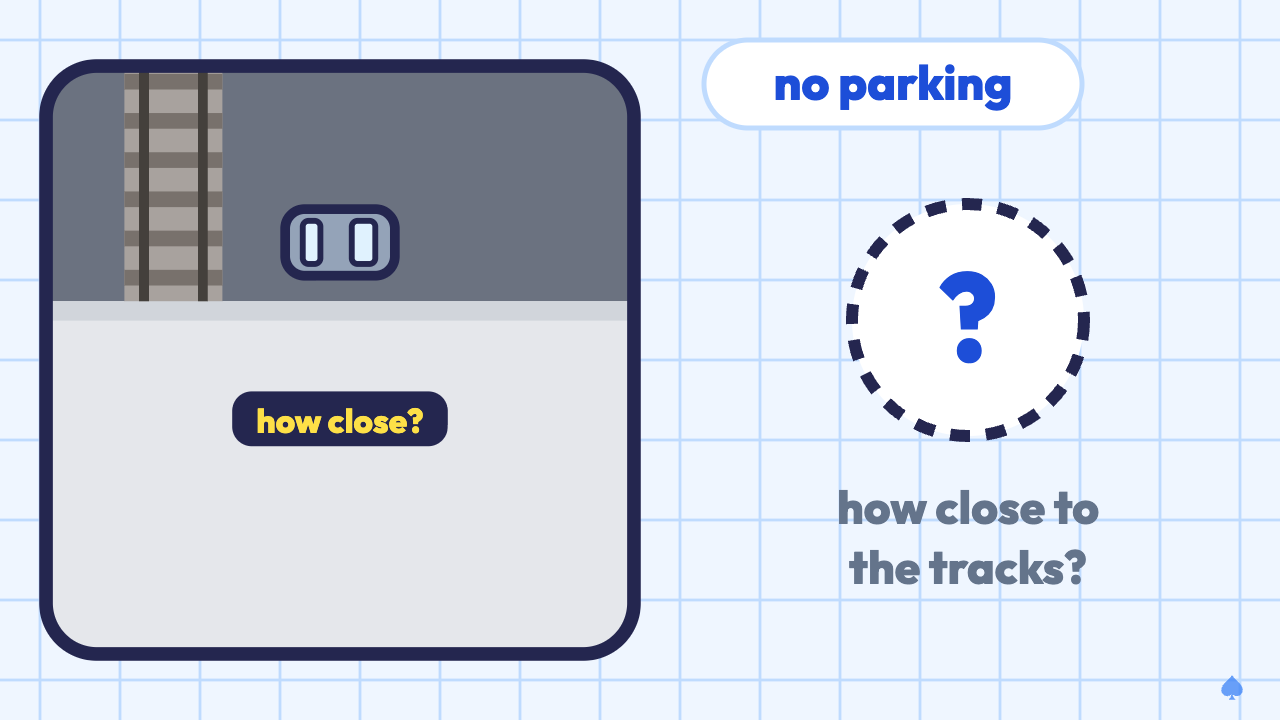
No closer than 50 feet
Parking within 50 feet of the nearest rail of a railroad crossing is prohibited, whether or not the vehicle is occupied. (Rules of the Road, p. 36.)
-
Parking on a highway at night outside an urban area, what lights must show?
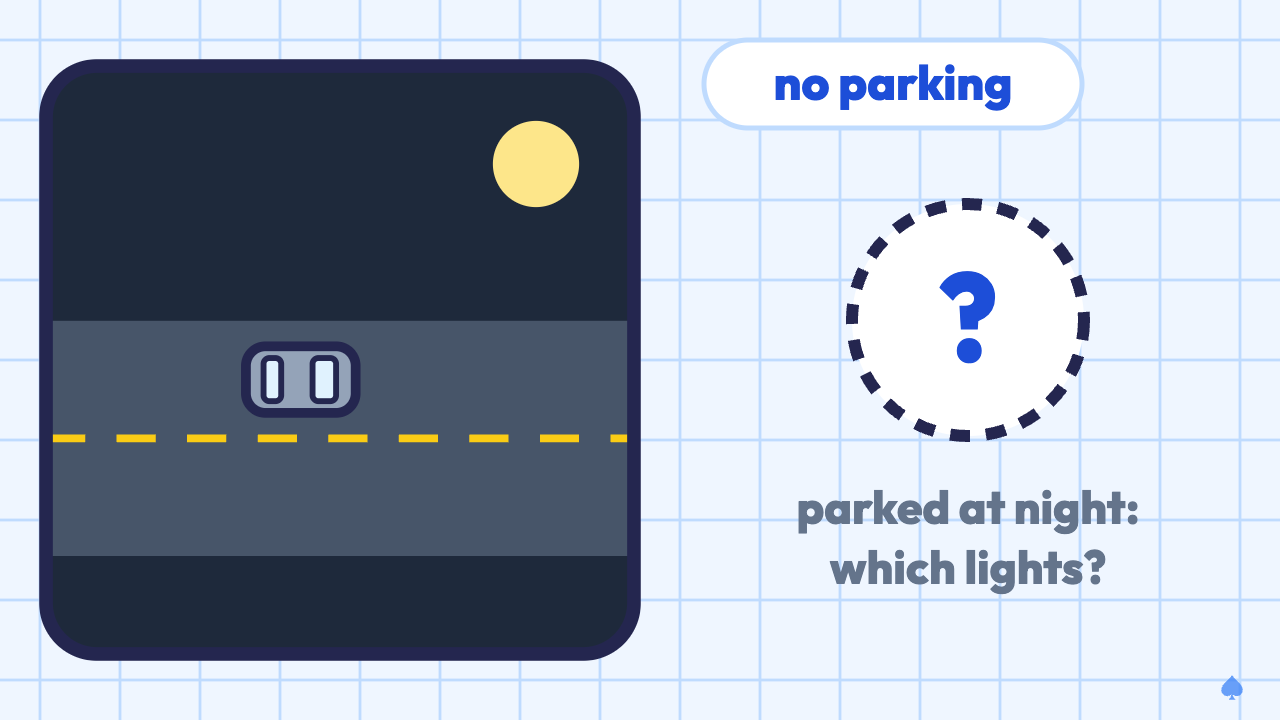
Front and rear parking lights
Parking on a highway between sunset and sunrise is prohibited unless front and rear parking lights are on, except in urban districts where lights are not required. Headlights must be dimmed. (Rules of the Road, p. 36.)
-
May you drive on a sidewalk?
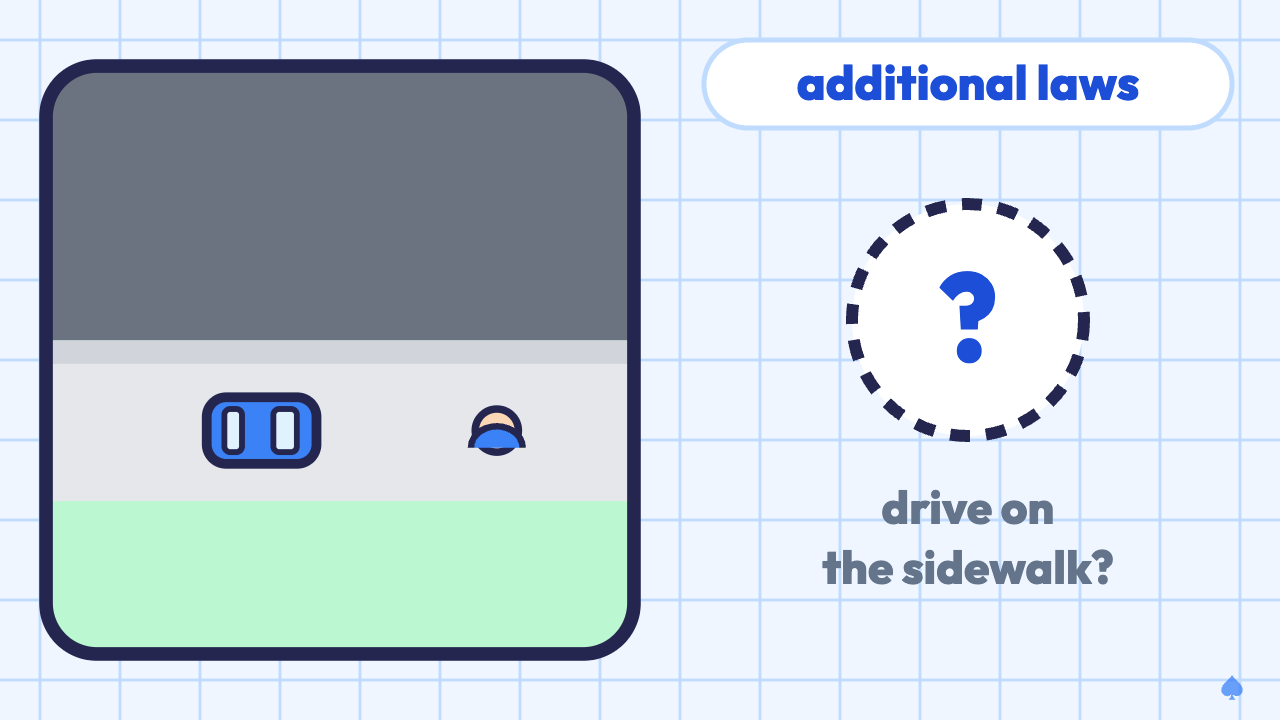
Only where it is part of a driveway
Illinois law says you may not drive on a sidewalk except where it is part of a driveway. (Rules of the Road, p. 36.)
Every card is here to read. Study them in the app, free to start, with spaced repetition bringing back the ones you miss.
Decks like this one.
- IL Permit 12: Teens, Phones, Belts & Your License FlashQuest · 60 cards Start free
- IL Permit 11: Alcohol, Drugs & DUI FlashQuest · 26 cards Start free
- IL Permit 10: Safe Driving & Equipment FlashQuest · 45 cards Start free
- IL Permit 09: Sharing the Road FlashQuest · 36 cards Start free
- IL Permit 07: Passing, Lanes, Turns & Roundabouts FlashQuest · 36 cards Start free
- IL Permit 06: Work Zones, Emergencies, Buses & Trains FlashQuest · 30 cards Start free

Study it properly.
All 31 cards are in the app, free to start, scheduled so the ones you miss come back sooner.