
IL Permit 09: Sharing the Road
by FlashQuest
36 Illinois permit test cards on sharing the road with walkers, riders, trucks and slow vehicles. Deck 9 of 12. You will see the 3 foot passing gap for bicyclists, motorcycle following distance, Class 3 e-bikes and the license needed for scooters and mopeds. Others cover guide dog and white cane crossings, truck No-Zones, hazard lights on a disabled car, towing rules, orange slow-moving emblems, low-speed vehicles and why you never honk at a horse. From the Illinois Rules of the Road 2026 (chapter 5).


Free to start, no account needed. After you install, search the Table for “IL Permit 09: Sharing the Road”.
Study all 36 cards, with their pictures, in the app.
All 36 cards in this deck.
Made by FlashQuest. Last updated November 2026. Drafted with AI help.
- A pedestrian using a guide dog or white cane is crossing. What must you do?
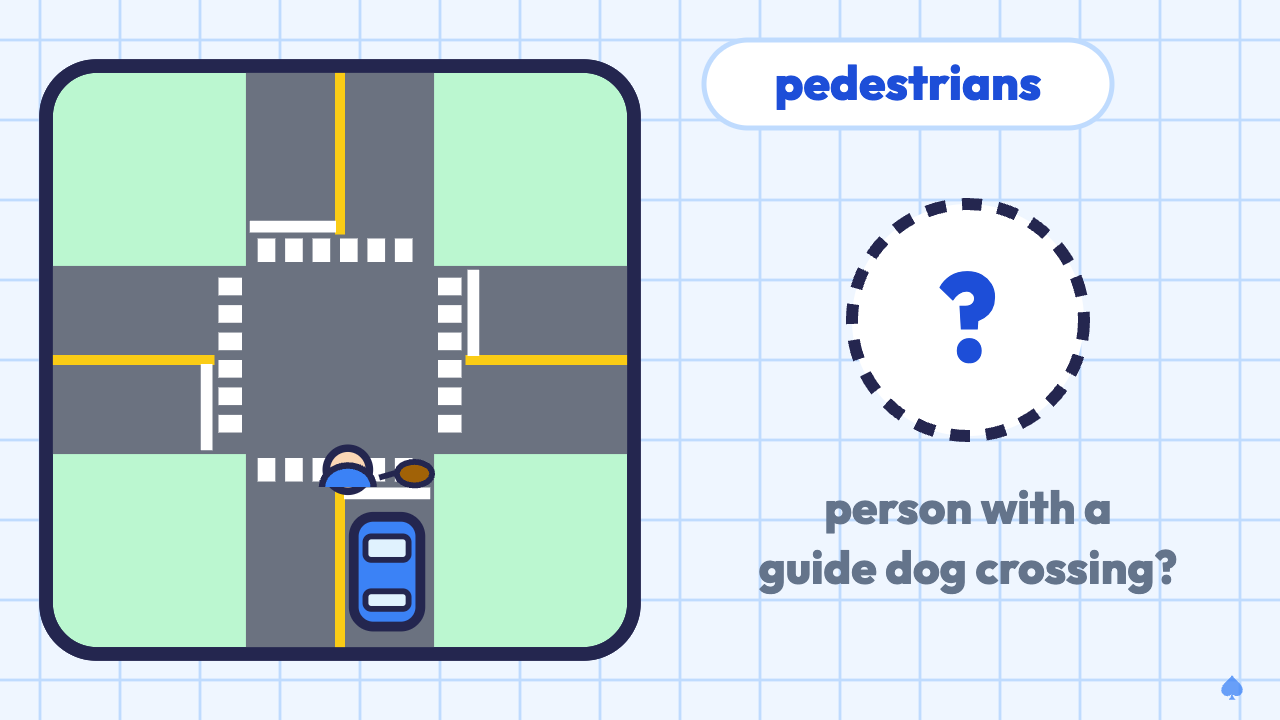
- Yield the right of way
- When approaching a pedestrian with a disability using a guide dog, white cane, wheelchair or other assistive device, the pedestrian has the right of way. (Rules of the Road, p. 40.)
- With no sidewalk on a two-way road, which way should people on foot walk?
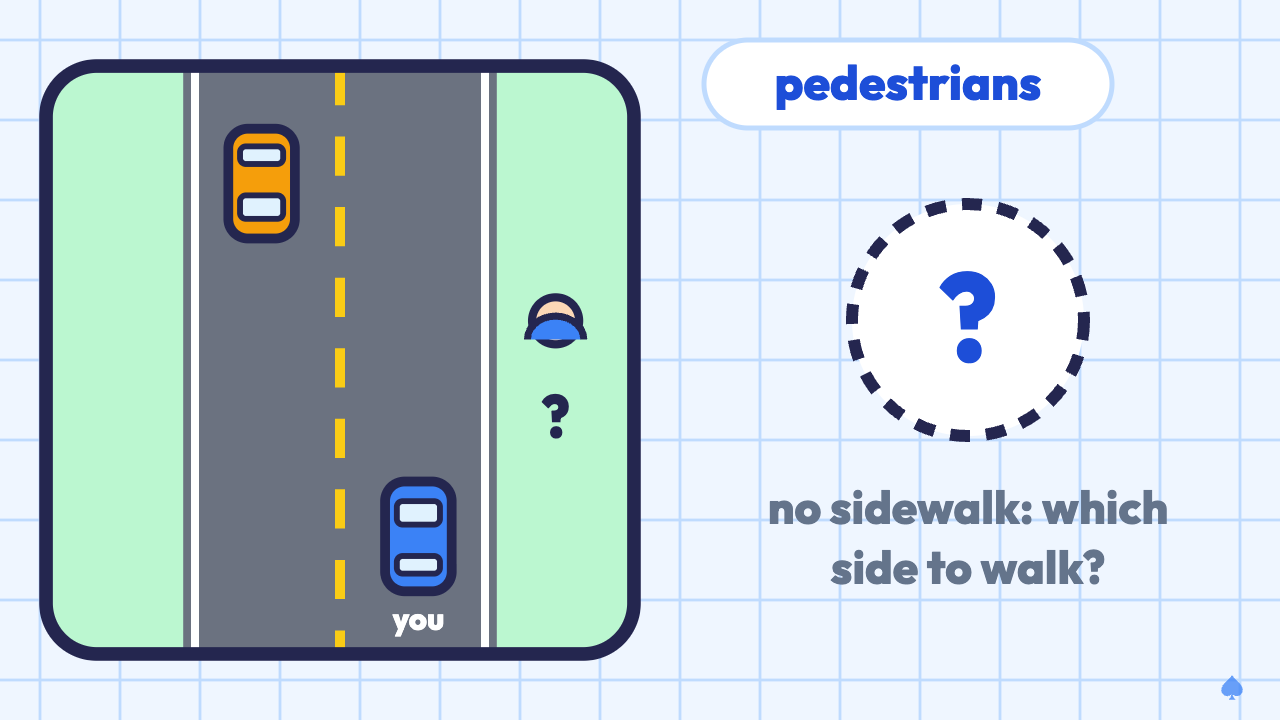
- Facing oncoming traffic
- Pedestrians may walk on a roadway only when there is no sidewalk or shoulder. In two-way traffic they should walk facing oncoming traffic, as far from the road as possible. (Rules of the Road, p. 40.)
- When must you be extremely watchful for children?

- Backing out of a driveway
- Be extremely watchful when backing in or out of a driveway when children are near. Also watch for school zones, bus stops, playgrounds and parks, and slow down where children are likely. (Rules of the Road, p. 41.)
- Where should you be ready to slow down because children are likely to be present?
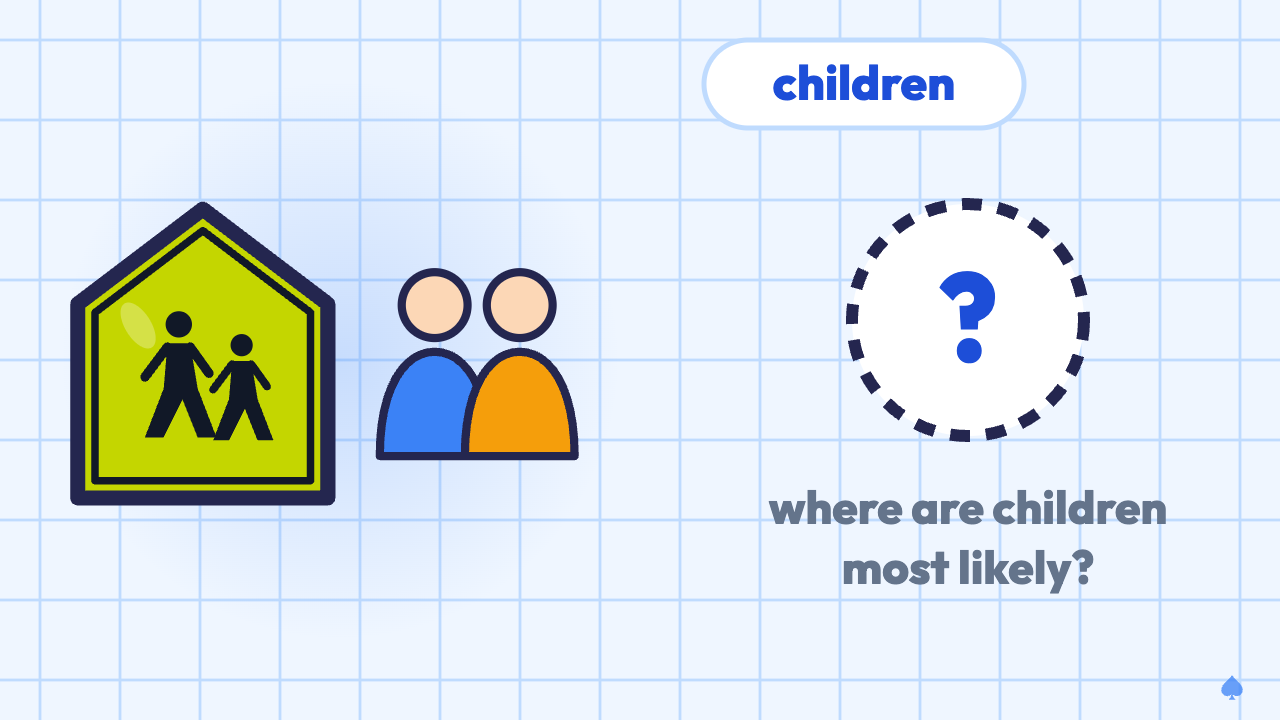
- Schools, parks, neighborhoods
- Watch for signs marking school zones, bus stops, playgrounds, parks and schools, and be ready to reduce speed in residential and school areas. (Rules of the Road, p. 41.)
- What is the most common cause of motorcycle crashes?
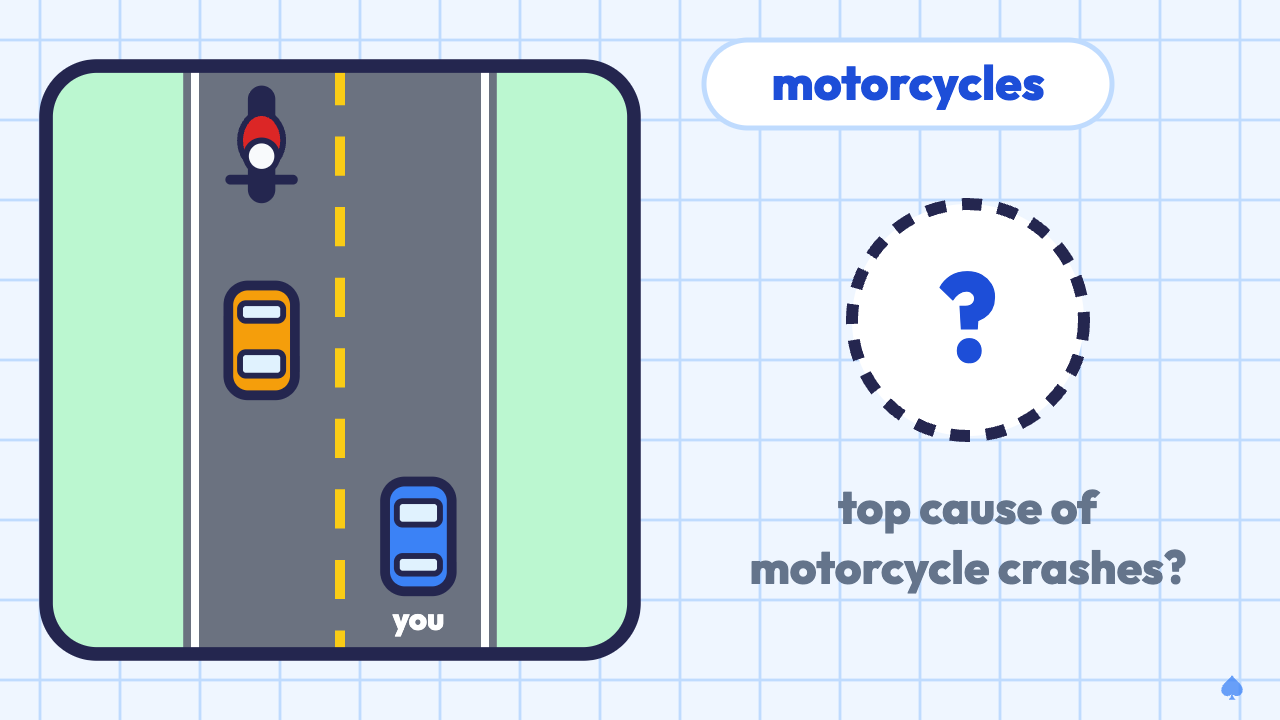
- Drivers not seeing the motorcycle
- Motorists failing to detect and recognize motorcycles is the most common cause of motorcycle crashes. They are small and their speed is easy to misjudge. Expect them any time of year. (Rules of the Road, p. 41.)
- What is the most common motorcycle crash at intersections?
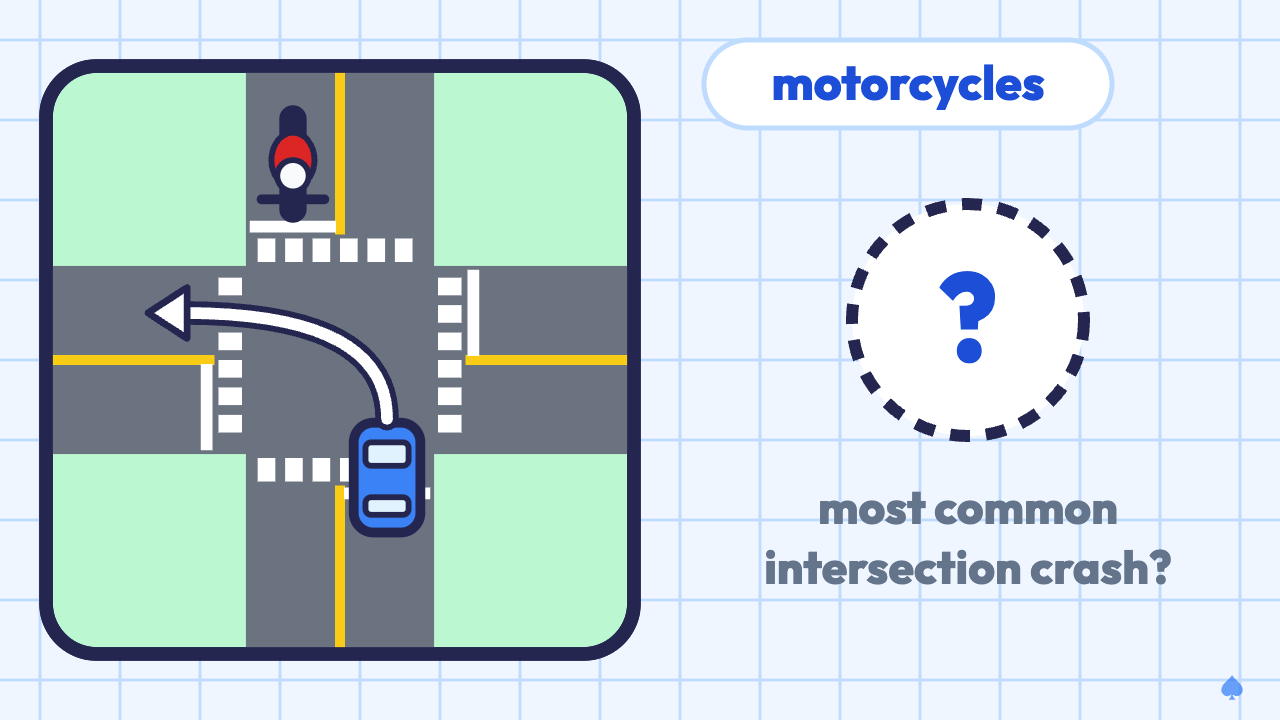
- A car turning left in front of it
- More than half of motorcycle crashes happen at intersections. The most common is an oncoming car turning left in front of a motorcycle. Look for them and yield before turning. (Rules of the Road, p. 41.)
- May you share a lane side by side with a motorcycle?
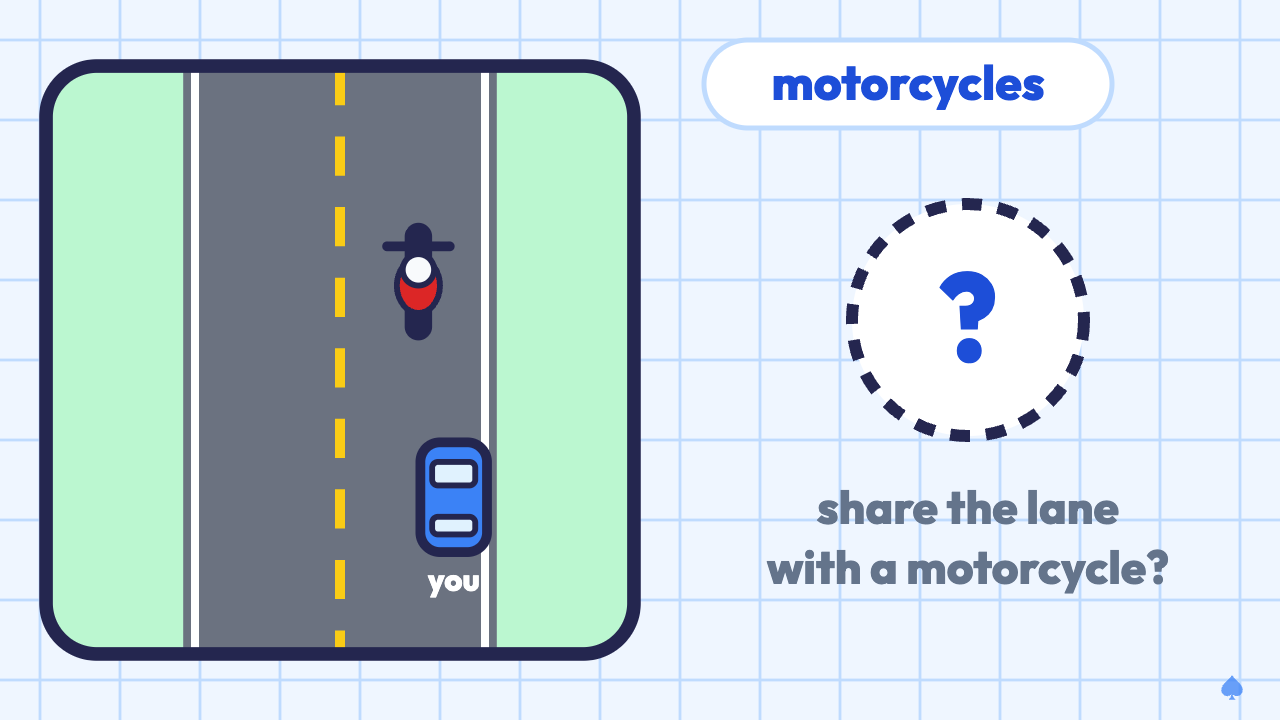
- No, it gets the full lane
- A motorcyclist is entitled to the entire lane and needs it to maneuver. Do not share the lane. Pass a motorcycle the same way you would pass another vehicle. (Rules of the Road, p. 41.)
- What following distance should you keep behind a motorcycle?
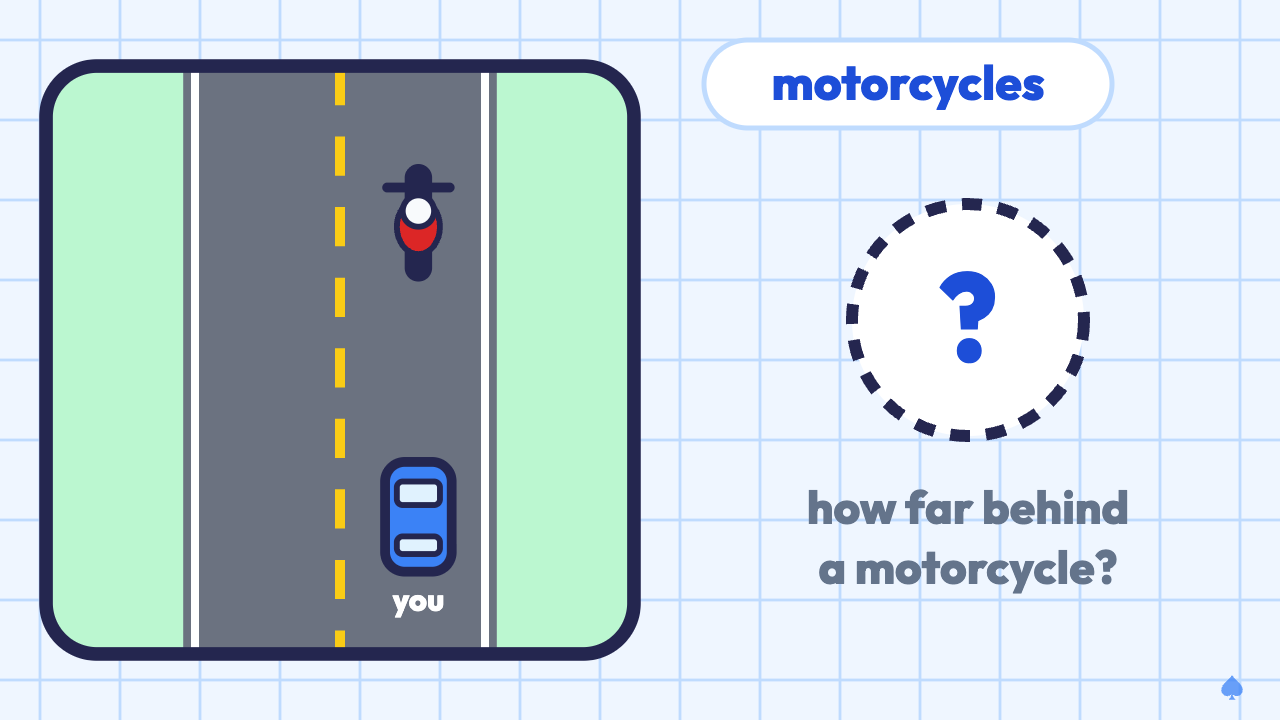
- At least 3 to 4 seconds
- Allow at least three to four seconds behind a motorcycle so the rider has time to maneuver. In dry conditions motorcycles can stop faster than cars. (Rules of the Road, p. 42.)
- A motorcycle is passing you. What should you do?
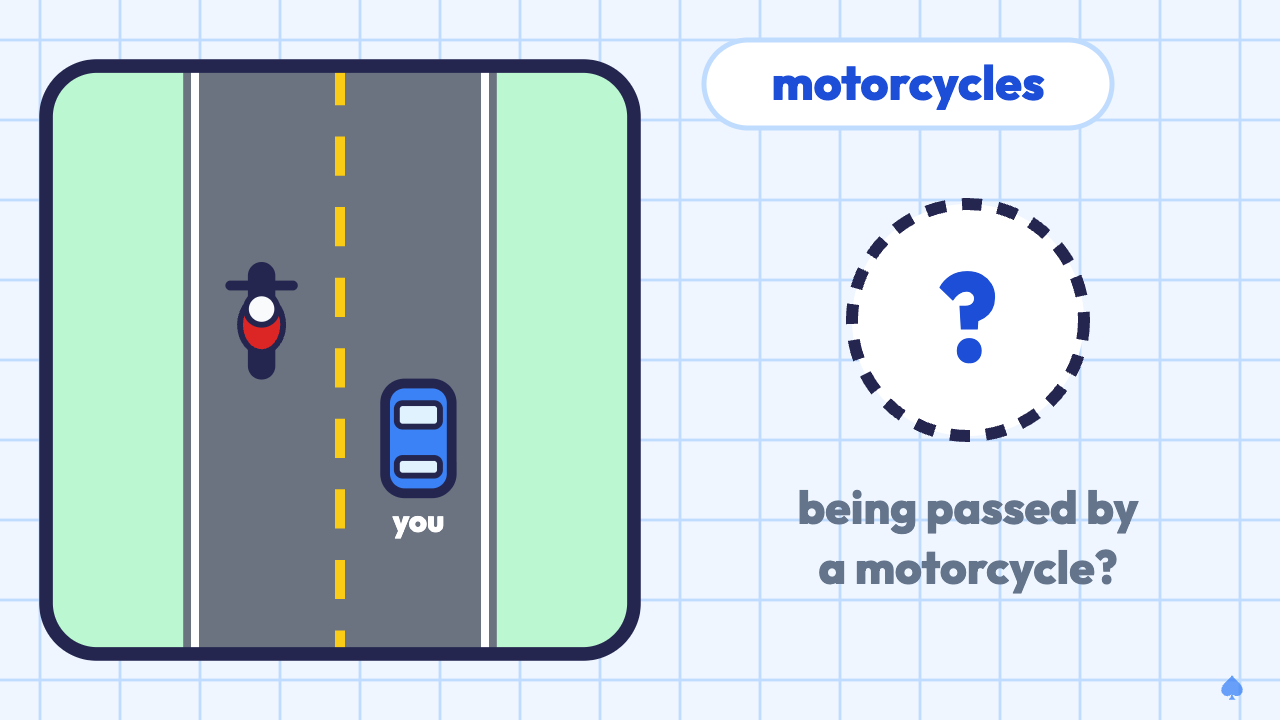
- Keep your lane and speed
- When a motorcycle passes you, maintain your lane position and speed and let it complete the move. (Rules of the Road, p. 41.)
- A red light does not change for a motorcyclist after 120 seconds. What may the rider do?
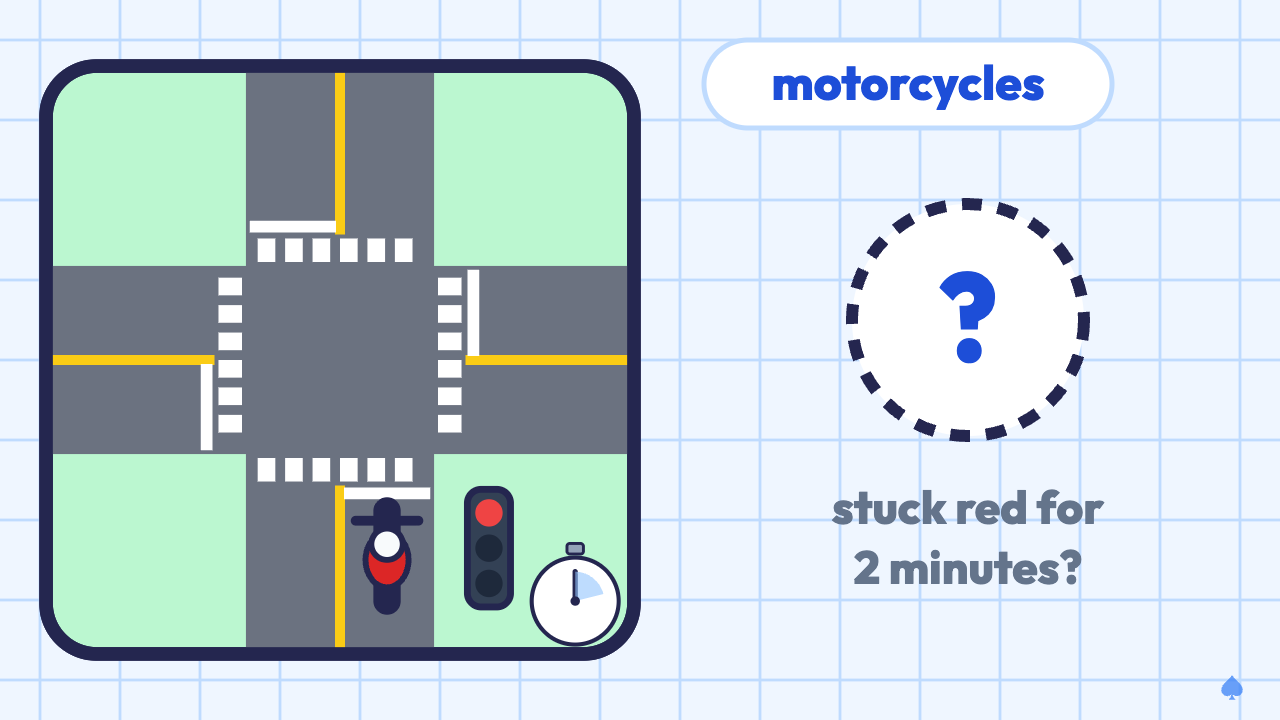
- Go after yielding
- If a red light fails to turn green after 120 seconds, a motorcyclist may proceed through the intersection after yielding to oncoming traffic. (Rules of the Road, p. 41.)
- What rights do bicyclists have on most Illinois roads?
- Same as other road users
- On most roads, bicyclists, including e-bikes and gas bikes up to 20 mph, have the same rights and responsibilities as other road users, including the right of way. Yield to them as to any vehicle. (Rules of the Road, p. 42.)
- How much room must you leave when passing a bicyclist?
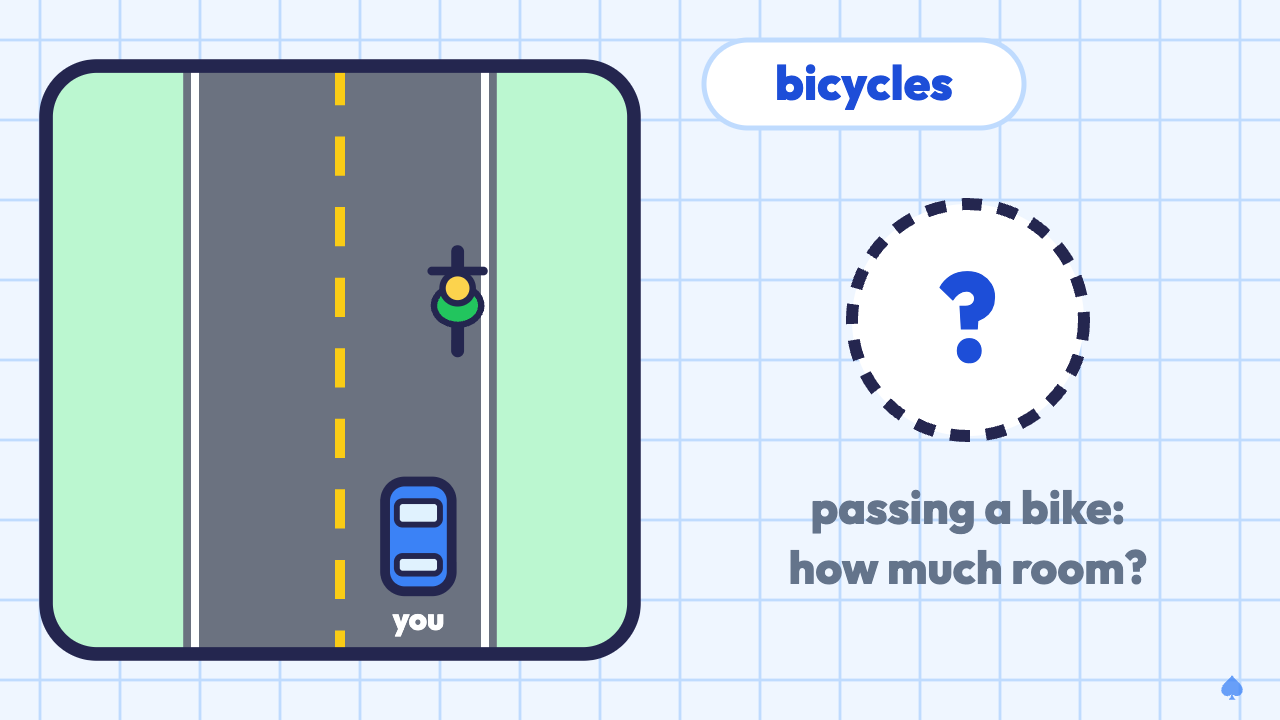
- At least 3 feet from your mirror
- Pass a bicyclist slowly and leave at least 3 feet from the edge of your side mirror. If there is not 3 feet, wait. Passing too close and causing a crash can bring criminal charges. (Rules of the Road, p. 43.)
Show the other 24 cards
-
You are turning right and a bicyclist is coming up on your right. What should you do?
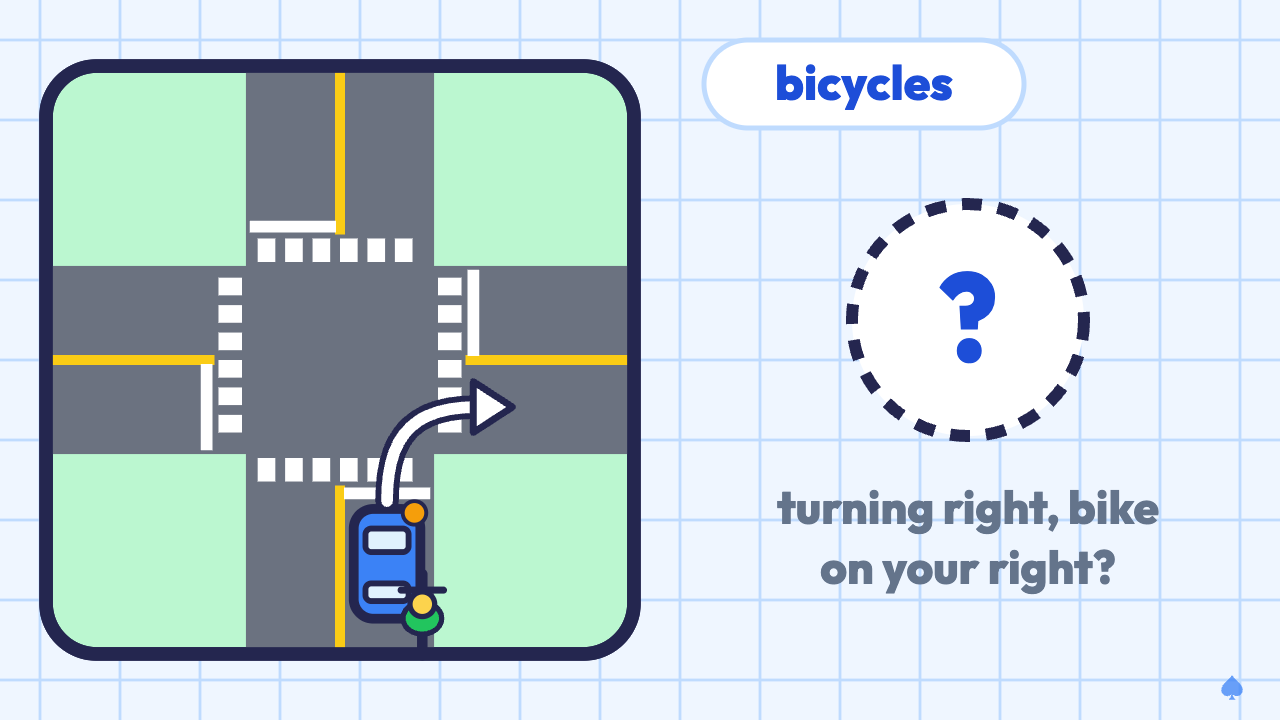
Let the bicyclist go first
If you are turning right and a bicyclist is approaching on the right, let the bicyclist go through the intersection first before turning. Remember to signal. (Rules of the Road, p. 43.)
-
You are turning left and a bicyclist is coming from the opposite direction. What should you do?
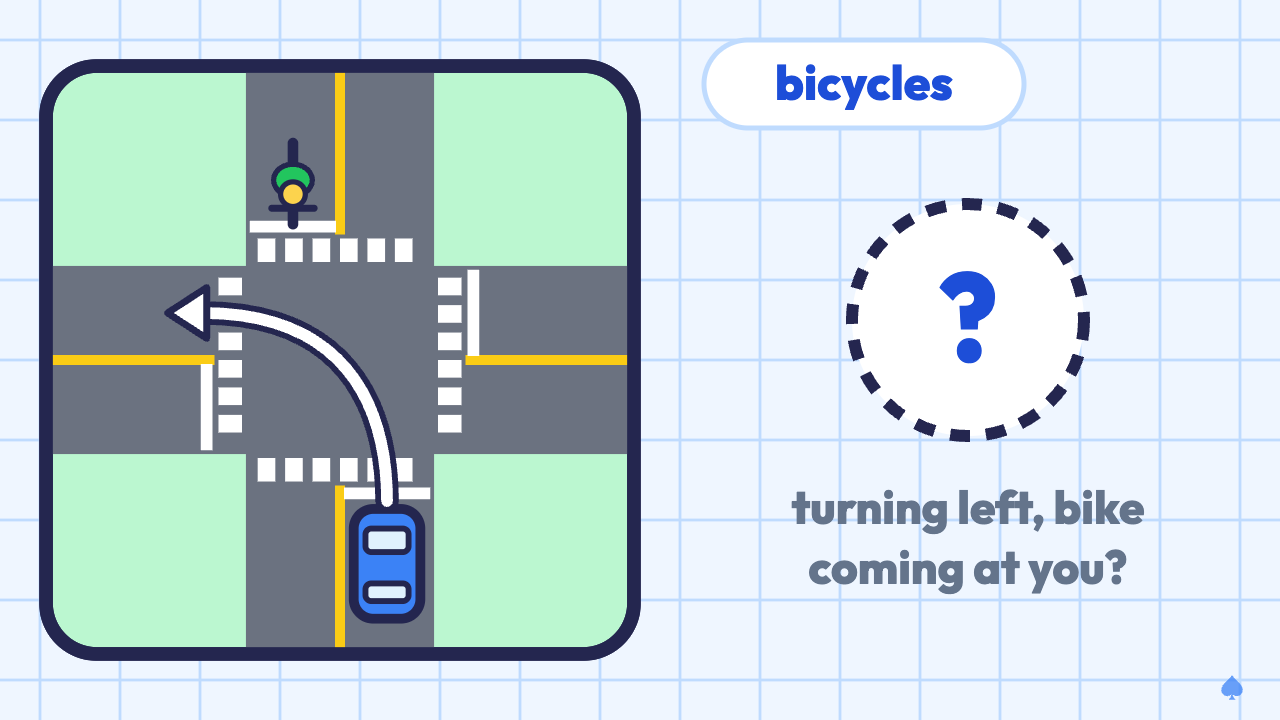
Wait for the bicyclist to pass
When turning left and a bicyclist enters the intersection from the opposite direction, wait for the bicyclist to pass before turning. In a shared left-turn lane, stay behind the bicyclist. (Rules of the Road, p. 43.)
-
May you stop in a bike lane to drop off a passenger?
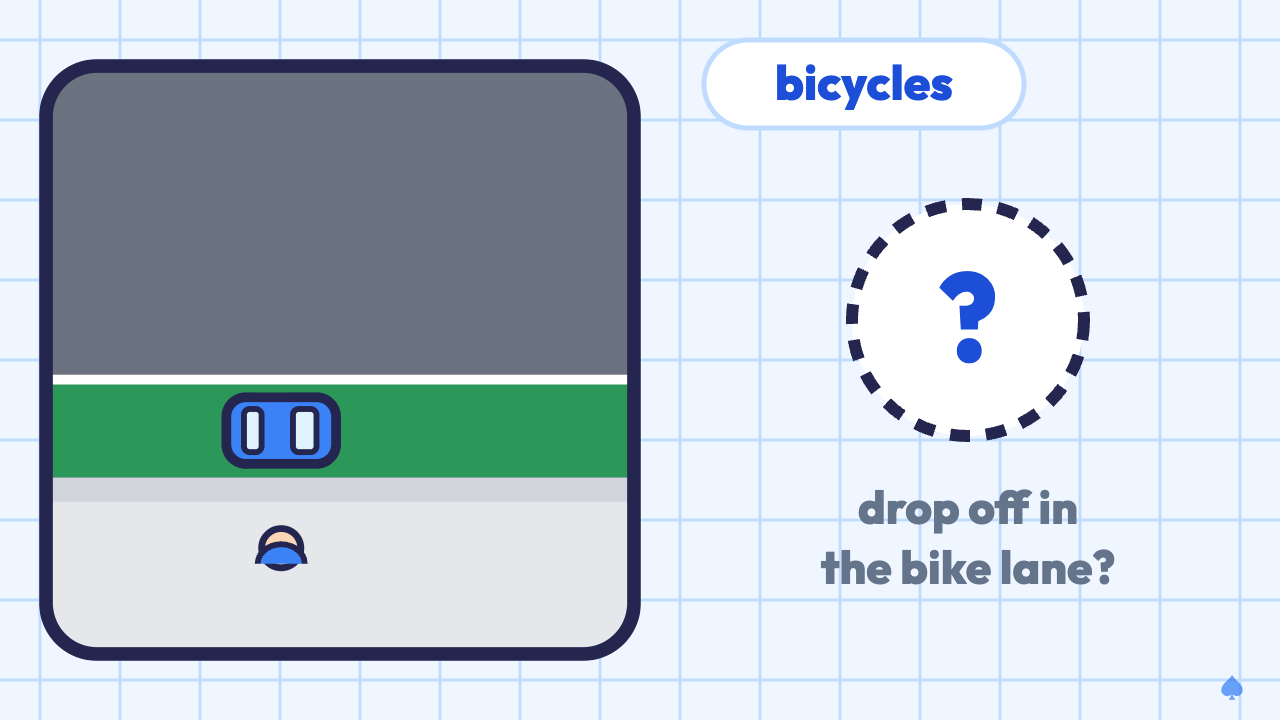
No
Vehicles may not drive, park, idle, or drop off or pick up passengers in a bike lane, even if no bicyclists are present. (Rules of the Road, p. 42.)
-
Which direction must bicyclists ride?
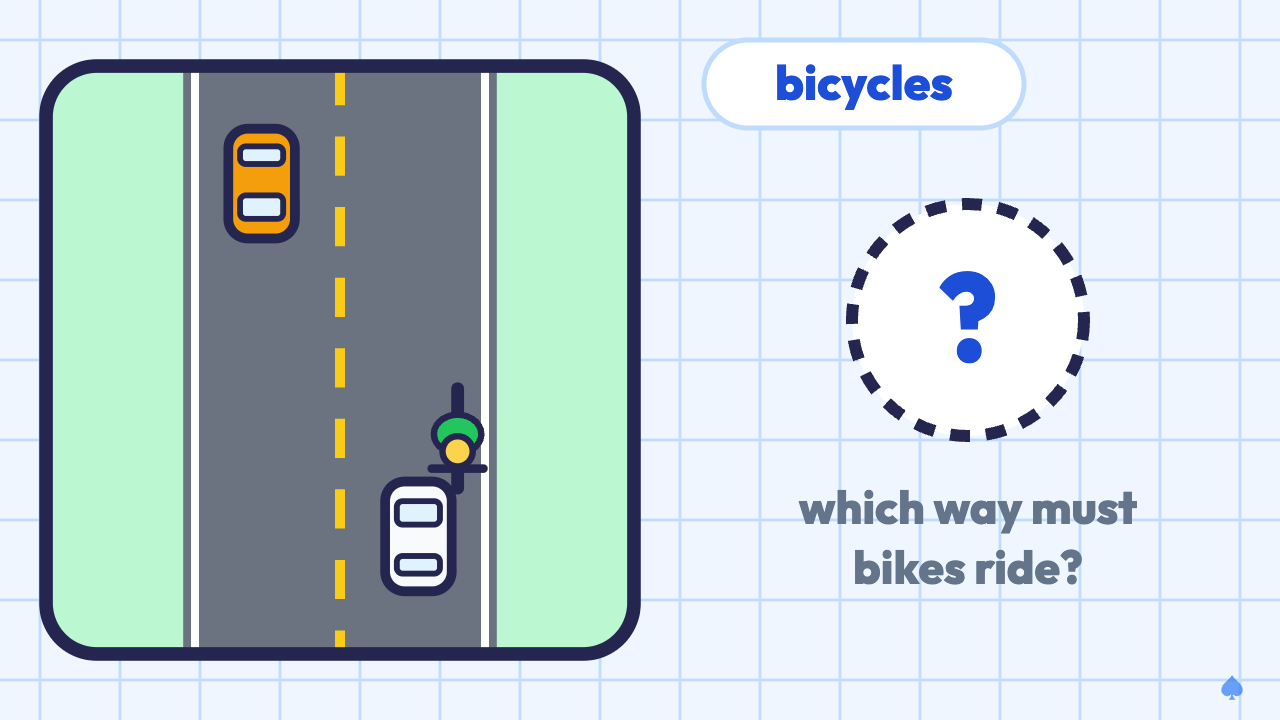
The same direction as traffic
Bicyclists must travel in the same direction as vehicles, usually just to the right of faster traffic. Hazards may require them to move toward the lane center. (Rules of the Road, p. 43.)
-
How many bicyclists may ride side by side on a road?
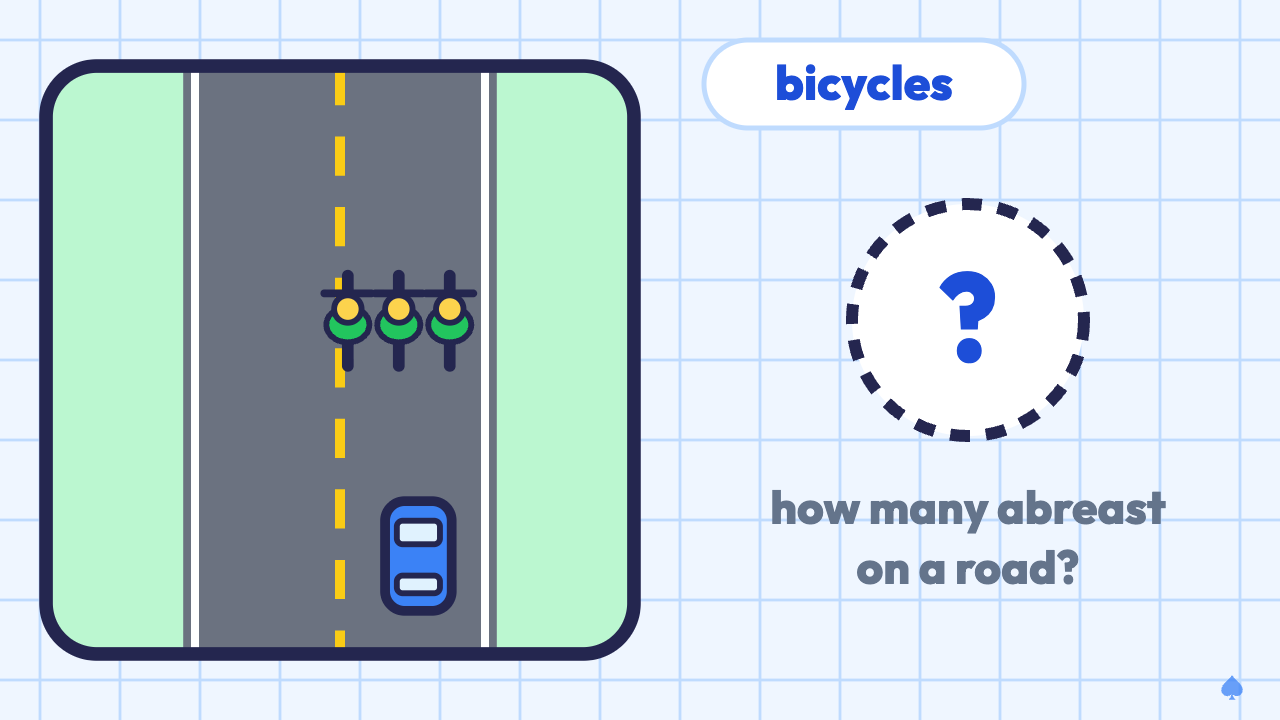
Two
Bicyclists may ride side by side if they do not impede normal traffic. Riding more than two abreast is prohibited, except on paths reserved for bicycles. (Rules of the Road, p. 43.)
-
At night, a bicyclist is coming toward you. What should you do with your lights?
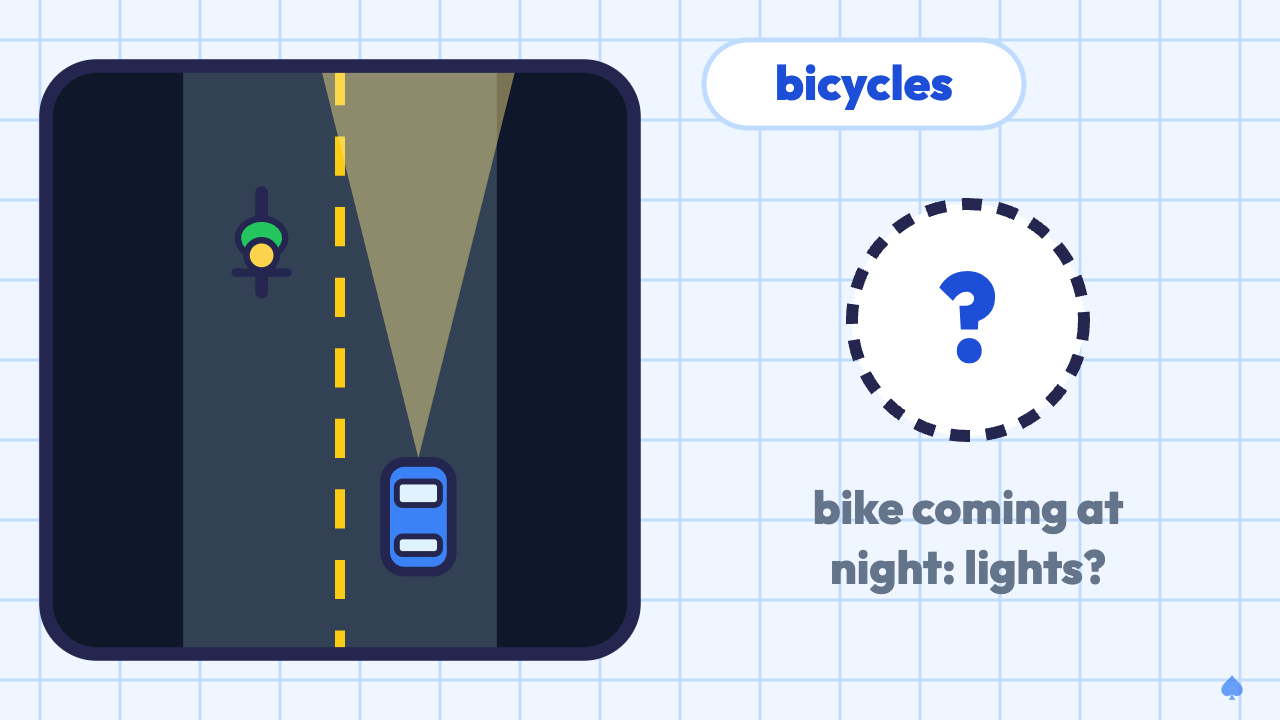
Use low beams
High beams should not be used at night when approaching an oncoming bicyclist. Switch to low beams. (Rules of the Road, p. 43.)
-
You parked on a street with bicycle traffic. How should you open the driver door?
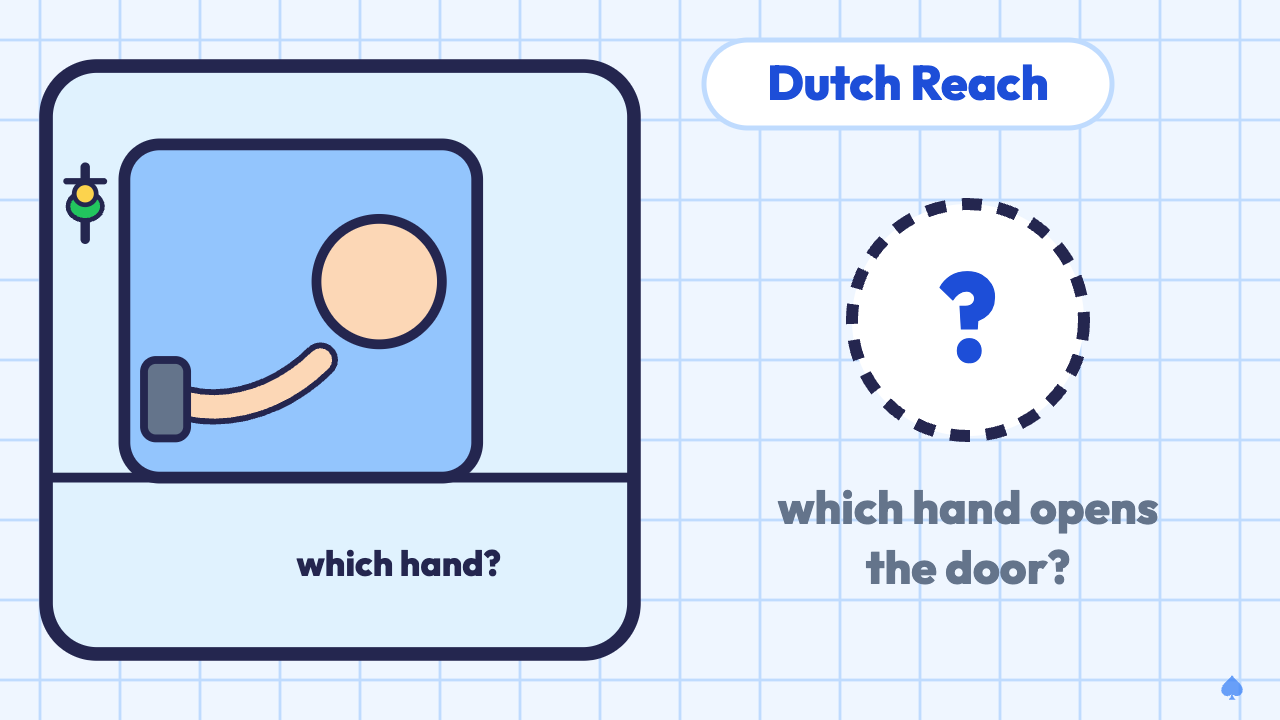
Reach across with your right hand
Reach across with your right hand to open the driver door; it turns your body so you look back for bikes and cars. Open it only when it will not interfere with traffic. This is the Dutch Reach. (Rules of the Road, p. 43.)
-
When may you or a passenger open a door on the side where traffic is moving?
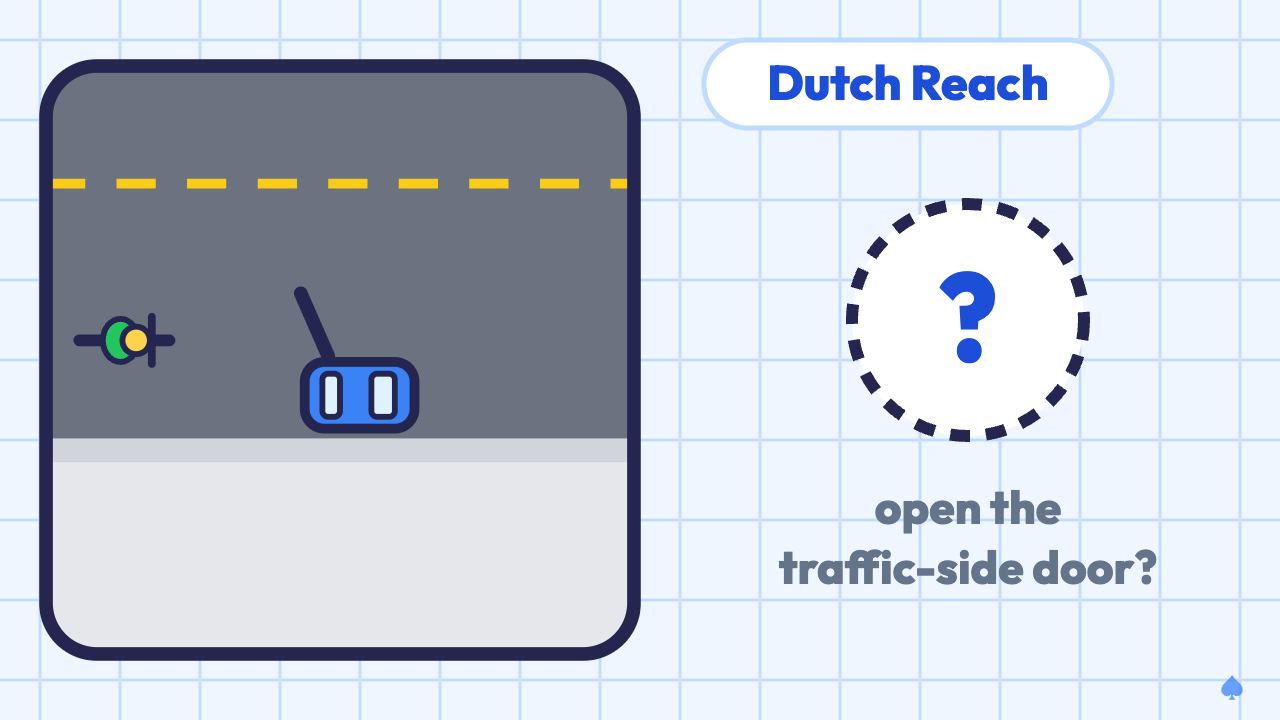
Only when it is safe
You may open doors on the traffic side only when it can be done safely without interfering with vehicles or bicycles, and leave the door open only long enough to load or unload. (Rules of the Road, p. 30.)
-
How old must a rider be for a Class 3 e-bike, which assists up to 28 mph?
At least 16
Class 1 assists while pedaling up to 20 mph; Class 2 can propel the bike up to 20 mph; Class 3 assists while pedaling up to 28 mph and riders must be at least 16. E-bikes may not use sidewalks. (Rules of the Road, p. 43-44.)
-
May low-speed electric bicycles be ridden on sidewalks?
No
Low-speed electric bicycles may operate on roads, bike lanes and bike paths unless local rules ban them, but not on sidewalks. They follow all bicycle laws. (Rules of the Road, p. 43.)
-
What license do you need for a scooter with an engine under 150cc?
Class L motorcycle license
A scooter with an engine under 150cc is a motor-driven cycle and requires a Class L motorcycle license. (Rules of the Road, p. 44.)
-
What license do you need for a scooter with an engine of 150cc or more?
Class M license
A scooter with an engine of 150cc or more is a motorcycle and requires a Class M license. (Rules of the Road, p. 44.)
-
What license do you need to drive a moped?
Any valid Illinois license
A moped may be driven with any valid Illinois driver’s license. A combustion engine may not exceed 50cc and may not require shifting gears. (Rules of the Road, p. 44.)
-
How old must you be to ride a low-speed electric scooter?
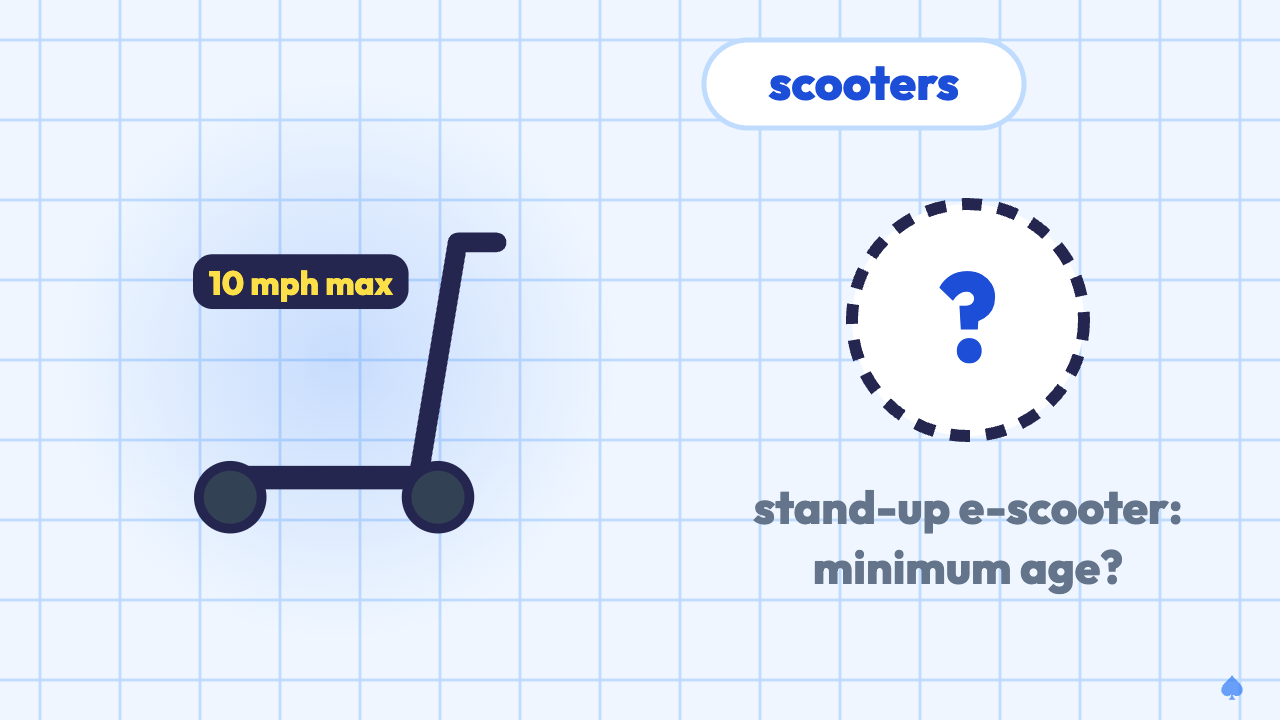
18 or older
A low-speed electric scooter, under 100 pounds with a 10 mph top speed, needs no license, but riders must be 18 or older. Only one person may ride, and only where local rules allow. (Rules of the Road, p. 44.)
-
Where are a large truck’s blind spots, or No-Zones?
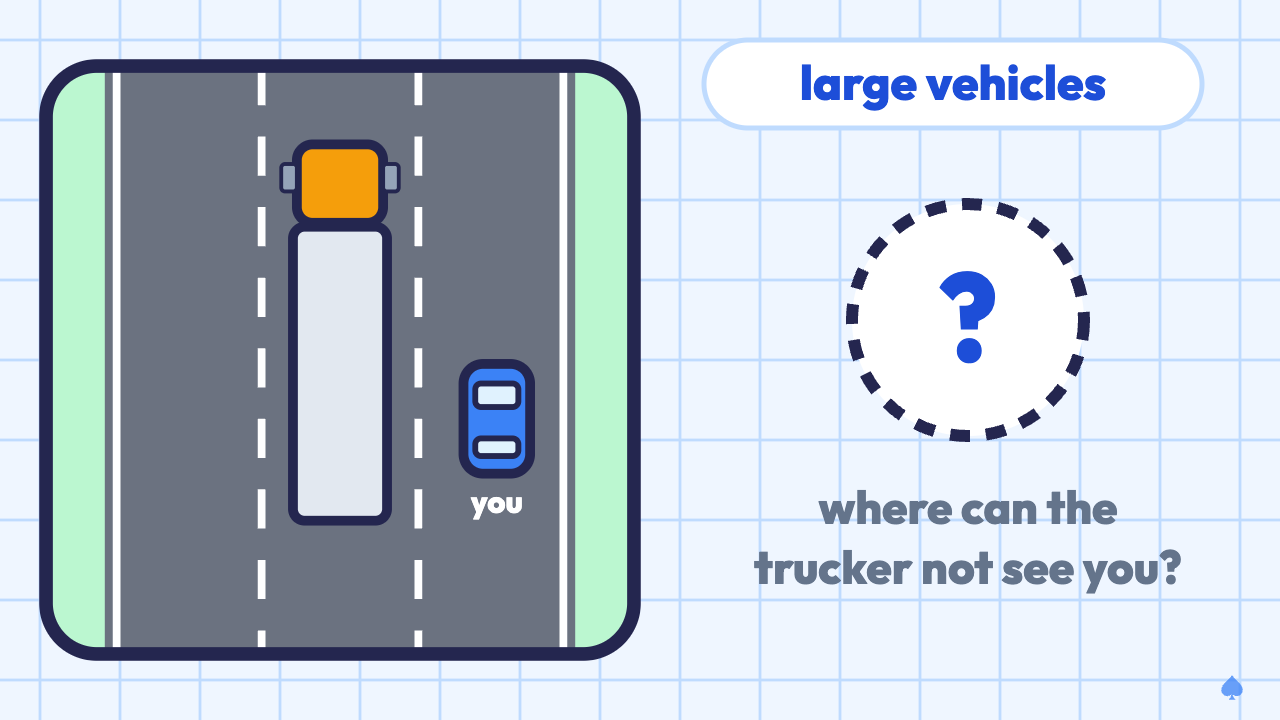
Beside, close behind and in front
Stay out of the blind spots of trucks and buses and keep a visible position when following. Truck drivers should be able to see you in their side mirrors. (Rules of the Road, p. 45.)
-
A truck ahead is signaling right and leaves space on its right. What should you do?
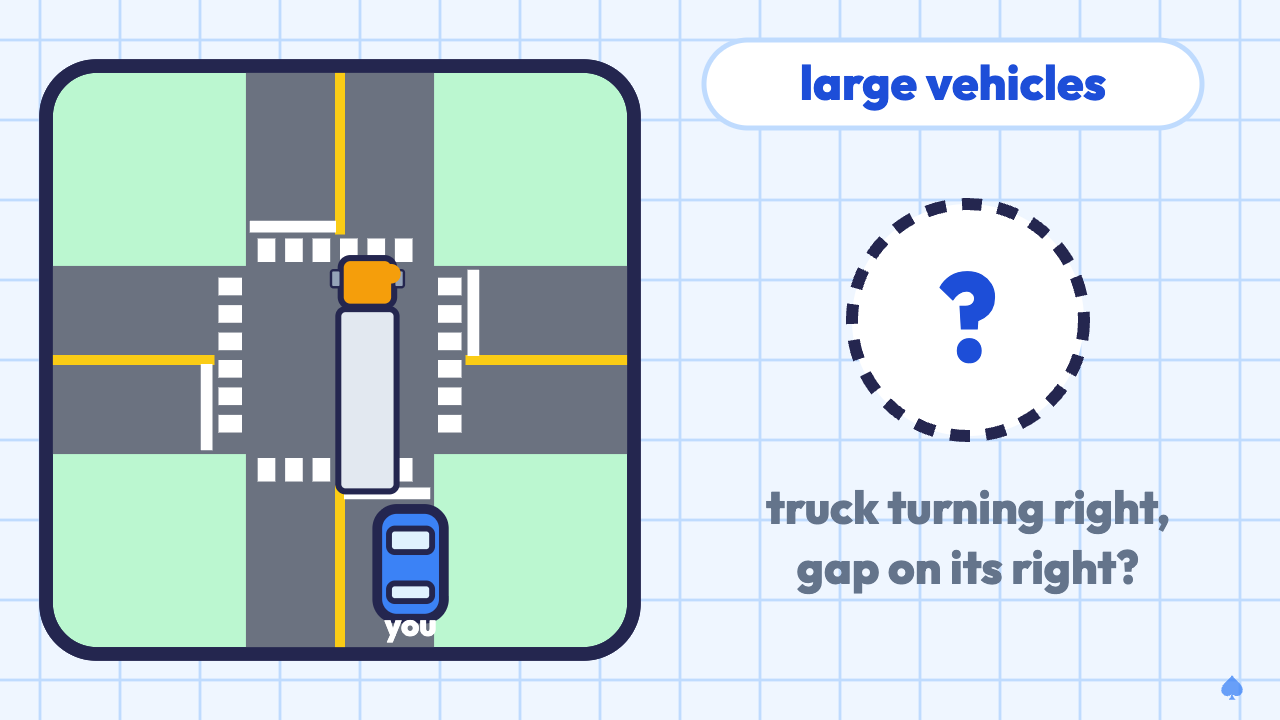
Stay back; it needs a wide turn
Large vehicles make wide right turns and may leave open space to the right just before turning. Watch their signals and give them plenty of room. (Rules of the Road, p. 45.)
-
When following a truck at night, what should you do with your headlights?
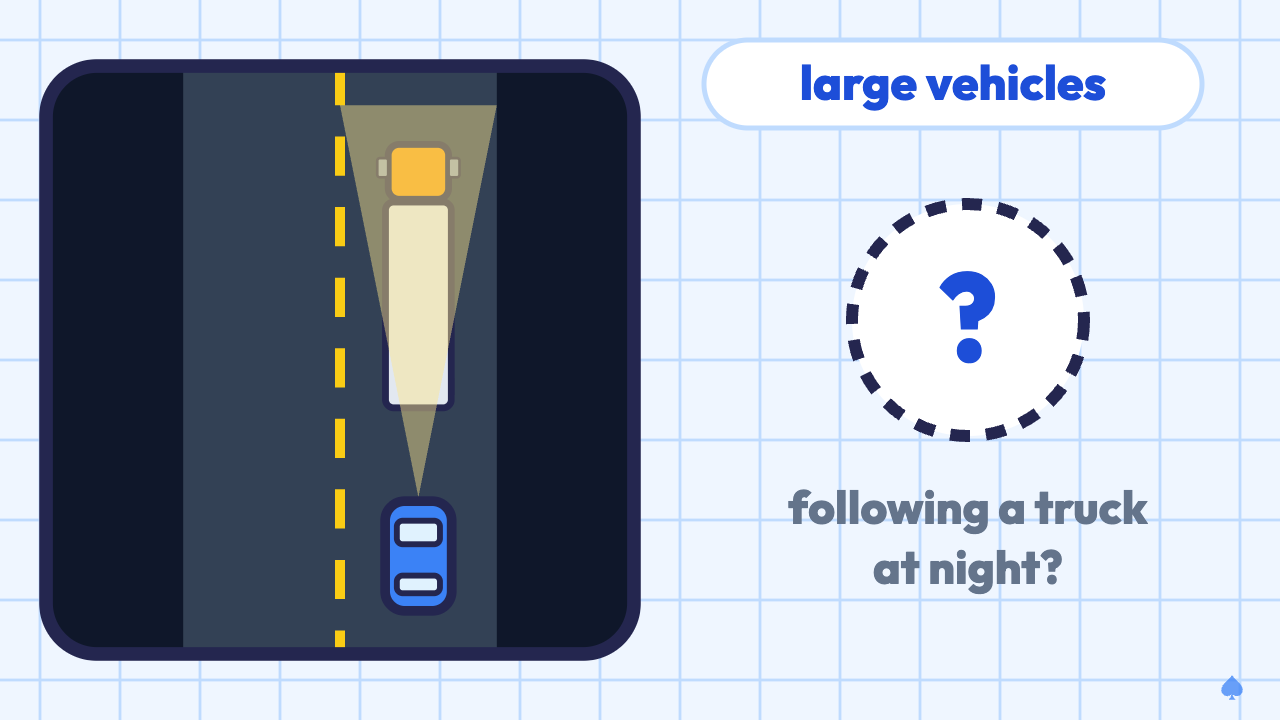
Dim them
Always dim your headlights when following a truck at night. Bright lights reflect off its large side mirrors and blind the driver. (Rules of the Road, p. 45.)
-
How should you pass a large truck?
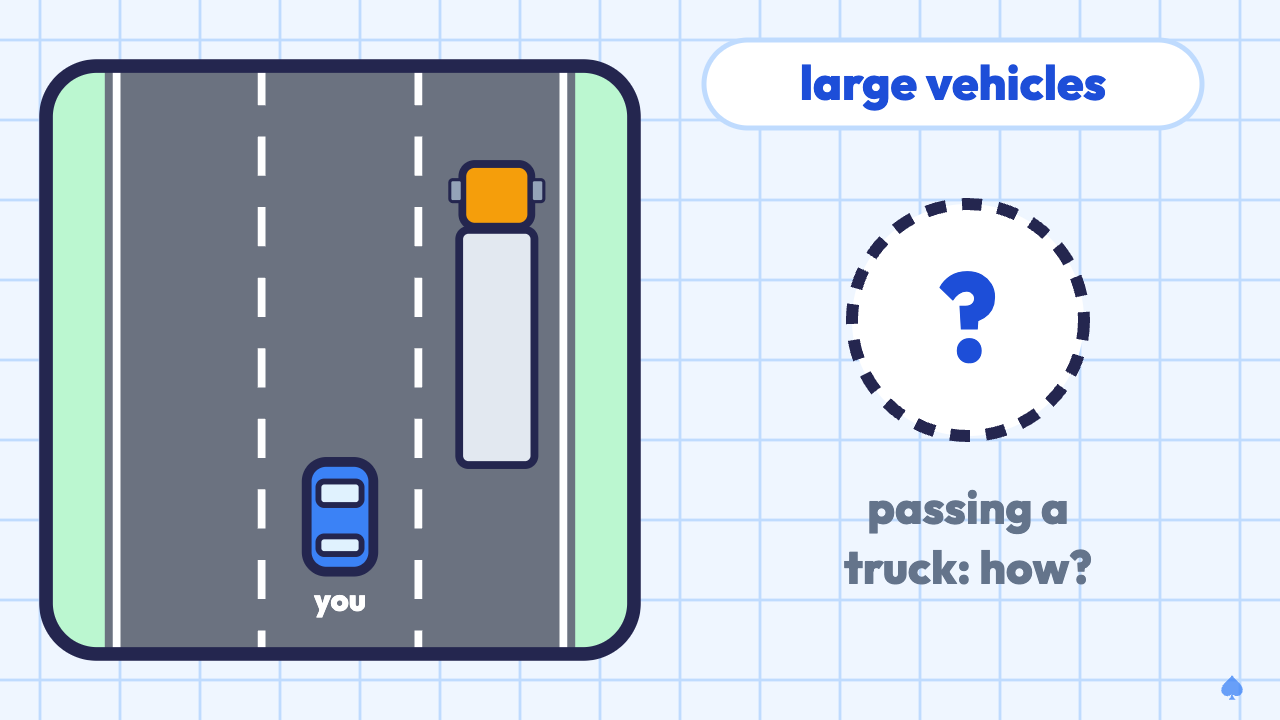
Blink lights, pass quickly
Blink your headlights when passing a truck, especially at night, to let the driver know. Complete the pass as quickly as possible so you do not stay beside the truck. (Rules of the Road, p. 45.)
-
On a four-lane highway, you approach a disabled car with hazard lights on. What does Illinois law require?
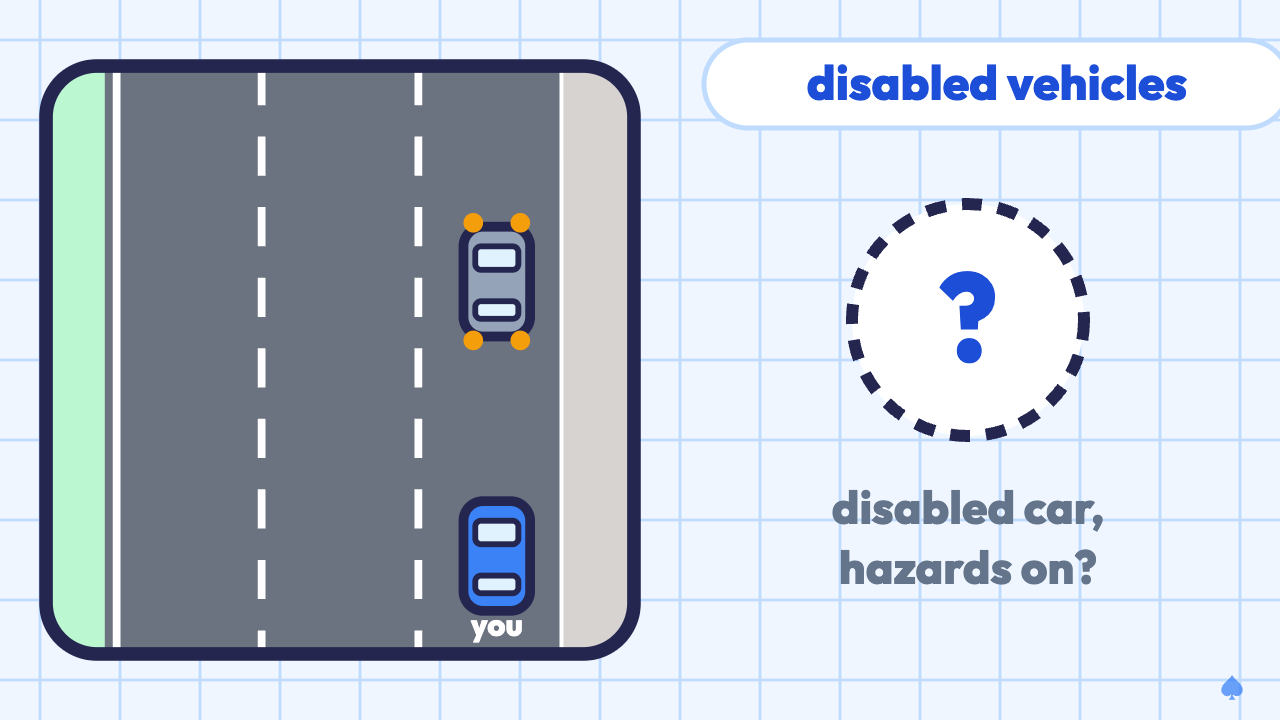
Change lanes away, or slow down
On a four-lane highway, change lanes away from a disabled vehicle using hazard lights if safe. If not, slow down when approaching and passing, and do not speed up until well past it. (Rules of the Road, p. 45.)
-
Towing another car, what does Illinois law require?
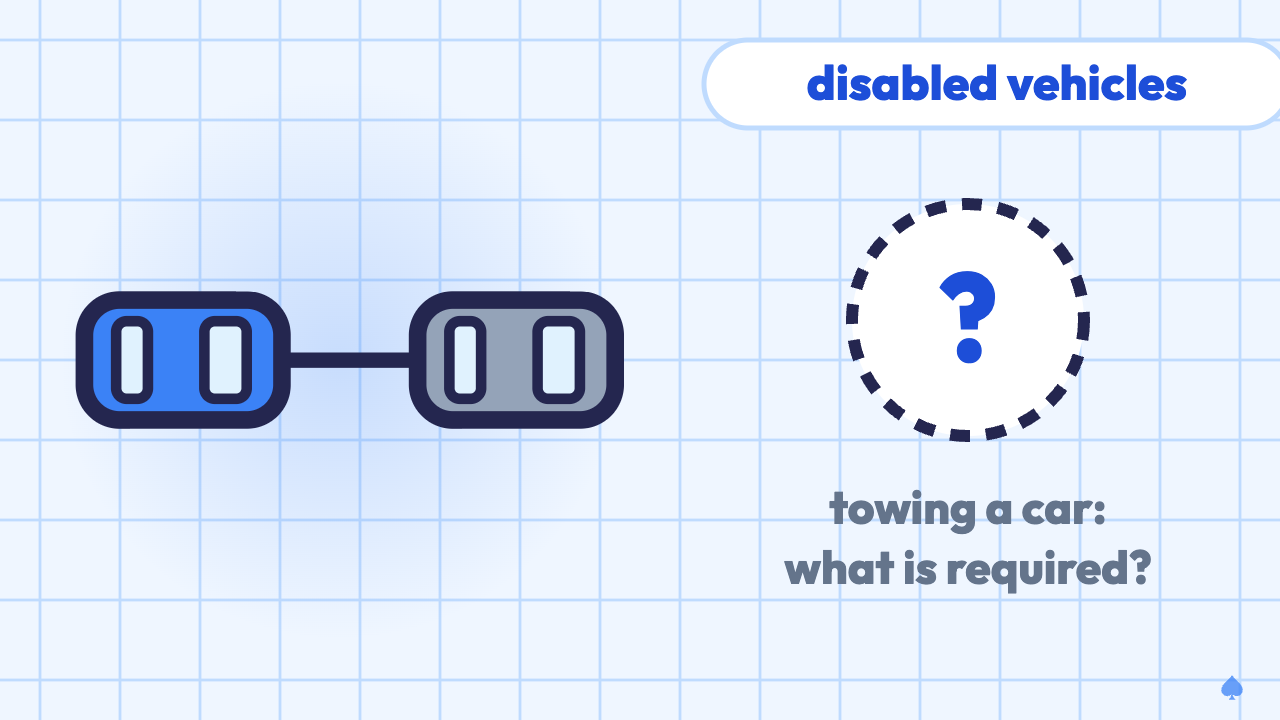
Drawbar, 15 ft max, two chains
You may tow one vehicle with another only by a drawbar. The gap usually may not exceed 15 feet, and the towed car must be coupled with two chains or cables. (Rules of the Road, p. 45.)
-
How long may an abandoned car sit on an interstate before police can have it towed?
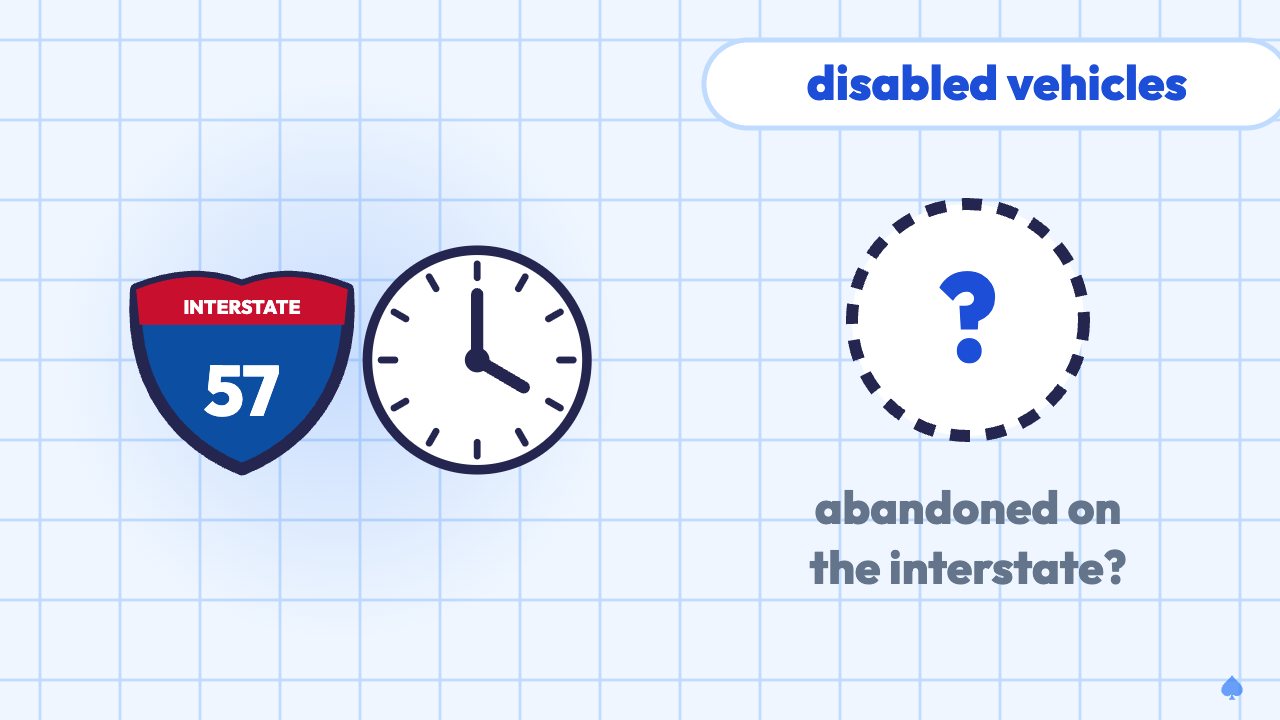
2 hours
Police may tow an abandoned or disabled vehicle at the owner’s expense after 2 hours on an interstate, expressway or toll highway; 10 hours on an urban highway; 24 hours on a rural highway. (Rules of the Road, p. 45.)
-
On which streets may a low-speed vehicle (top speed 25 mph) drive?
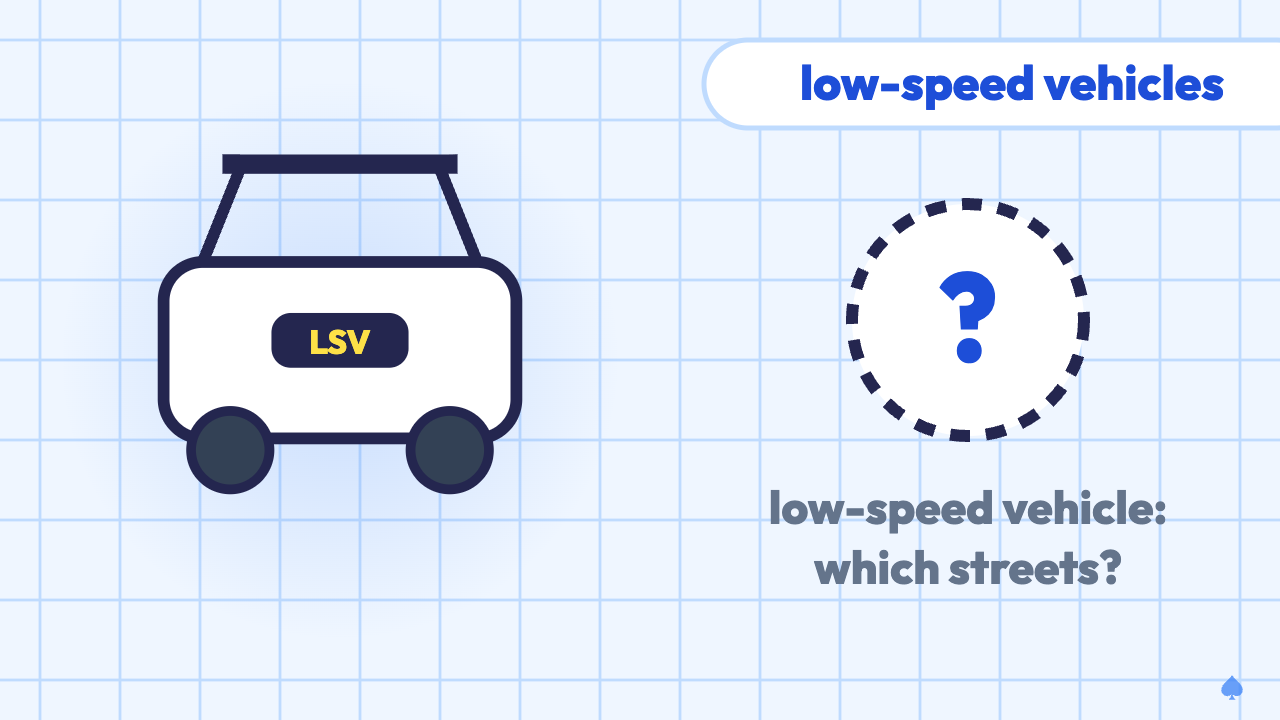
Streets posted 30 mph or less
Low-speed vehicles, with a top speed of 25 mph, must be titled and registered and may drive on streets posted 30 mph or less unless the town prohibits them. (Rules of the Road, p. 45-46.)
-
You come up behind a vehicle with an orange slow-moving vehicle emblem. What should you do?
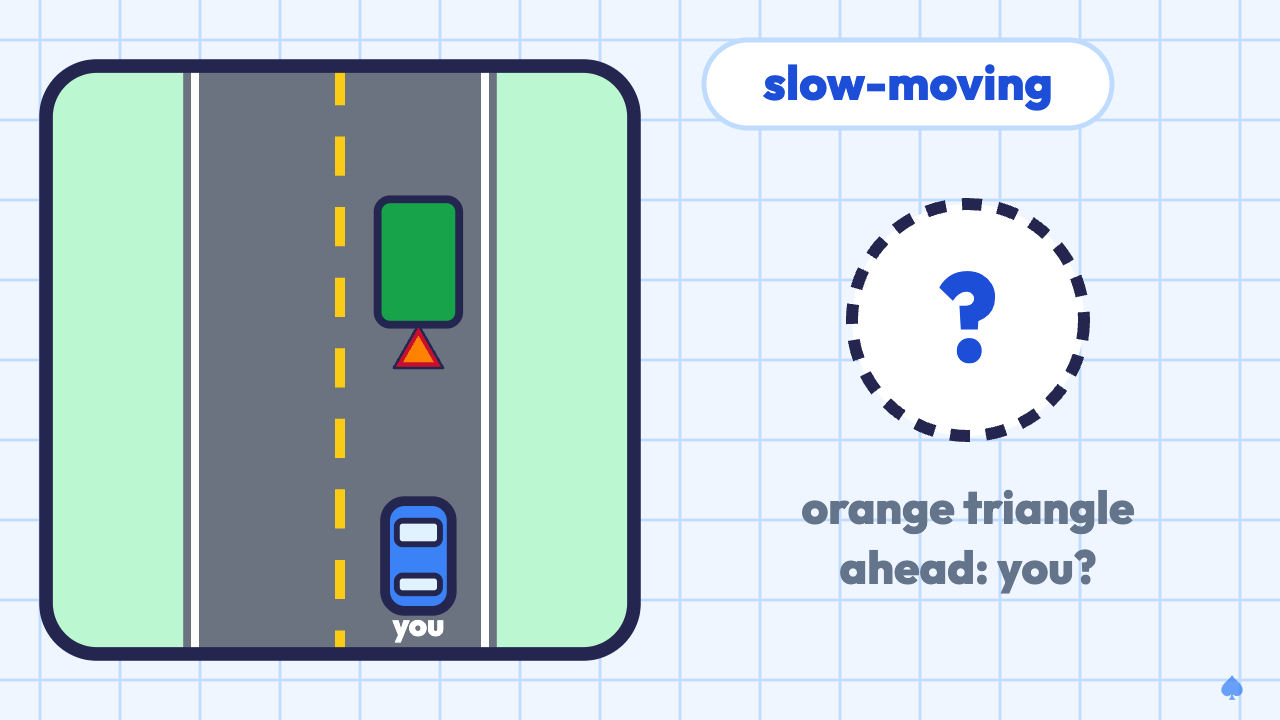
Slow down; pass only when safe
Slow-moving vehicles usually travel 5 to 20 mph, so you close on them quickly. Slow down, stay a safe distance back, and pass only when safe and legal; they may turn wide at any time. (Rules of the Road, p. 46, 74.)
-
You are passing a person riding a horse. What must you never do?

Sound your horn
Never sound a horn near a horse or livestock; it may frighten the animal and cause a crash. Pass with caution and be ready to stop. (Rules of the Road, p. 47.)
Every card is here to read. Study them in the app, free to start, with spaced repetition bringing back the ones you miss.
Decks like this one.
- IL Permit 12: Teens, Phones, Belts & Your License FlashQuest · 60 cards Start free
- IL Permit 11: Alcohol, Drugs & DUI FlashQuest · 26 cards Start free
- IL Permit 10: Safe Driving & Equipment FlashQuest · 45 cards Start free
- IL Permit 08: Speed Limits & Parking FlashQuest · 31 cards Start free
- IL Permit 07: Passing, Lanes, Turns & Roundabouts FlashQuest · 36 cards Start free
- IL Permit 06: Work Zones, Emergencies, Buses & Trains FlashQuest · 30 cards Start free

Study it properly.
All 36 cards are in the app, free to start, scheduled so the ones you miss come back sooner.