
IL Permit 10: Safe Driving & Equipment
by FlashQuest
45 Illinois permit test cards on safe driving habits, emergencies and required car equipment. Deck 10 of 12. The first half covers the three-second rule, stopping distance, fog, floods, icy bridges, expressway exits, skids, blowouts, a stuck gas pedal, smoke, a car in water and aggressive drivers. The second half is equipment: when headlights are required, dimming at 500 and 300 feet, horn, mirror, brake and taillight distances, window tint, loud stereos and radar jammers. From the Illinois Rules of the Road 2026 (chapters 11 and 12).


Free to start, no account needed. After you install, search the Table for “IL Permit 10: Safe Driving & Equipment”.
Study all 45 cards, with their pictures, in the app.
All 45 cards in this deck.
Made by FlashQuest. Last updated November 2026. Drafted with AI help.
- Which rule helps you find a safe following distance?
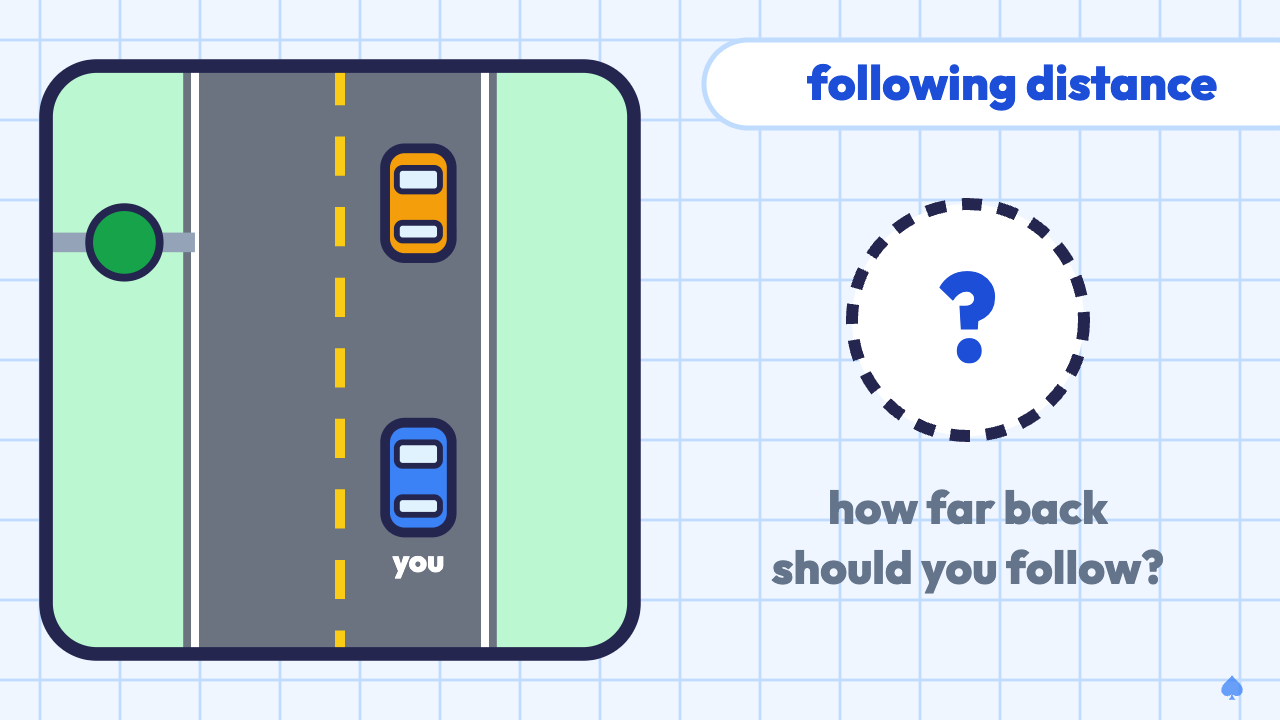
- The three-second rule
- Pick a fixed object ahead. When the car in front passes it, count one-thousand-one, one-thousand-two, one-thousand-three. If you reach the object before three, you are following too closely. (Rules of the Road, p. 83.)
- What causes most rear-end crashes?
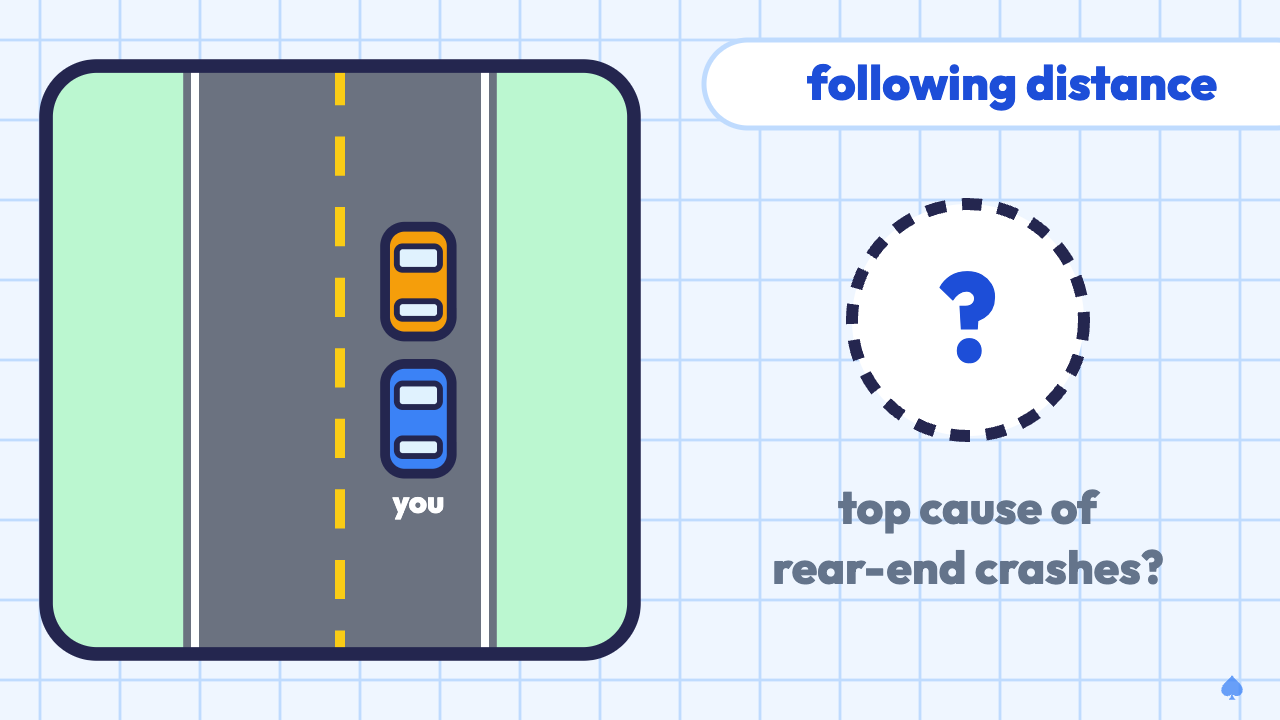
- Following too closely
- Following a vehicle too closely, or tailgating, is the cause of most rear-end crashes. (Rules of the Road, p. 83.)
- Roads are wet or the weather is bad. What should you do with your following distance?
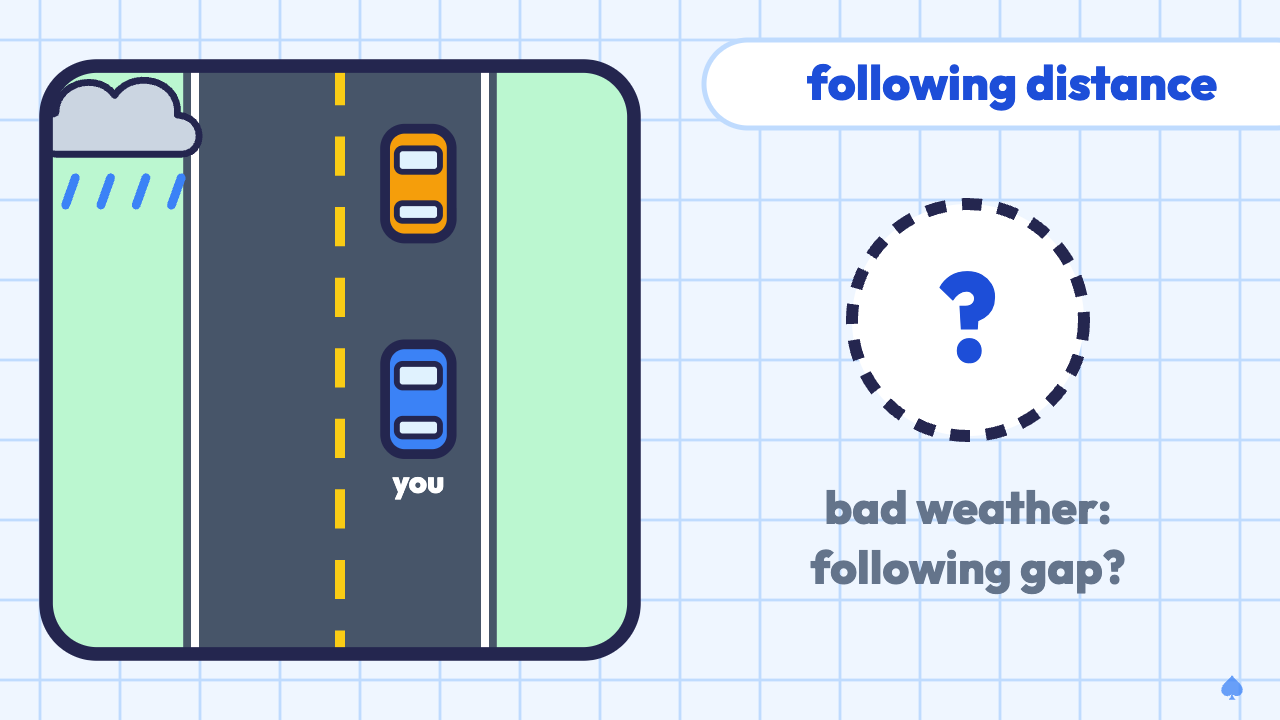
- Increase it beyond 3 seconds
- The three-second rule applies on a good road in good weather. If road or weather conditions are not good, increase your following distance even more. (Rules of the Road, p. 83.)
- Someone is tailgating you. What should you do?
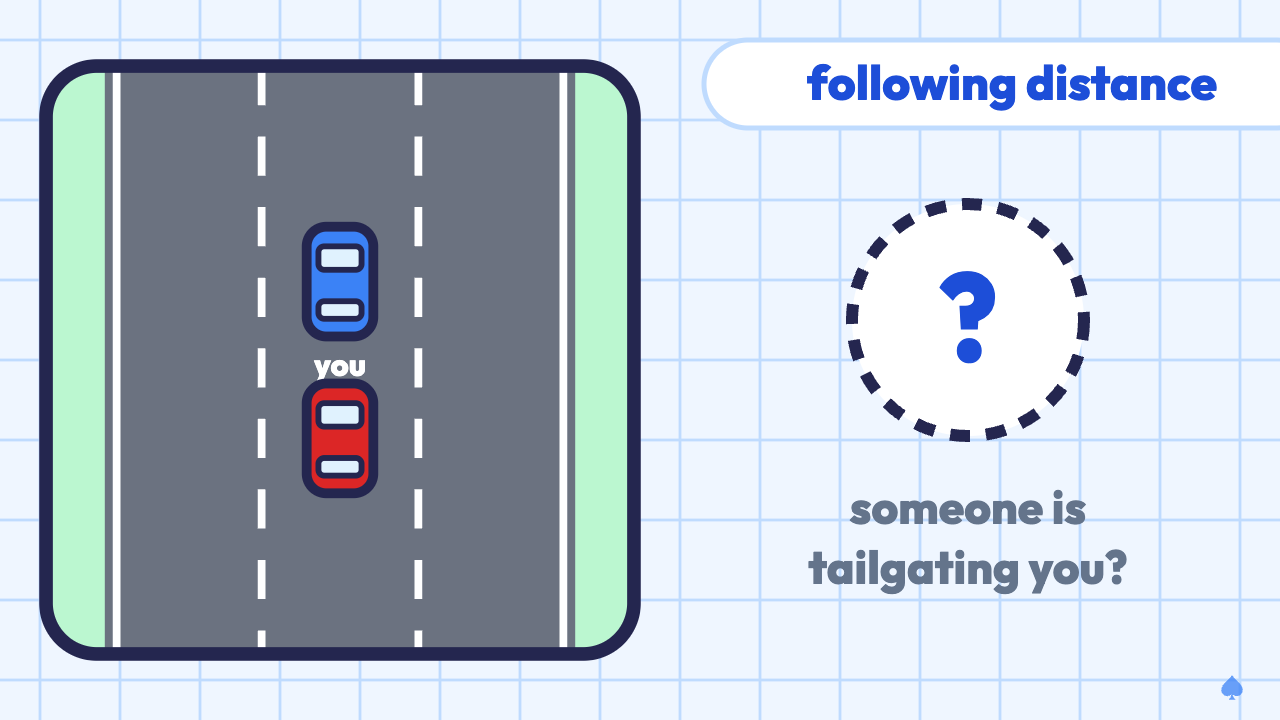
- Change lanes or let them pass
- If you are being tailgated, move to another lane, or slowly pull off the road and allow the vehicle to pass. (Rules of the Road, p. 83.)
- If you double your speed, what happens to your stopping distance?
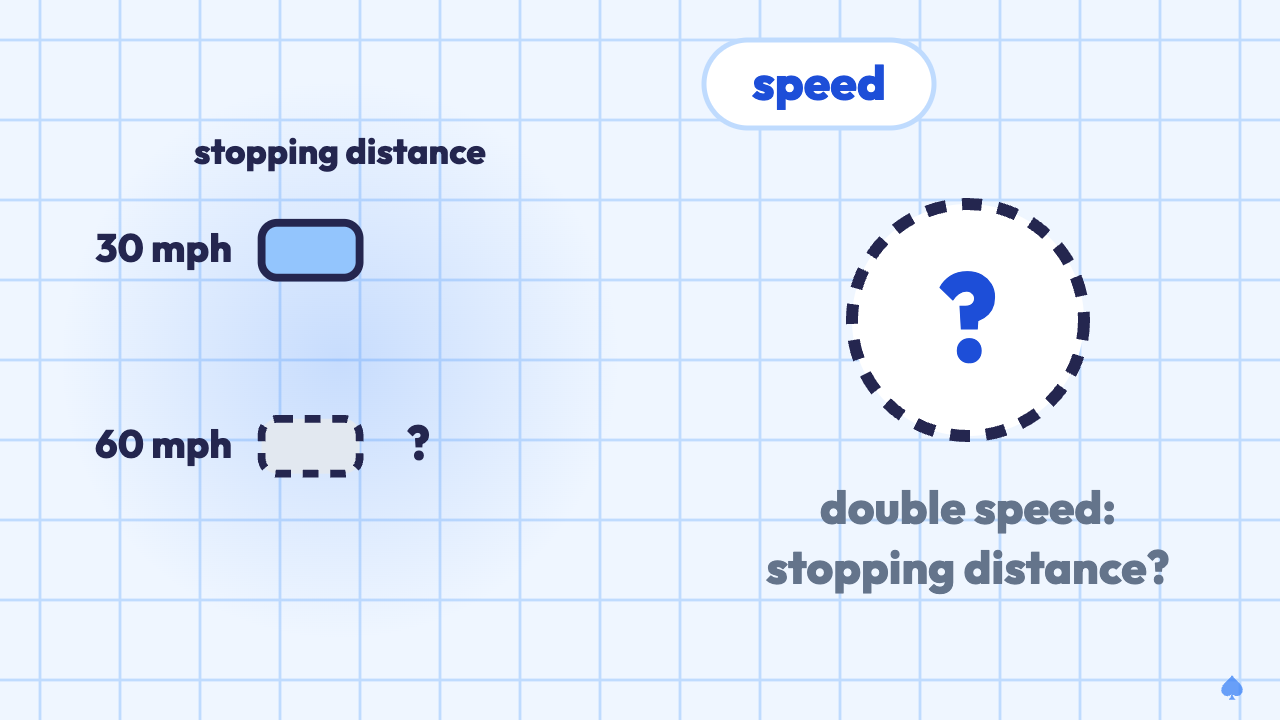
- It is about four times as long
- Doubling your speed quadruples your vehicle’s stopping distance. Adjust your speed to conditions, even below the posted limit. (Rules of the Road, p. 84.)
- How can you avoid drowsy driving on a long trip?
- Rest first and stop often
- Drowsy driving can impair you even if you do not fall asleep. Be properly rested and stop frequently on long trips. Reading road signs and shifting your focus also helps. (Rules of the Road, p. 84.)
- Driving in fog, which headlights should you use?
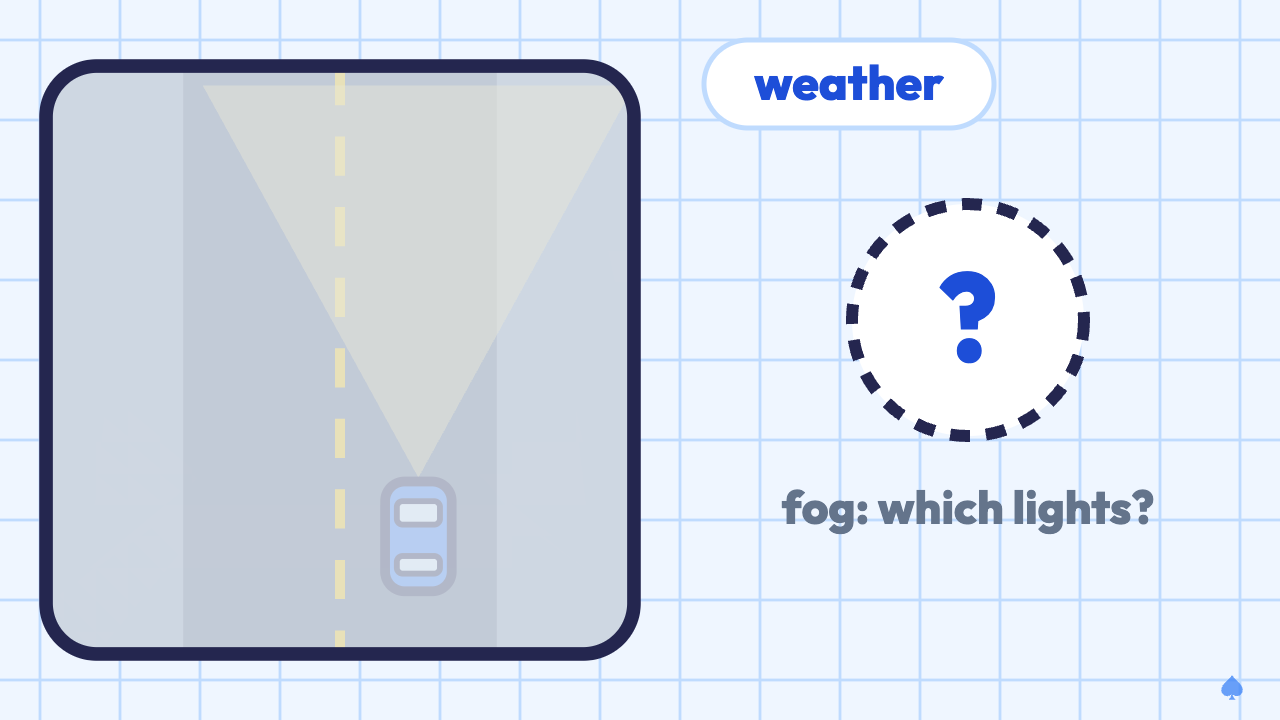
- Low beams or fog lights
- In fog, drive with headlights dimmed or use fog lights. Slow down, turn off cruise control, increase following distance and do not overdrive your headlights. (Rules of the Road, p. 84.)
- The fog is too thick to see. What should you do?
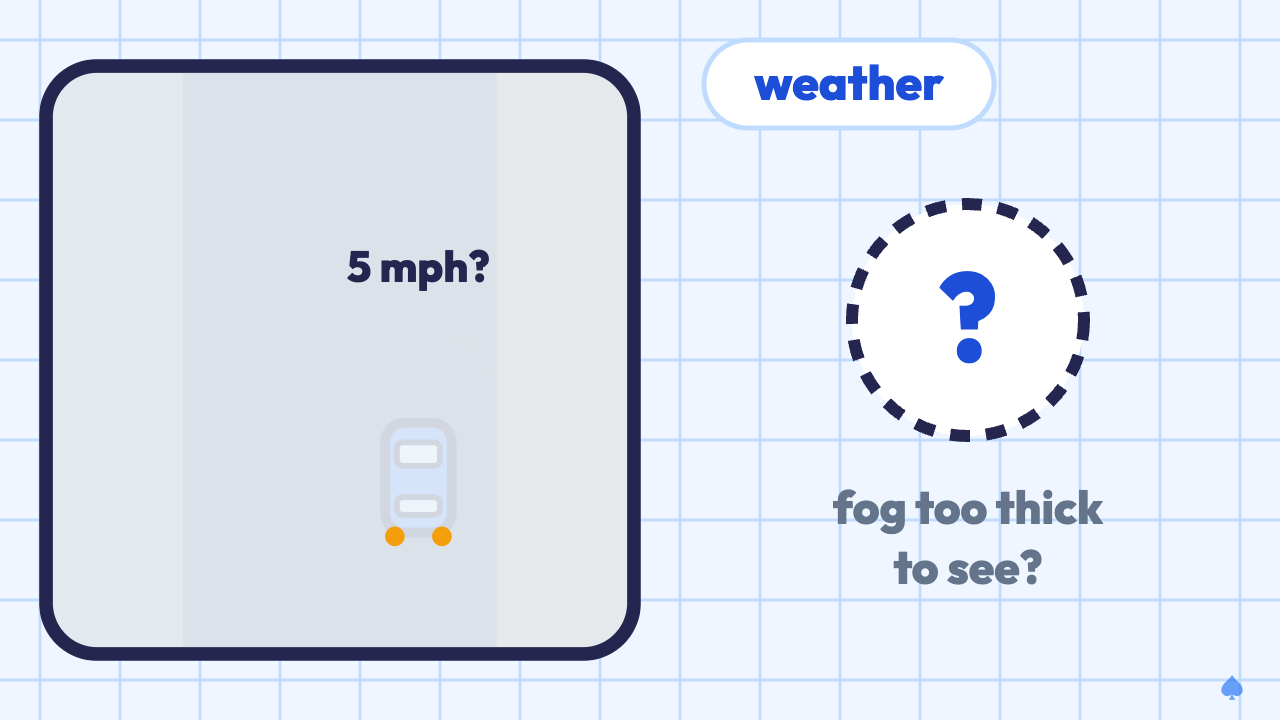
- Pull off the road and stop
- If the fog is too dense, pull off the roadway and stop. Do not drive at 5 to 10 mph; other drivers may not see you. (Rules of the Road, p. 84.)
- When does Illinois law require headlights during the day?
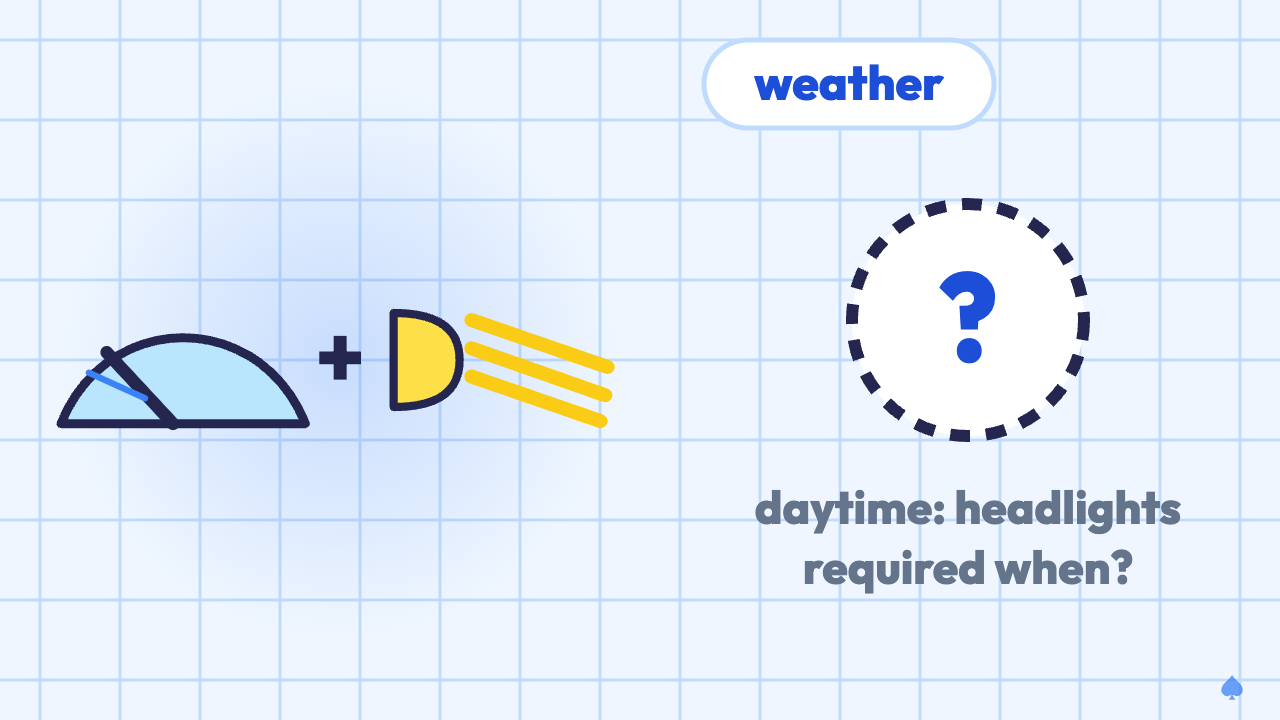
- Whenever wipers are needed
- Illinois law requires headlights whenever rain, snow, fog or other conditions require windshield wipers, and when you cannot see objects 1,000 feet away. (Rules of the Road, p. 85, 92.)
- Your car starts to hydroplane on wet pavement. What should you do?
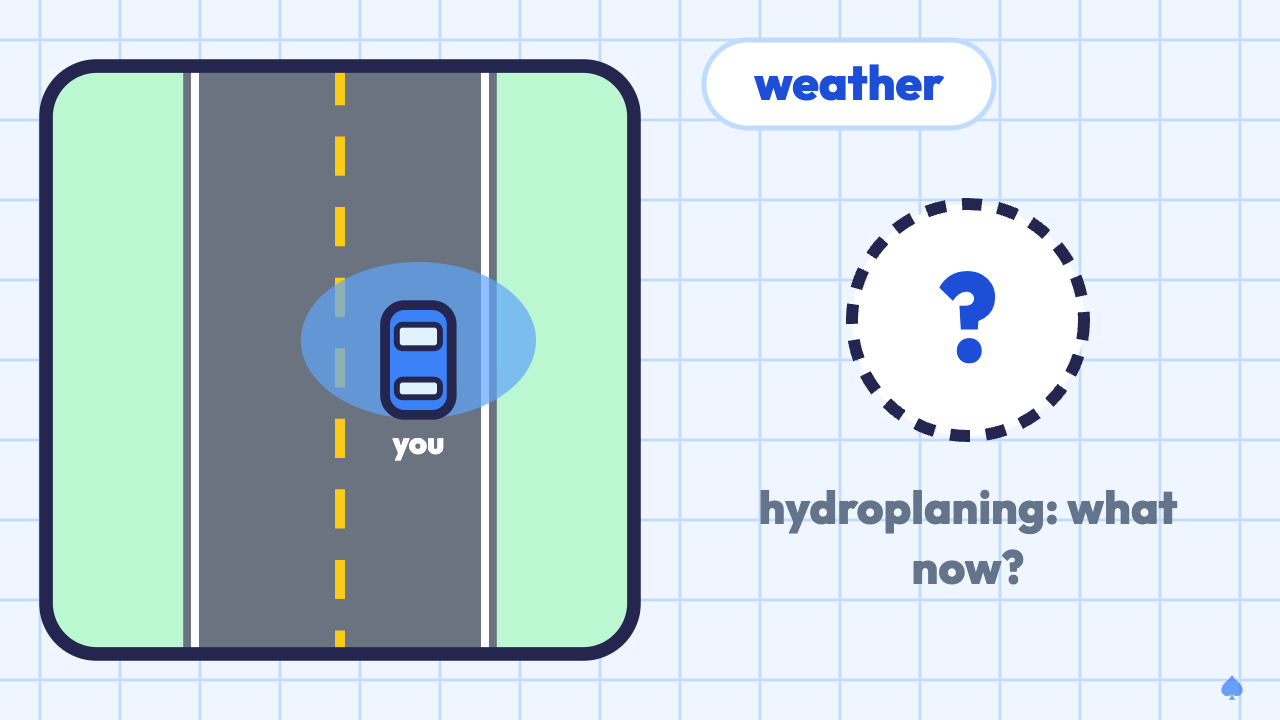
- Ease off the gas; do not brake
- Slow down to avoid hydroplaning. If you skid, try to regain control; if not possible, release the accelerator and ride out the skid. Do not brake quickly. (Rules of the Road, p. 85.)
- A road or viaduct ahead is flooded. What should you do?
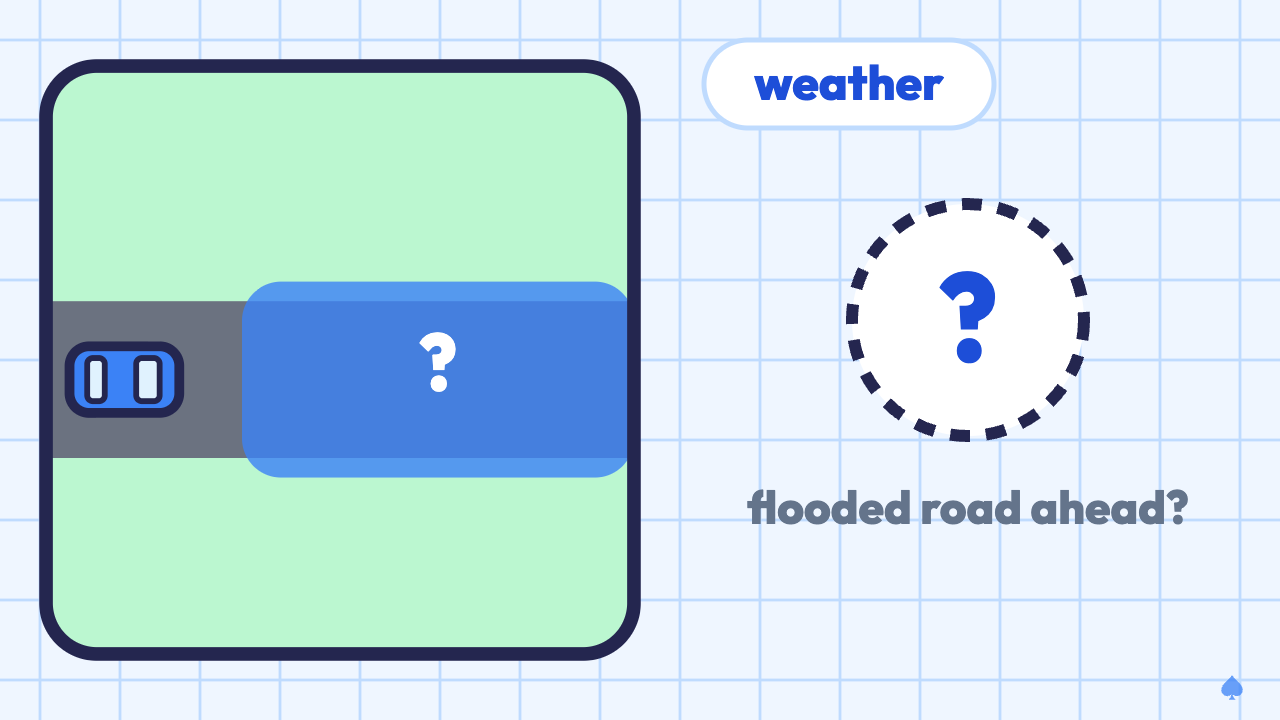
- Turn around; find another way
- Do not drive through a flooded roadway or viaduct. It is impossible to judge the depth or current of the water. Turn around and find another route. (Rules of the Road, p. 85.)
- Why is a bridge dangerous in winter?
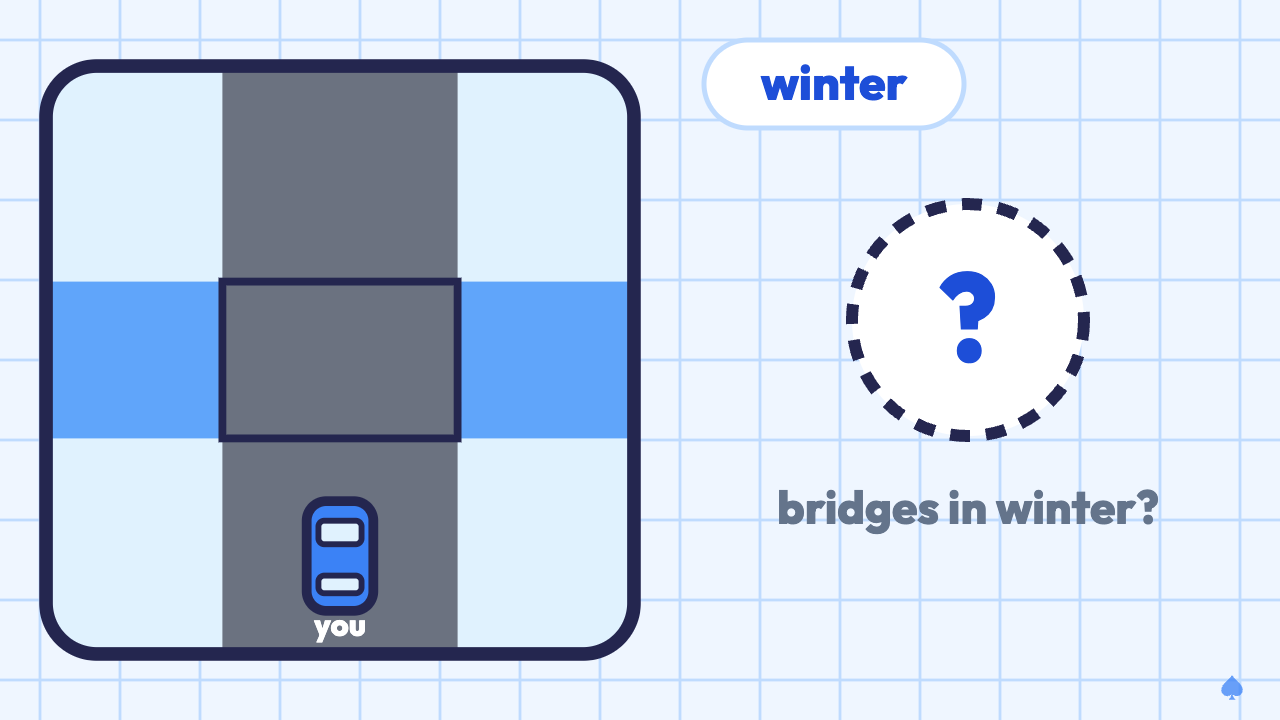
- It may stay icy after the road
- Approach bridges, shaded spots, overpasses and turns slowly. They may remain icy after the rest of the roadway is clear and dry. (Rules of the Road, p. 85.)
Show the other 33 cards
-
You are stranded in a blizzard. What should you do?
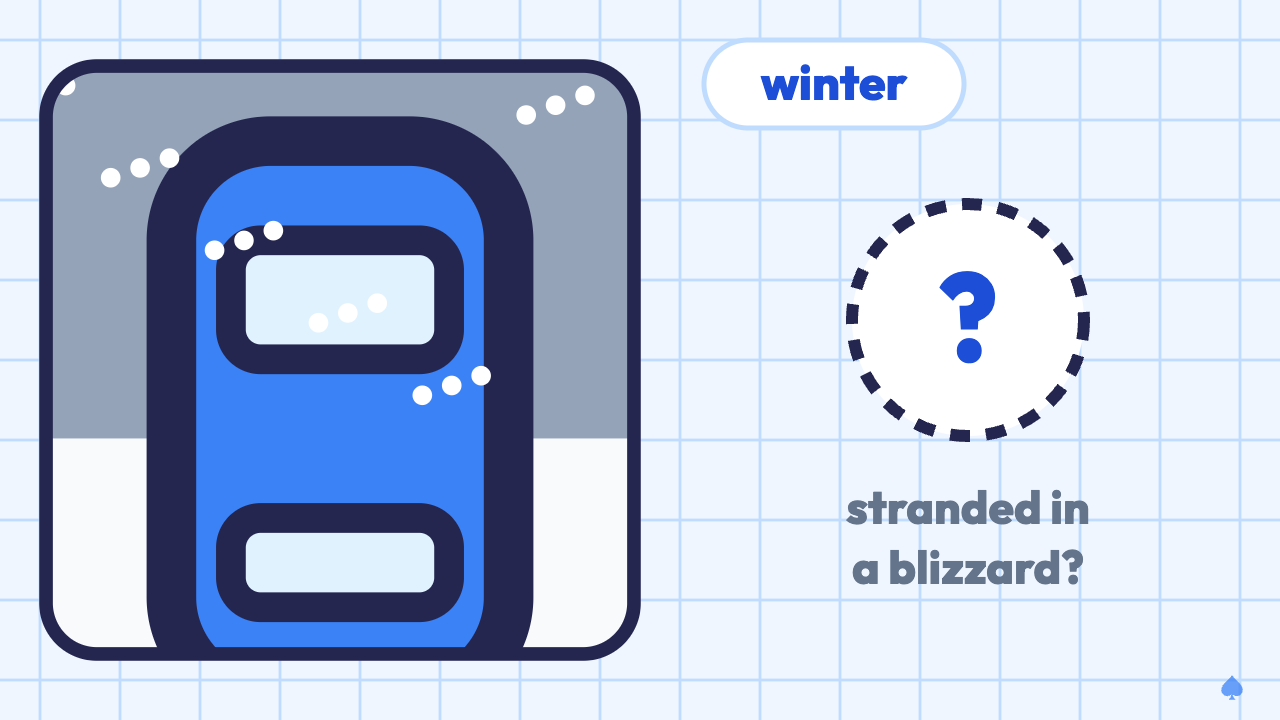
Stay in your vehicle
If stranded, remain in your vehicle. Run the engine only for brief times and open a window to prevent carbon monoxide poisoning. Keep the tailpipe clear of snow. (Rules of the Road, p. 85.)
-
How do you enter an expressway safely?
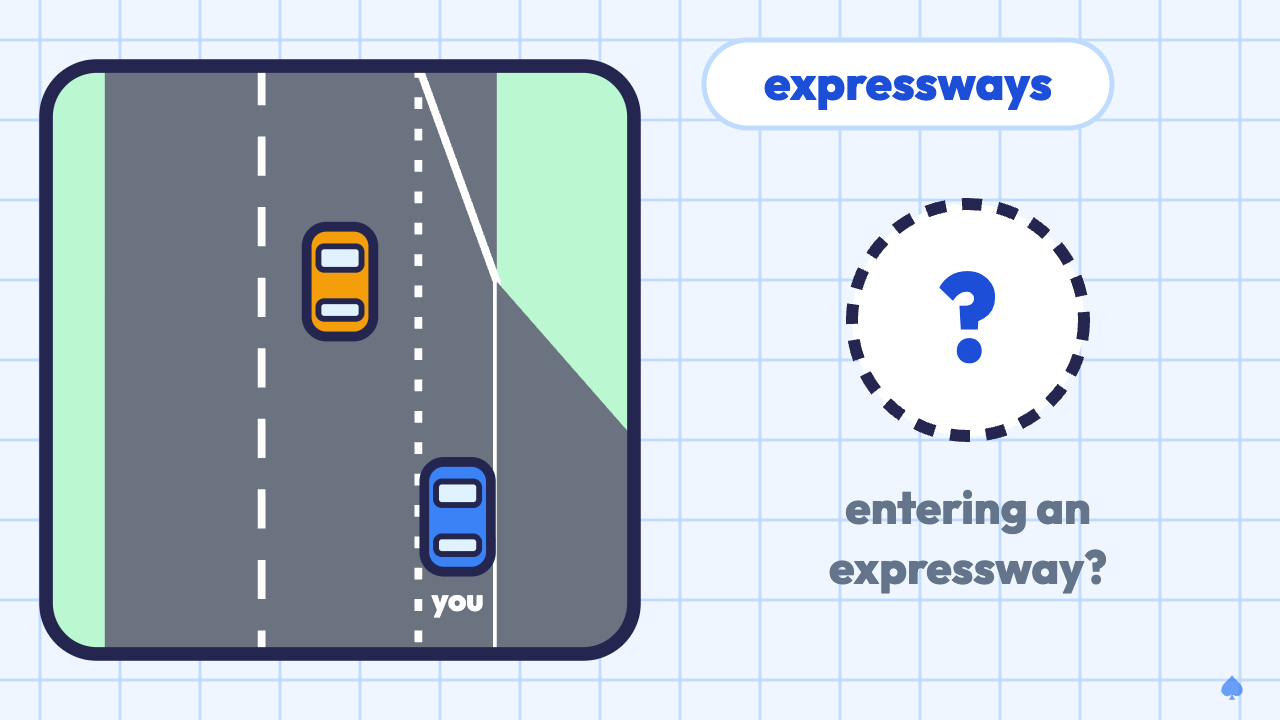
Use the speed-change lane
Use the speed-change lane to gain the speed needed before merging. Signal, look for an opening, match traffic speed and merge when safe. (Rules of the Road, p. 86.)
-
You miss your expressway exit. What should you do?
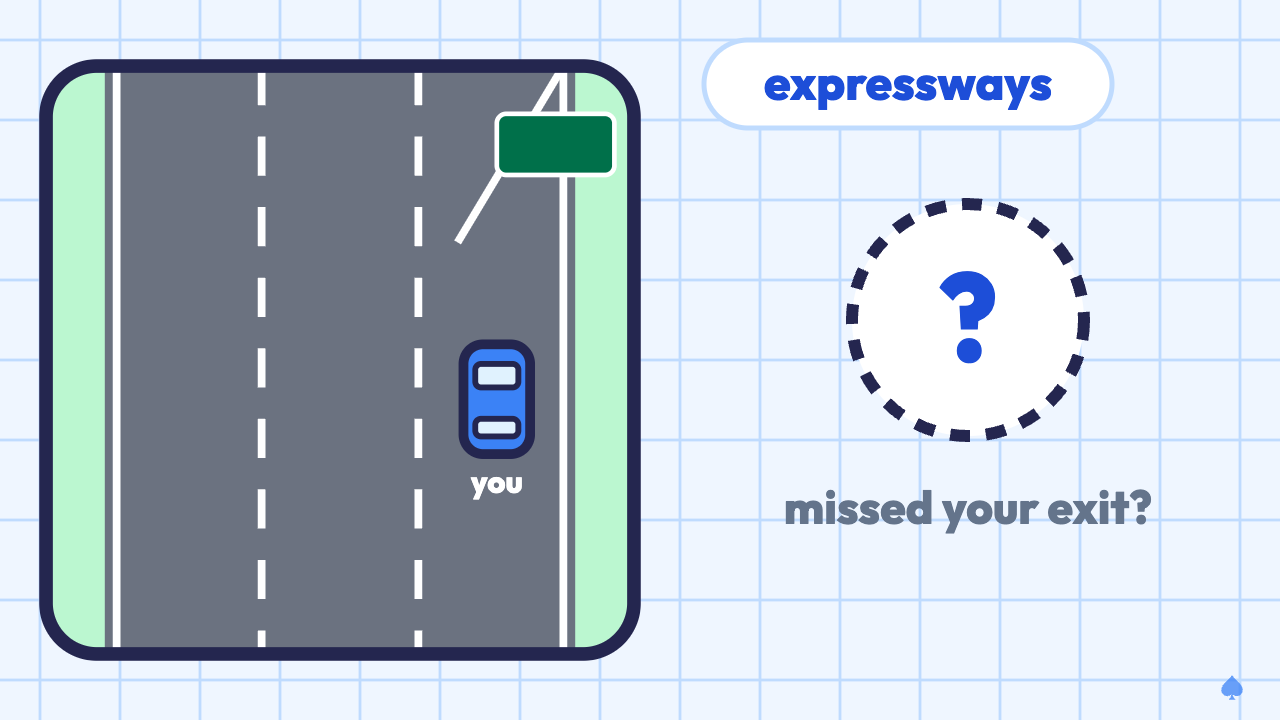
Go to the next exit
If you miss an exit, go on to the next available exit. Backing up on an expressway is against the law. (Rules of the Road, p. 86.)
-
Your car has a problem on the expressway. What should you do?
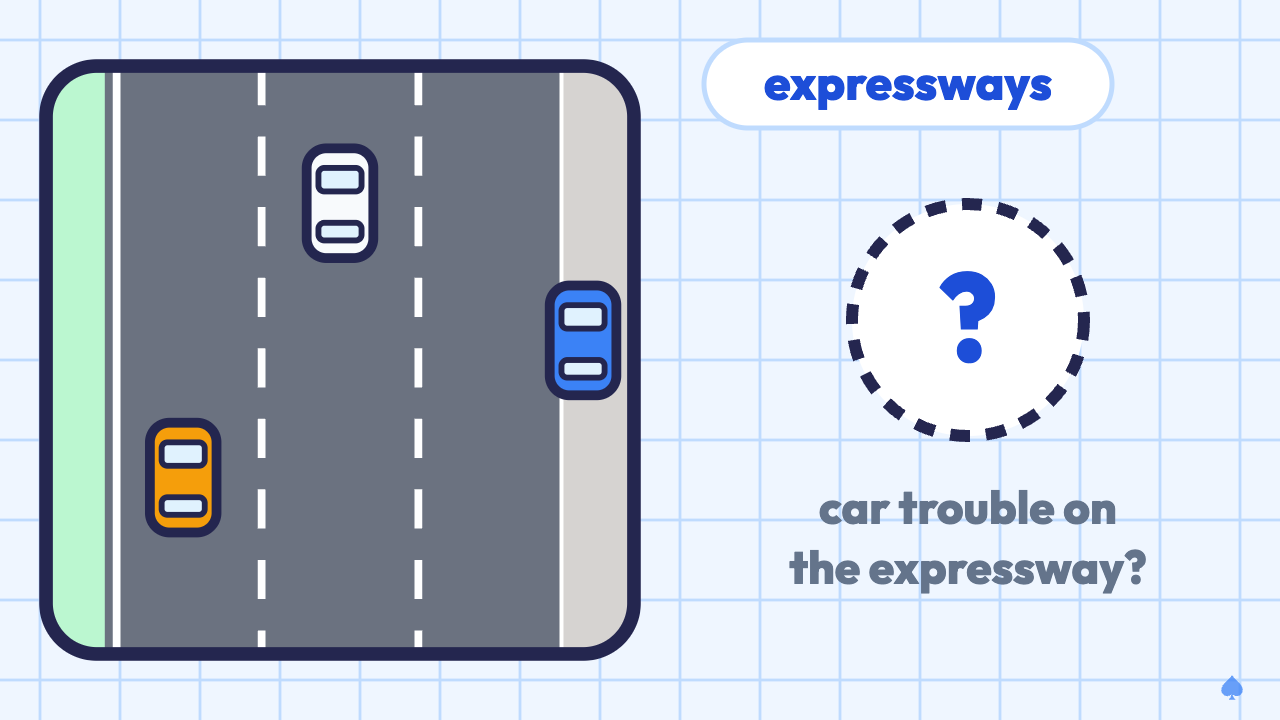
Pull off, hazards on, hood up
Do not stop on the expressway. Pull off the road, lift the hood and turn on your hazard flashers. Never walk along the expressway. (Rules of the Road, p. 86.)
-
How far from an oncoming vehicle must you dim your high beams?
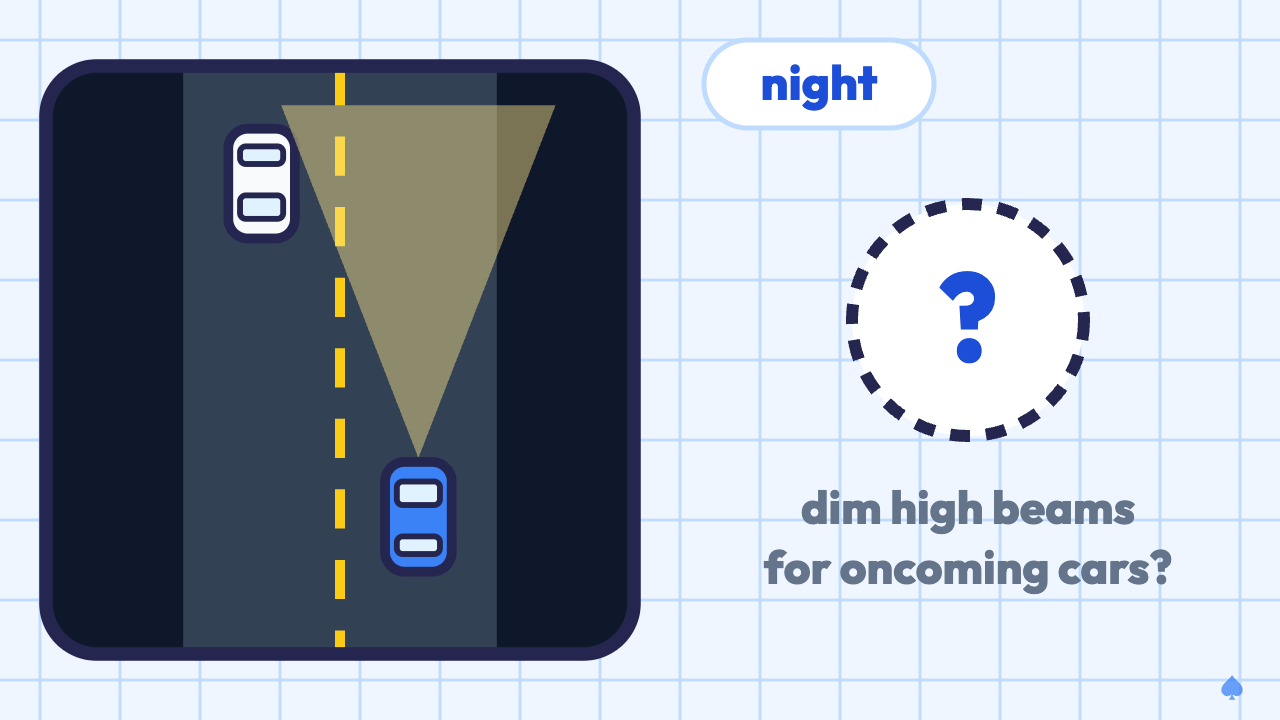
500 feet
Bright lights must be dimmed 500 feet before meeting an oncoming vehicle, and 300 feet before passing a vehicle traveling in your direction. (Rules of the Road, p. 87, 92.)
-
Coming up behind a car at night, when must you dim your high beams?
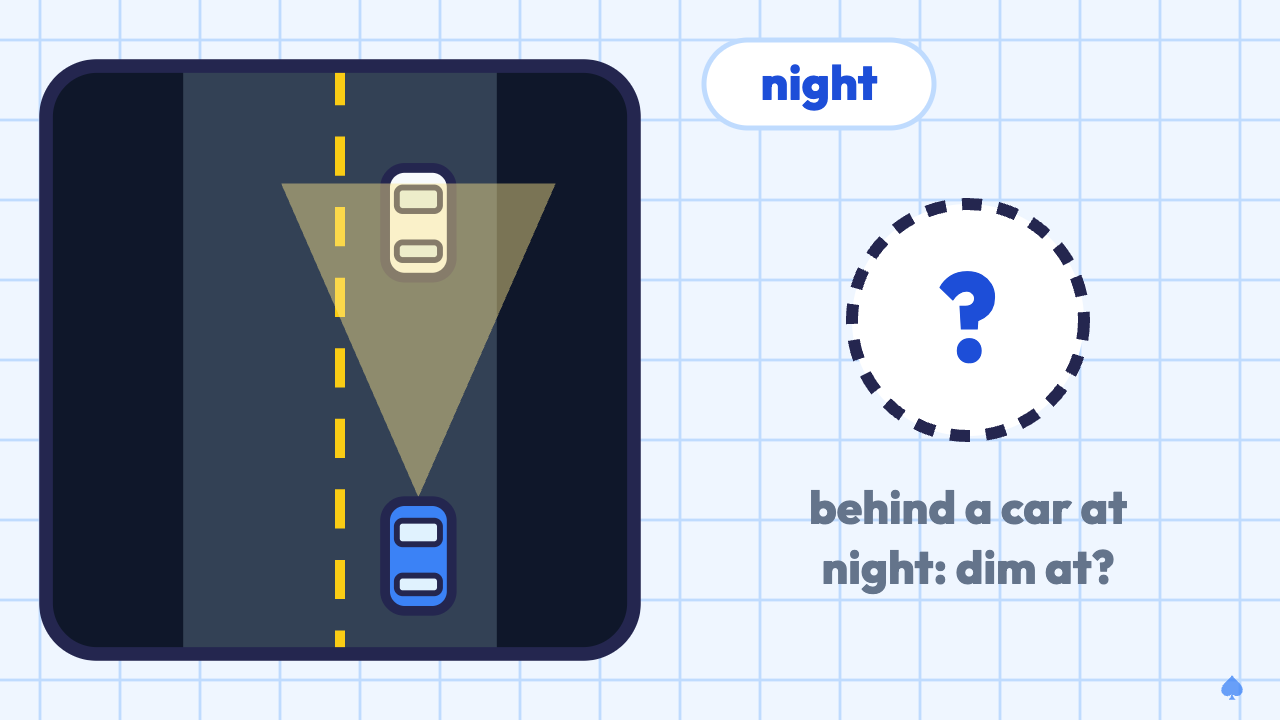
Within 300 feet
Dim your bright lights 300 feet before passing, or when following, a vehicle going your way, so you do not blind the driver through the mirrors. (Rules of the Road, p. 87, 92.)
-
A vehicle is coming at you head-on in your lane. What should you do?
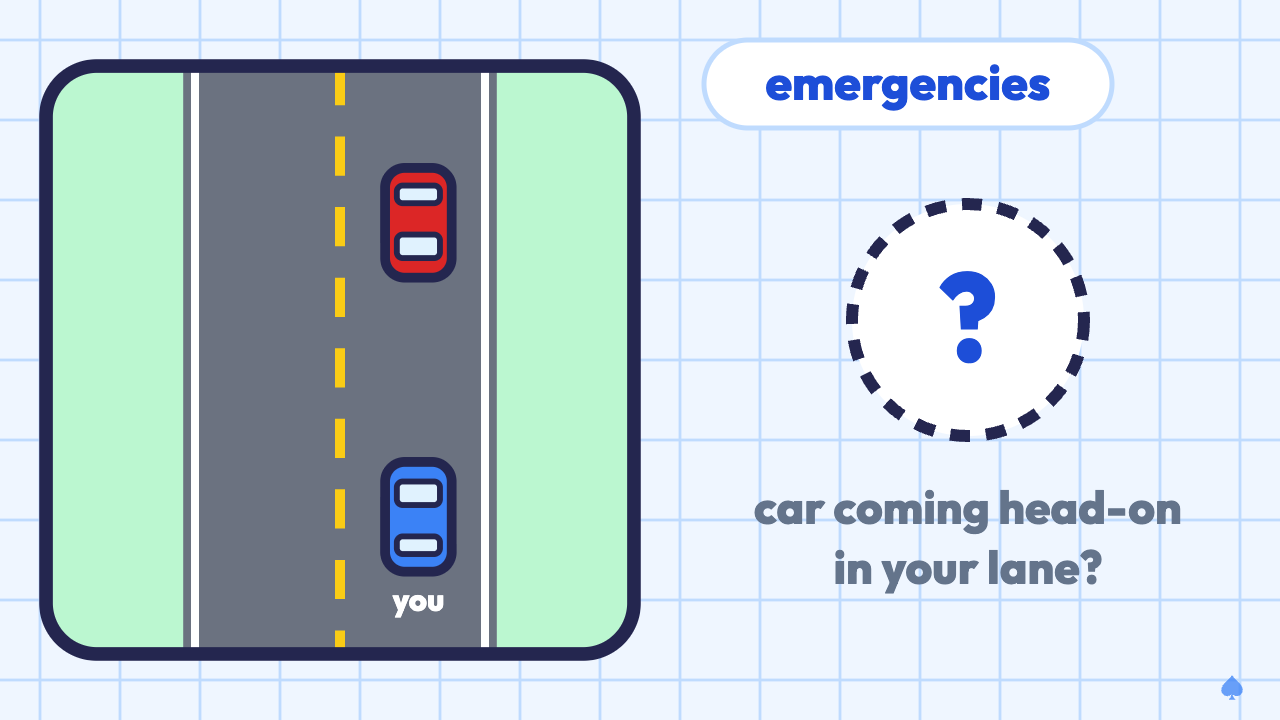
Slow, pull right, sound horn
When a vehicle approaches head-on in your lane, slow down, pull over to the right and sound your horn. (Rules of the Road, p. 87.)
-
Your car starts to skid. What should you do?
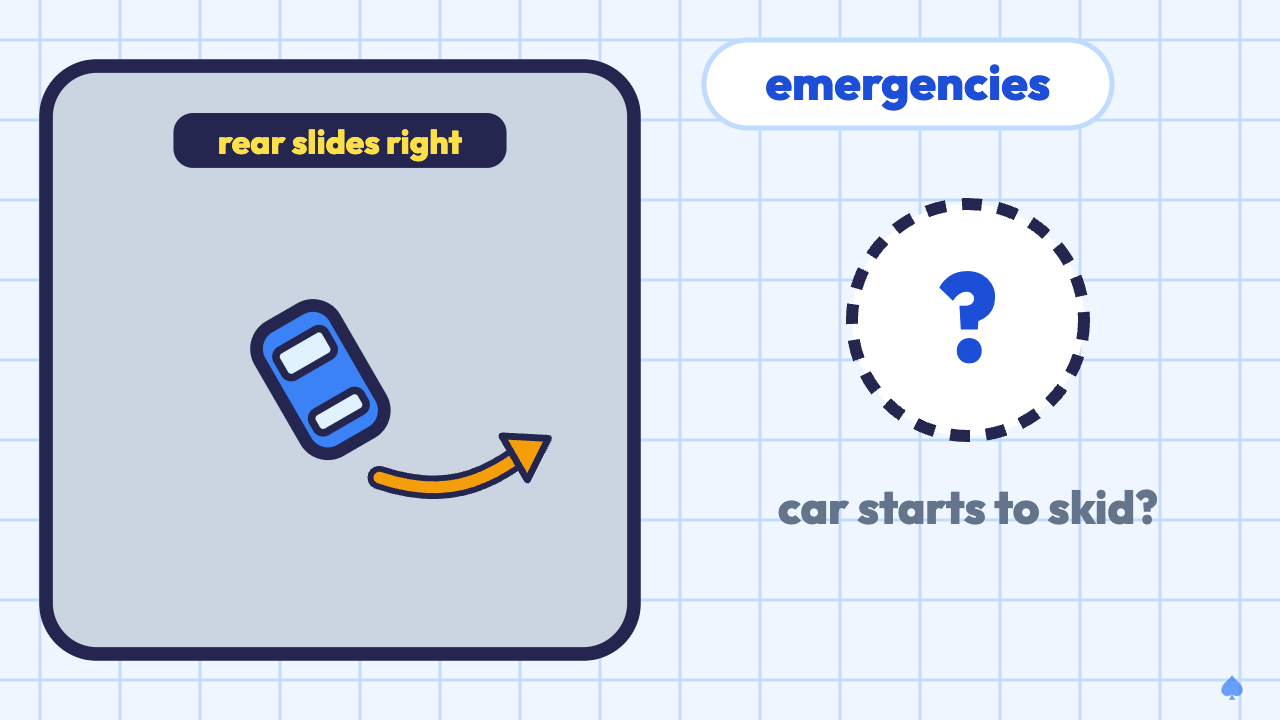
Ease off and steer into the skid
If your vehicle starts to skid, ease off the gas pedal or brakes, steer into the direction of the skid until you regain traction, then straighten the vehicle. (Rules of the Road, p. 87.)
-
Your right wheels drift off the pavement. What should you do?
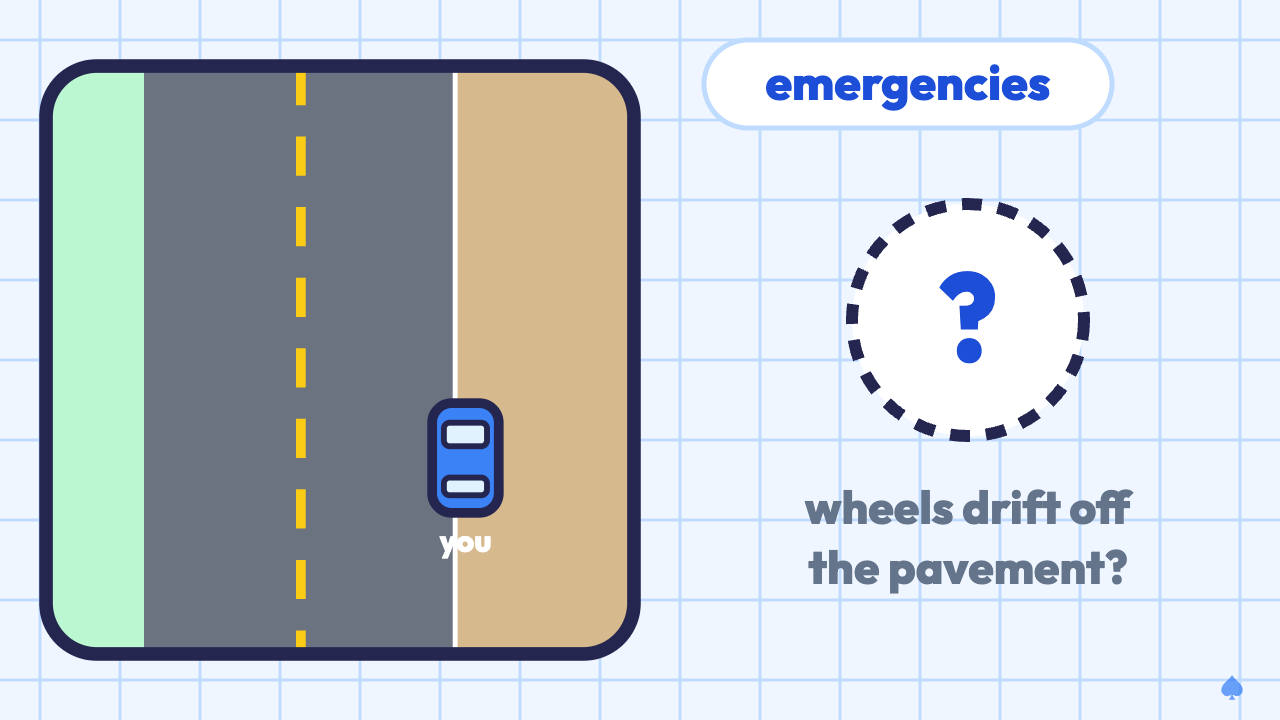
Ease off, brake gently, steer back
Grip the wheel firmly, ease off the gas and brake gently. After checking traffic behind you, gently steer back onto the pavement. Jerking the wheel can send you into oncoming traffic. (Rules of the Road, p. 87.)
-
Smoke is coming from your car. What should you do?
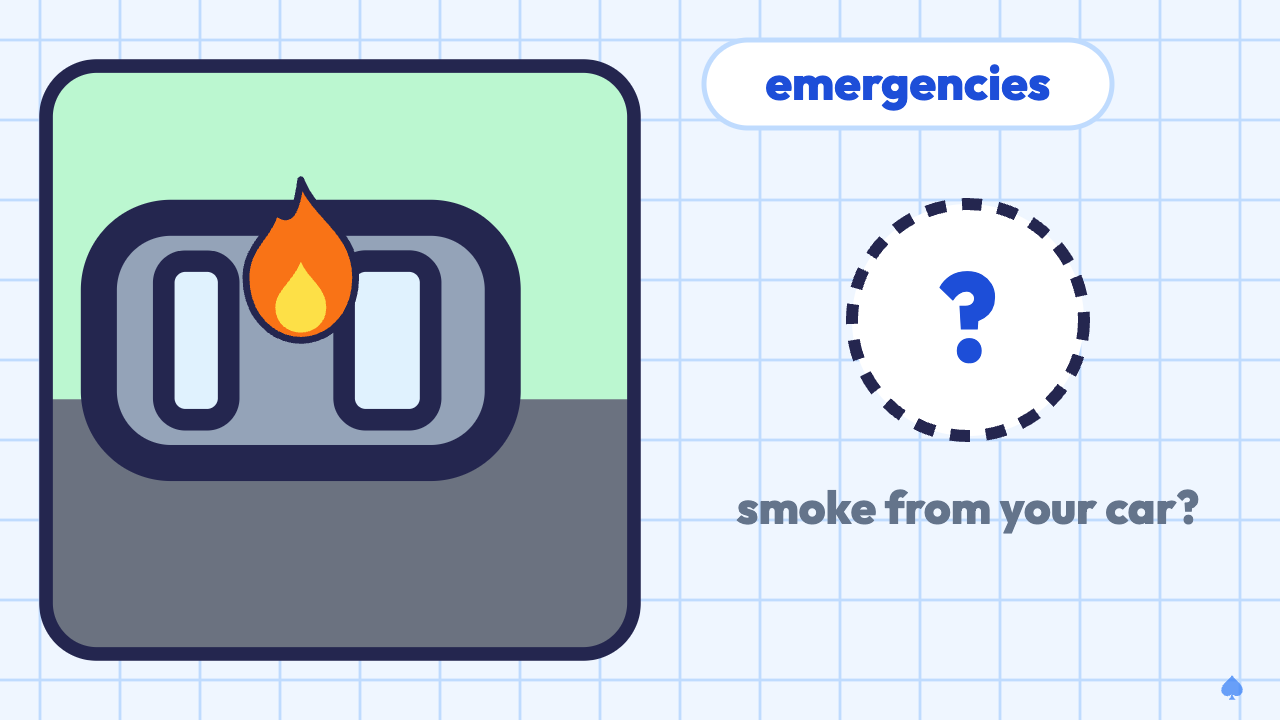
Pull off, get away, call 911
If smoke appears, pull off the road, turn off the engine, move away from your vehicle and call 911. Do not fight the fire yourself. (Rules of the Road, p. 88.)
-
Your car runs into water but has not sunk yet. How should you escape?
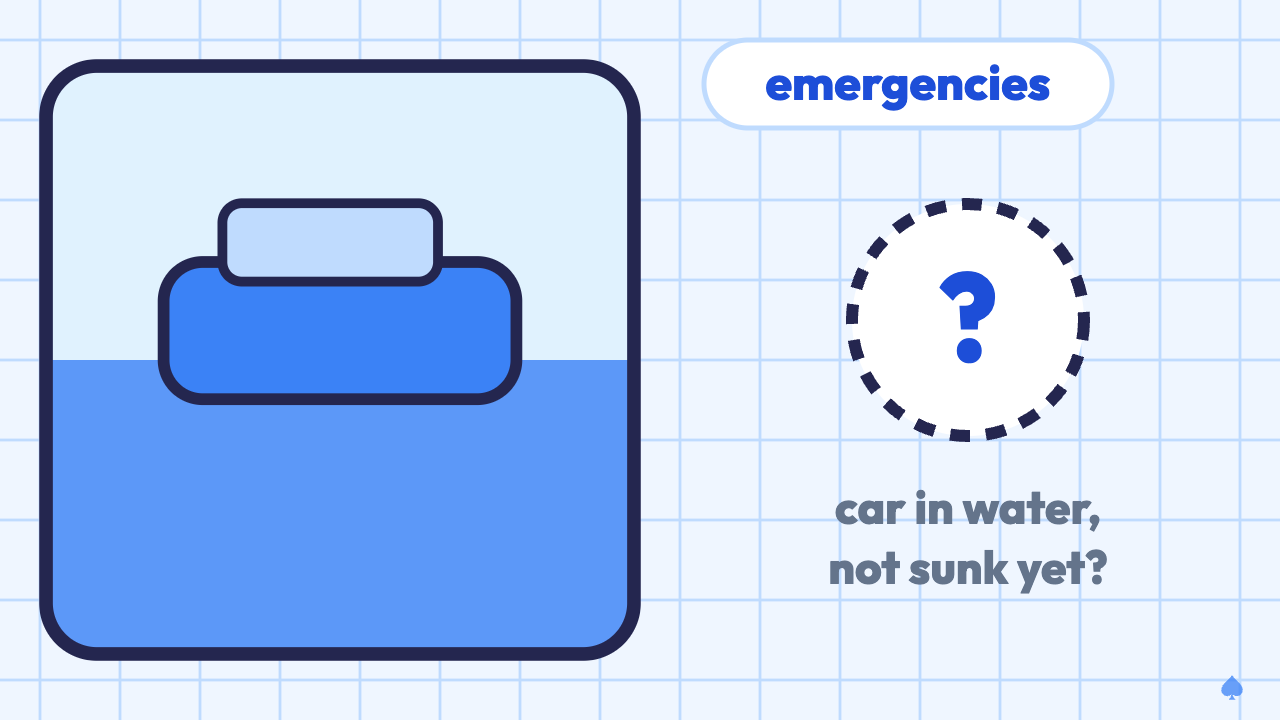
Through a window
If your vehicle runs into water but does not sink right away, escape through a window; water pressure may keep the doors from opening. If it sinks, move to the back where an air pocket forms. (Rules of the Road, p. 88.)
-
Where should you never run your car’s engine?
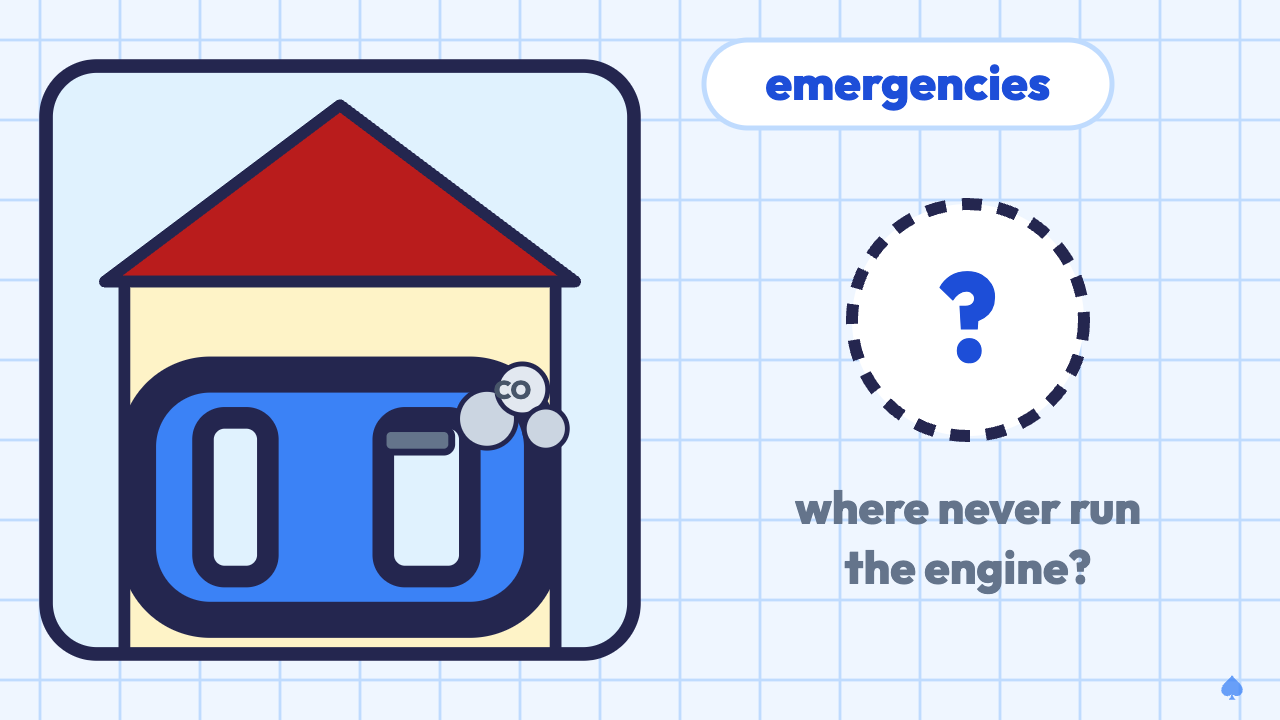
Inside an attached garage
Carbon monoxide is deadly and comes from burning fuel. Symptoms are flu-like. Never run a vehicle in a garage attached to a house, and have the exhaust checked every year. (Rules of the Road, p. 88.)
-
Power lines fall on your car after a crash. What should you do?
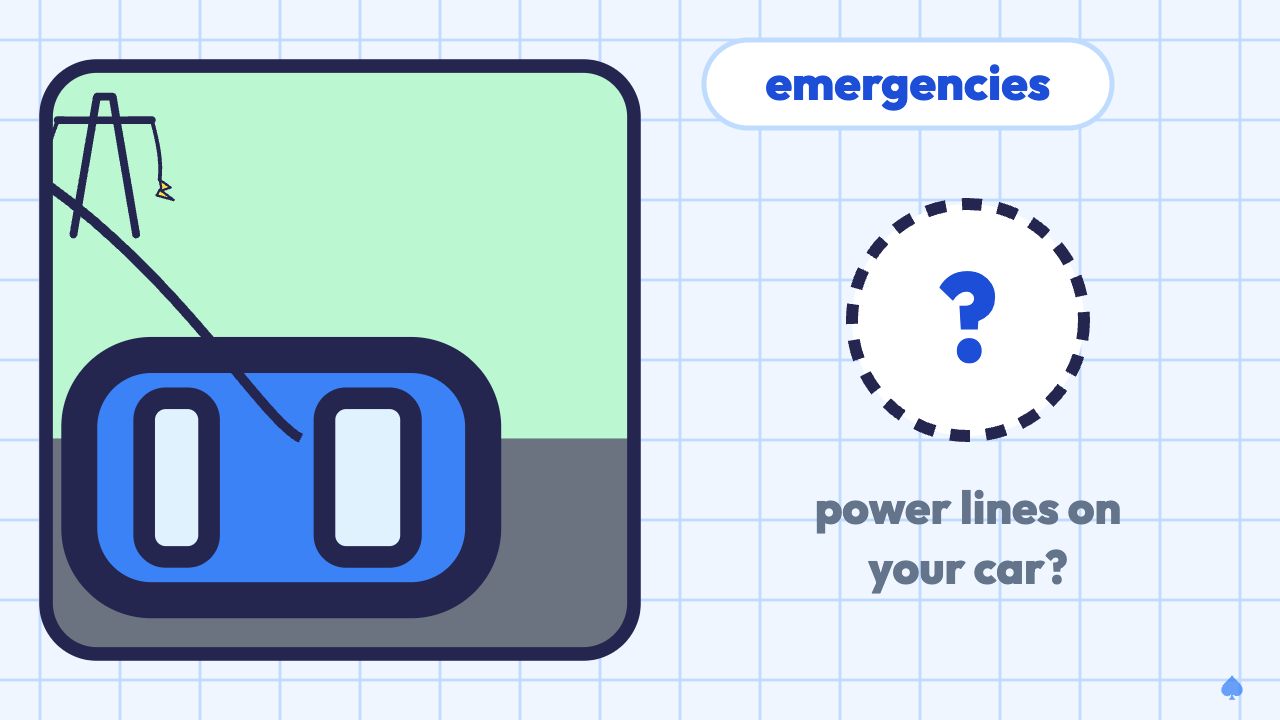
Stay inside until help arrives
Remain in the vehicle until help arrives. If fire forces you out, jump clear without touching the car and ground at the same time, land on both feet and shuffle 50 feet away. (Rules of the Road, p. 88.)
-
You have a tire blowout. What should you do?
Ease off the gas; do not brake hard
A thumping sound may warn of a blowout. Ease off the gas, grip the wheel firmly, pull safely off the road and check the tires. Do not brake suddenly. (Rules of the Road, p. 88.)
-
Your brake pedal suddenly sinks to the floor. What should you do first?
Pump the brake pedal
If the brake pedal sinks to the floor, pump it to build pressure. If that does not work, use the emergency or parking brake, and shift into a lower gear to slow down. (Rules of the Road, p. 89.)
-
Your gas pedal sticks and will not come free. What should you do?
Shift to neutral, brake gently
If the gas pedal sticks, hook your toe under it to free it. If it will not come free, shift into neutral and brake gently to slow down. (Rules of the Road, p. 89.)
-
An angry, aggressive driver is near you. What should you do?
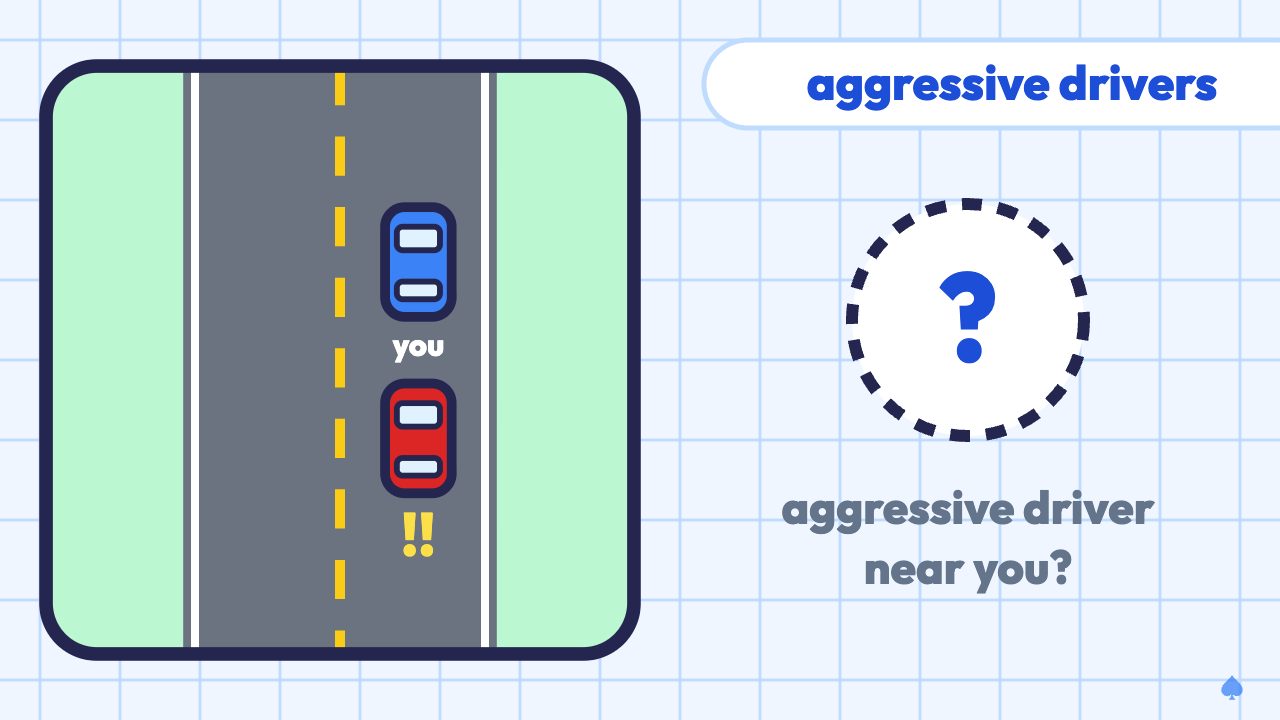
Do not engage or make eye contact
Do not retaliate or engage the other driver, do not make eye contact, keep your doors locked and windows up, and leave enough space ahead to pull out. (Rules of the Road, p. 89.)
-
Your car breaks down on a busy highway. What is the protocol?
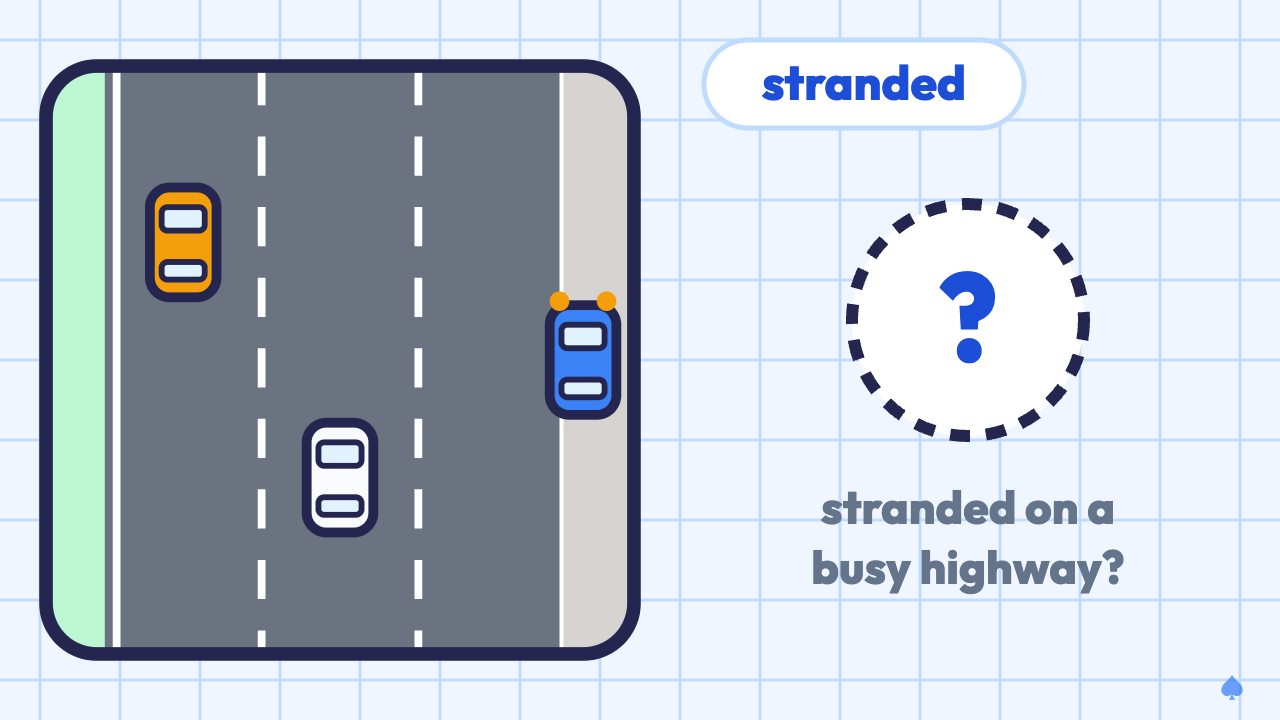
Stay in, belt on, call 911
On high-capacity roads and the Tollway, pull to the right shoulder, stay in the vehicle with your seat belt on, turn on hazards and call 911 (or *999 on the Tollway). (Rules of the Road, p. 90.)
-
When must headlights be on?
From sunset to sunrise
Headlights must be on from sunset to sunrise, when conditions require wipers, and when objects 1,000 feet away cannot be seen. (Rules of the Road, p. 92.)
-
How far away must your car’s horn be heard?
200 feet
Vehicles must have a horn that can be heard from 200 feet. Sirens, whistles and bells are allowed only on authorized emergency vehicles. (Rules of the Road, p. 92.)
-
Is window tint allowed on the front windshield?
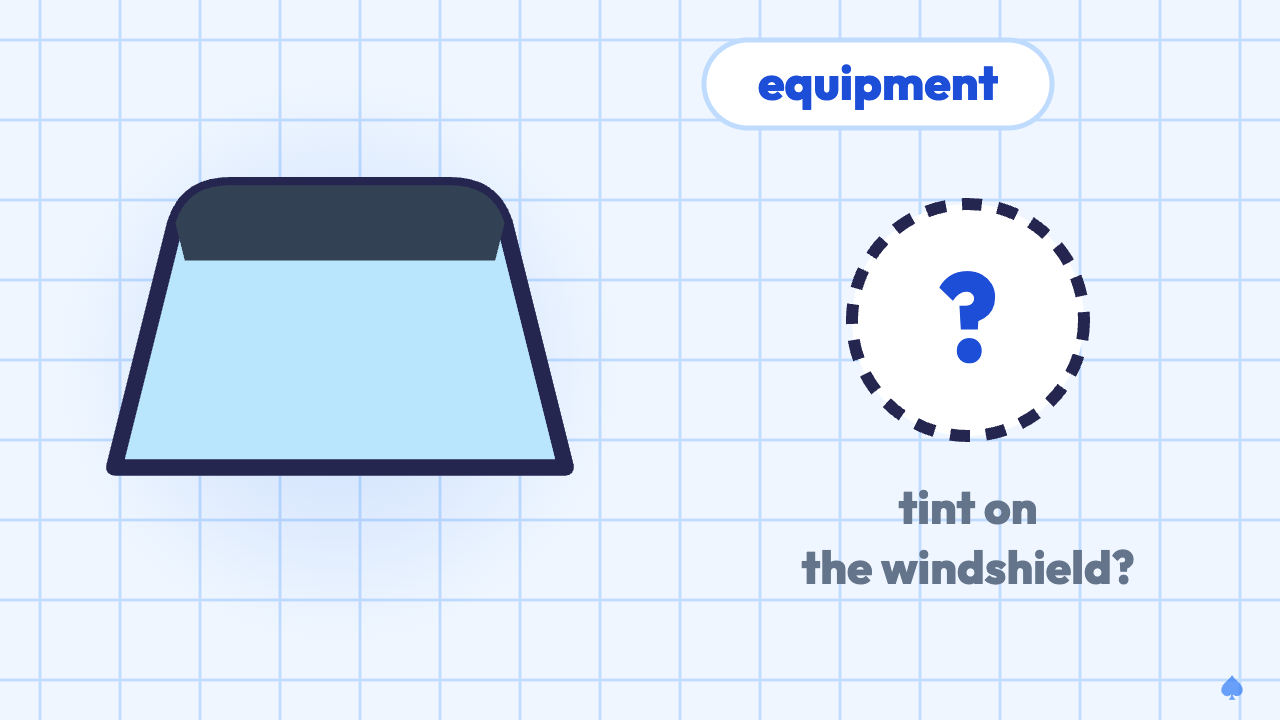
No, except a 6-inch top strip
Tinted windows are not allowed on the front windshield. A 6-inch strip of tint is allowed along the top of the windshield. All glass must be approved safety glass. (Rules of the Road, p. 92.)
-
May a TV or video screen visible to the driver be on while moving?

No
TVs or video monitors that can be seen from the driver’s seat are prohibited while the vehicle is moving. Watching or streaming live video on a cellphone is also illegal. (Rules of the Road, p. 93.)
-
From how far must turn signals be visible?

300 feet
Vehicles, except motorcycles, trailers and semitrailers, must have right and left turn signals, front and rear, visible from 300 feet. (Rules of the Road, p. 92.)
-
Your foot brake must stop the car from 20 mph within how far?
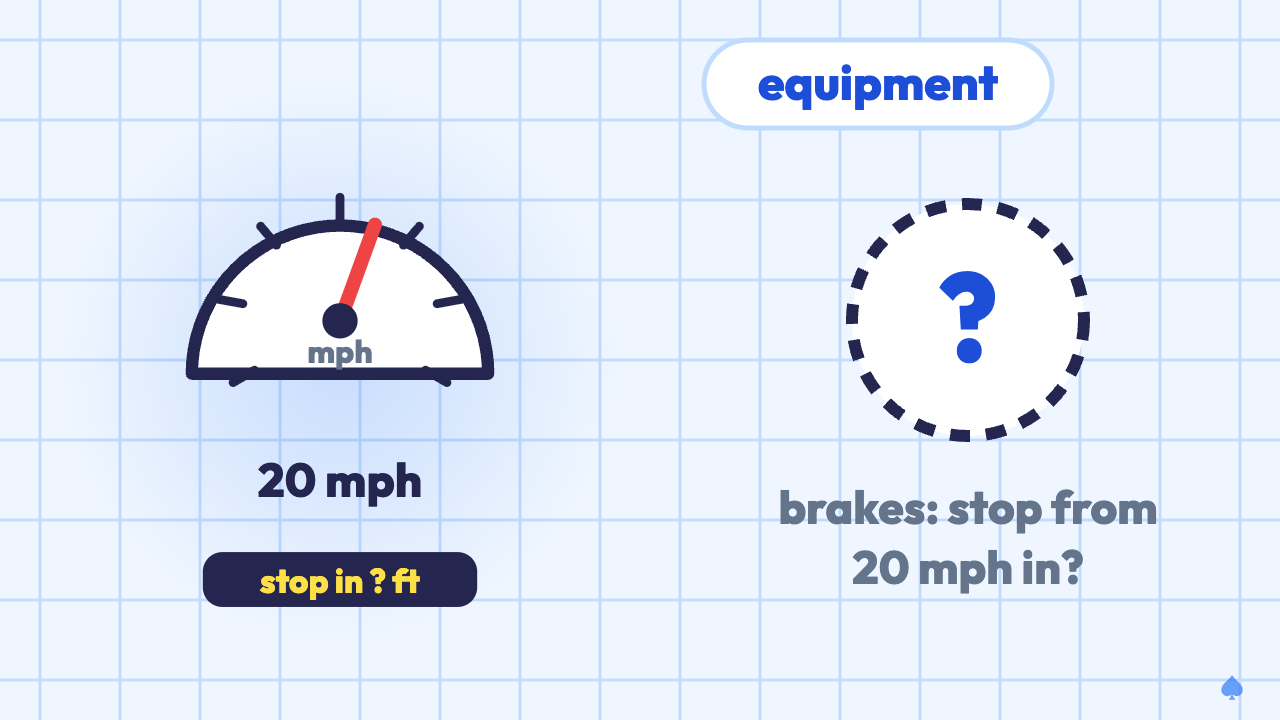
30 feet
Vehicles need two brake systems. The foot brake must stop a car going 20 mph within 30 feet; the parking brake within 55 feet, and it must hold the car on a hill. (Rules of the Road, p. 92.)
-
Your rearview mirror must let you see how far behind?

At least 200 feet
One rearview mirror is required so you can see at least 200 feet behind your car. (Rules of the Road, p. 92.)
-
A load sticks out 4 feet or more past the rear. What must mark it in daytime?
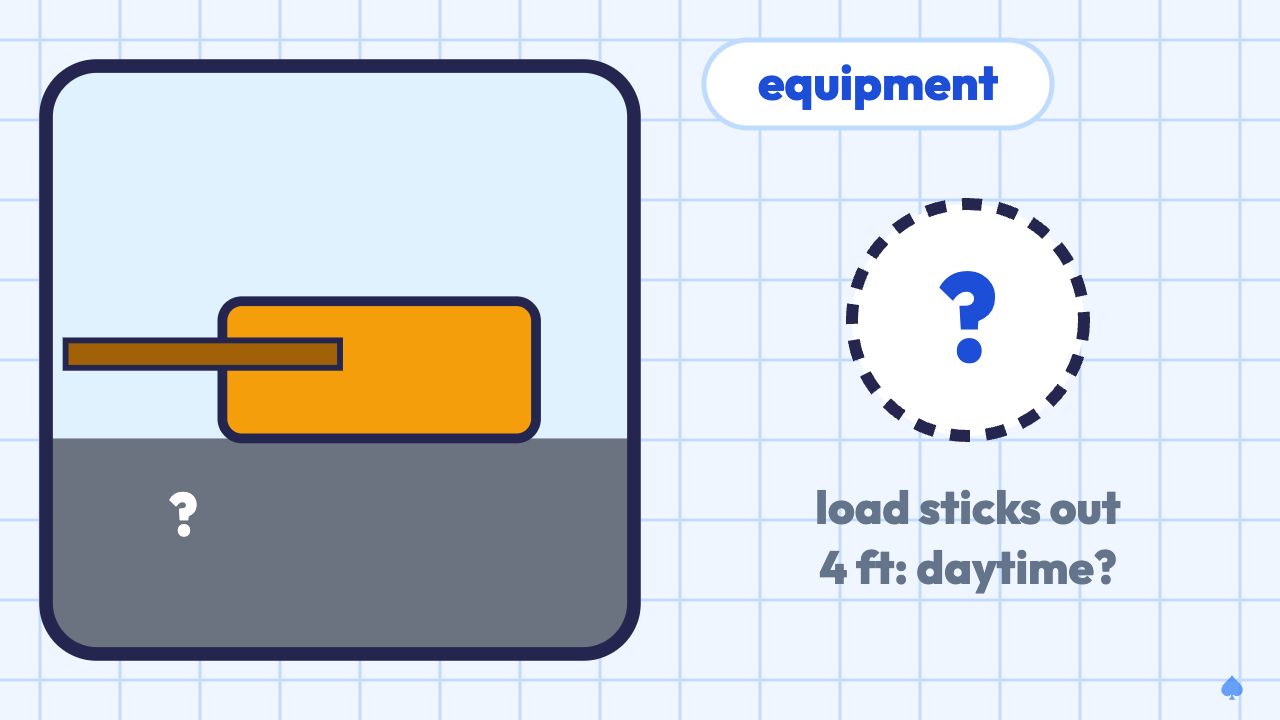
A red flag
Loads extending 4 feet or more past the rear must be marked with a red flag during the day. At night or in poor visibility, a red light visible for 500 feet is required. (Rules of the Road, p. 93.)
-
From how far must your license plate be readable at night?

50 feet
Vehicles must have a white light making the rear license plate readable from 50 feet, and it must be on whenever the headlights are on. (Rules of the Road, p. 92.)
-
Your car stereo is illegal if it can be heard from how far away?
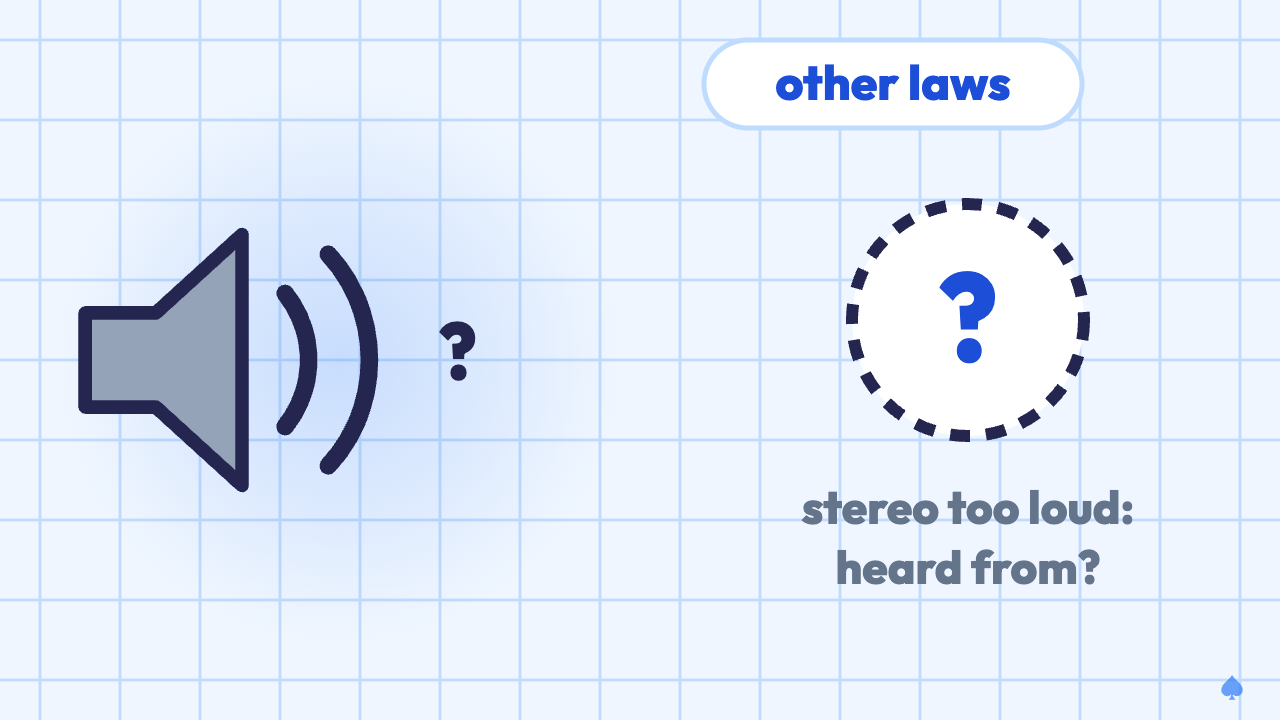
75 feet or more
You may not operate a sound system at a volume that can be heard 75 feet or more from a vehicle being driven on a highway. (Rules of the Road, p. 36.)
-
May a person ride in a house trailer while it is towed on a road?
No
Illinois law states you may not ride in a house trailer while it is being moved on a street or highway. (Rules of the Road, p. 36.)
-
May you have a radar jamming device in your car?
No, they are prohibited
Possession and use of radar jamming devices is prohibited in all vehicles. (Rules of the Road, p. 93.)
-
Your car breaks down on a quiet, low-traffic road. What does the stranded-motorist protocol say?
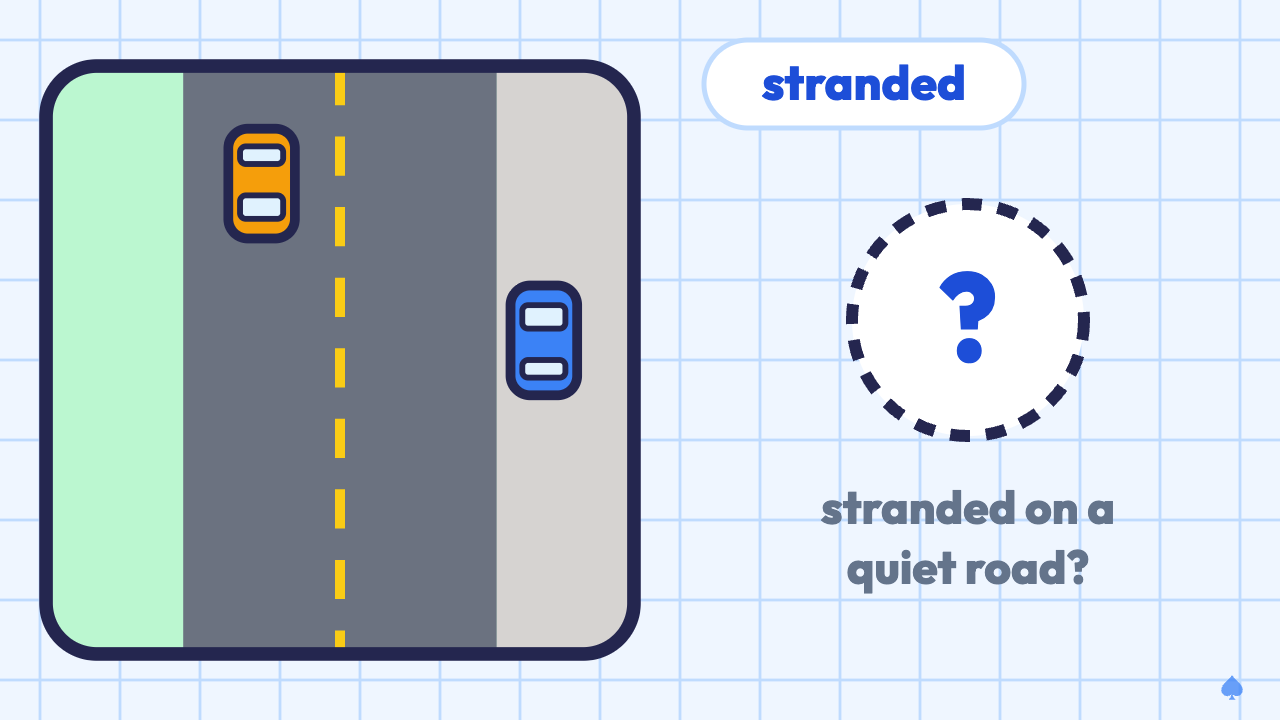
Get out away from traffic, if safe
On lower-capacity roads, pull to the right shoulder; if necessary and safe, exit on the side away from traffic and move away from the car. If you cannot exit safely, stay inside belted. Turn on hazards and call 911. (Rules of the Road, p. 90.)
-
What should you do every time you refuel?
Shut off the engine; don’t smoke
Always shut off your vehicle’s engine when refueling, never smoke around gas pumps, and stay with the pump while refueling. (Rules of the Road, p. 88.)
-
From how far behind must your two red taillights be visible?

500 feet
Vehicles must have two red taillights visible for 500 feet from behind. Mopeds and motorcycles need only one. (Rules of the Road, p. 92.)
Every card is here to read. Study them in the app, free to start, with spaced repetition bringing back the ones you miss.
Decks like this one.
- IL Permit 12: Teens, Phones, Belts & Your License FlashQuest · 60 cards Start free
- IL Permit 11: Alcohol, Drugs & DUI FlashQuest · 26 cards Start free
- IL Permit 09: Sharing the Road FlashQuest · 36 cards Start free
- IL Permit 08: Speed Limits & Parking FlashQuest · 31 cards Start free
- IL Permit 07: Passing, Lanes, Turns & Roundabouts FlashQuest · 36 cards Start free
- IL Permit 06: Work Zones, Emergencies, Buses & Trains FlashQuest · 30 cards Start free

Study it properly.
All 45 cards are in the app, free to start, scheduled so the ones you miss come back sooner.