
IL Permit 07: Passing, Lanes, Turns & Roundabouts
by FlashQuest
36 Illinois permit test cards on passing, lane use, turn signals, U-turns and roundabouts. Deck 7 of 12. Learn where passing is banned: hills, curves, construction zones, a stopped car at a crosswalk, and within 100 feet of an intersection or crossing. Other cards cover leaving 3 feet for a pedestrian, the left lane on interstates, signaling 100 or 200 feet ahead, the three arm signals, a U-turn with 500 feet of view, and entering, exiting and changing lanes in a roundabout. From the Illinois Rules of the Road 2026 (chapter 4).


Free to start, no account needed. After you install, search the Table for “IL Permit 07: Passing, Lanes, Turns & Roundabouts”.
Study all 36 cards, with their pictures, in the app.
All 36 cards in this deck.
Made by FlashQuest. Last updated November 2026. Drafted with AI help.
- After passing a car, when may you move back into the right lane?
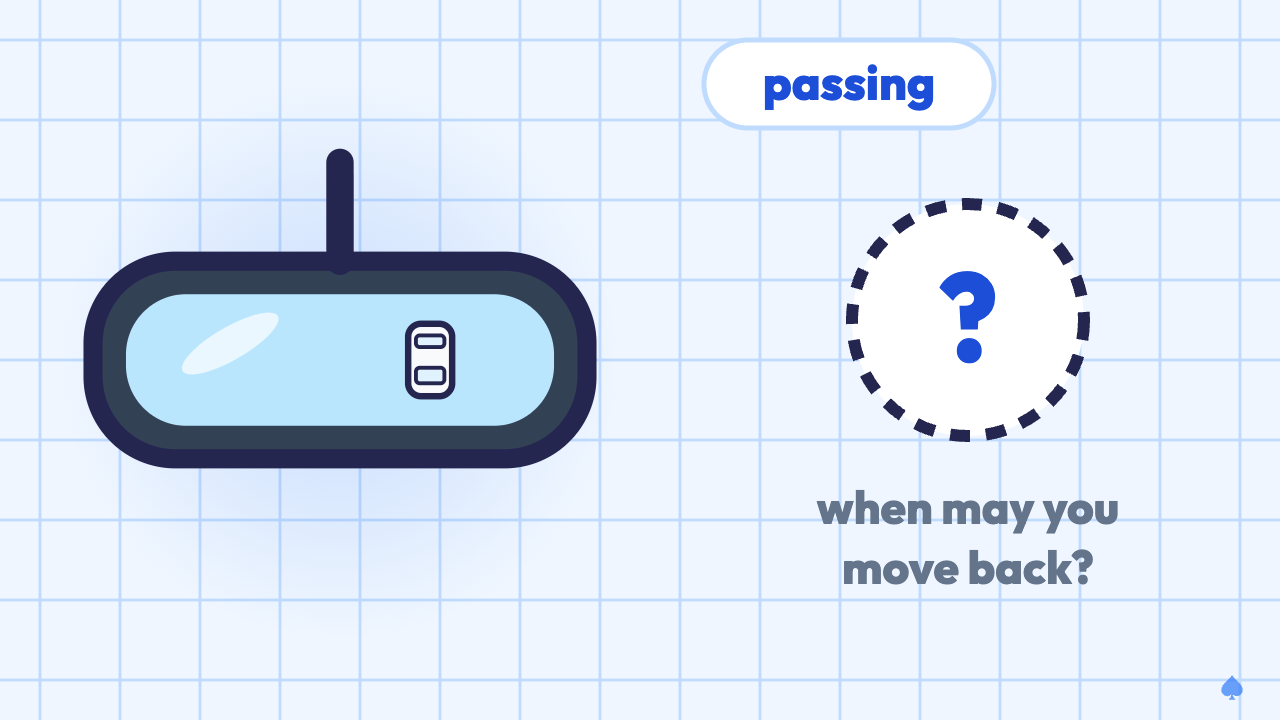
- When it shows fully in the mirror
- Do not turn back into the right lane until the entire vehicle you just passed is visible in your rearview mirror. (Rules of the Road, p. 28.)
- When passing on a two-lane road, how close may you get to an oncoming car before returning to your lane?
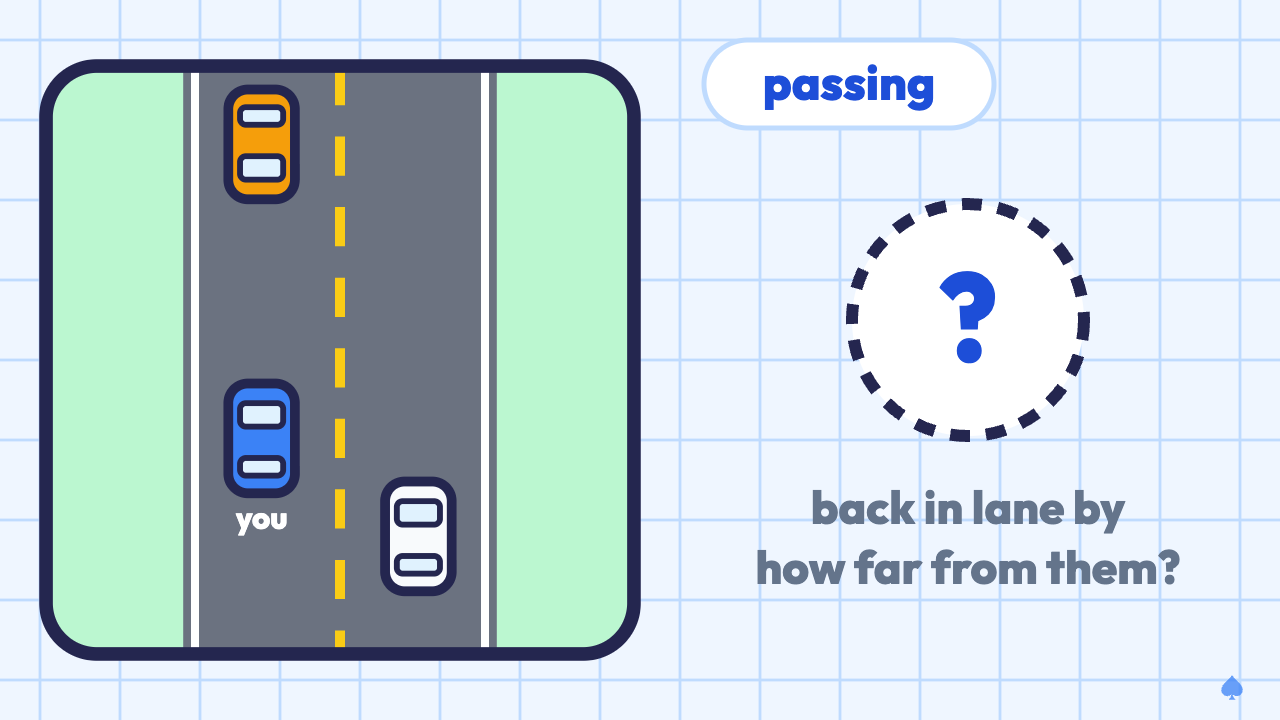
- 200 feet
- You must return to your lane before coming within 200 feet of an oncoming vehicle. The left lane should be clear for enough distance to pass safely. (Rules of the Road, p. 28.)
- Another car is passing you. What must you not do?
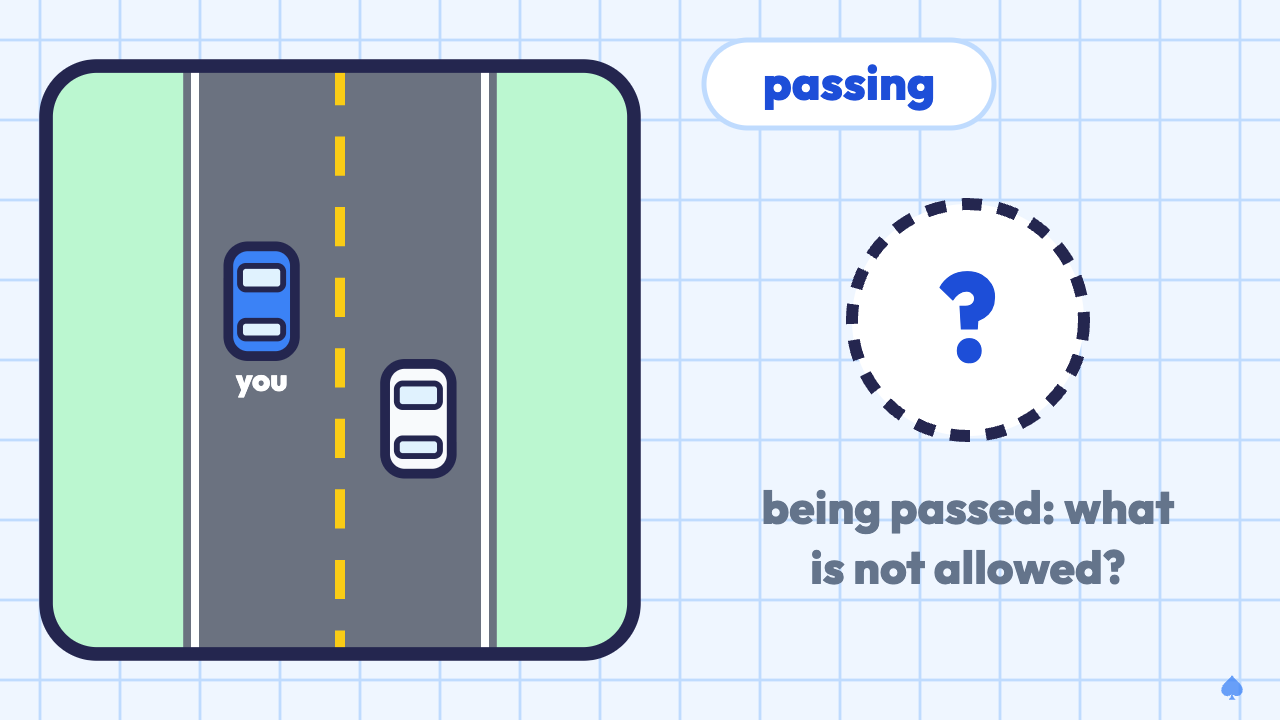
- Speed up
- The driver of the vehicle being passed must not increase speed until the passing driver has completed the move. (Rules of the Road, p. 28.)
- Is it legal to flash your turn signal to tell the driver behind it is safe to pass?
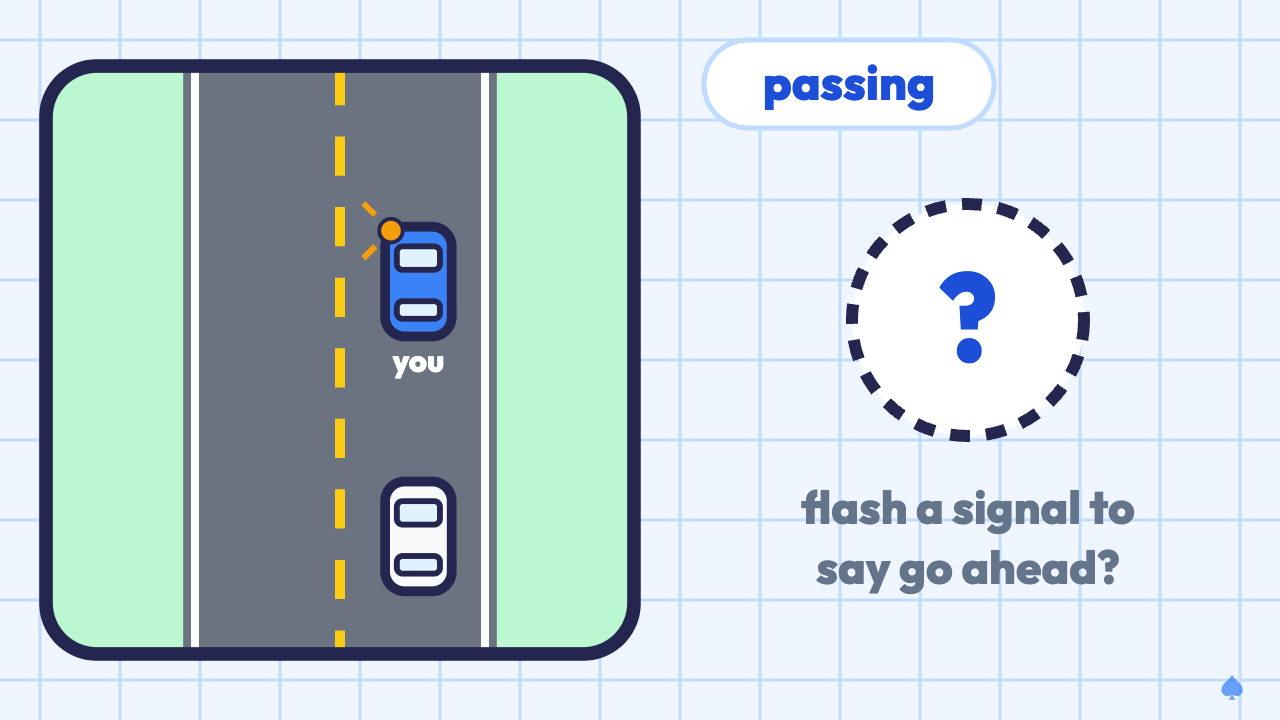
- No, it is illegal
- It is against the law to flash your turn signals as a courtesy or "do pass" signal to other drivers. (Rules of the Road, p. 28.)
- May you pass another vehicle by driving on the shoulder?
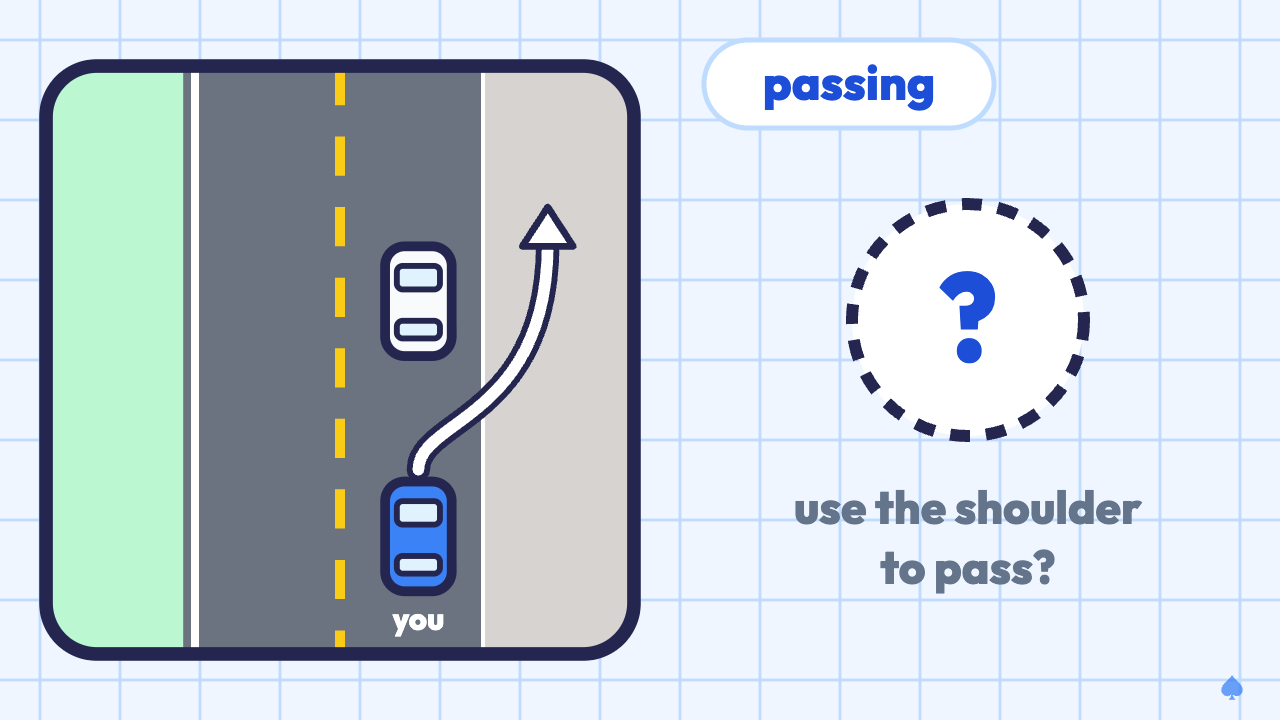
- No
- Driving off the pavement or main traveled part of the road is not allowed when passing on the right or the left. Only authorized vehicles may use the shoulder. (Rules of the Road, p. 28.)
- How much room must you leave when passing a pedestrian walking on the road or shoulder?
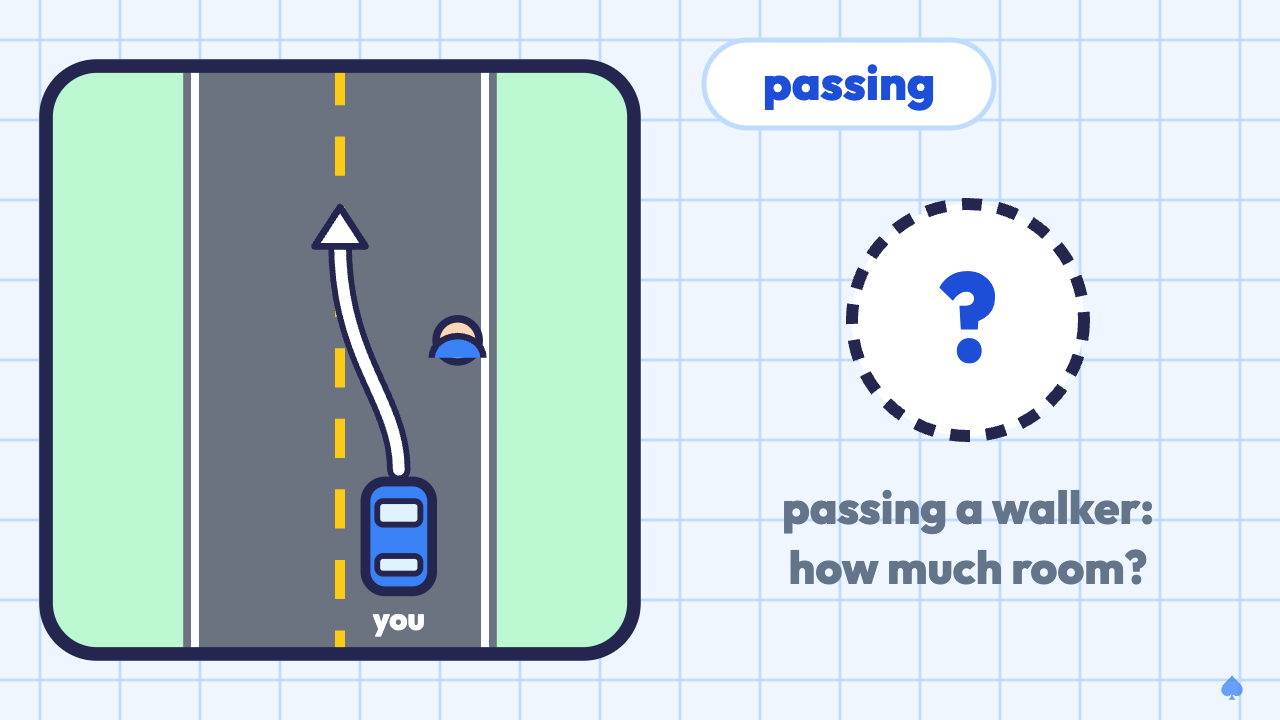
- At least 3 feet
- When passing a pedestrian on the road or shoulder, keep at least 3 feet between your vehicle and the pedestrian. The same 3-foot minimum applies to bicyclists. (Rules of the Road, p. 28.)
- On a two-lane road, when may you pass on the right?
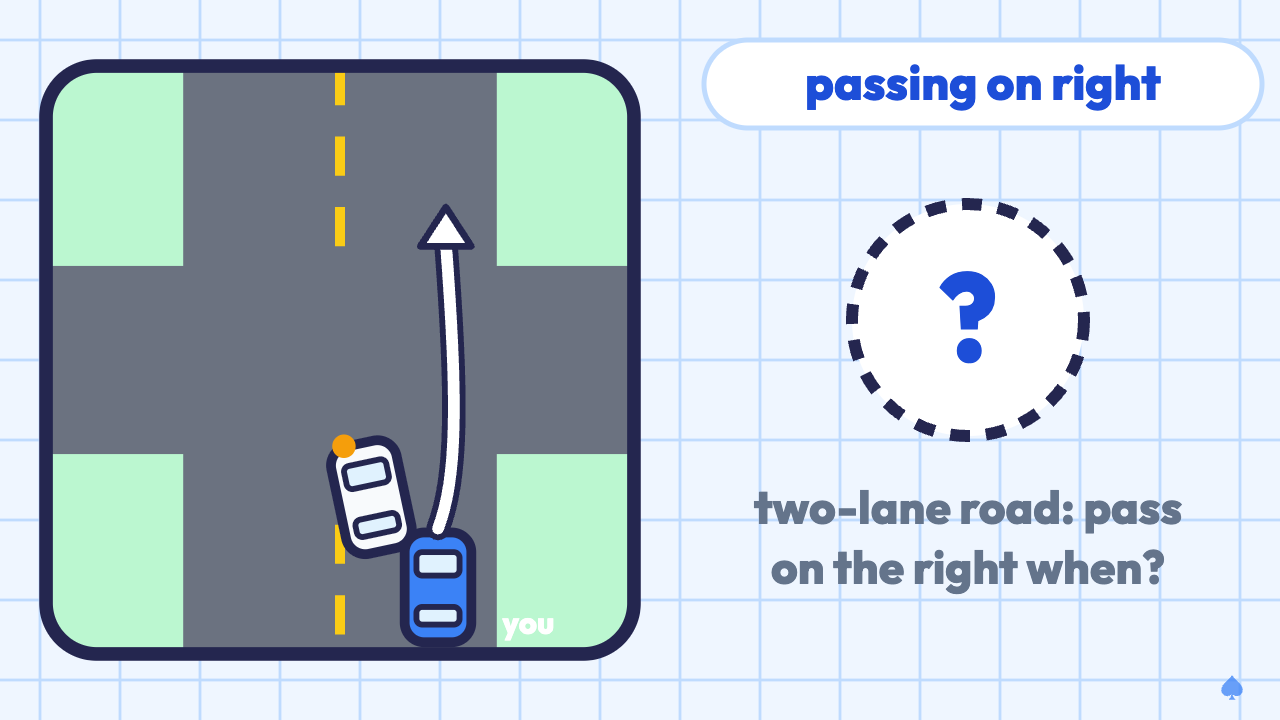
- When the car ahead turns left
- You may pass on the right on a two-lane road when there is enough room and the vehicle you are passing is making, or about to make, a left turn. Never use the shoulder. (Rules of the Road, p. 28.)
- Where else may you pass on the right?
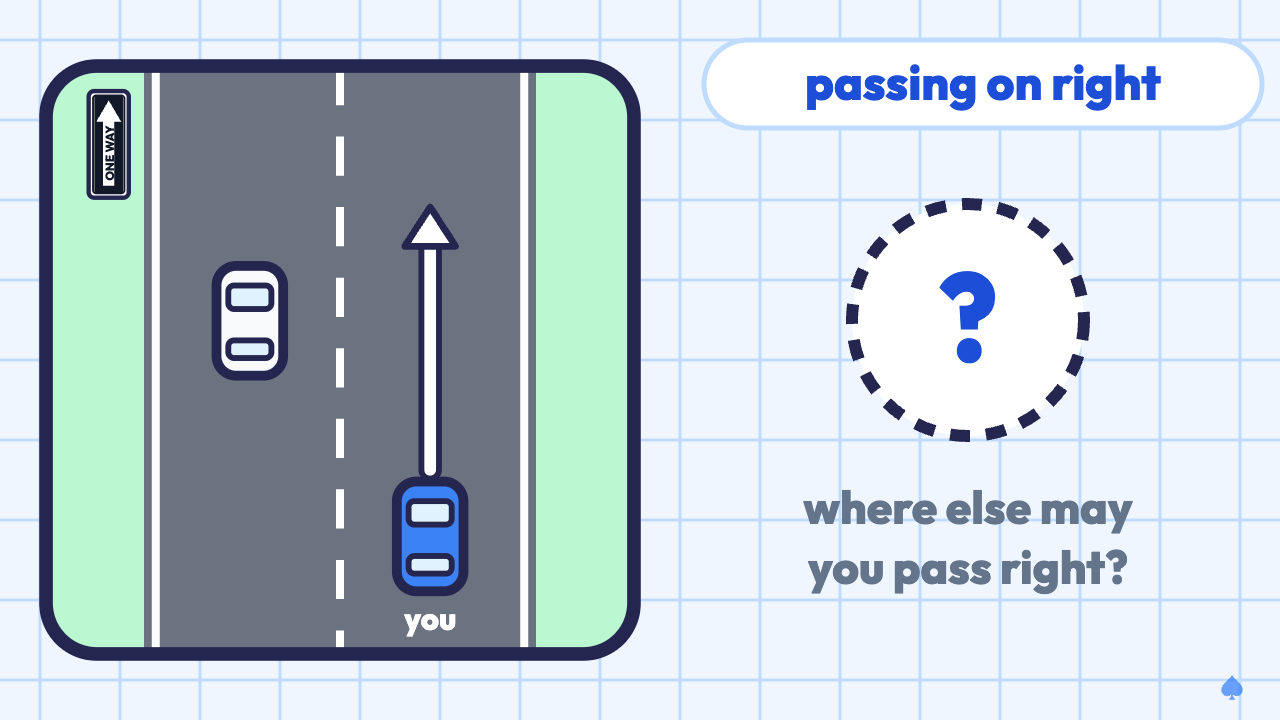
- One-way or 2+ lanes each way
- You may pass on the right on a one-way street, on a road with two or more clear lanes in each direction, or at an intersection widened for it. Never on the shoulder. (Rules of the Road, p. 28.)
- May you pass on a two-lane road within 100 feet of an intersection or railroad crossing?
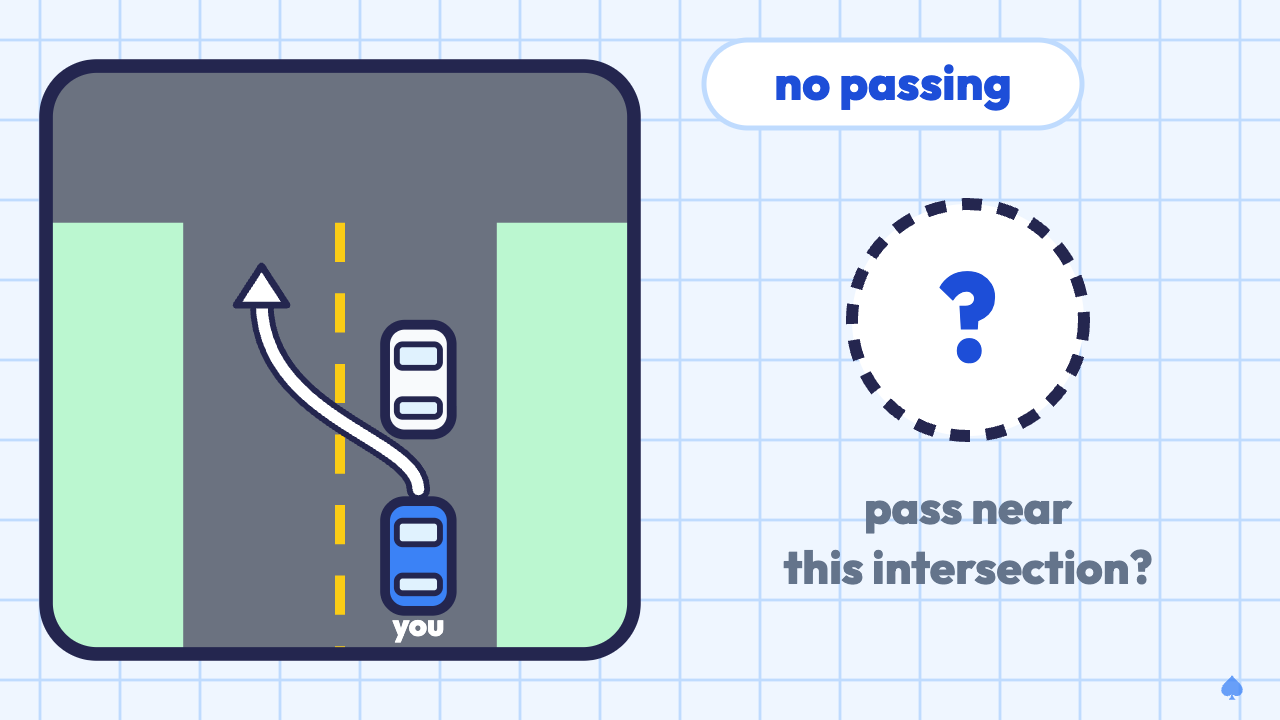
- No
- Passing on a two-lane, two-way road is not allowed within 100 feet of an intersection or railroad crossing. (Rules of the Road, p. 29.)
- May you pass on a hill or curve where you cannot see oncoming traffic?
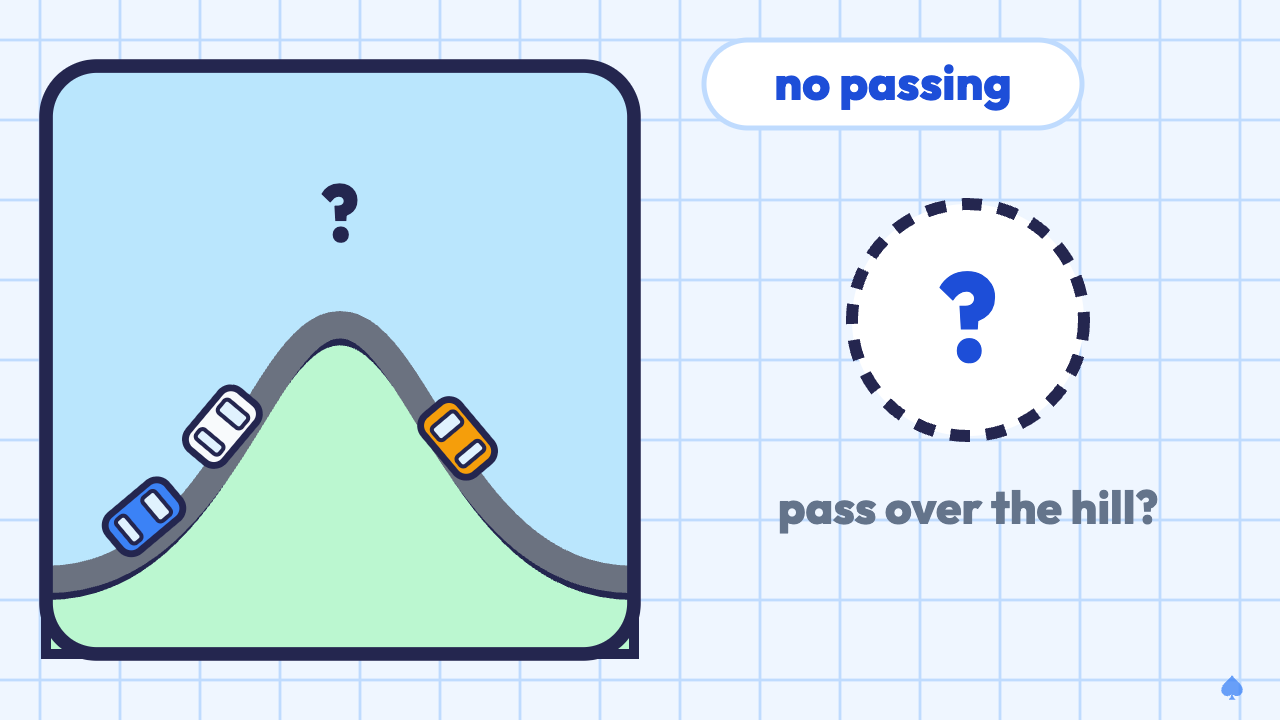
- No
- Passing on a two-lane, two-way road is not allowed on a hill or curve where you cannot see oncoming vehicles. (Rules of the Road, p. 29.)
- Your view is blocked within 100 feet of a bridge, viaduct or tunnel. May you pass?
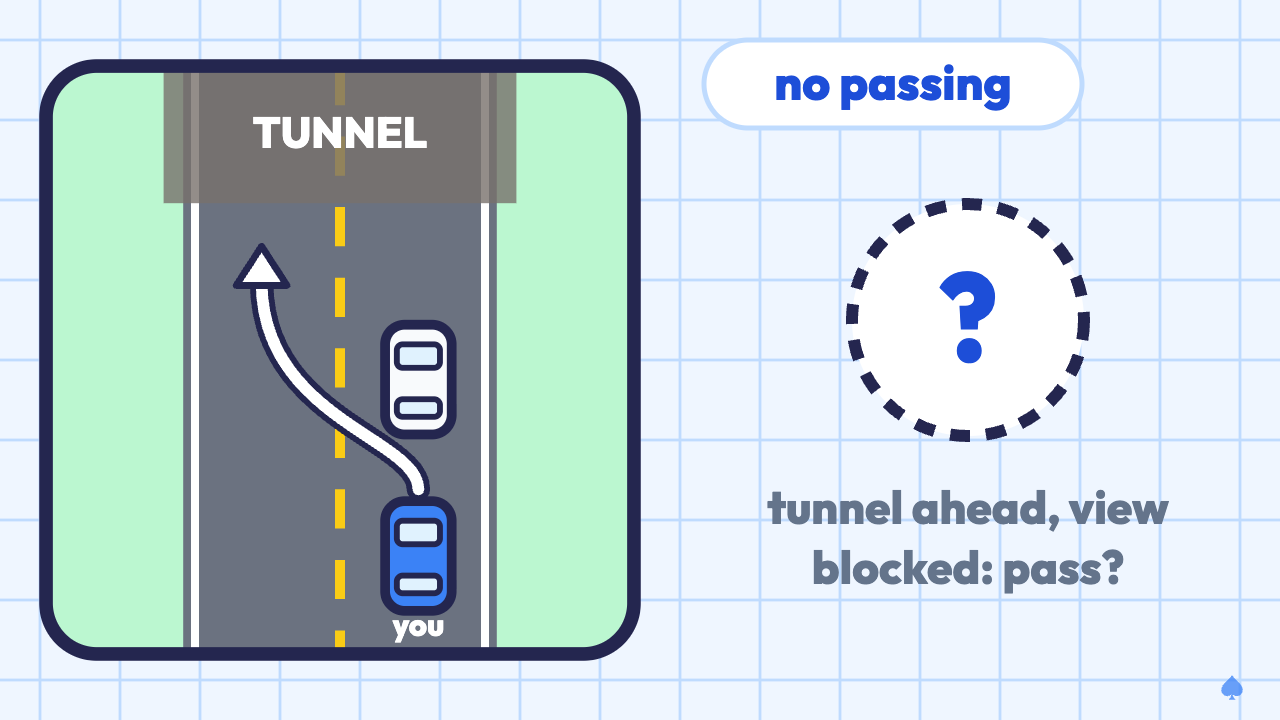
- No
- Passing on a two-lane, two-way road is not allowed when the view is blocked within 100 feet of any bridge, viaduct or tunnel. (Rules of the Road, p. 29.)
- A car ahead has stopped at a crosswalk. May you pass it?
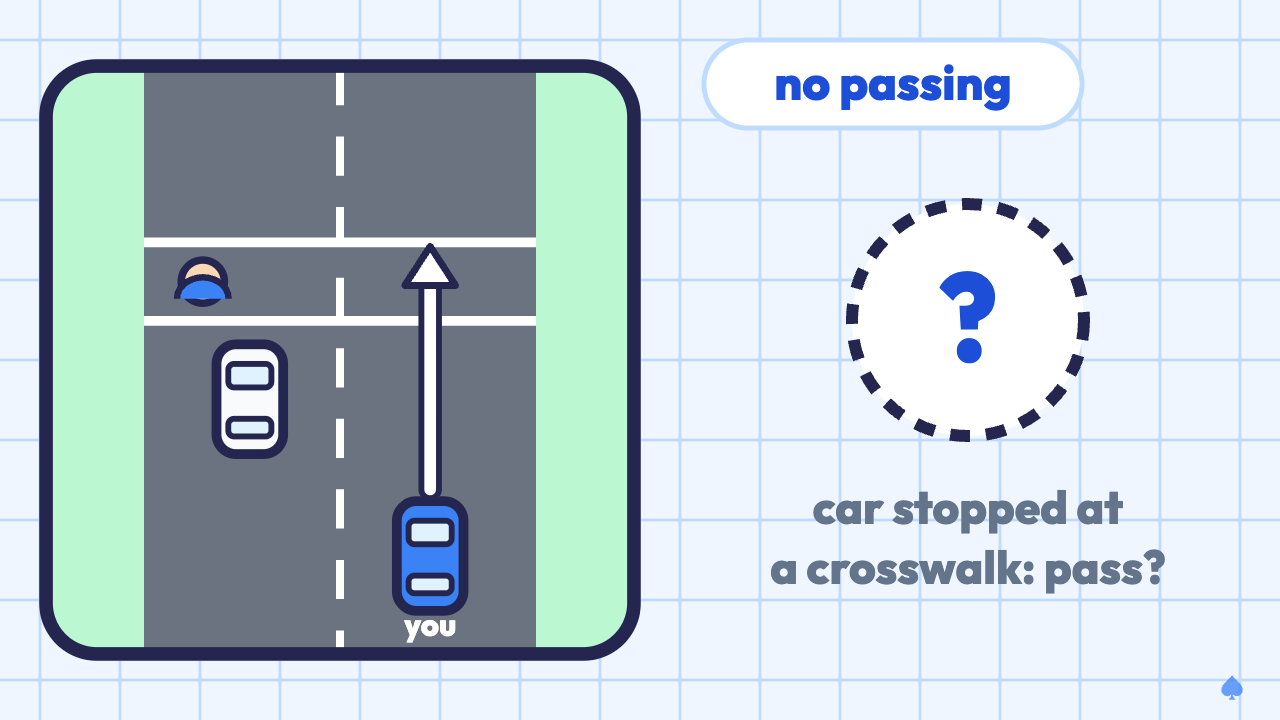
- No
- Passing is not allowed when a vehicle has stopped at a crosswalk or intersection to let a pedestrian cross. A person may step out in front of you. (Rules of the Road, p. 29.)
Show the other 24 cards
-
Is passing allowed in Illinois construction zones?
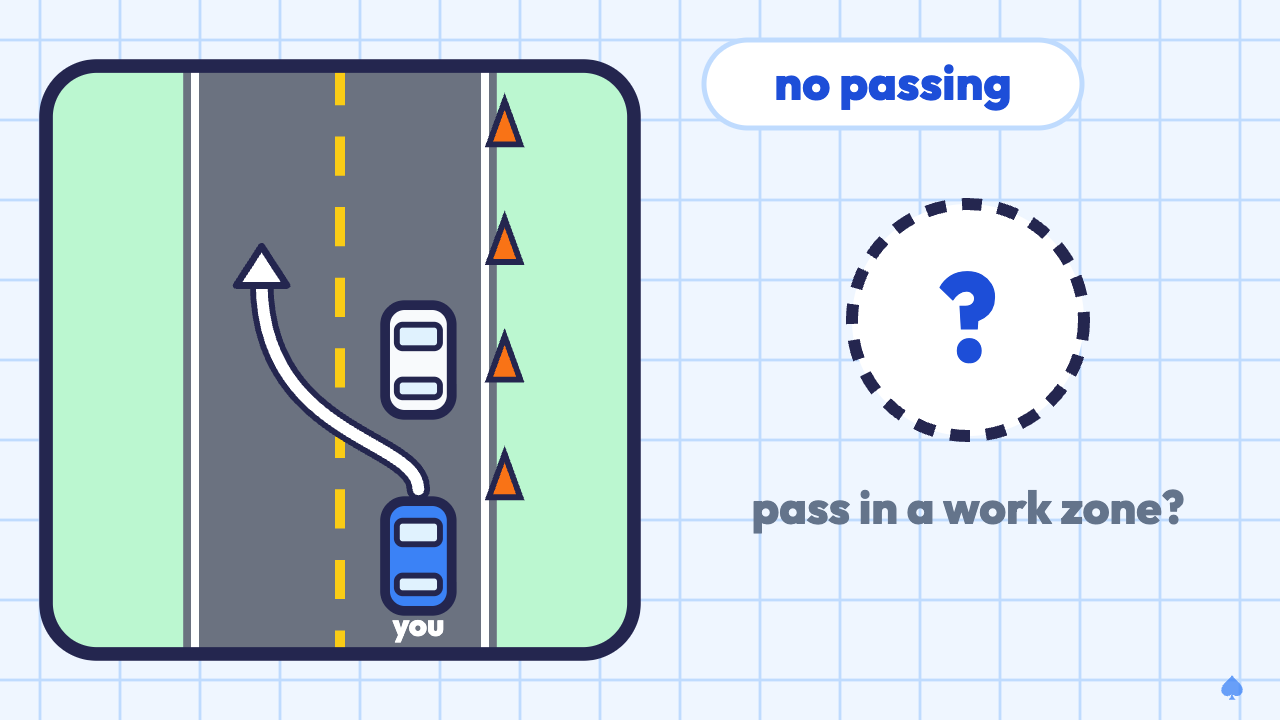
No, all are no-passing zones
All construction zones in Illinois are no passing zones. Passing is also banned in school zones and when a school bus is stopped. (Rules of the Road, p. 29.)
-
A fallen tree blocks your lane on a two-lane road. May you drive left of the center line?
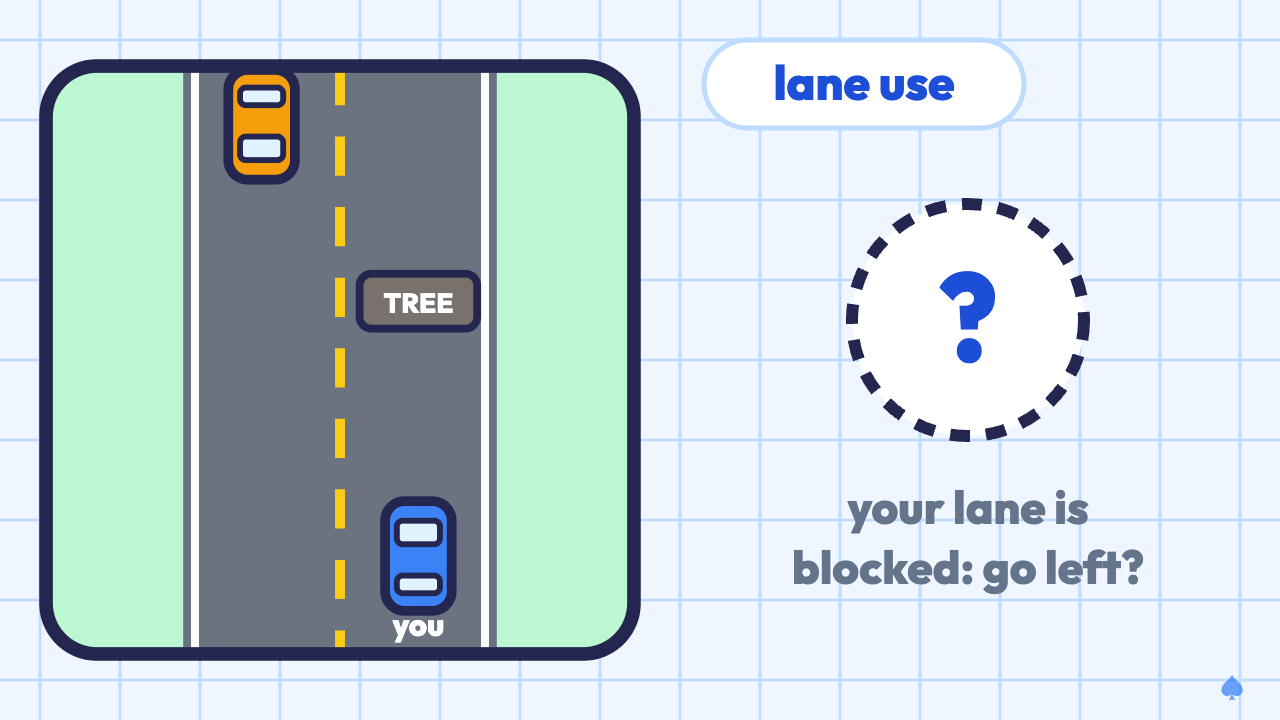
Yes, after yielding
You must drive on the right half of the road, except in listed cases such as when a blockage makes it necessary. Then you may drive left of center after yielding to oncoming traffic. (Rules of the Road, p. 29.)
-
On an interstate, when may you drive in the left lane?
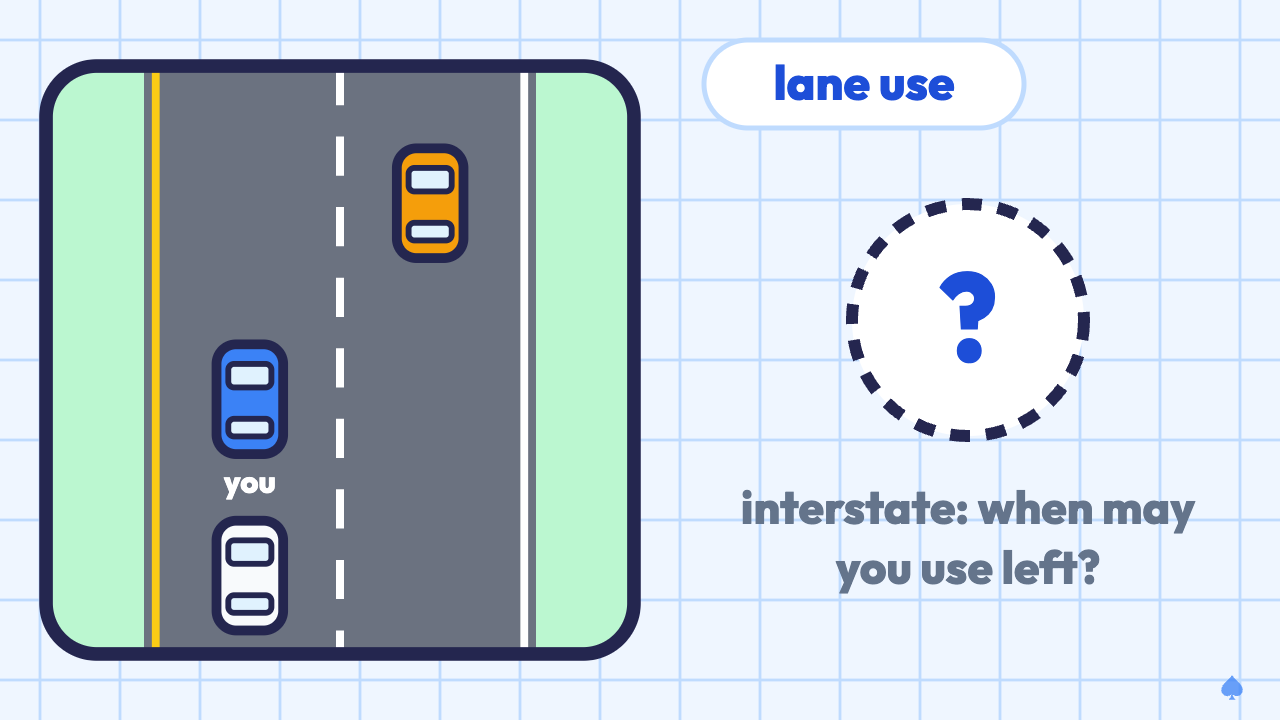
Mainly to pass
On an interstate or controlled freeway you may not drive in the left lane except to pass. Exceptions include no car behind you, congestion, weather, a hazard in the right lane, or moving over for emergency or work vehicles. (Rules of the Road, p. 29.)
-
Slow vehicles should use the left-hand lane except when passing or turning left. True or false?
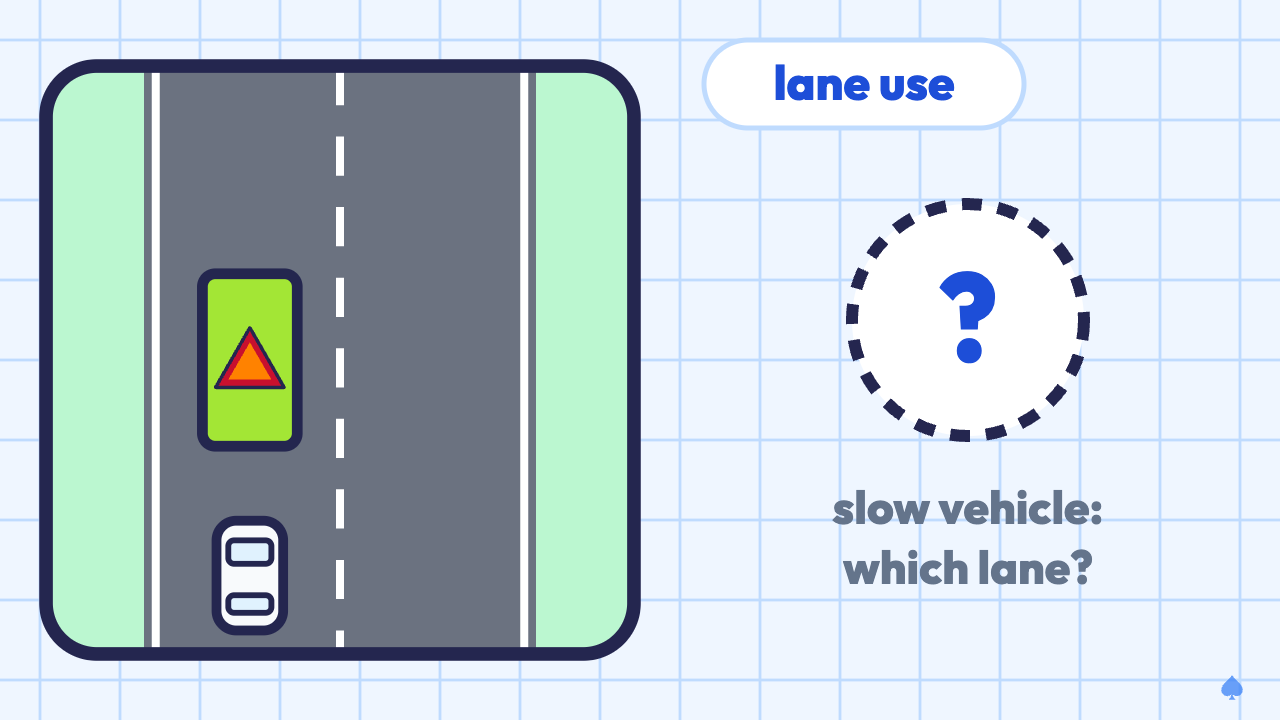
False
Slow vehicles must use the right-hand lane except when passing or turning left. (Rules of the Road, p. 29.)
-
Is weaving from lane to lane to get ahead of traffic legal?
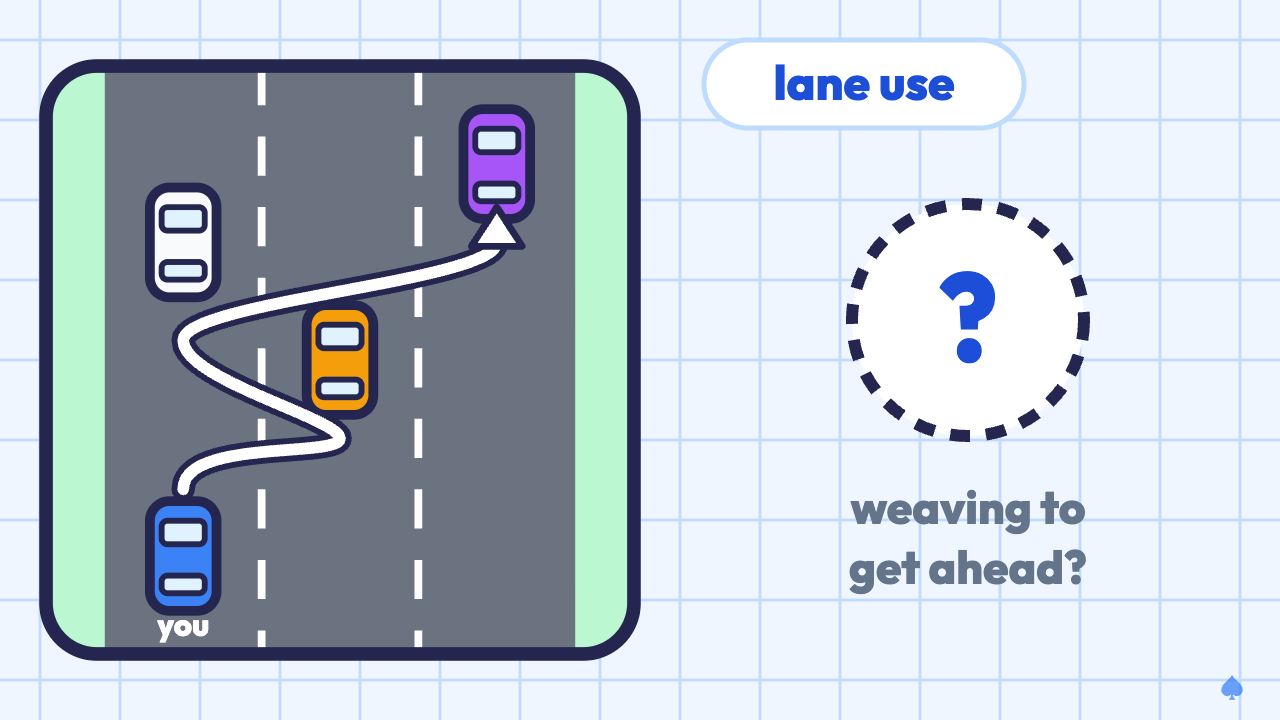
No, it is unlawful
Weaving from lane to lane to move faster than the flow of traffic is unlawful. (Rules of the Road, p. 29.)
-
May you drive across a grass median or median barrier to turn around?
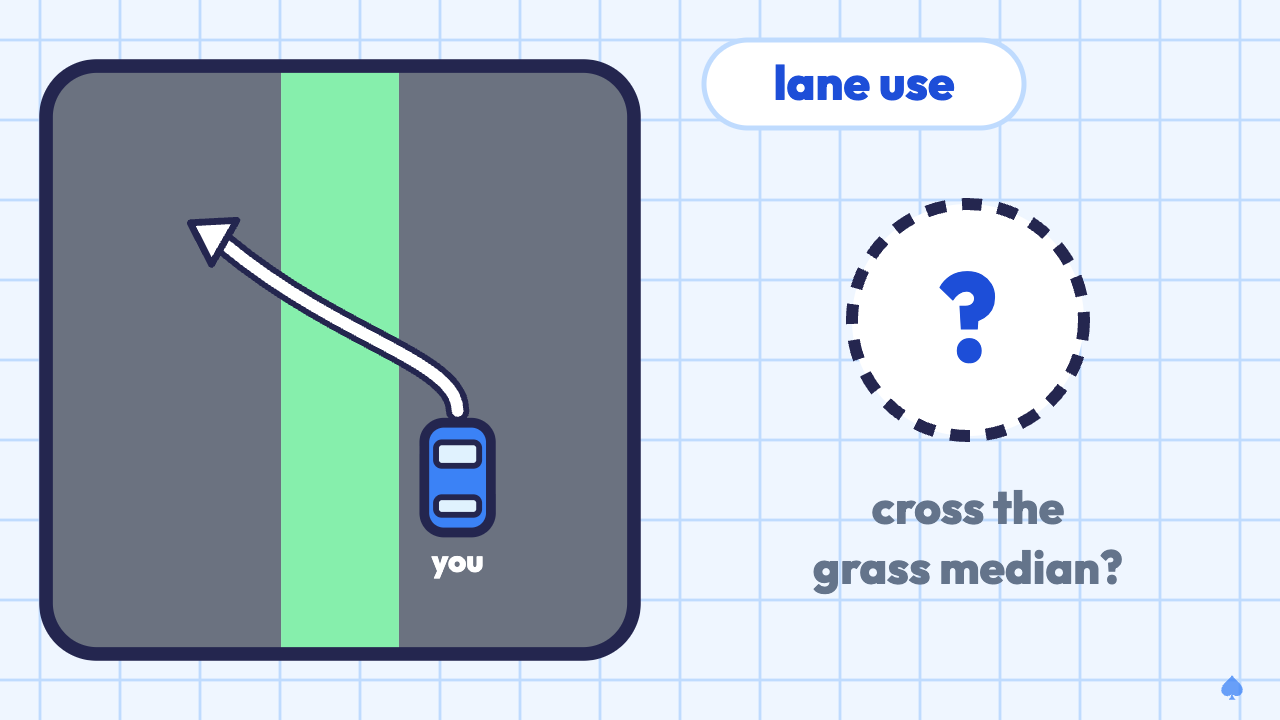
No, it is unlawful
It is unlawful to drive across median strips, such as unpaved strips or barriers. You may turn left across a paved dividing space unless a sign or signal forbids it. (Rules of the Road, p. 29-30.)
-
Where may you enter or leave a controlled-access highway?
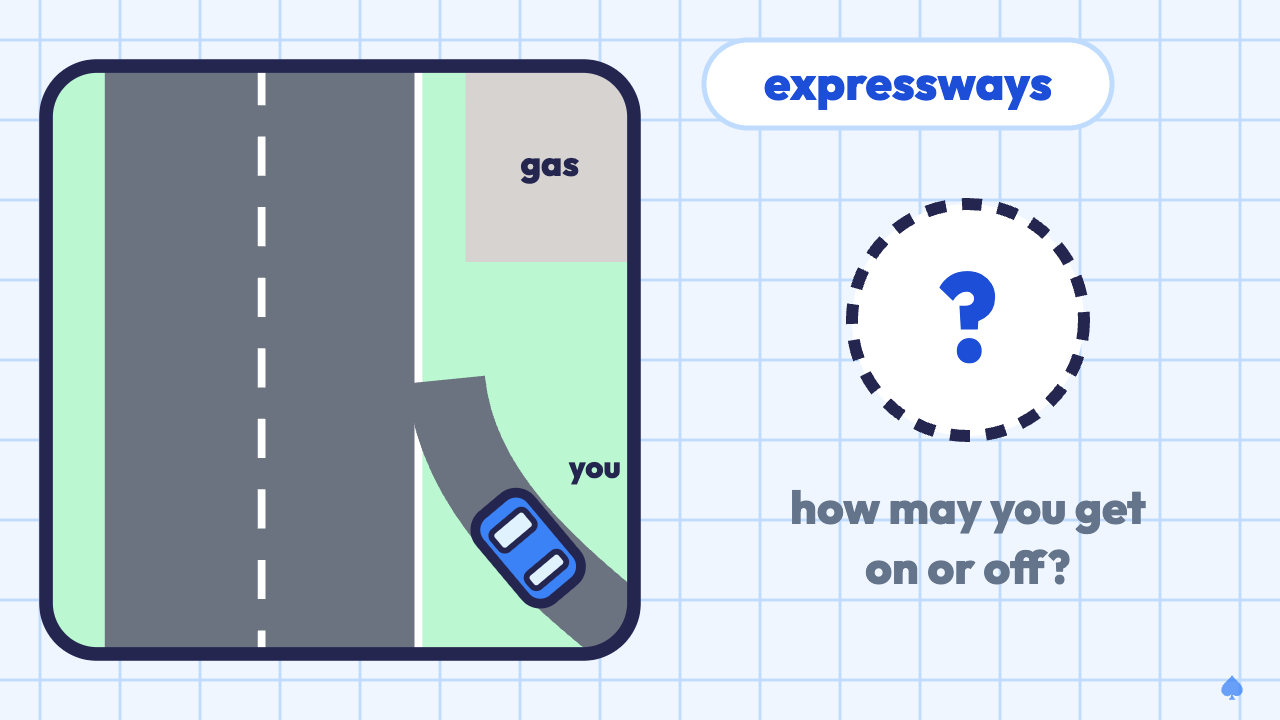
Only at posted ramps
You must not enter or leave a controlled-access road except at a posted entrance or exit. You may not back up on its shoulder or roadway. (Rules of the Road, p. 30.)
-
In a business or residential district, how far before turning must you signal?
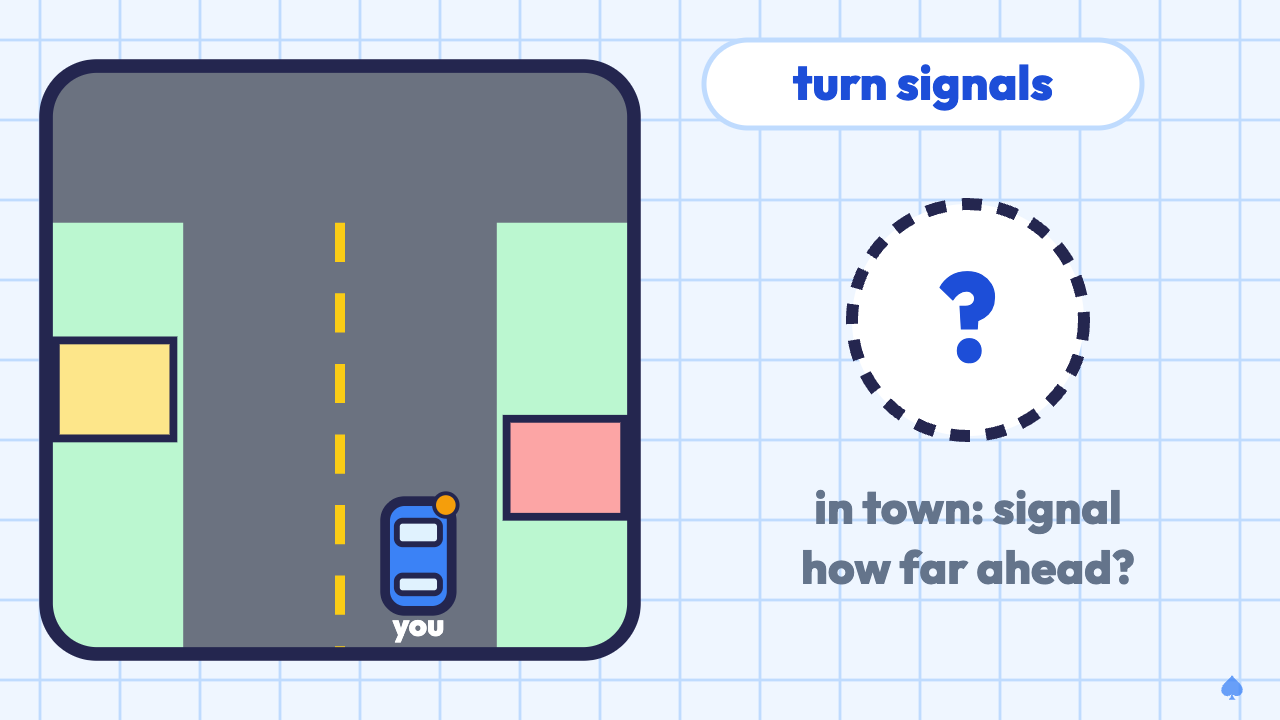
At least 100 feet
In a business or residential area, give a continuous turn signal for at least 100 feet before turning. In other areas, signal at least 200 feet before. (Rules of the Road, p. 30.)
-
Outside business and residential areas, how far before turning must you signal?
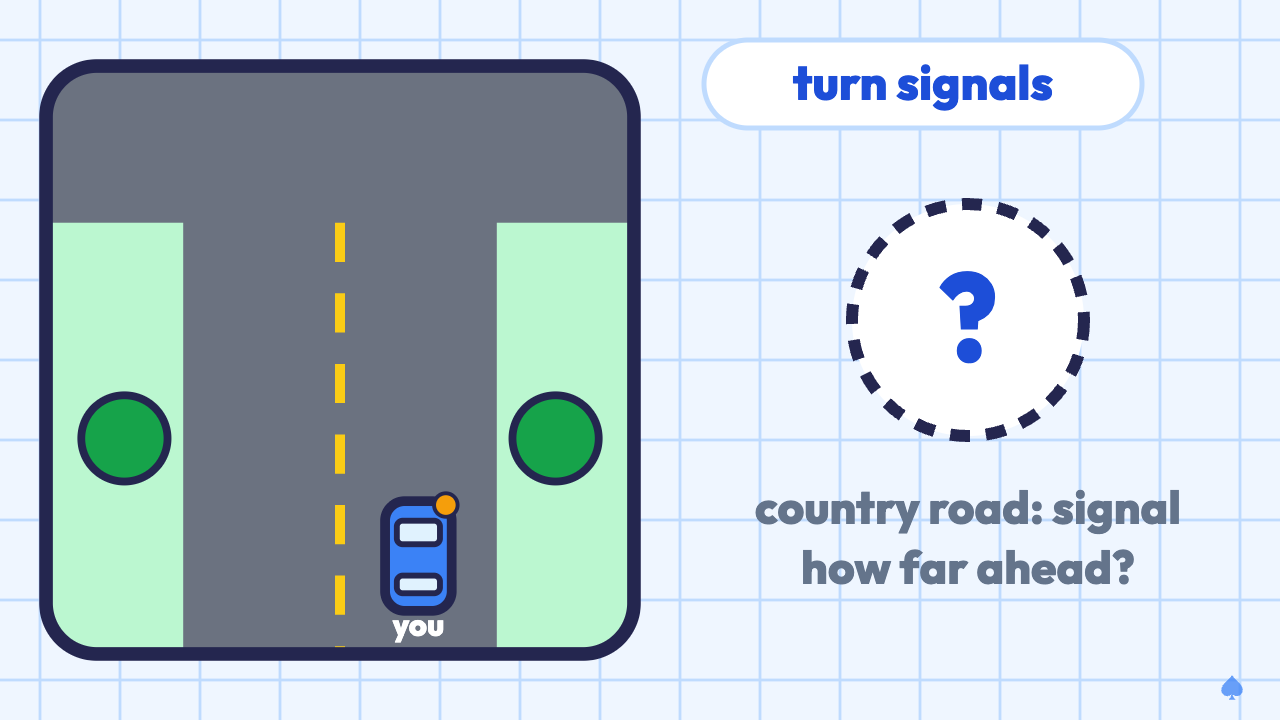
At least 200 feet
Outside business and residential areas, the turn signal must be given at least 200 feet before turning, because traffic is usually faster. (Rules of the Road, p. 30.)
-
Your left arm points straight up out of the window. What are you signaling?
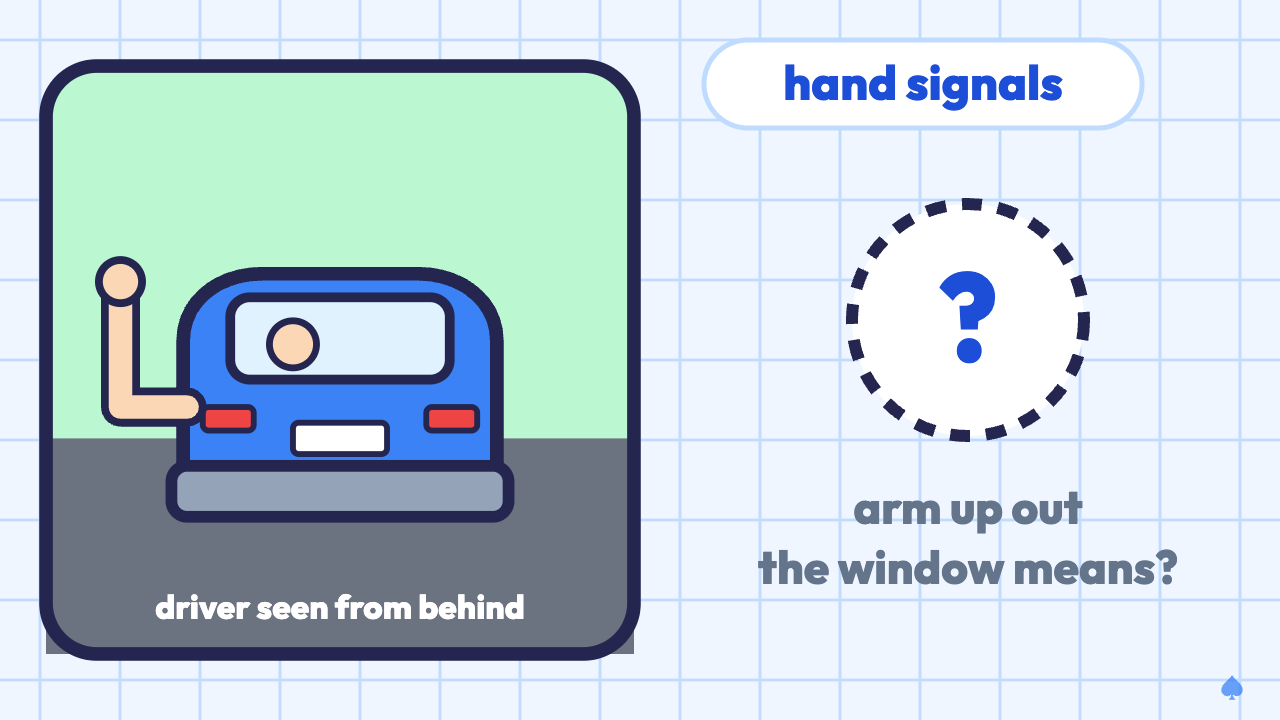
A right turn
Hand signals use the left arm. Arm extended straight up means a right turn; straight out means a left turn; down means slow or stop. (Rules of the Road, p. 30.)
-
Your left arm is extended straight out of the window. What are you signaling?
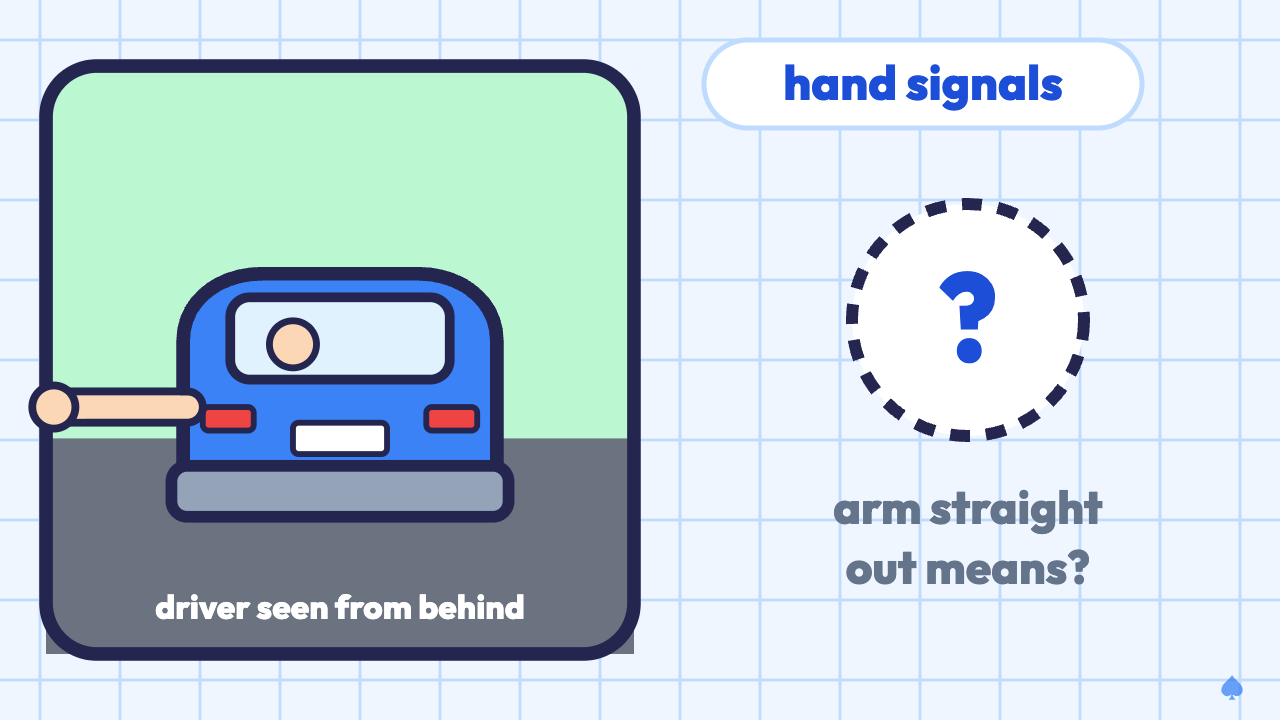
A left turn
With the left arm extended straight out to the left, you are signaling a left turn. (Rules of the Road, p. 30.)
-
Your left arm points down out of the window. What are you signaling?
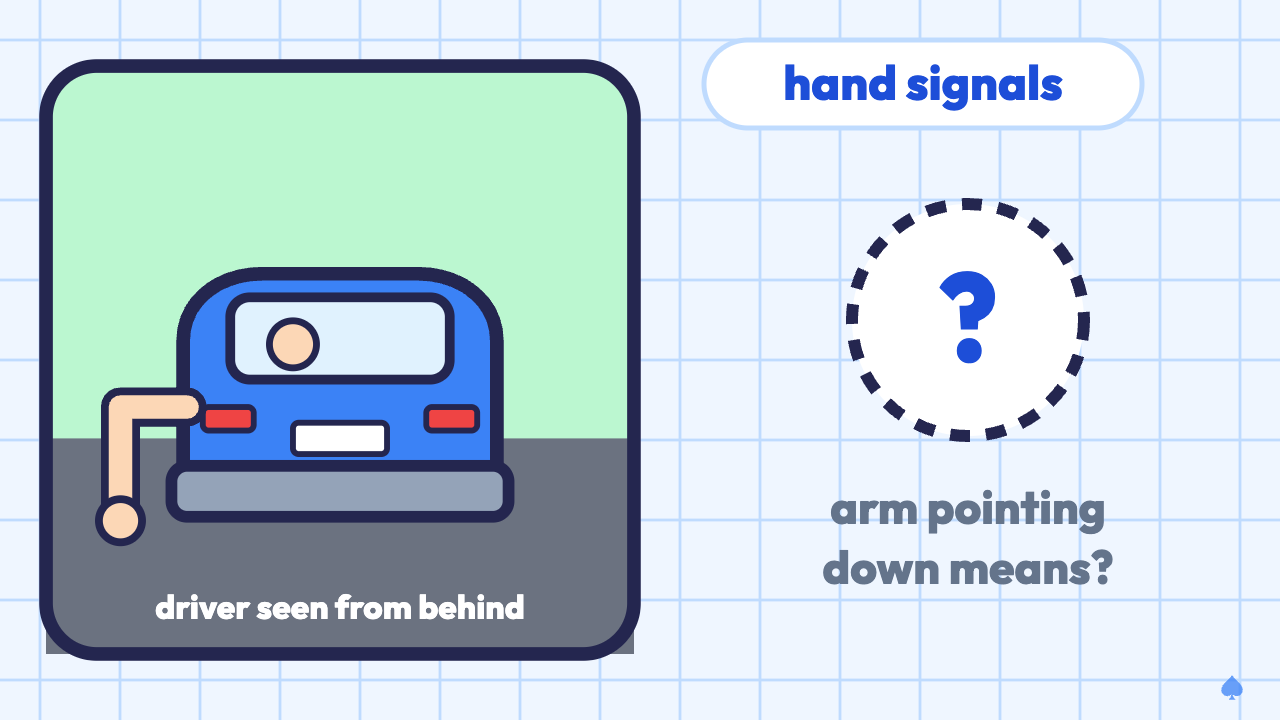
Slow down or stop
With the left arm extended downward, you are signaling that you will slow down or stop. (Rules of the Road, p. 30.)
-
Must you use your turn signal when changing lanes?
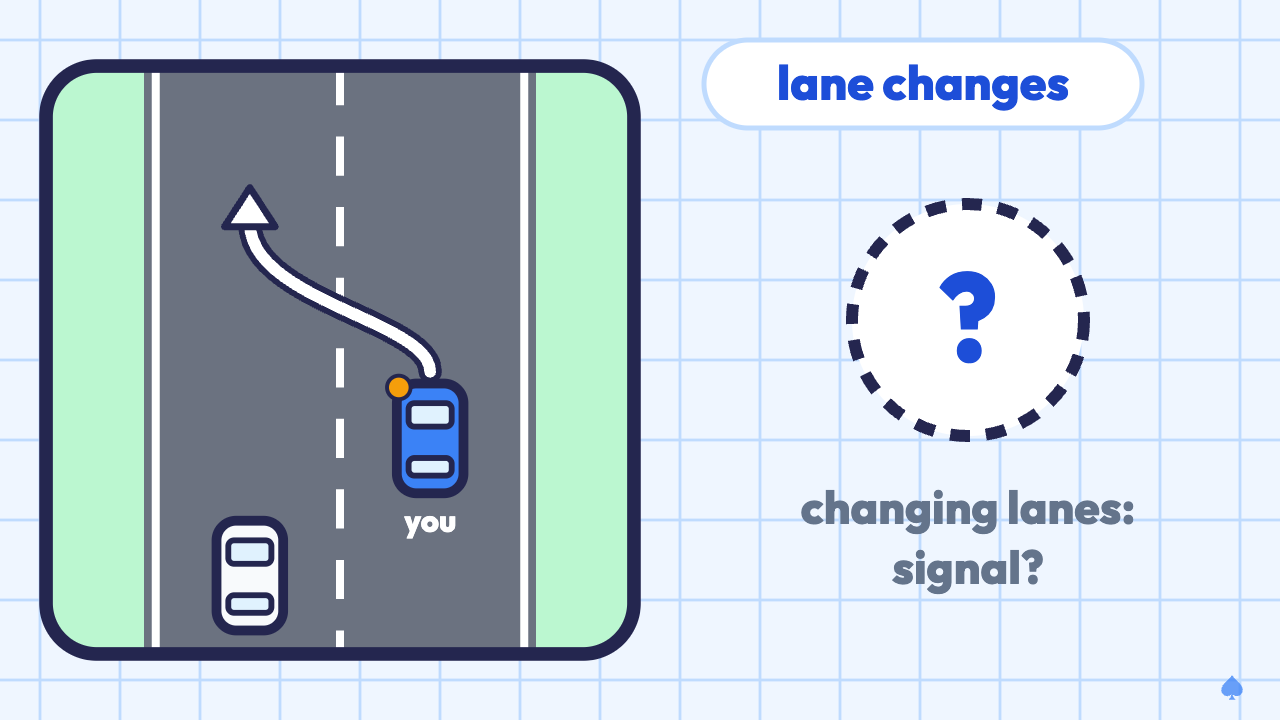
Yes
A driver must signal when changing lanes. First check behind and to the side by turning your head; if clear, signal and move over carefully. (Rules of the Road, p. 31-32.)
-
Before changing lanes, how should you check the lane next to you?
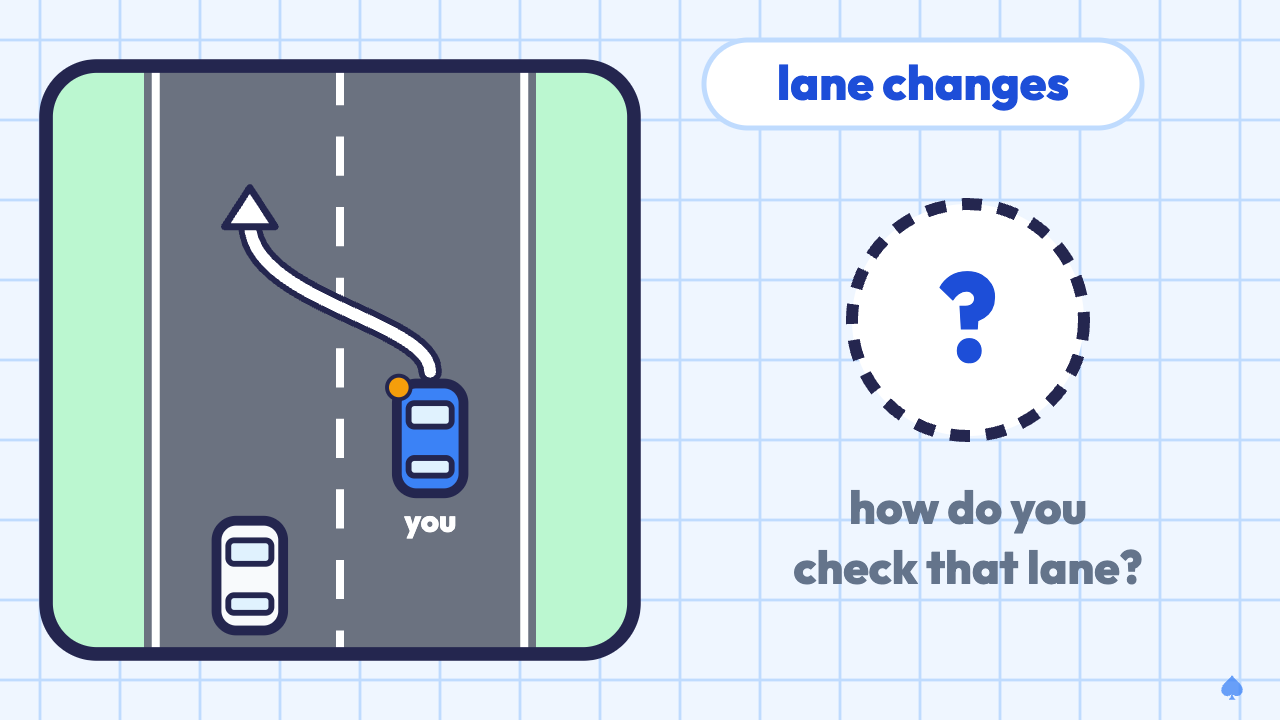
Turn your head and look
Before changing lanes, check for traffic behind you and to the side by turning your head and looking. If the area is clear, signal and move over carefully. (Rules of the Road, p. 31-32.)
-
Making a right turn, how should you steer?
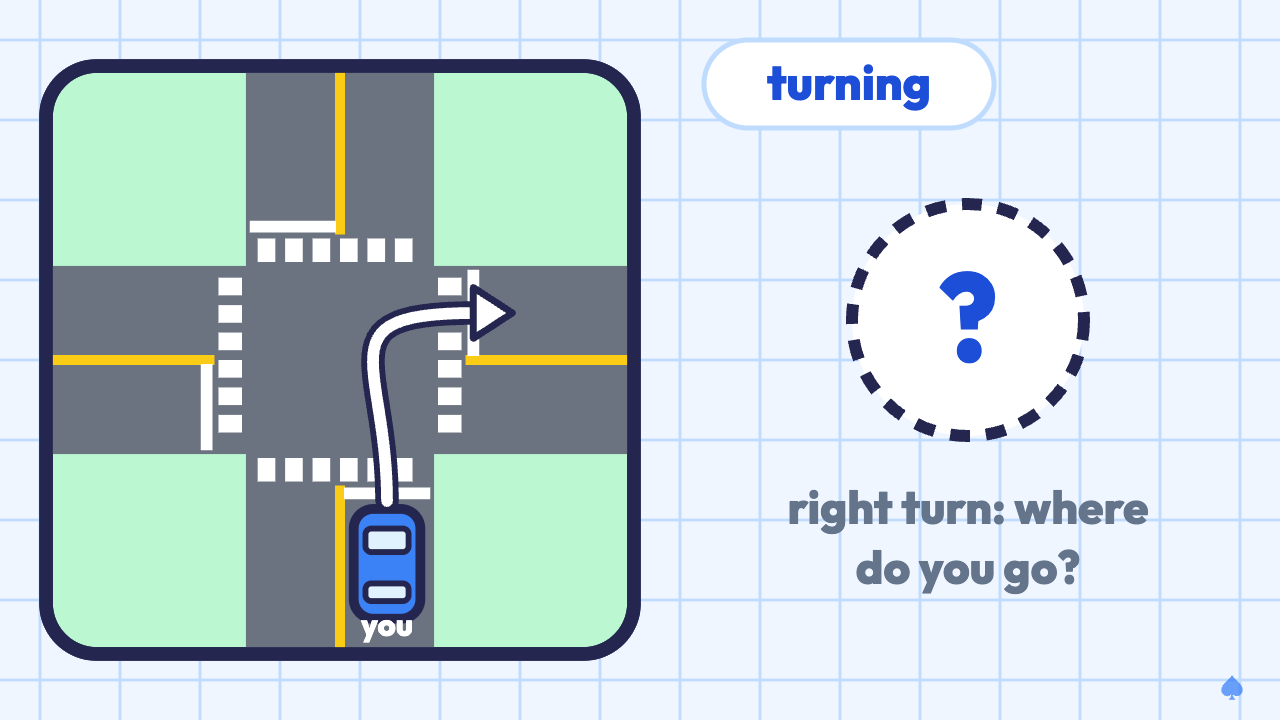
Close to the curb, into right lane
For a right turn, signal from the proper lane, yield, follow the curve of the curb staying as close as possible, and turn into the right-hand lane of the new road. (Rules of the Road, p. 30-31.)
-
Which lane should a left turn end in?
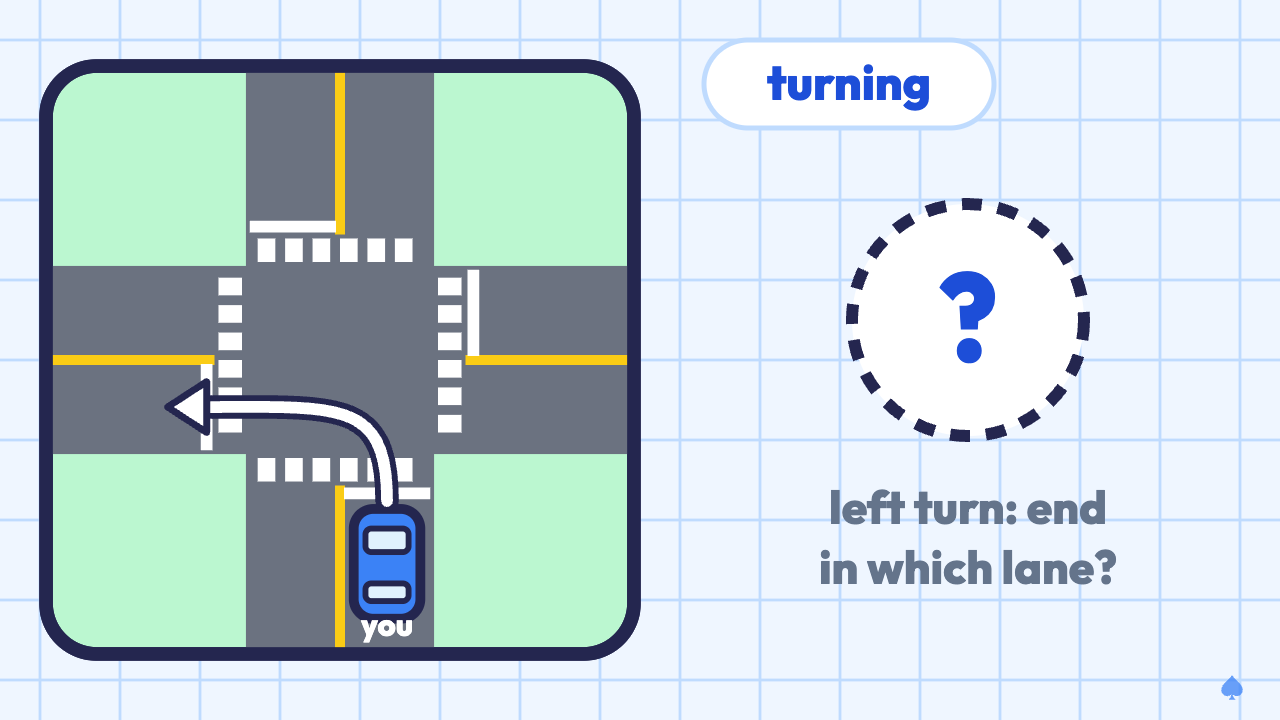
The lane closest to you
Complete a left turn into the lane closest to your intended direction, which is usually the left lane of the road you are entering. (Rules of the Road, p. 31.)
-
Waiting to turn left, which way should your front wheels point?
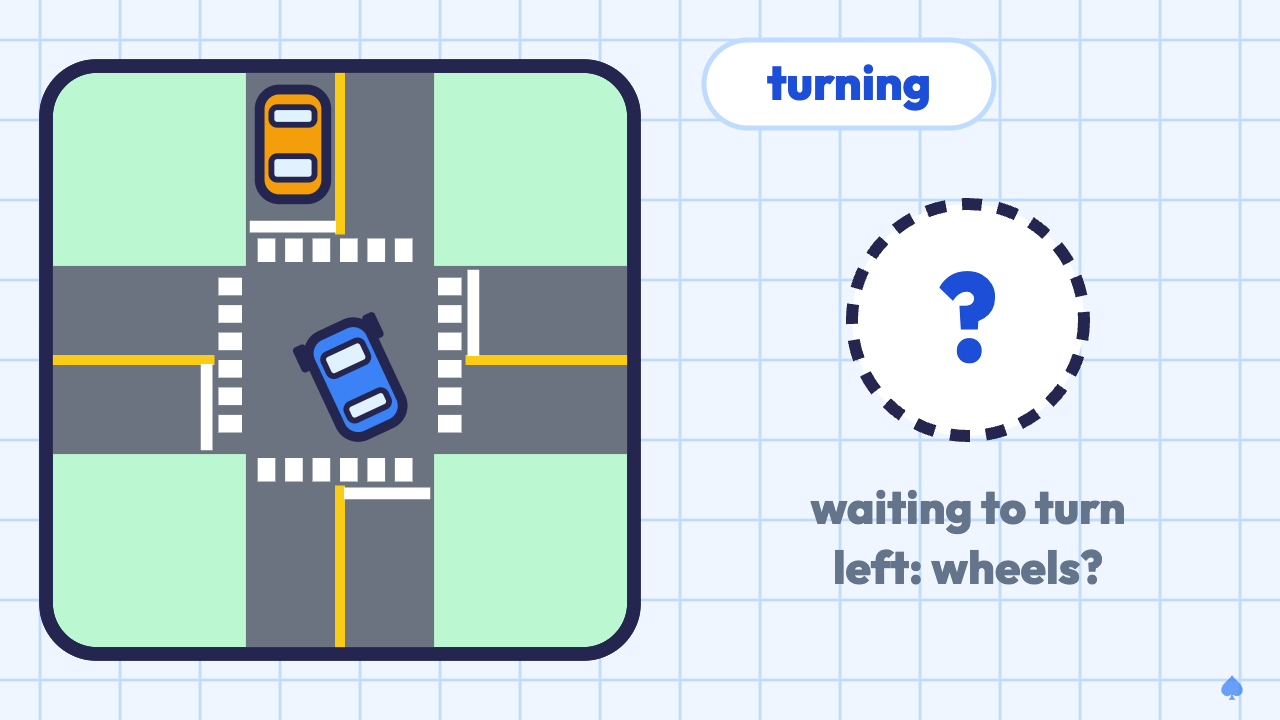
Straight ahead
Point the wheels straight ahead until starting the turn. If hit from behind, angled wheels could push you into oncoming traffic. (Rules of the Road, p. 31.)
-
When may you make a U-turn on a curve or hill?
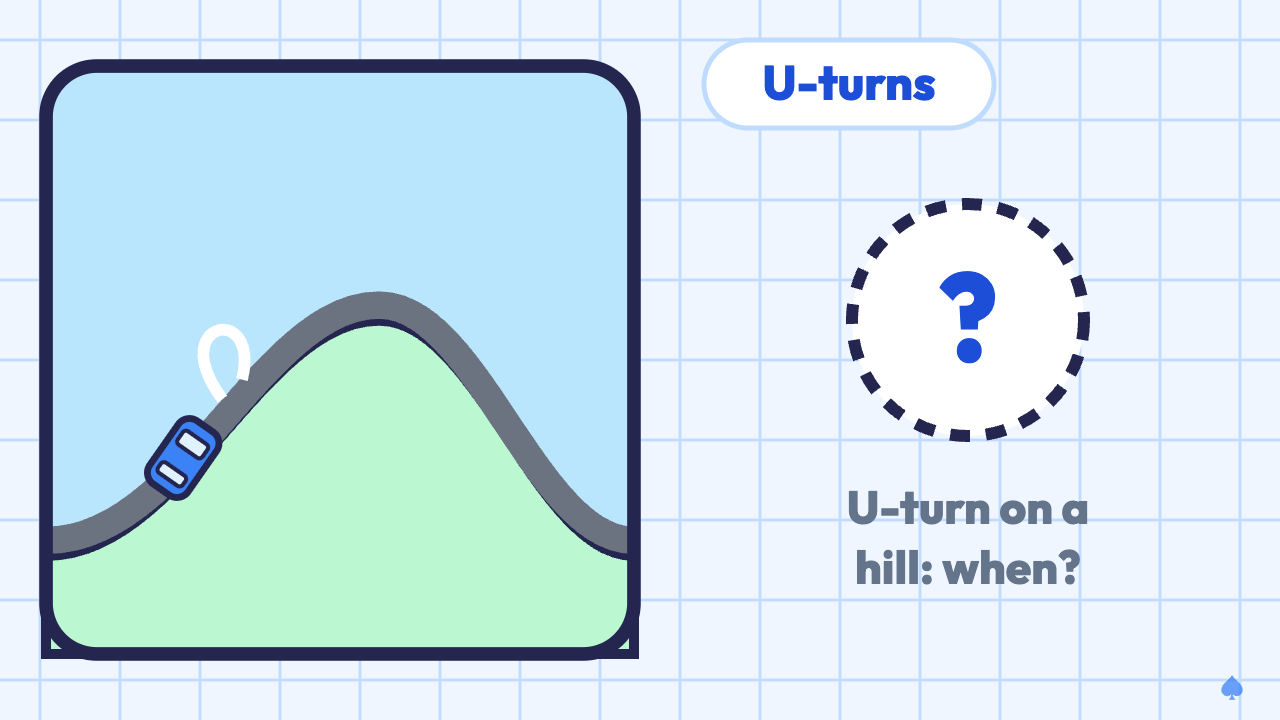
With 500 feet of view each way
You must not turn around on curves and hills unless you can see at least 500 feet in all directions. Towns may ban U-turns on some roads. (Rules of the Road, p. 32.)
-
What does it mean when both turn signals flash at once?
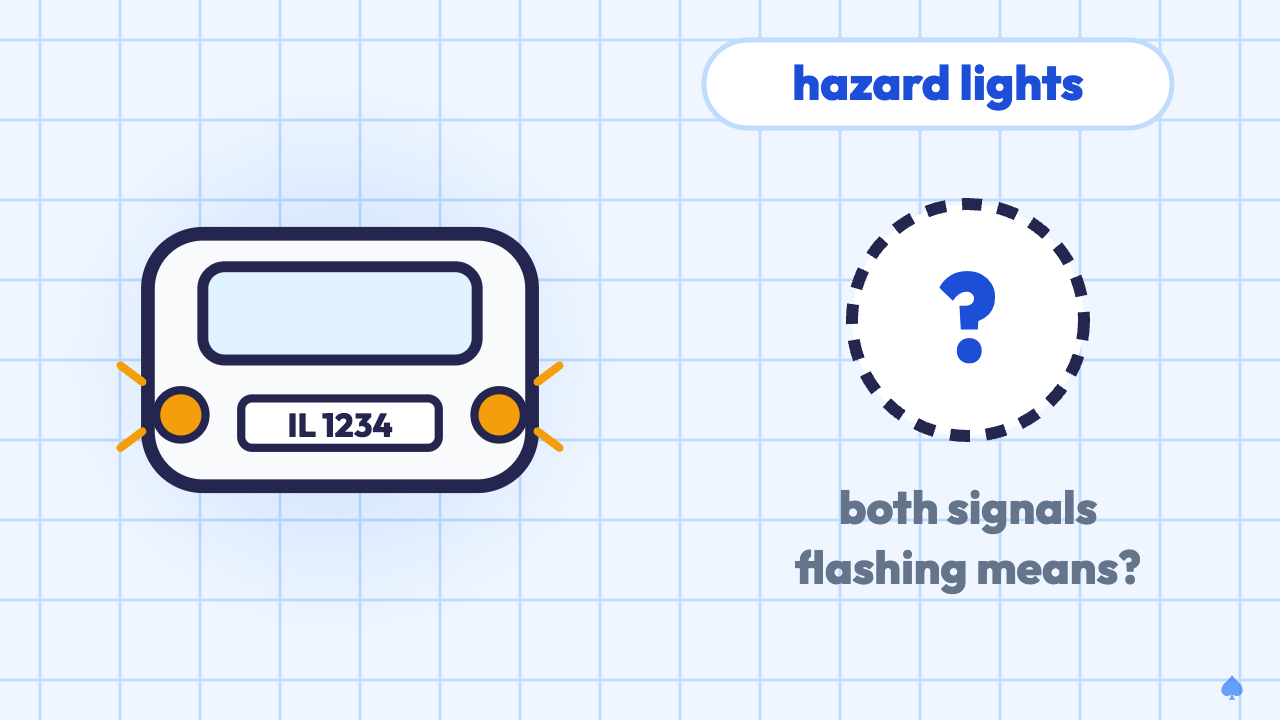
A disabled or parked vehicle
Both turn signals may be flashed at the same time to show a disabled or parked vehicle. (Rules of the Road, p. 32.)
-
Which way does traffic travel in a roundabout?
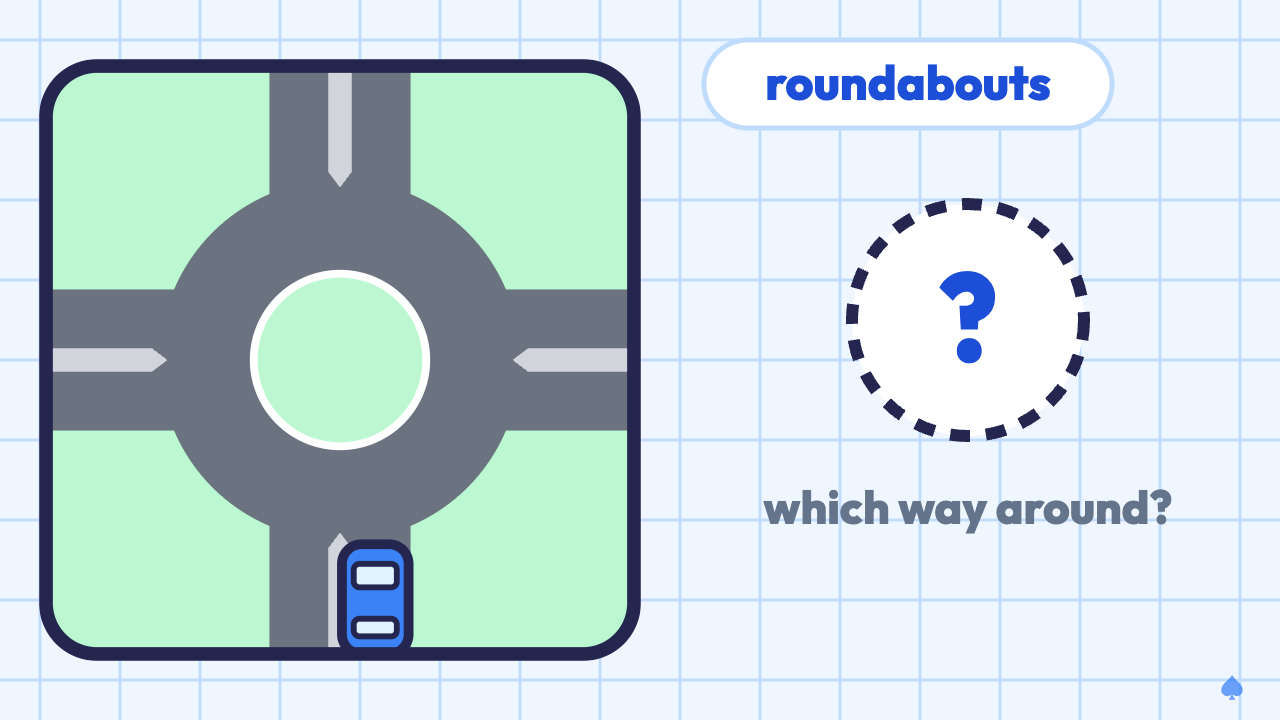
Counter-clockwise
A roundabout is an intersection where traffic travels counter-clockwise around a central island. Some have more than one lane. (Rules of the Road, p. 32.)
-
Entering a roundabout, whom must you yield to?
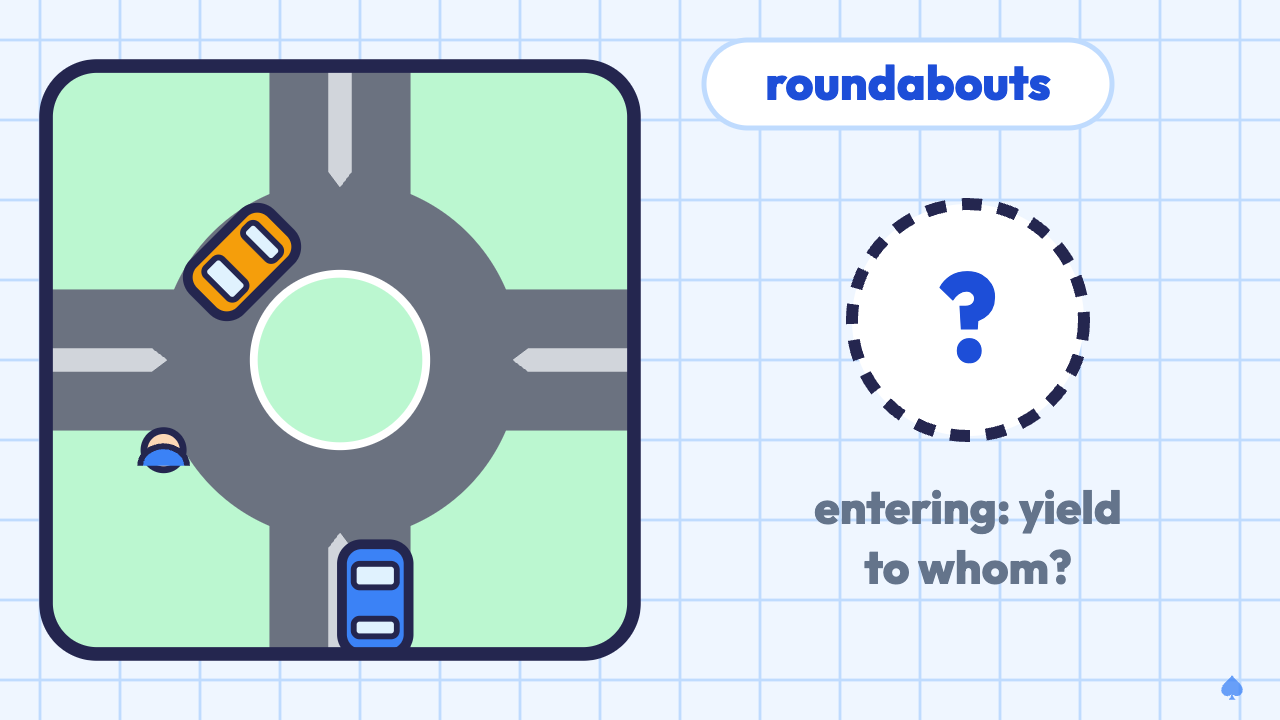
All traffic, walkers and bikes
Vehicles entering or exiting a roundabout must yield to all traffic, including pedestrians and bicycles. Slow down and enter by turning right when it is safe. (Rules of the Road, p. 32.)
-
How do you show you are leaving a roundabout?
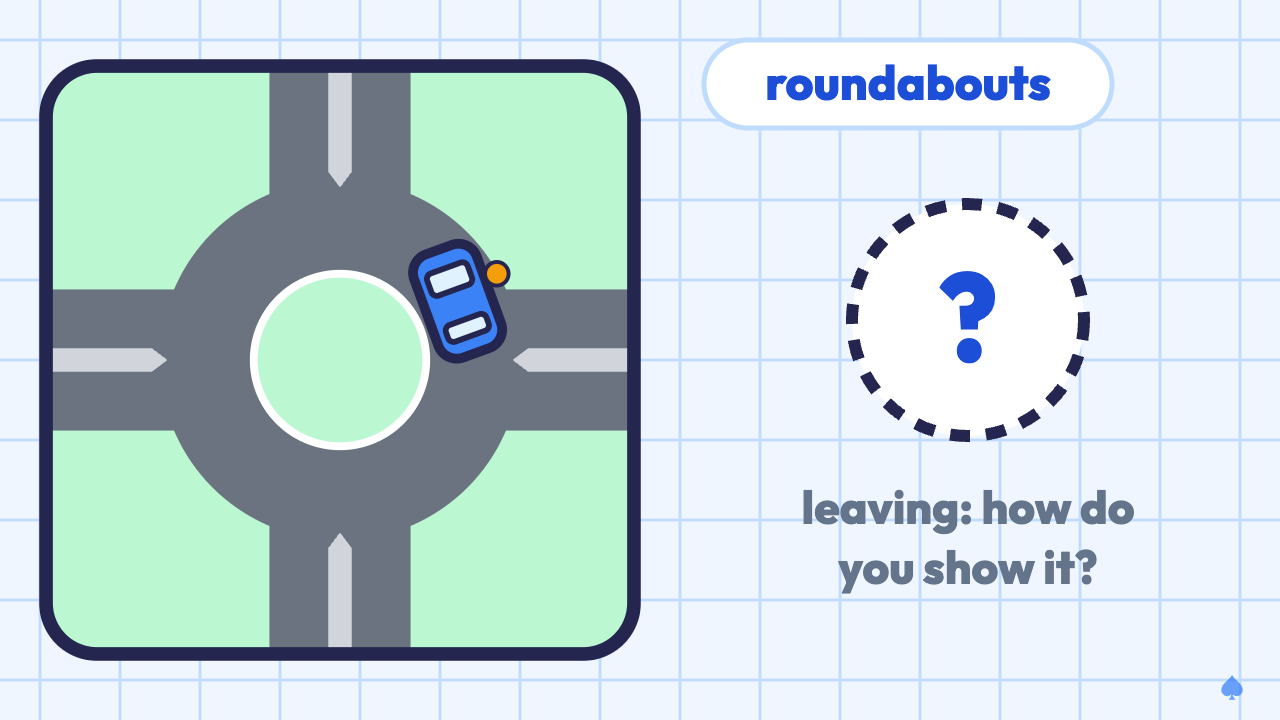
Use the right turn signal
Use your right turn signal to let other drivers know you are exiting the roundabout. Check for vehicles continuing around before you exit. (Rules of the Road, p. 32.)
-
In a multi-lane roundabout, what must you do before changing lanes or exiting?
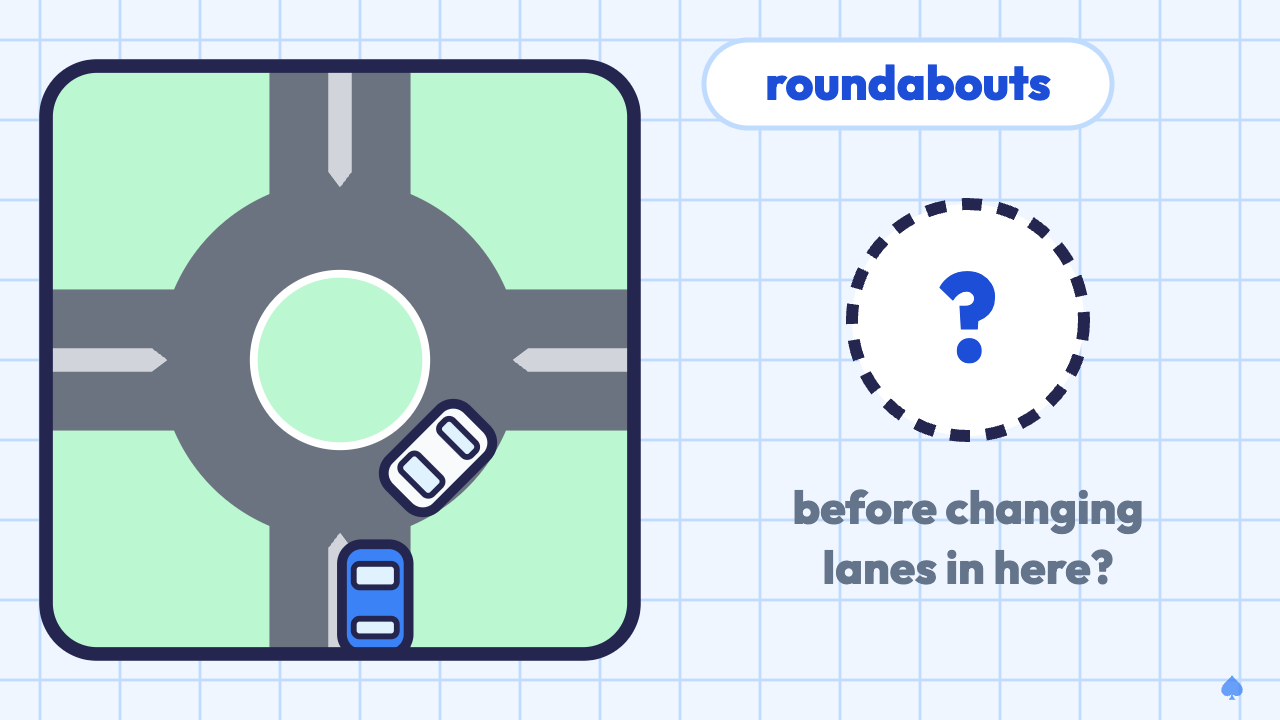
Check for cars going around
Do not change lanes or take an exit before checking for vehicles continuing through the roundabout. Expect cars in blind spots you cannot see in mirrors. (Rules of the Road, p. 32.)
-
Cars block a street so drivers can do stunts and speed shows. What is this called, and is it legal?
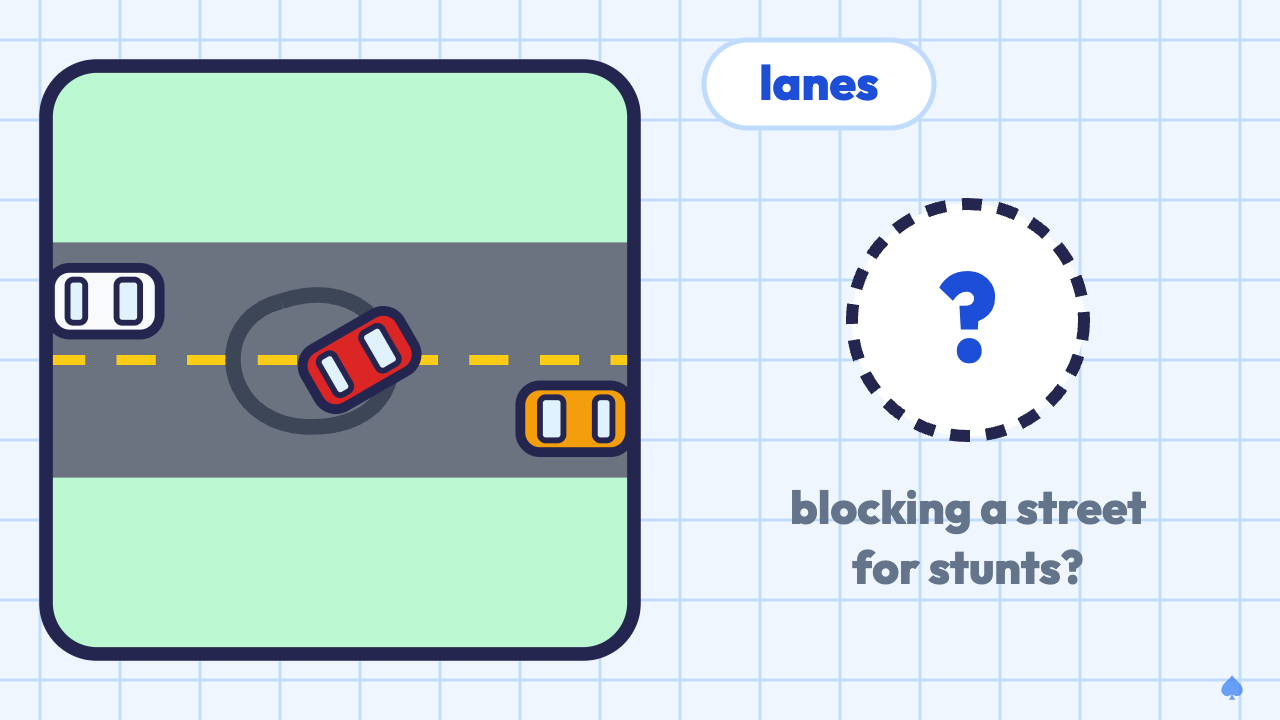
A street sideshow; it is illegal
It is illegal to engage in a street sideshow, an event where vehicles block or impede traffic on a street or highway to perform unauthorized stunts, speed contests or exhibitions of speed. (Rules of the Road, p. 30.)
Every card is here to read. Study them in the app, free to start, with spaced repetition bringing back the ones you miss.
Decks like this one.
- IL Permit 12: Teens, Phones, Belts & Your License FlashQuest · 60 cards Start free
- IL Permit 11: Alcohol, Drugs & DUI FlashQuest · 26 cards Start free
- IL Permit 10: Safe Driving & Equipment FlashQuest · 45 cards Start free
- IL Permit 09: Sharing the Road FlashQuest · 36 cards Start free
- IL Permit 08: Speed Limits & Parking FlashQuest · 31 cards Start free
- IL Permit 06: Work Zones, Emergencies, Buses & Trains FlashQuest · 30 cards Start free

Study it properly.
All 36 cards are in the app, free to start, scheduled so the ones you miss come back sooner.