
IL Permit 04: Signals & Pavement Markings
by FlashQuest
36 Illinois permit test cards on traffic signals and pavement markings. Deck 4 of 12. Signal cards cover a dark signal as an all-way stop, steady and flashing red and yellow, every arrow, the walking person and orange hand, and the red X, yellow X and green arrow over a lane. Marking cards cover edge line colors, broken and solid white lines, single and double yellow lines, finishing a pass, shared left-turn lanes, stop lines, crosswalks and striped obstructions. From the Illinois Rules of the Road 2026 (chapter 10).


Free to start, no account needed. After you install, search the Table for “IL Permit 04: Signals & Pavement Markings”.
Study all 36 cards, with their pictures, in the app.
All 36 cards in this deck.
Made by FlashQuest. Last updated November 2026. Drafted with AI help.
- A traffic signal is dark because the power is out. How do you treat the intersection?
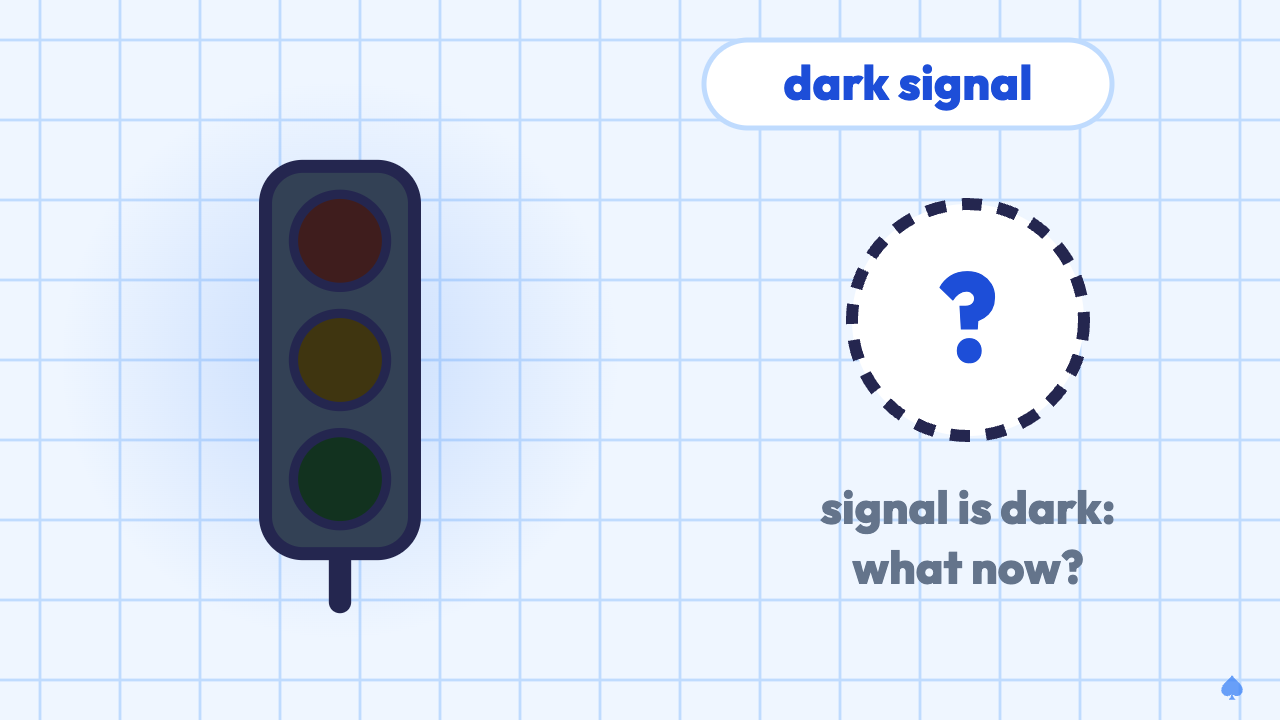
- As an all-way stop
- When a signal is not working, treat the intersection as an all-way stop: come to a complete stop, look, and yield the right of way before entering, unless an officer directs otherwise. (Rules of the Road, p. 77.)
- Who can direct you to do something different from what a traffic signal shows?
- A police or traffic officer
- Traffic signals and pavement markings must be obeyed unless a police officer or traffic control officer directs you otherwise. Follow the officer. (Rules of the Road, p. 77.)
- May you drive through a parking lot or gas station to avoid a traffic signal?
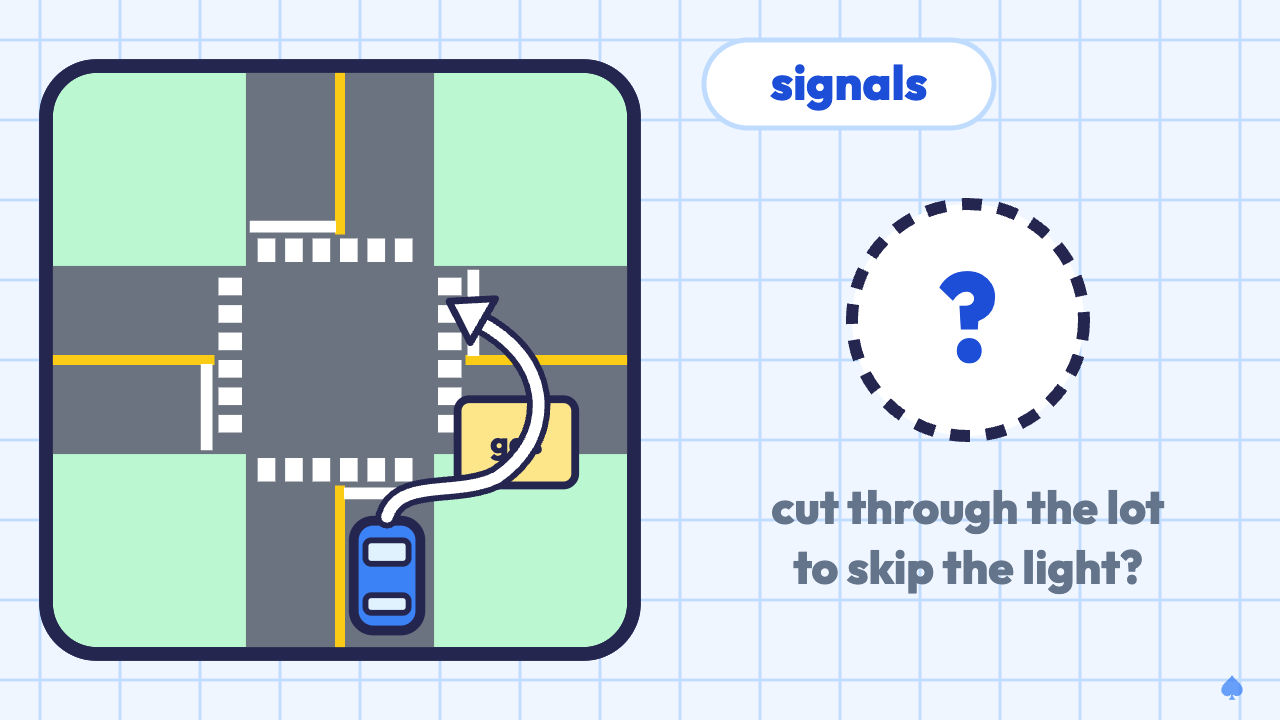
- No, never leave the road for it
- A driver may never leave the roadway to avoid a traffic signal. Wait for the signal like everyone else. (Rules of the Road, p. 77.)
- At a steady red light with no stop line, where do you stop?
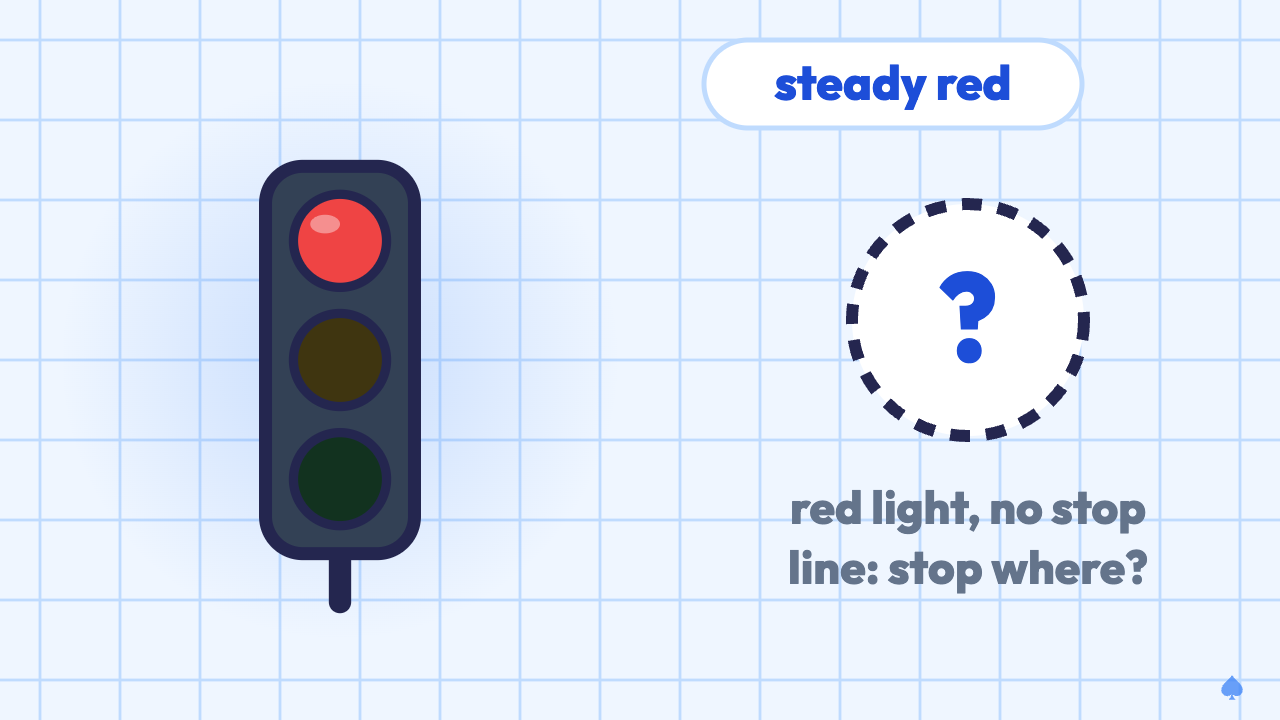
- Before the crosswalk
- Stop at the marked stop line. With no stop line, stop before entering the crosswalk. With no crosswalk, stop before entering the intersection. Wait for green and a clear intersection. (Rules of the Road, p. 77.)
- At a steady red light, when may you go straight through?
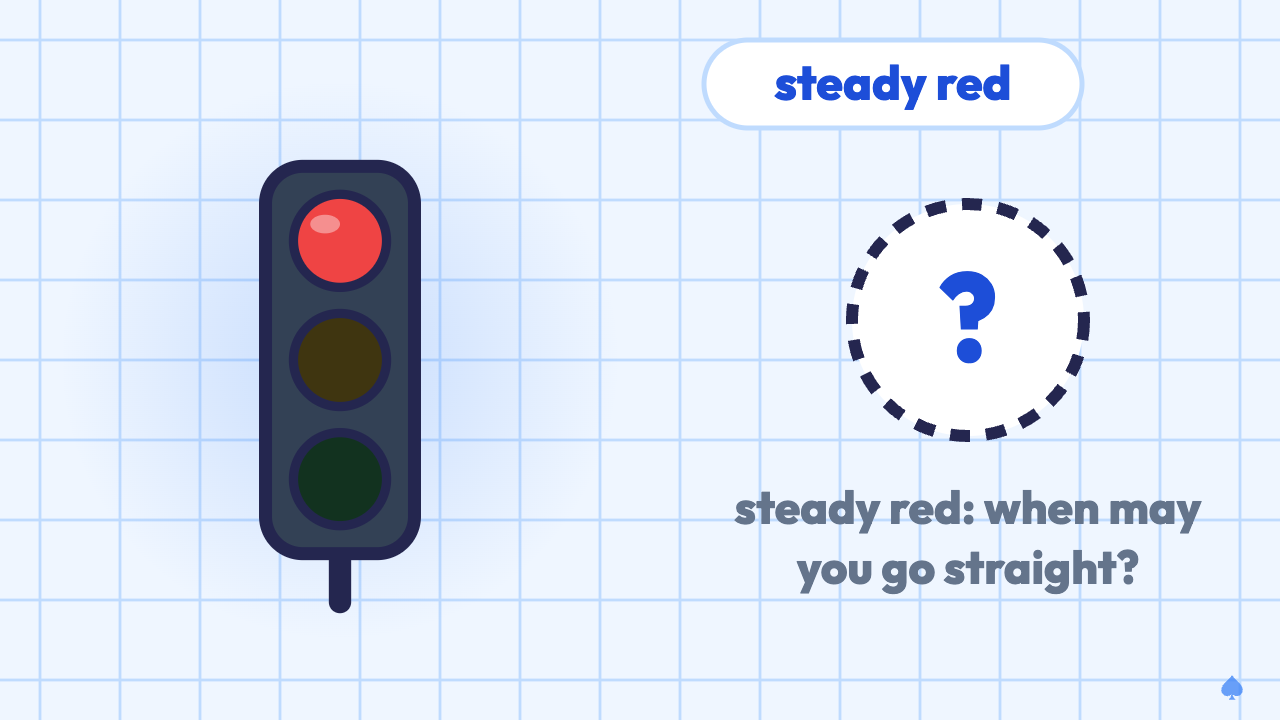
- When it is green and clear
- At a steady red, do not go until the light is green and the intersection is clear. Turning right on red after a full stop is a separate rule. (Rules of the Road, p. 77.)
- What does a steady yellow light mean?
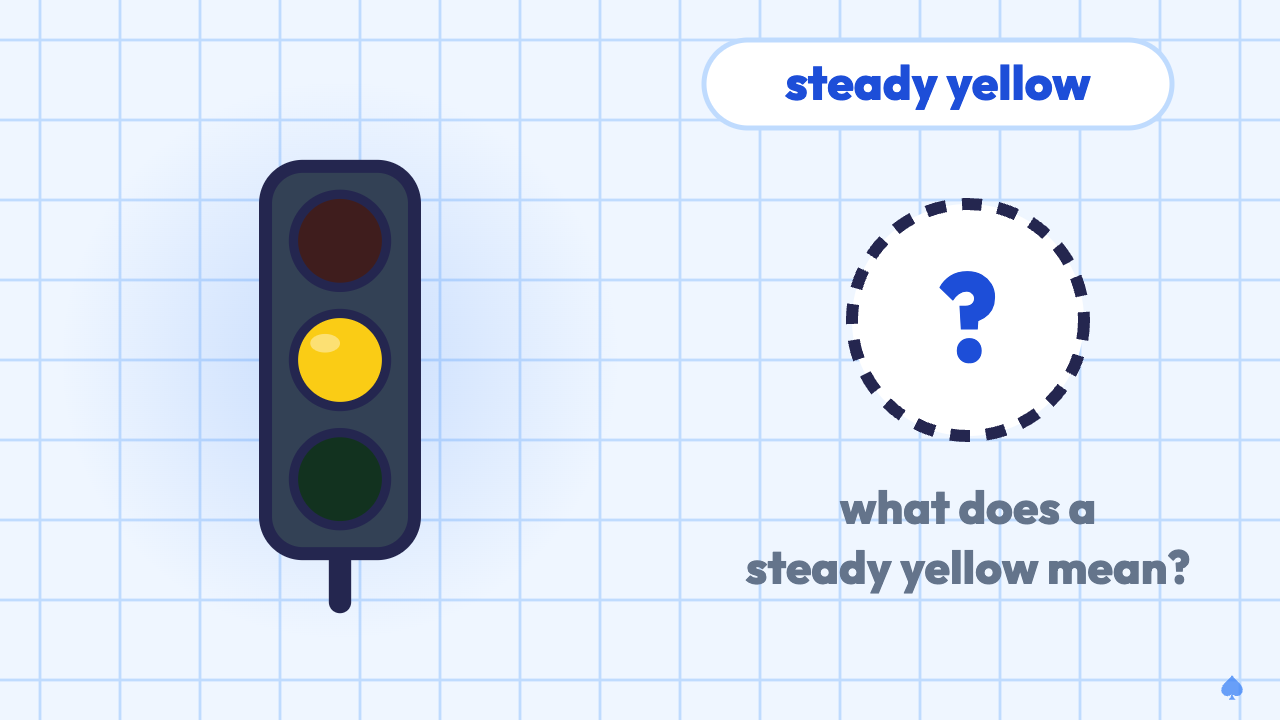
- The light is about to turn red
- A steady yellow light warns that the signal is changing from green to red. When the red light appears, do not enter the intersection. (Rules of the Road, p. 77.)
- The light turns green. What must you still do before going?
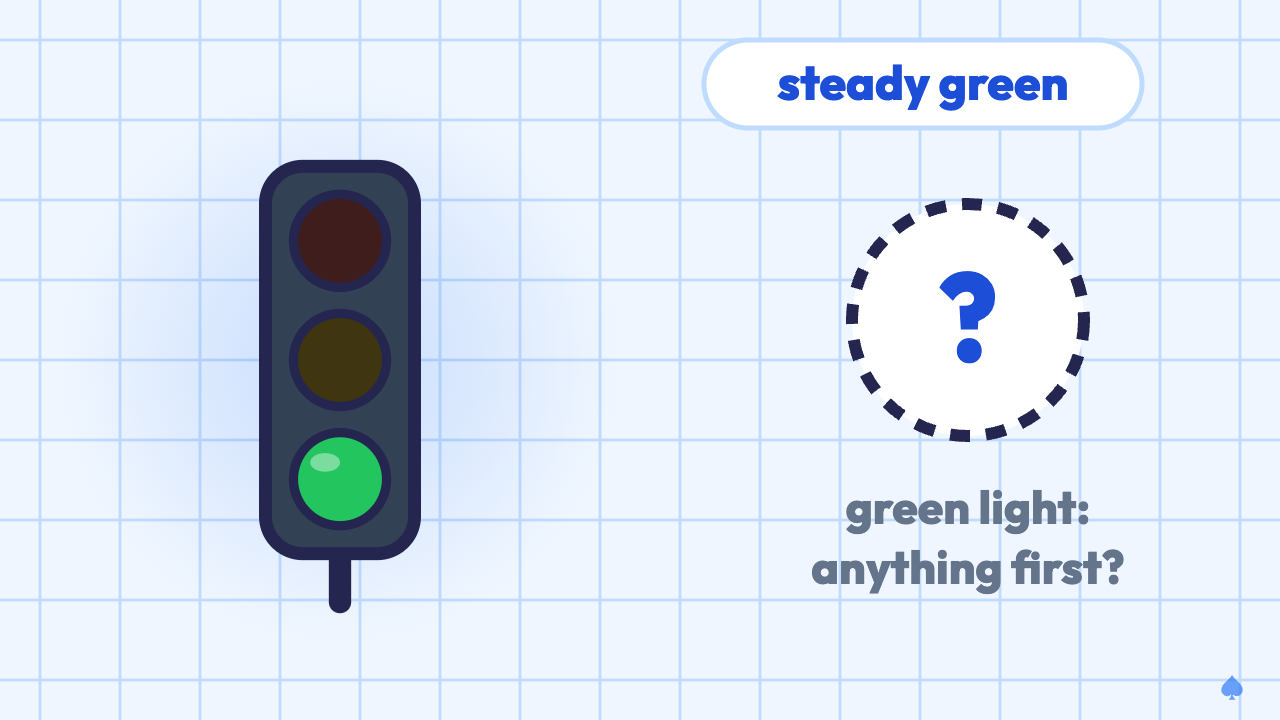
- Yield to anyone still crossing
- At a green light you may go only after yielding the right of way to pedestrians and vehicles already in the intersection or crosswalk. (Rules of the Road, p. 77.)
- What must you do at a flashing red light?
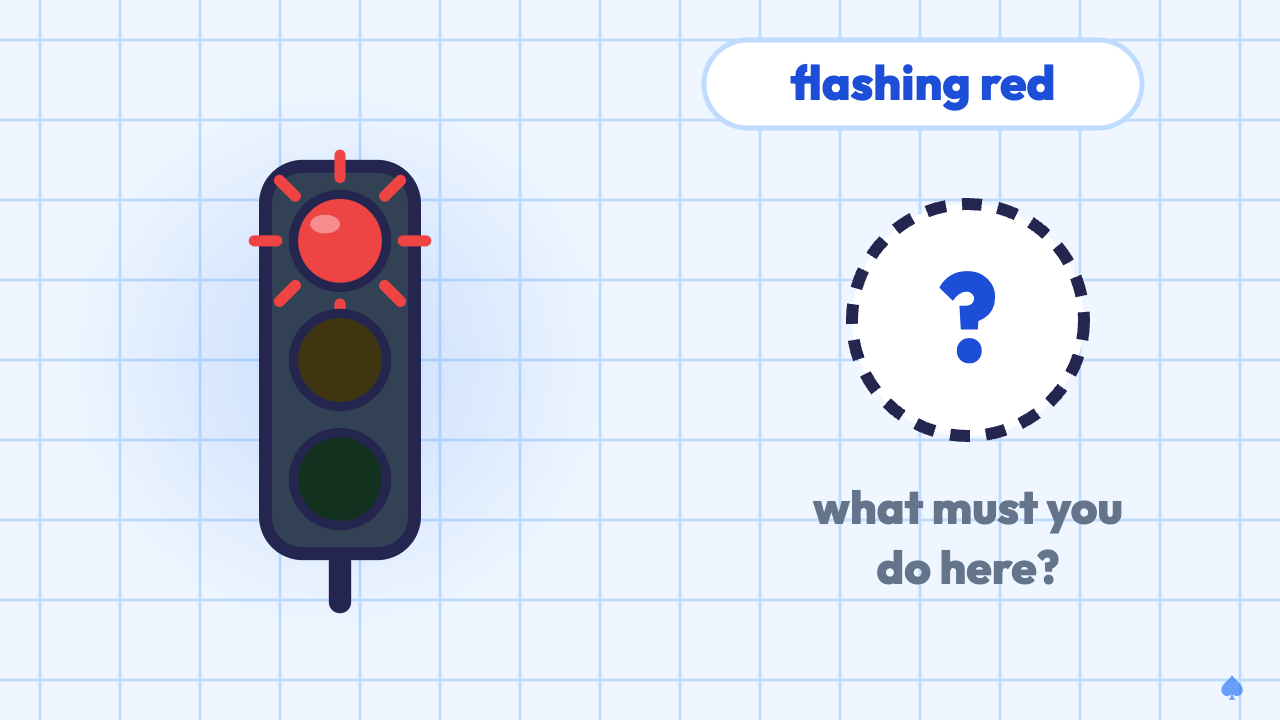
- Stop, yield, go when safe
- At a flashing red light you must stop, yield the right of way to traffic in the intersection or crosswalk, and proceed when safe, just as at a STOP sign. (Rules of the Road, p. 77.)
- Where is a flashing red light often used besides some intersections?
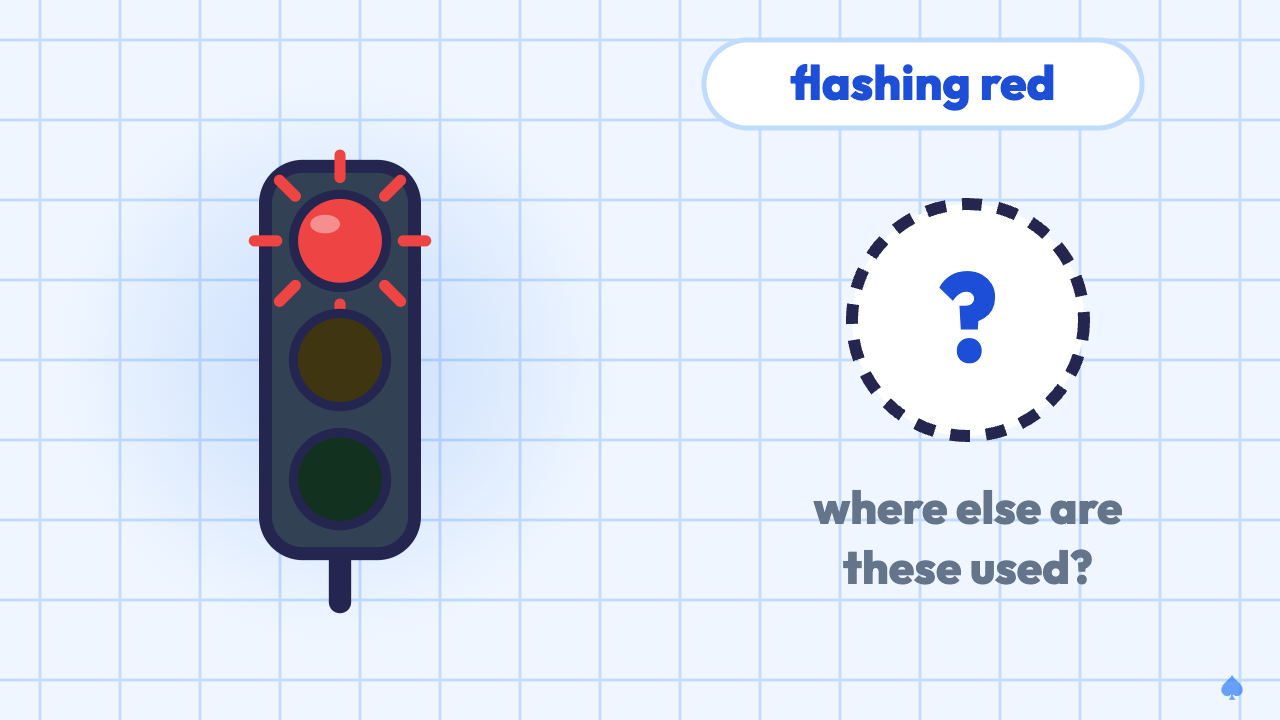
- At railroad crossings
- Flashing red lights are used where a STOP sign alone is hard to see or needs emphasis, and at railroad crossings to warn of approaching trains. (Rules of the Road, p. 77.)
- What does a flashing yellow light mean?
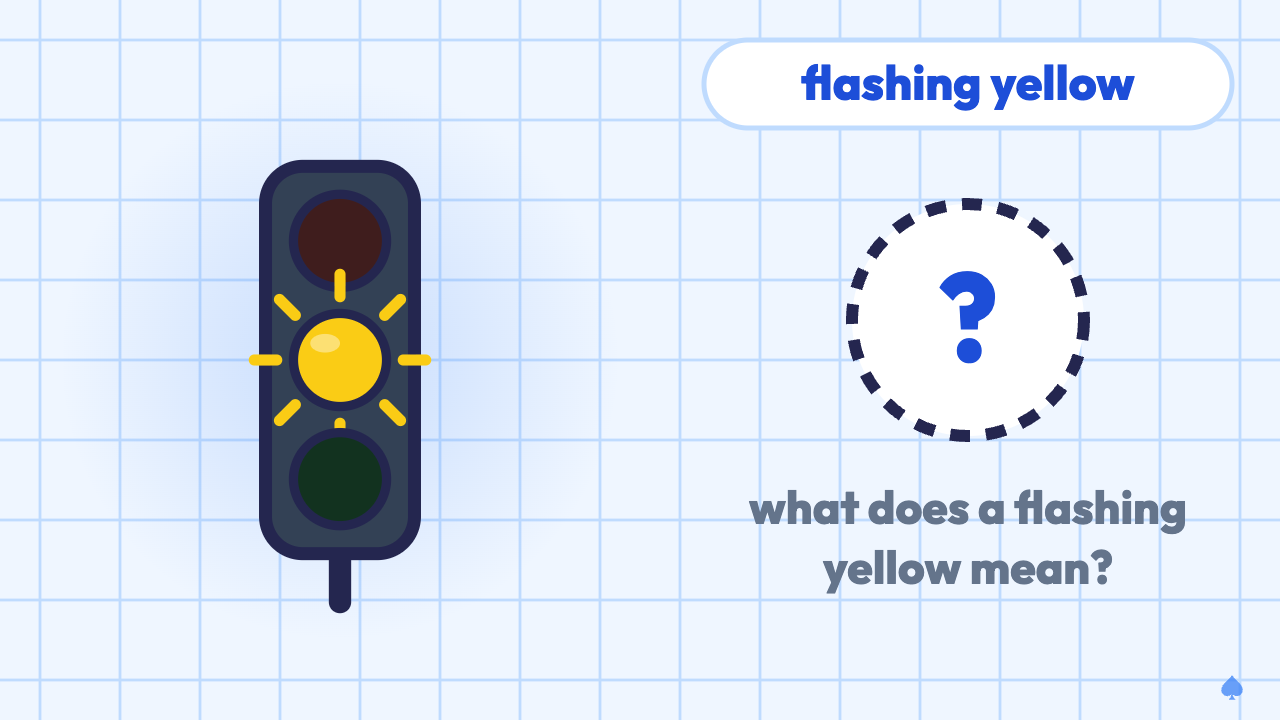
- Proceed with caution
- A flashing yellow light means you may proceed into the intersection with caution. Slow down and watch for other traffic. (Rules of the Road, p. 77.)
- What does a steady red arrow mean?
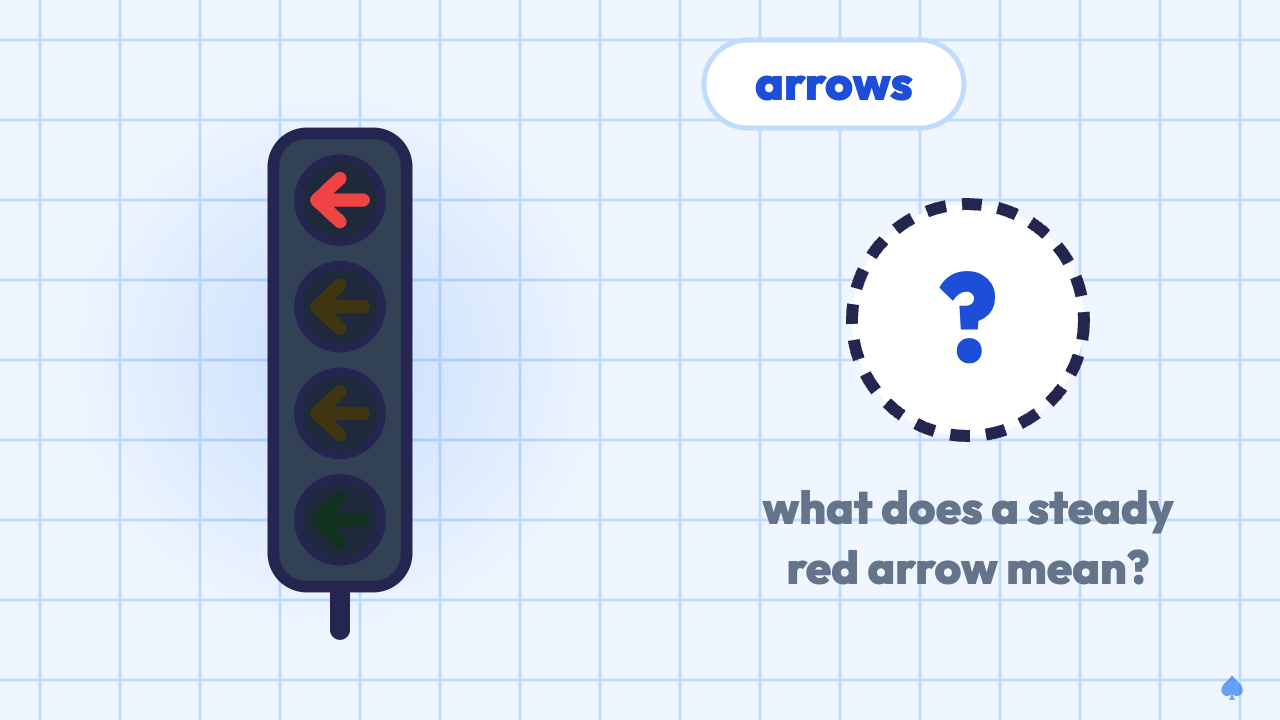
- No turn that way until green
- A steady red arrow means you may not make the movement shown until a green arrow appears. You may still turn right on a red arrow, or left from one-way to one-way, after a full stop and yielding. (Rules of the Road, p. 78.)
- A signal shows a red light and a green arrow together. May you go in the arrow direction?
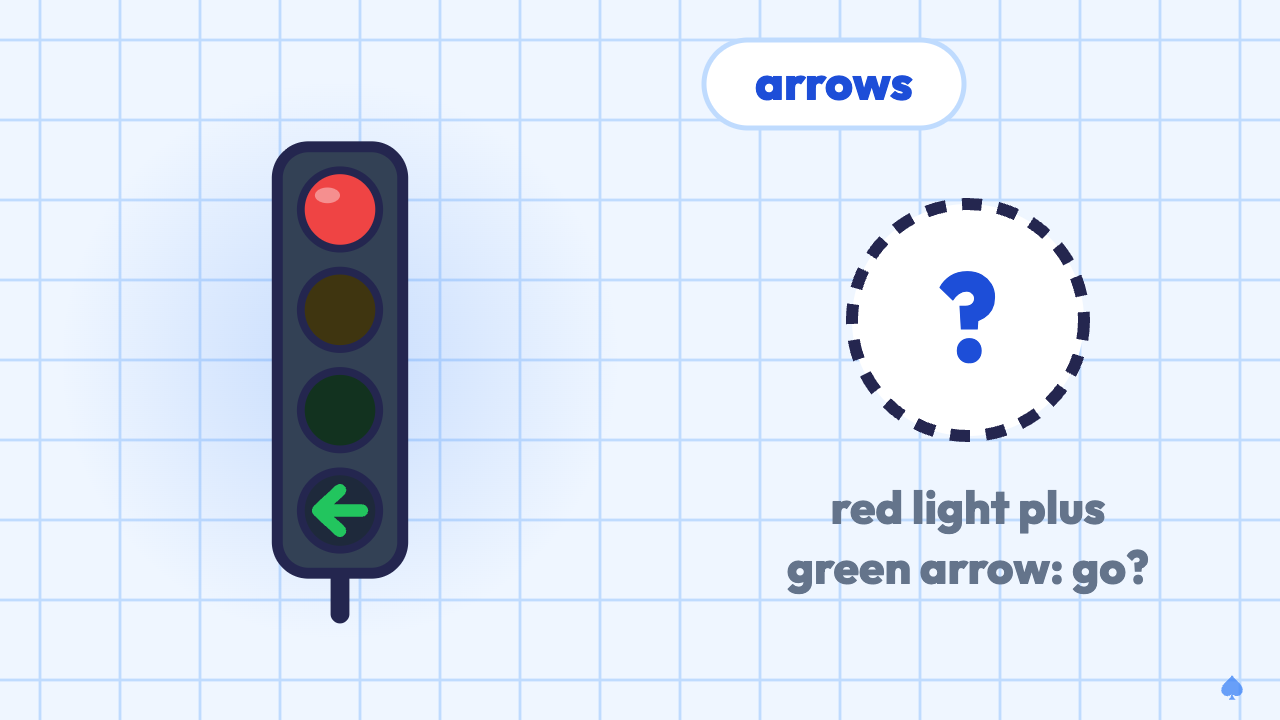
- Yes, after yielding
- You may go in the direction the arrow points after yielding to traffic and pedestrians in the intersection or crosswalk. You do not wait for the red to change. (Rules of the Road, p. 78.)
Show the other 24 cards
-
What does a steady yellow arrow mean?
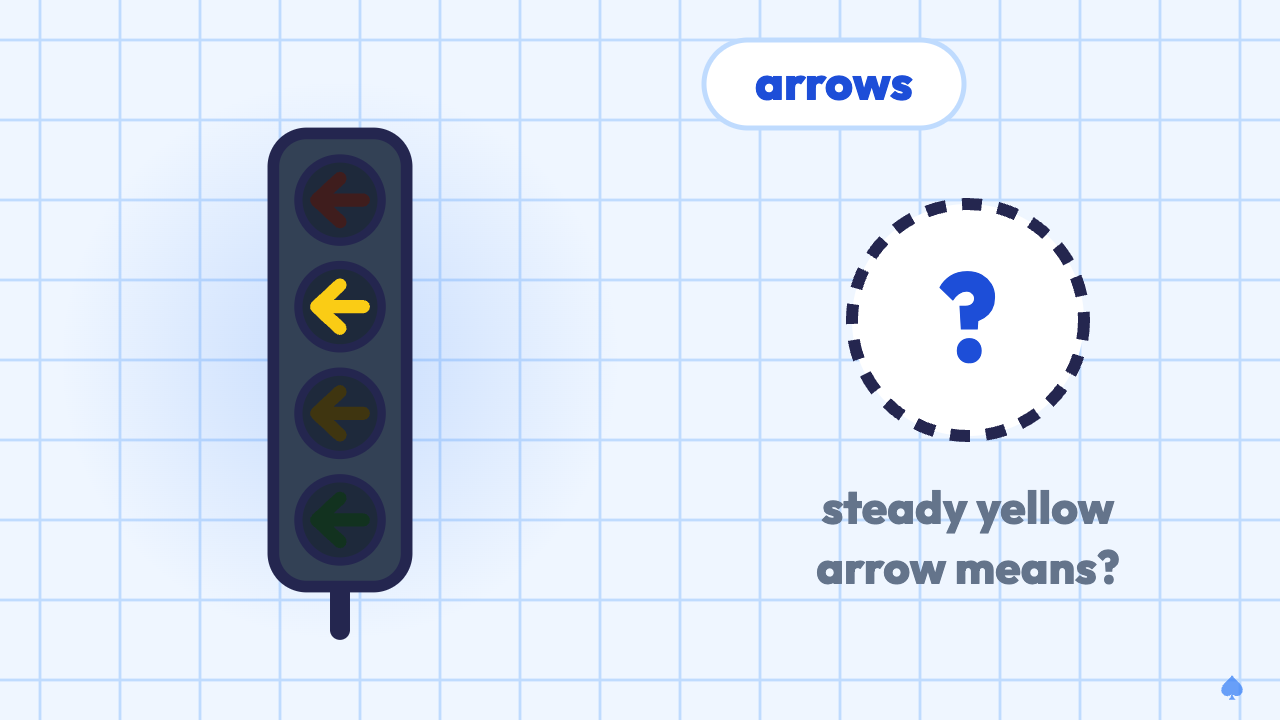
The green arrow is ending
A steady yellow arrow means the green arrow is ending or the light is about to turn red. (Rules of the Road, p. 78.)
-
What does a flashing yellow arrow mean?
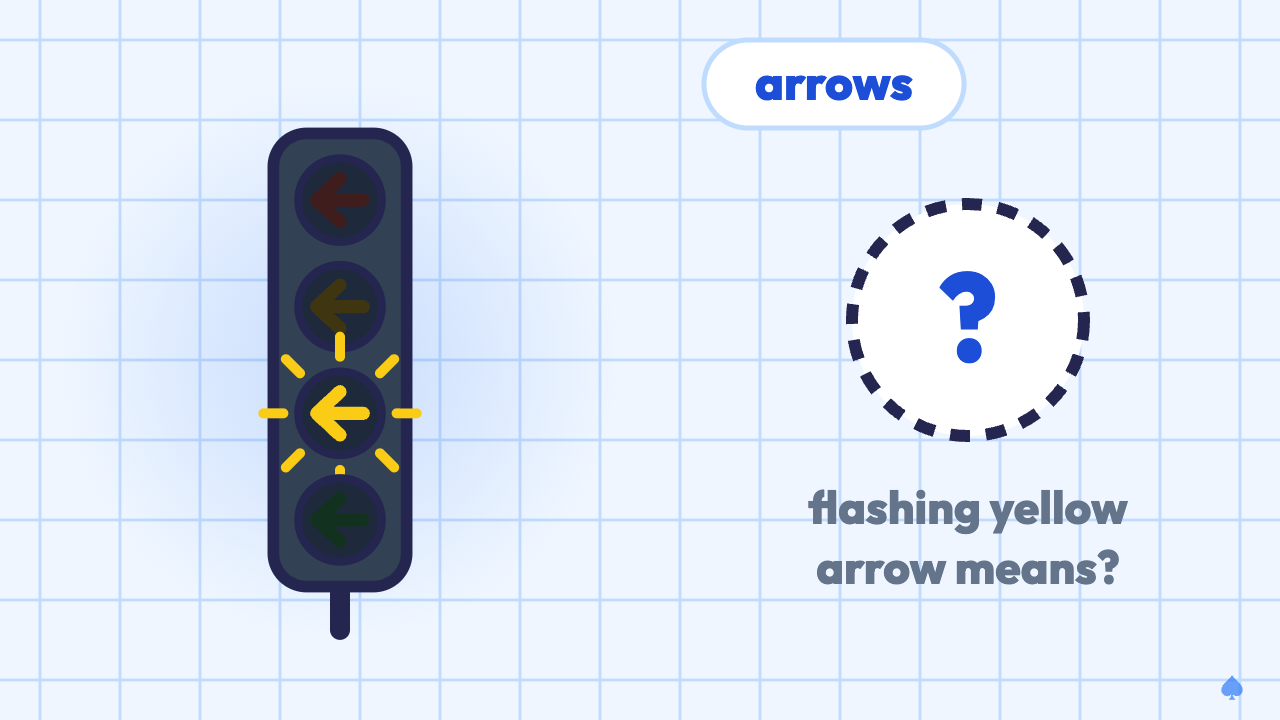
Turn after yielding
A flashing yellow arrow means you may turn in the direction of the arrow after yielding to any pedestrians and vehicles in the intersection or crosswalk. Oncoming traffic may have a green. (Rules of the Road, p. 78.)
-
What does a green arrow pointing straight up mean?
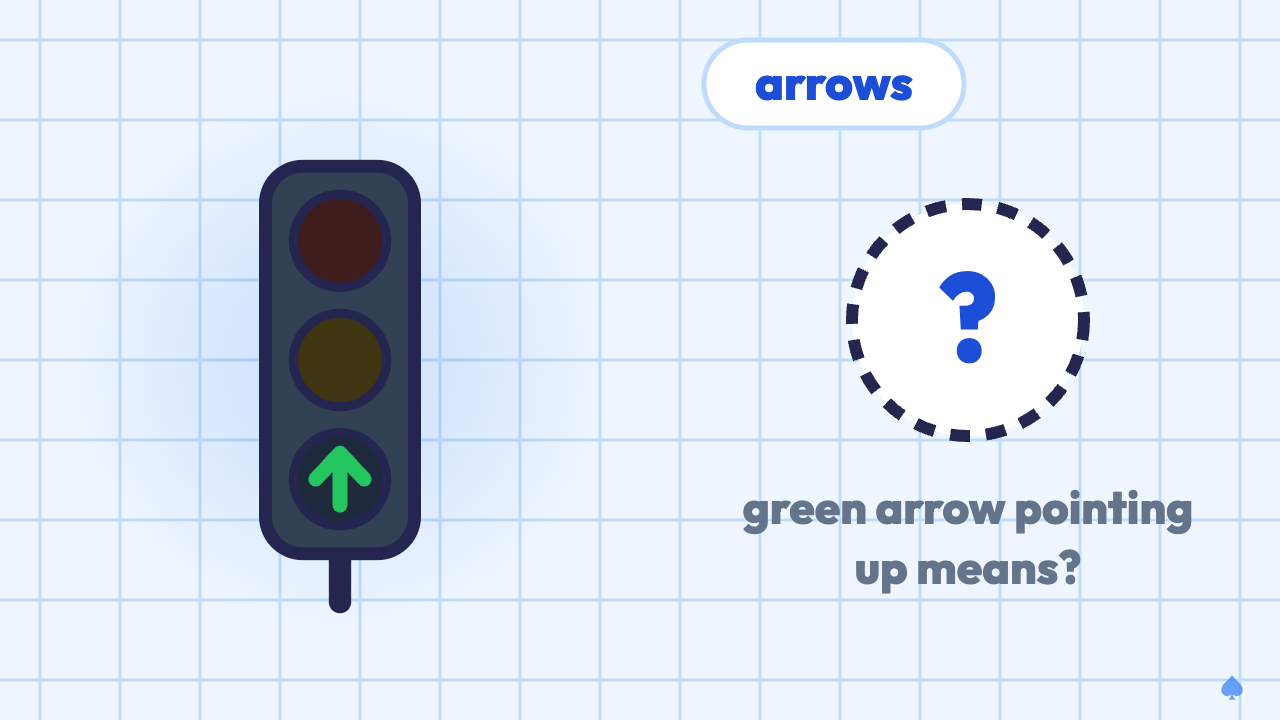
Go straight ahead only
When a green arrow points upward, you may go straight ahead only. A right arrow allows a right turn; a left arrow allows a left turn. (Rules of the Road, p. 78.)
-
You face a walking-person signal. What does it mean for someone on foot?
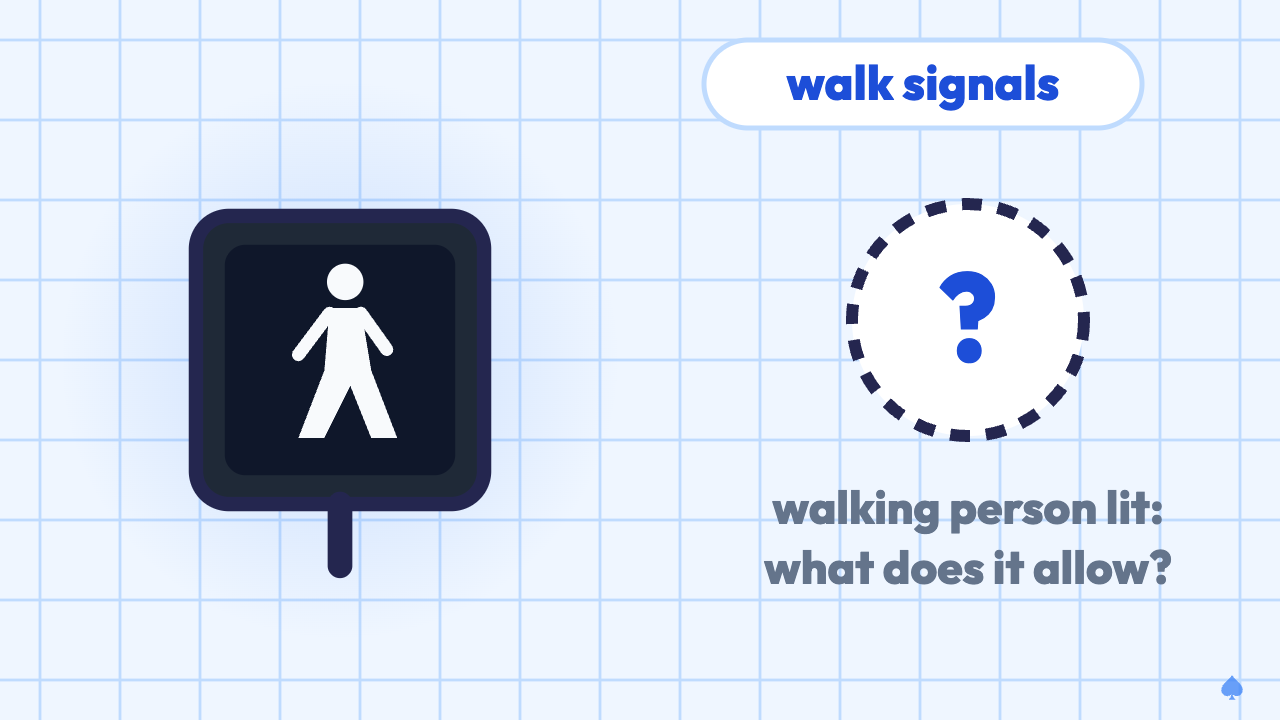
They may cross now
A walking-person signal means pedestrians facing it may cross the roadway in the direction of the signal. Drivers turning across them must yield. (Rules of the Road, p. 78.)
-
What does a flashing orange upraised hand mean for someone on foot?
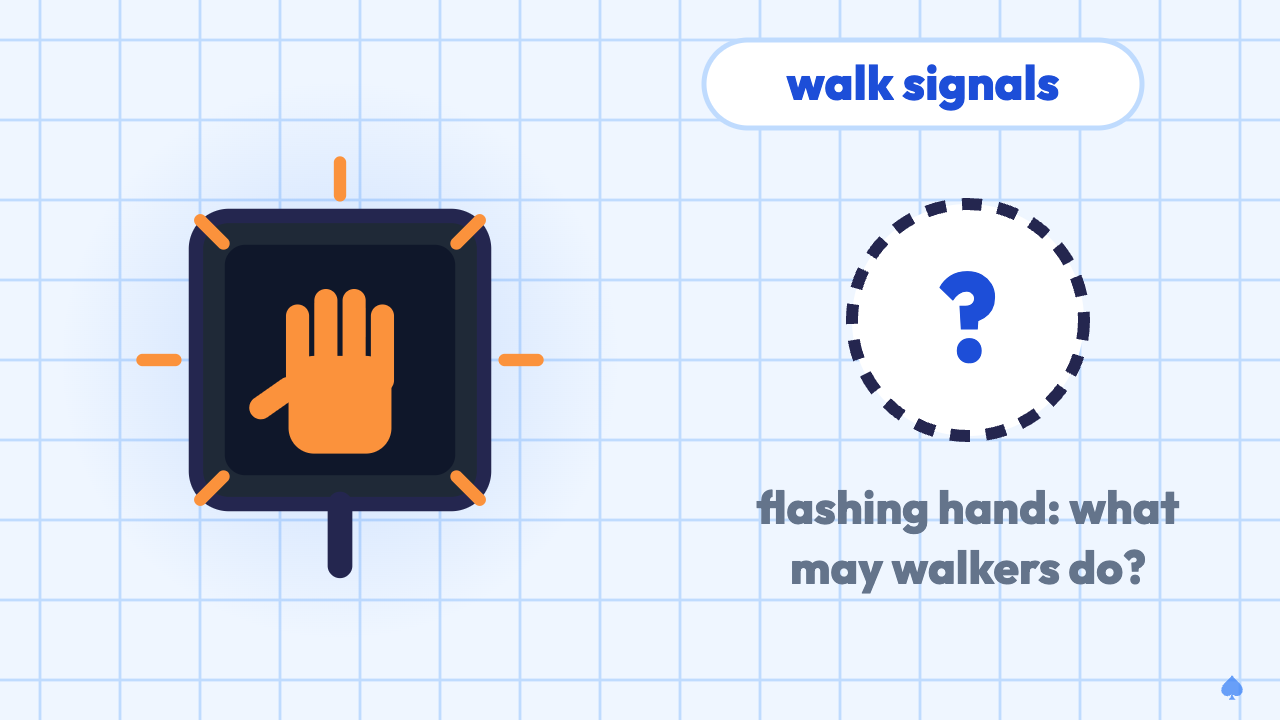
Do not start; finish if partway
A flashing upraised hand means do not start crossing. Someone who started during the walk signal may continue to the sidewalk or safety island. Drivers must let them finish. (Rules of the Road, p. 78.)
-
What does a steady orange upraised hand mean for someone on foot?
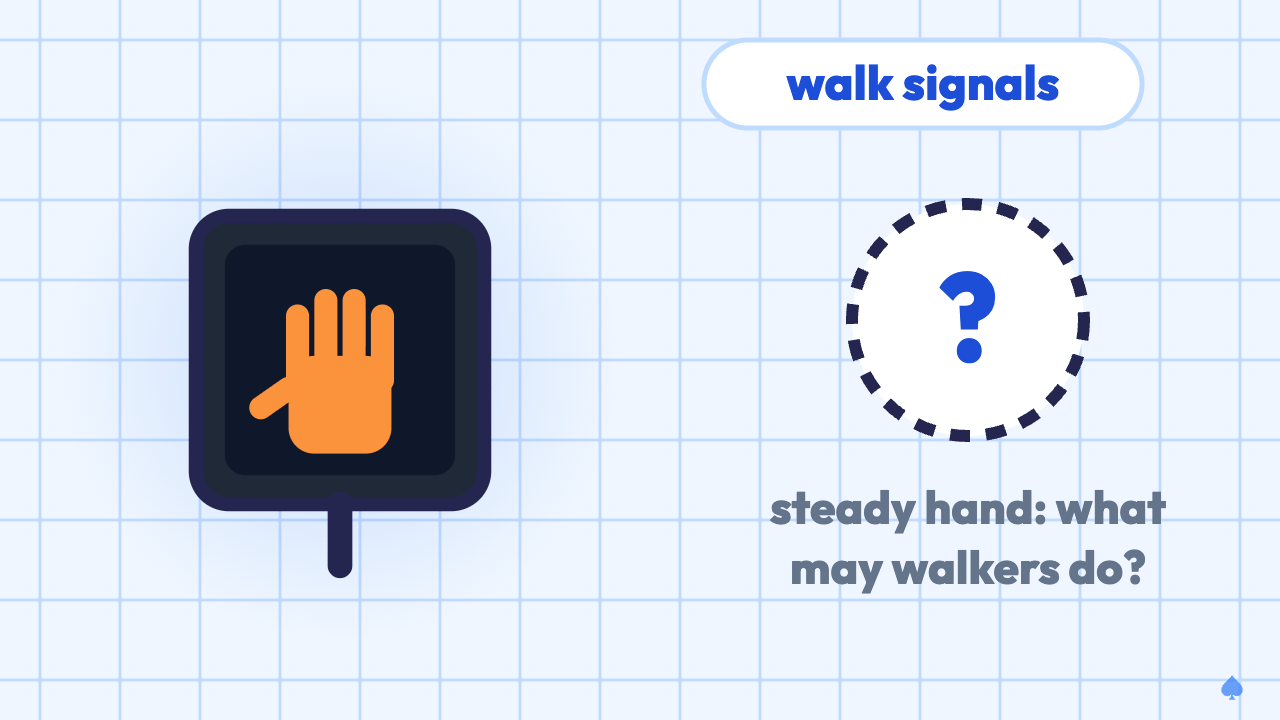
Do not enter the road
A constantly lit orange upraised hand means do not enter the roadway. (Rules of the Road, p. 78.)
-
A red X is lit over a lane on an expressway. What does it mean?
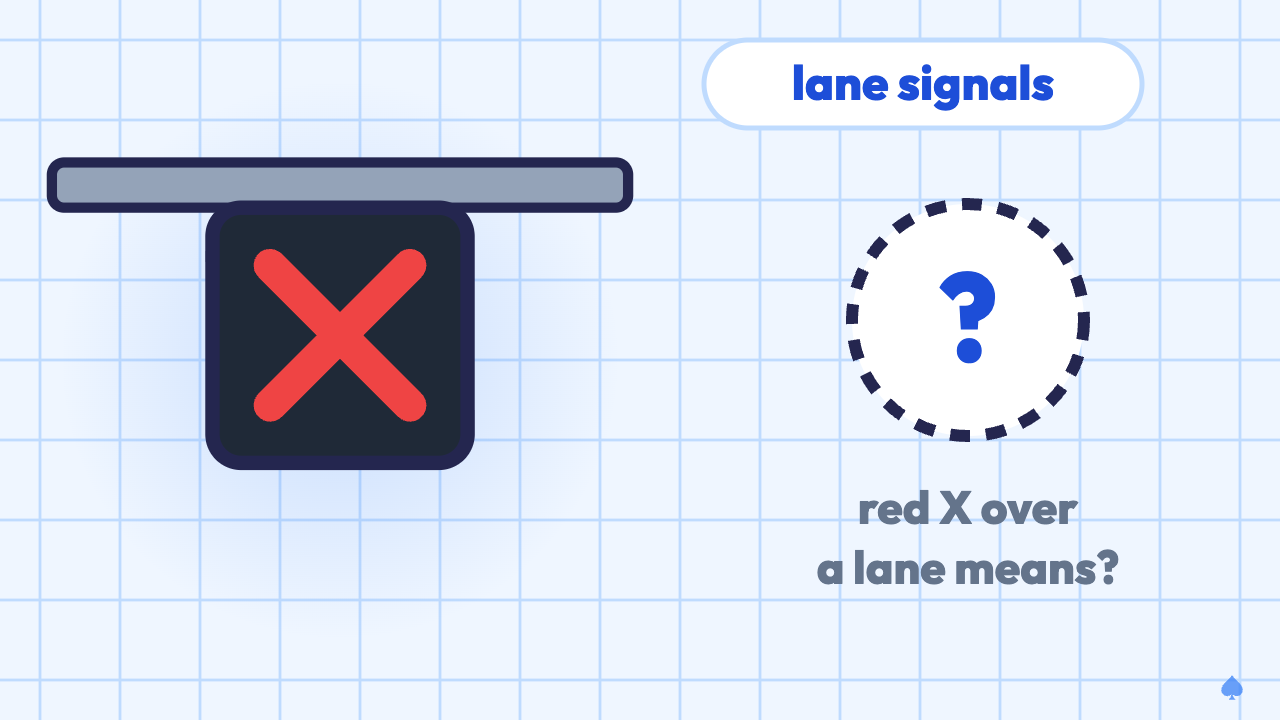
Never drive in this lane
Lane signals change the flow of traffic at certain hours. Never drive in a lane when a red X is displayed over it. (Rules of the Road, p. 78.)
-
A yellow X is lit over your lane. What should you do?
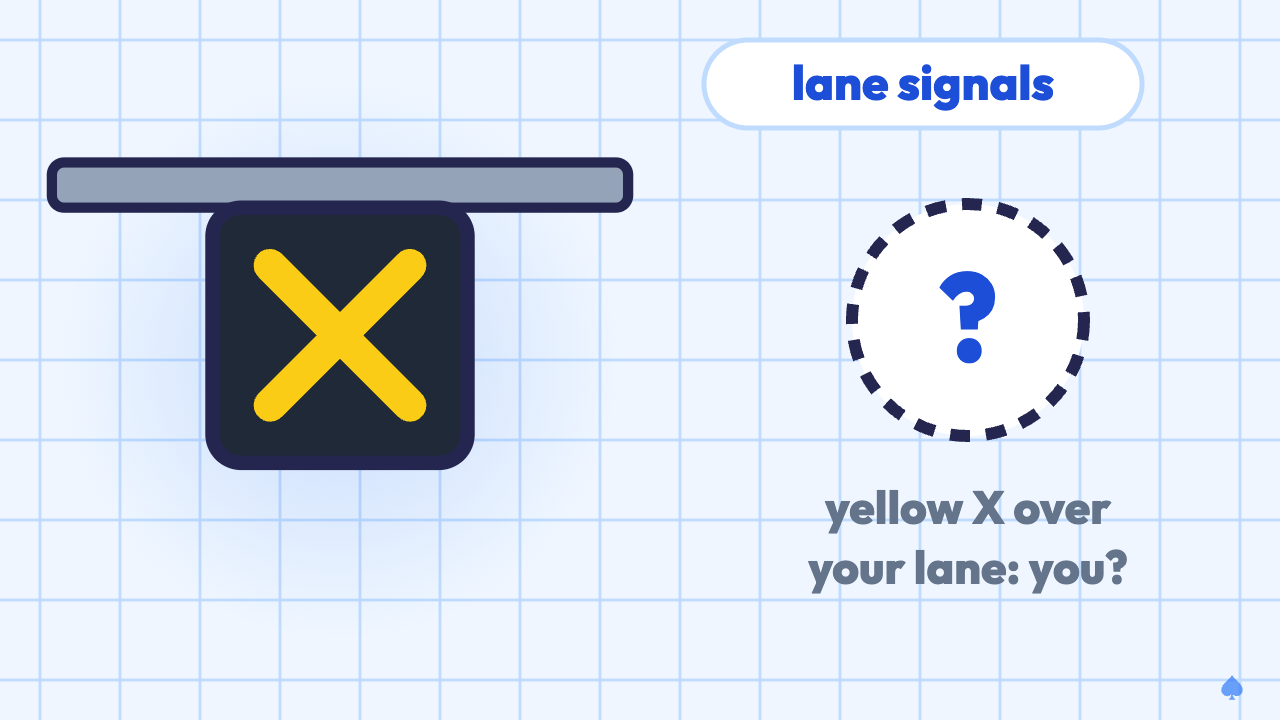
Leave the lane safely
A yellow X means the lane signal is about to change to red. Leave the lane safely before the red X appears. (Rules of the Road, p. 78.)
-
A flashing yellow arrow is lit over a lane. What is the lane for?
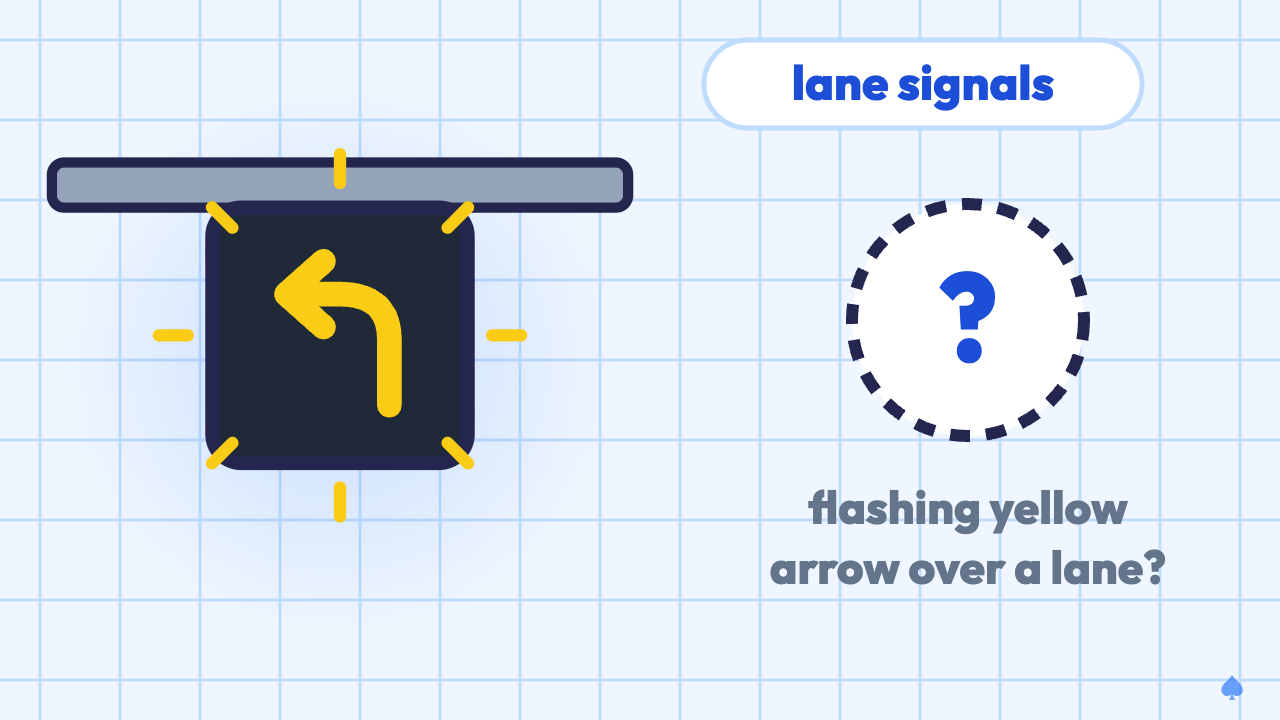
Approaching and making a left turn
A flashing yellow arrow lane signal means the lane may be used for approaching and making a left turn. (Rules of the Road, p. 78.)
-
A green arrow is lit over a lane. What does it mean?
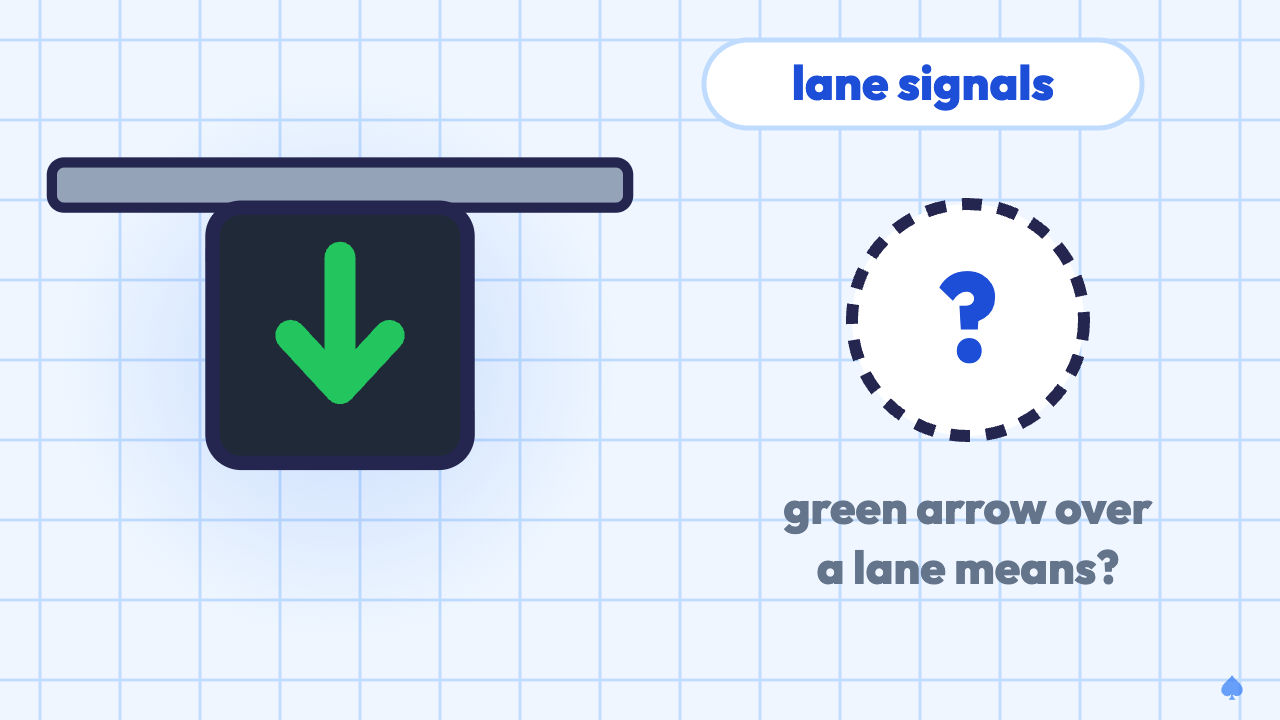
You may use the lane
A green arrow lane signal means you may use the lane, but you must still obey all other signs and signals. (Rules of the Road, p. 78.)
-
On a divided highway, what color is the edge line on your left?
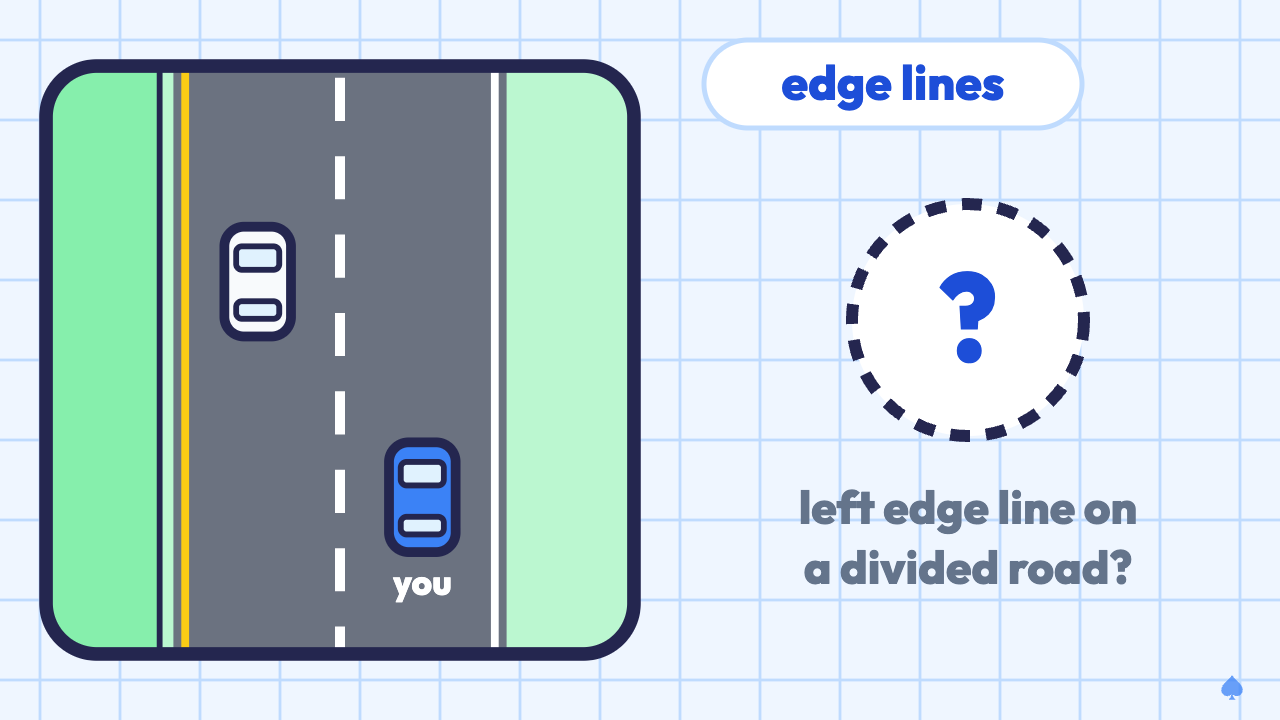
Yellow
Solid edge lines show where the pavement ends. Solid white lines mark the right edge; solid yellow lines mark the left edge of divided streets or roadways. (Rules of the Road, p. 79.)
-
Broken white lines separate two lanes going the same way. When may you cross them?
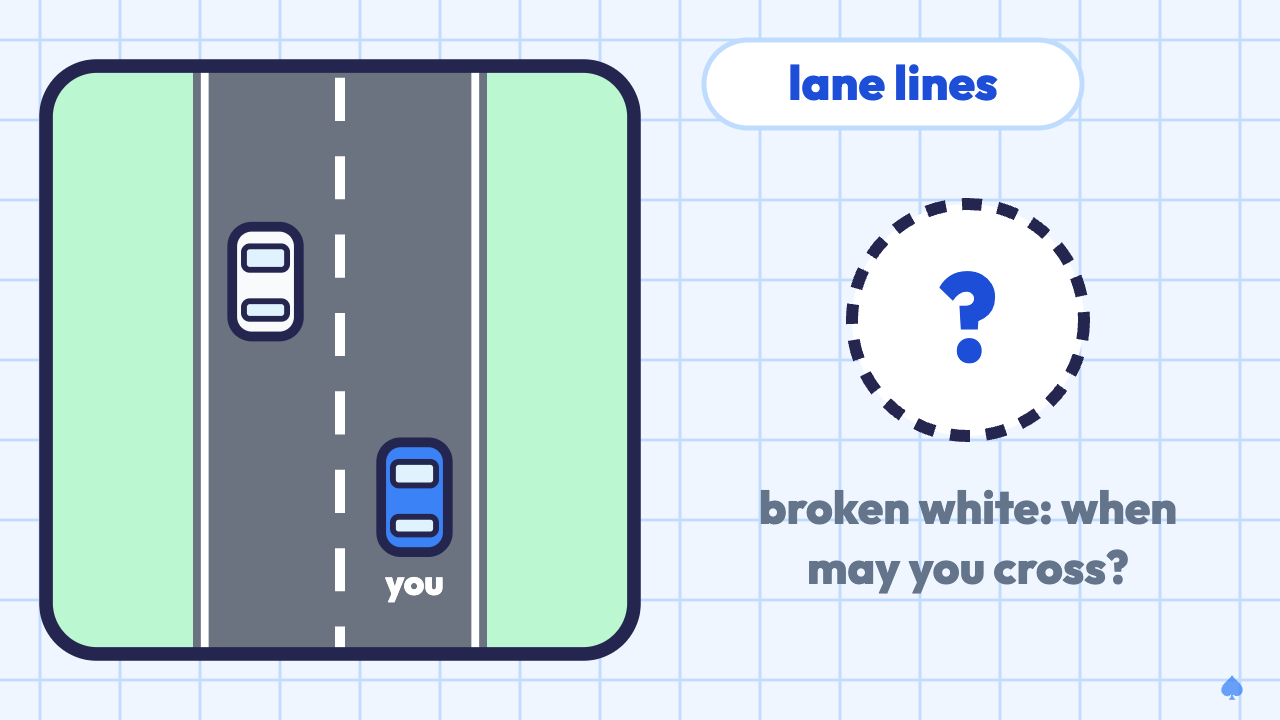
To change lanes or turn
White lane lines separate traffic moving the same direction. Broken white lines may be crossed only when changing lanes or turning. (Rules of the Road, p. 79.)
-
What does a solid white line between same-direction lanes tell you?
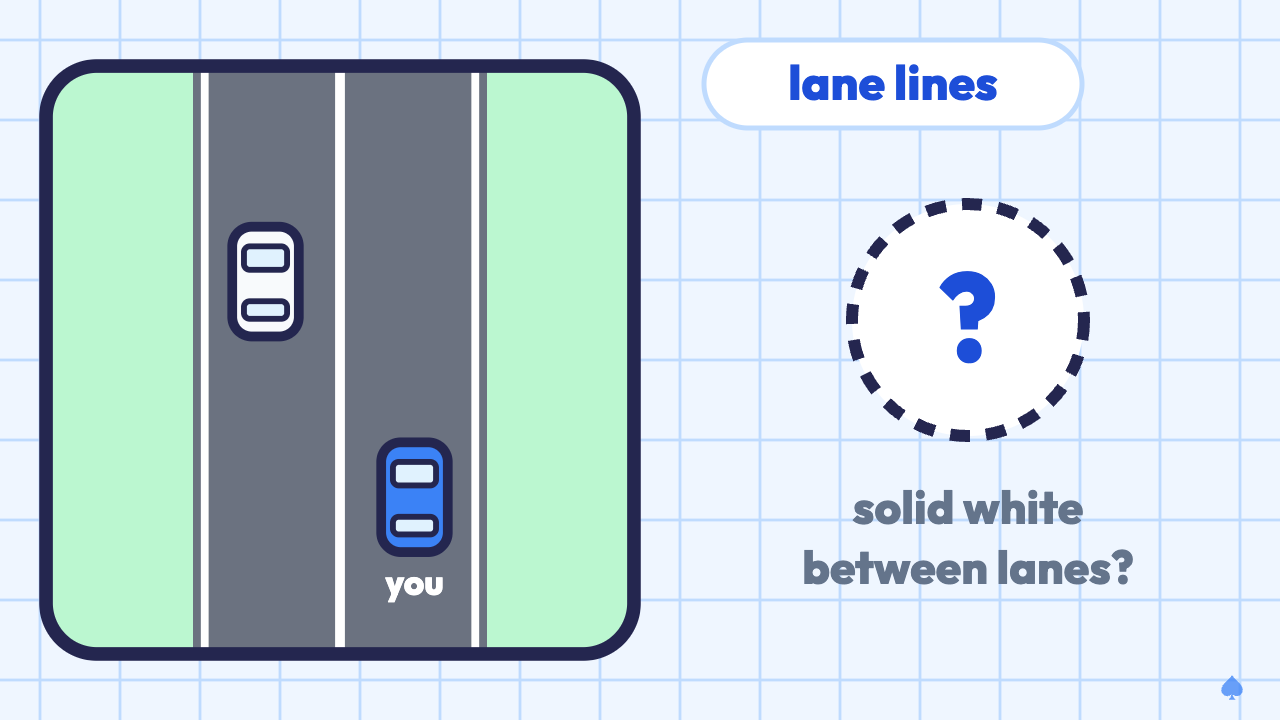
Crossing needs care; discouraged
Solid white lines separate lanes moving the same direction. Crossing a solid white line requires special care and is discouraged. (Rules of the Road, p. 79.)
-
May you cross a double solid white line?
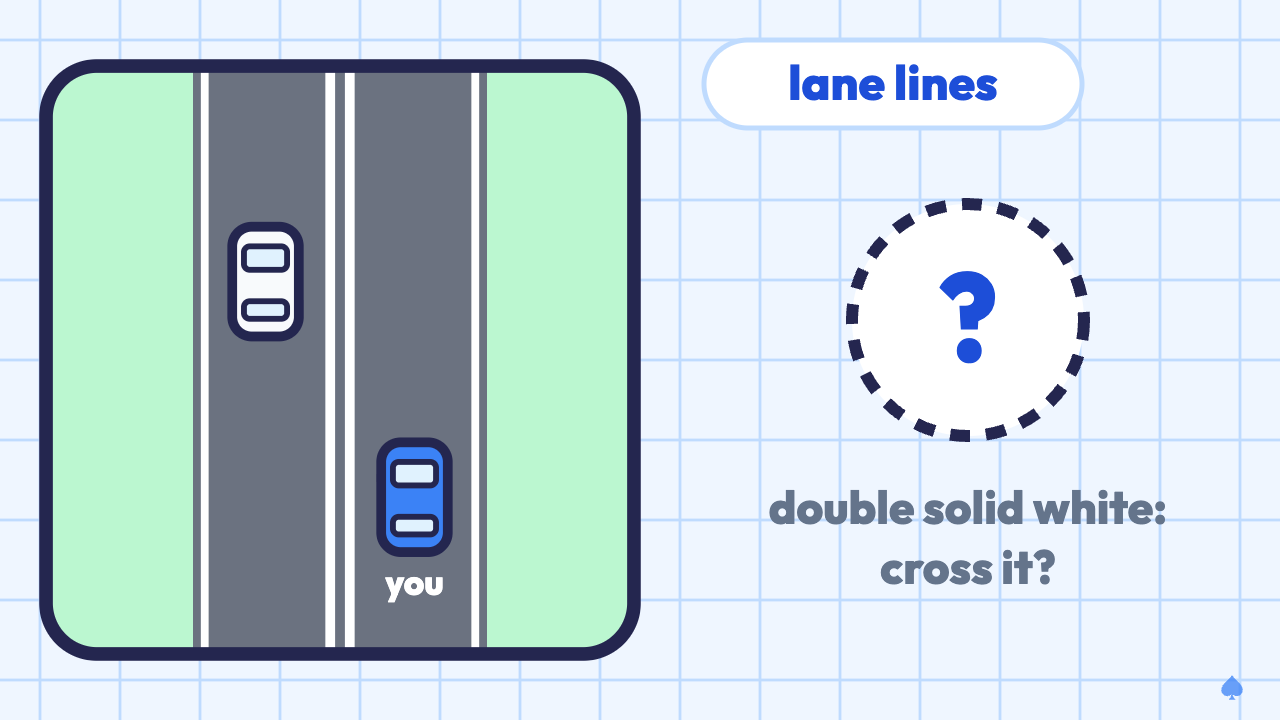
No, it is prohibited
Solid double white lines separate lanes moving the same direction. Crossing a double solid white line is prohibited. (Rules of the Road, p. 79.)
-
What do yellow center lines separate?
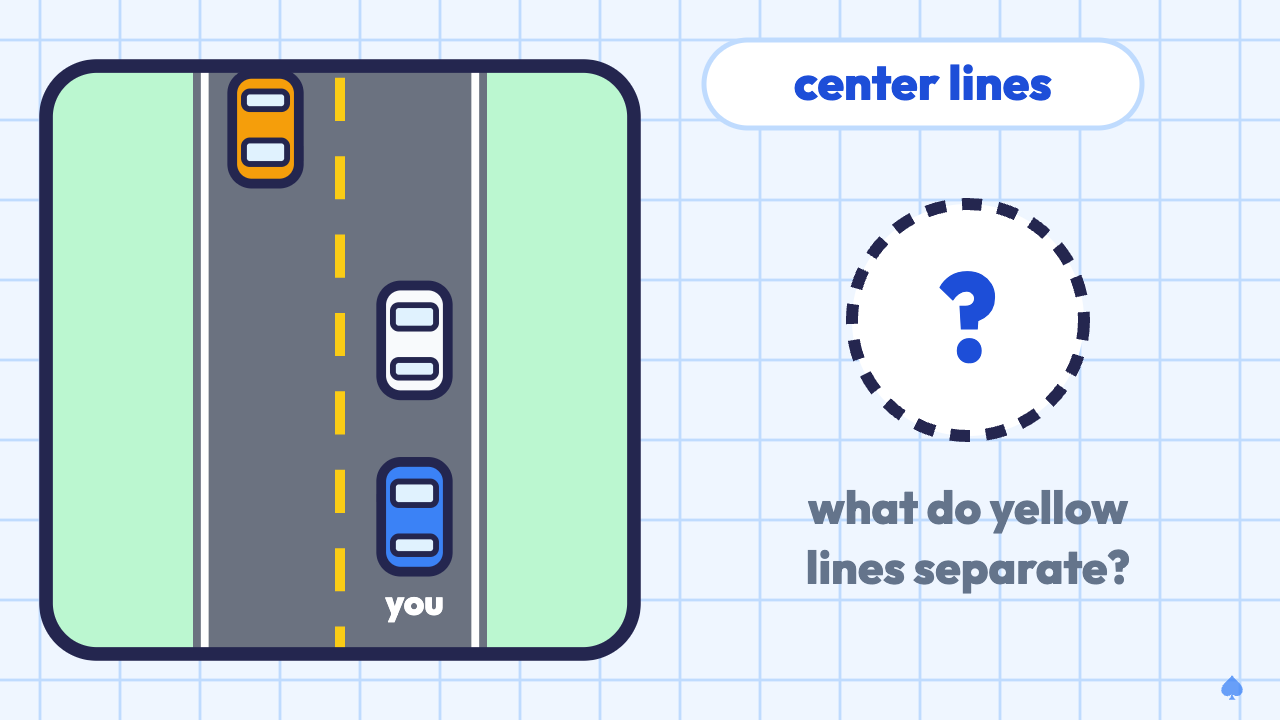
Traffic going opposite ways
Yellow center lines separate lanes of traffic moving in opposite directions. White lines separate traffic going the same way. (Rules of the Road, p. 79.)
-
A two-way road has a single broken yellow center line. May you pass?
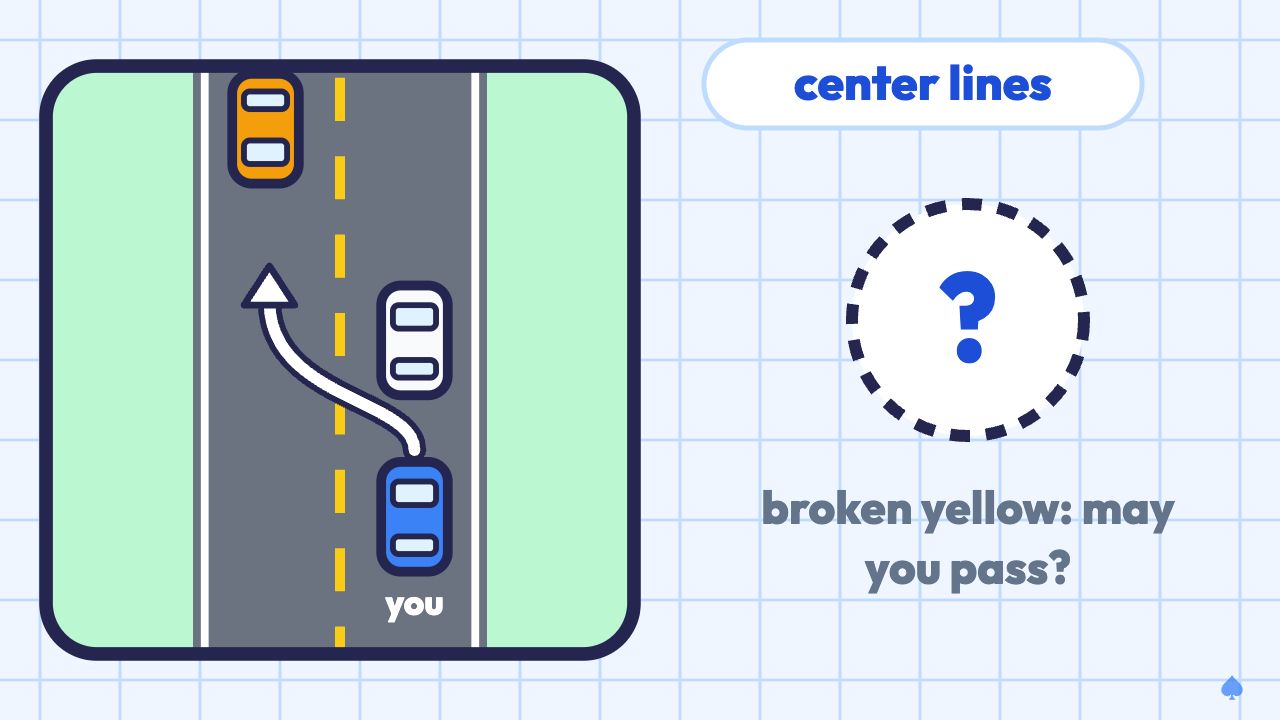
Yes, when safe
Broken yellow lines separate single lanes of traffic moving in opposite directions, and passing is allowed when it is safe. (Rules of the Road, p. 79.)
-
May you cross a double solid yellow line to turn left into a driveway?
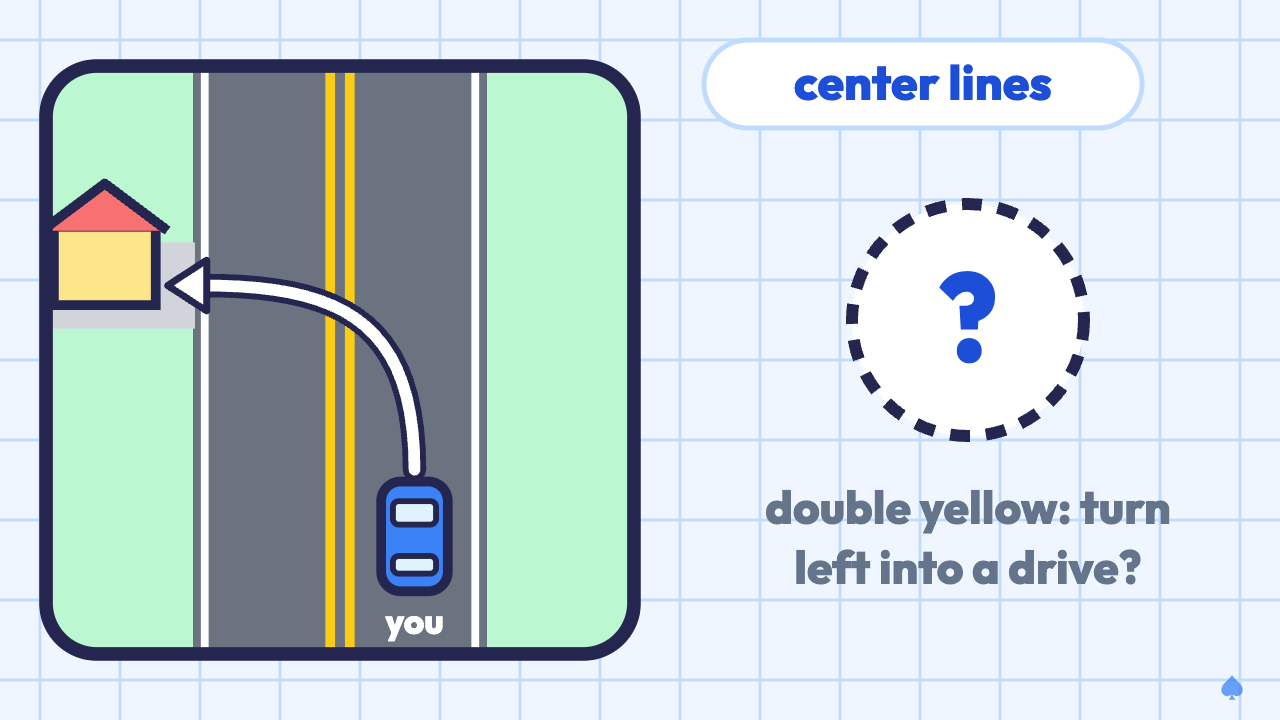
Yes
Two solid yellow lines mark the center of the road. You may not pass across them, but you may cross them to make a left turn to or from an alley, private road, driveway or street. (Rules of the Road, p. 79.)
-
A solid yellow line is on your side of the center line. May you start a pass?
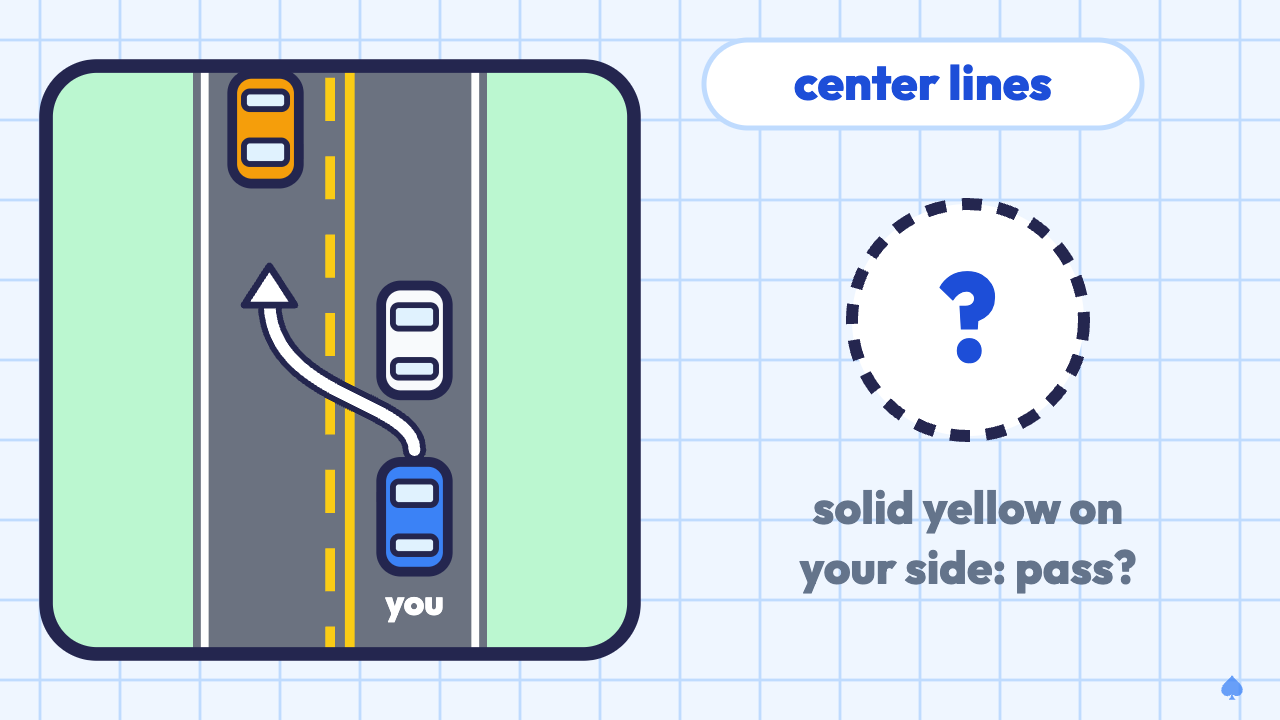
No
Solid yellow no-passing lines mark zones where passing is not allowed. When the solid line is on your side, do not pass. You may cross it to finish a pass begun before the zone, or to turn left into an alley or driveway. (Rules of the Road, p. 79-80.)
-
You started a pass, and then a no-passing line begins on your side. What may you do?
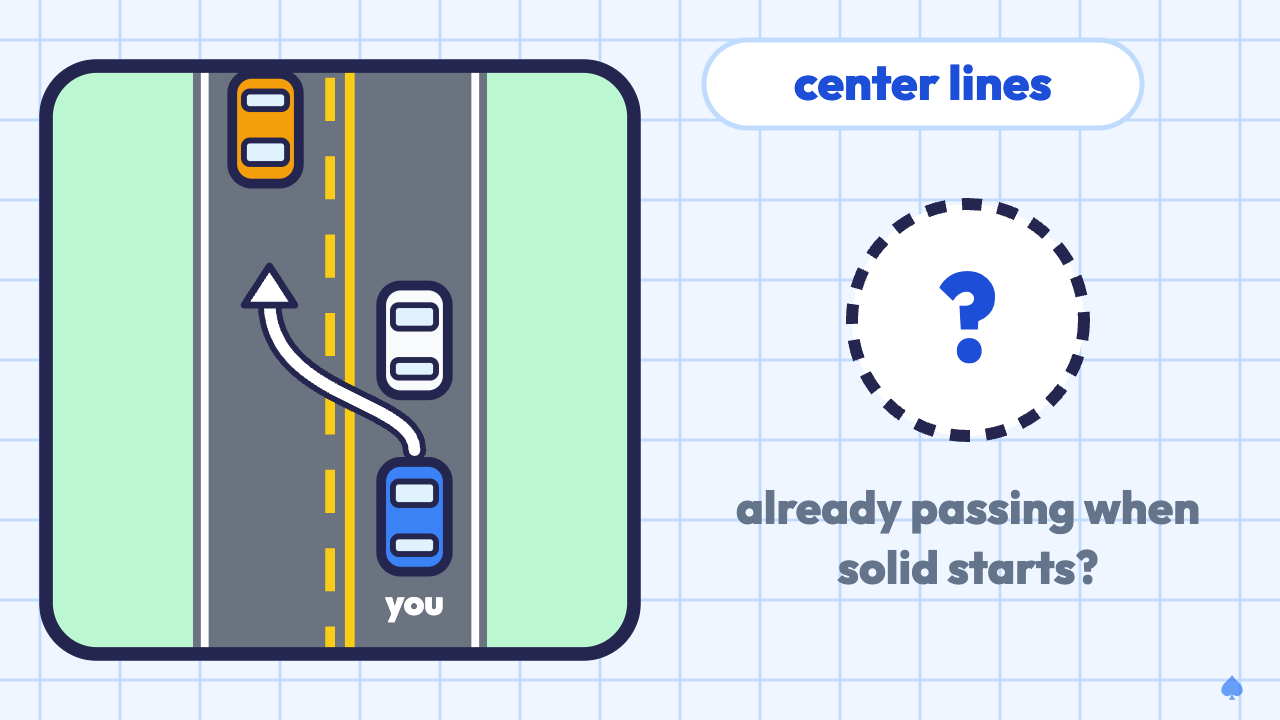
Finish the pass
When the solid yellow line is on your side, you may cross it to finish passing a vehicle you started to pass before the no-passing zone began. (Rules of the Road, p. 79.)
-
Solid and broken yellow lines run side by side. When may you pass?
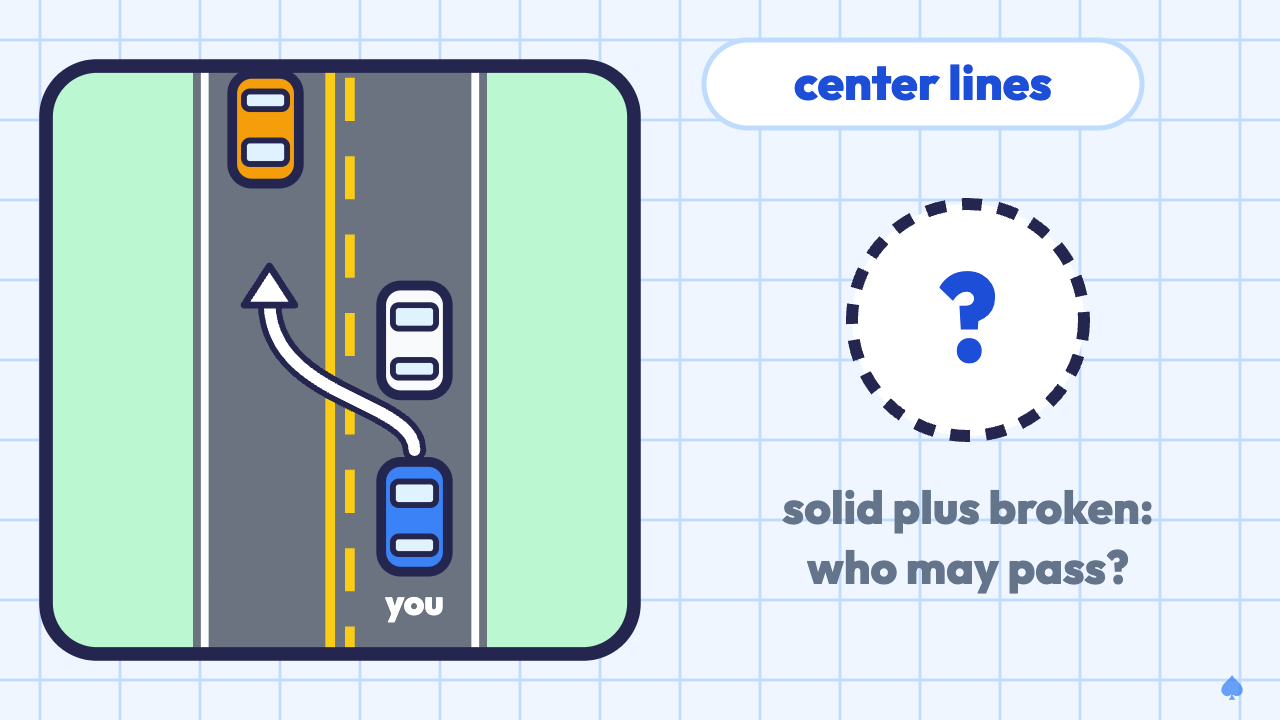
Only if the broken line is nearest
When solid and broken yellow lines separate opposite traffic, you may pass only when the broken yellow line is nearest your lane. (Rules of the Road, p. 80.)
-
A center lane has yellow lines and white arrows pointing both ways. What is it for?
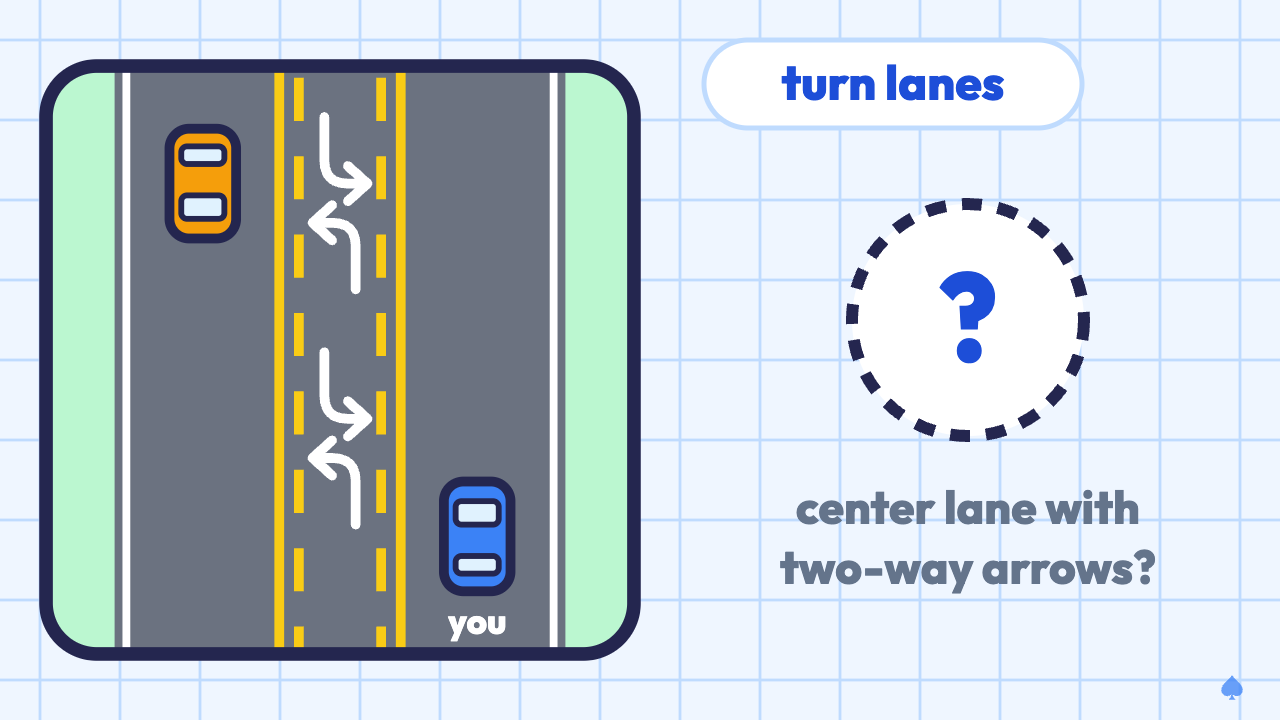
Left turns from both directions
A two-way left turn lane is marked with yellow lines and white arrows. Use it only to prepare for or make a left turn, or a legal U-turn. When one is provided, do not turn left from any other lane. (Rules of the Road, p. 80.)
-
Where must your car be when you stop at a white stop line?
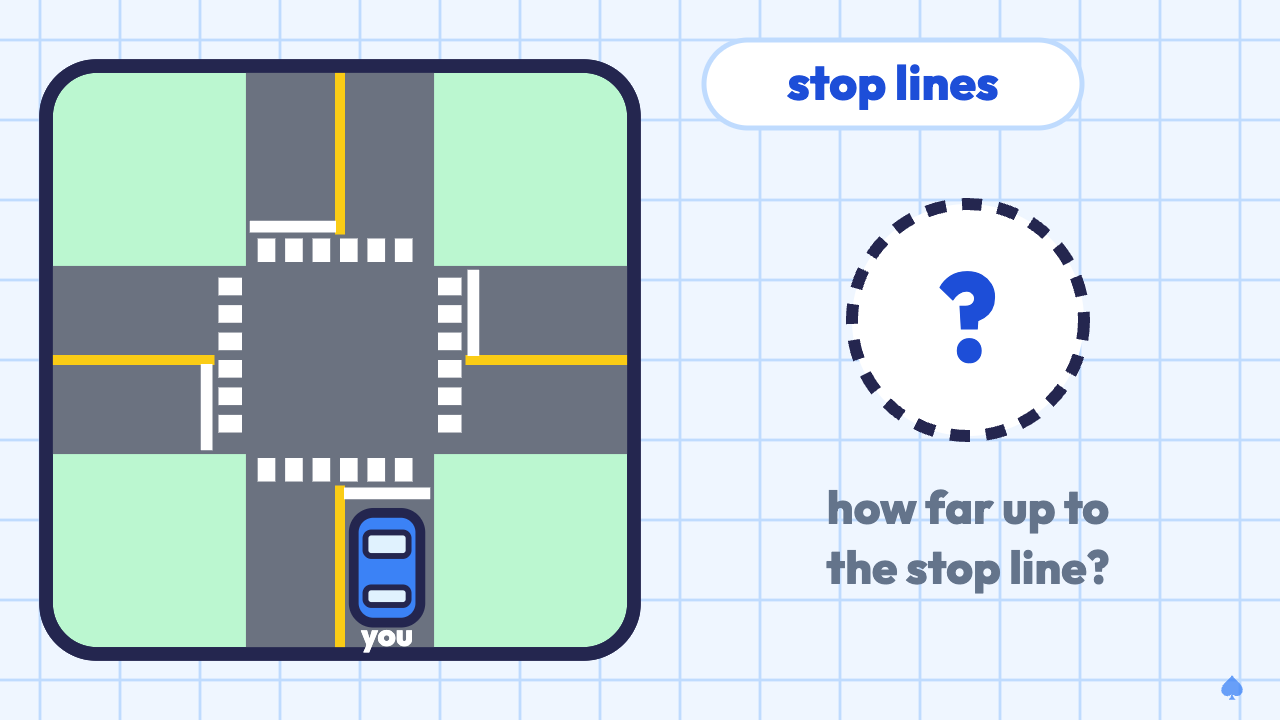
Entirely behind it
A white stop line is painted across a lane, usually about 4 feet before the crosswalk in a city. Stop before any part of your vehicle crosses the line. (Rules of the Road, p. 80.)
-
Who has the right of way in a marked crosswalk?
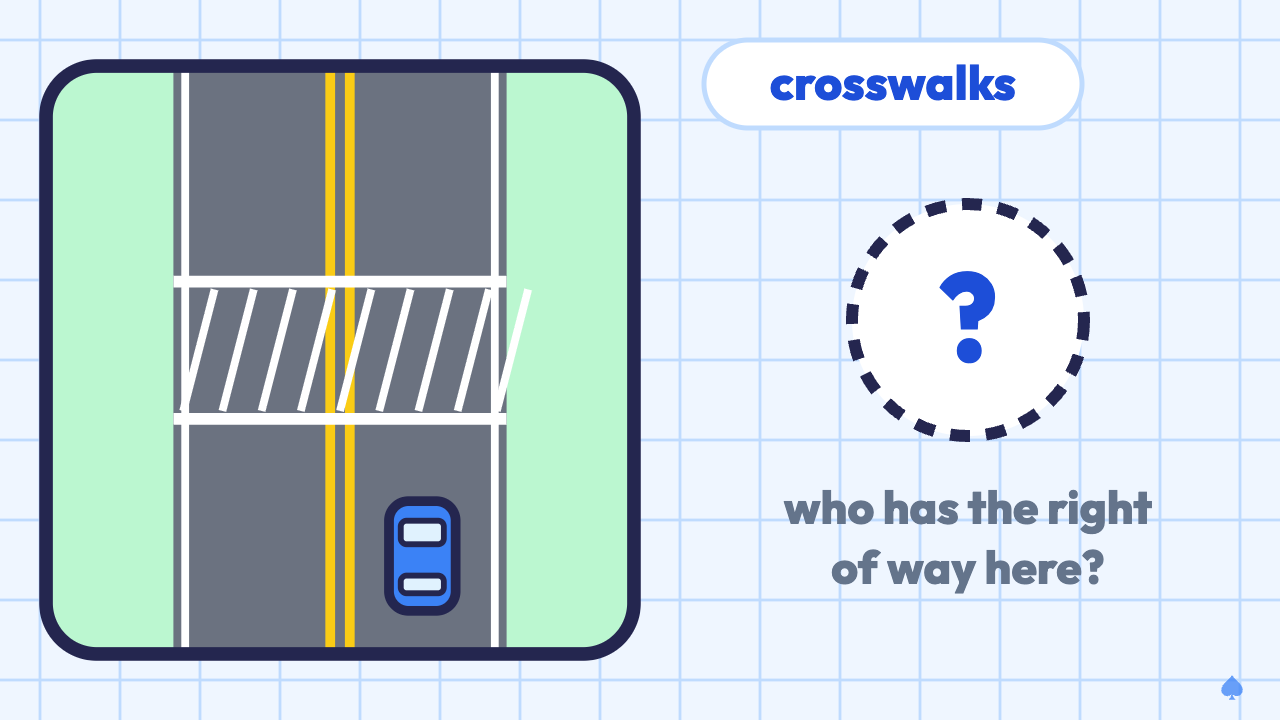
Pedestrians
White crosswalk lines are painted across the pavement, sometimes with diagonal lines for visibility. Pedestrians in crosswalks have the right of way over vehicles. (Rules of the Road, p. 80.)
-
What do yellow or white diagonal stripes painted on a fixed object mark?
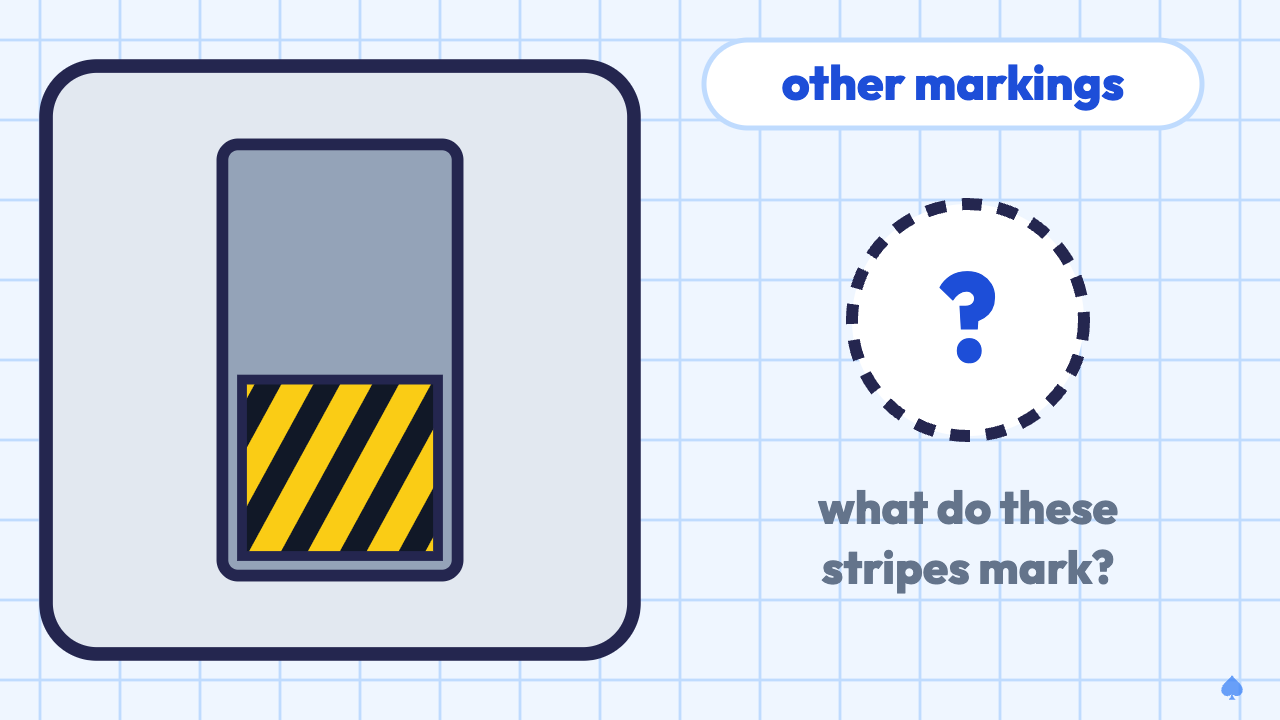
An obstruction
Yellow or white diagonal stripes mark fixed obstructions. Solid white or yellow lines may also channel traffic around a hazard. (Rules of the Road, p. 80.)
Every card is here to read. Study them in the app, free to start, with spaced repetition bringing back the ones you miss.
Decks like this one.
- IL Permit 12: Teens, Phones, Belts & Your License FlashQuest · 60 cards Start free
- IL Permit 11: Alcohol, Drugs & DUI FlashQuest · 26 cards Start free
- IL Permit 10: Safe Driving & Equipment FlashQuest · 45 cards Start free
- IL Permit 09: Sharing the Road FlashQuest · 36 cards Start free
- IL Permit 08: Speed Limits & Parking FlashQuest · 31 cards Start free
- IL Permit 07: Passing, Lanes, Turns & Roundabouts FlashQuest · 36 cards Start free

Study it properly.
All 36 cards are in the app, free to start, scheduled so the ones you miss come back sooner.